

Properly specified, installed, cleaned, and maintained, certified equipment helps processors and facility managers:
- Ensure equipment is designed and built of appropriate materials to perform its intended function
- Reduce the potential for product contamination
- Facilitate equipment cleanability
Equipment used in food and beverage applications should be designed and constructed to facilitate cleanability, minimize the potential for product contamination discussed at https://www.who.int/news-room/fact-sheets/detail/food-safety, and withstand repeated cleaning and sanitizing. Problems can arise from poorly draining equipment designs, cracks and rough welds on product contact surfaces, seals that have deteriorated or cracked, materials that are porous or absorbent, and seams that are inaccessible for cleaning. Even minor equipment design deficiencies can complicate cleaning procedures and provide locations for residue accumulation.
Certification Scope
Certified equipment has been independently evaluated and found to meet applicable requirements for design, construction, and/or materials of equipment used in food and beverage applications. The scope of evaluation depends on the product and may include:
- Materials of construction for food, ingredient, or water contact applications
- Cleanability, including smooth surfaces free of cracks, crevices, gaps, and other potential product harborage areas
- Ease of access for cleaning and sanitizing
- Drainage
- Corrosion, chemical, temperature, or washdown resistance
- Suitability of materials and construction for the equipment’s intended use
Certification helps buyers and specifiers identify equipment that’s been independently evaluated and found suitable for use in food and beverage applications. Certification doesn’t guarantee that equipment will be properly installed, used, cleaned, and maintained, nor does it mean that every certified product is right for every application, as a component suitable for potable water applications, for example, may not be appropriate for use in high-temperature processing, with certain aggressive chemical cleaners, or in contact with certain food ingredients.
Selection and Suitability
Certified equipment can simplify equipment and component selection, helping specifiers choose products that are independently evaluated and found suitable for use in food and beverage applications and helping quality and sanitation personnel begin equipment reviews with products that have been independently evaluated.
Certification can help specifiers select equipment that facilitates cleanability and helps reduce the potential for product contamination, including from machines, vessels, tanks, work surfaces, guards, conveyors, enclosures, frames, legs, dispensers, washdown equipment and accessories to pumps, valves, strainers, hoses, tubing, connectors and other fluid handling components and seals that may come into contact with ingredients or finished product.
Replacement components, whether Certified or otherwise, should be evaluated for suitability, not just size. If NSF certified status is required, the replacement must meet that condition rather than merely fit. Chemical compatibility, maximum operating temperature, pressure rating, and other service conditions and food contact certification, when appropriate, should all be considered.
Certification can help specifiers select components that are independently evaluated and found suitable for their intended service, without cracking, degrading, or shedding particulates into the product and without rough surfaces, seams, crevices, cracks, or other areas that may be challenging to clean or provide areas for residue accumulation.
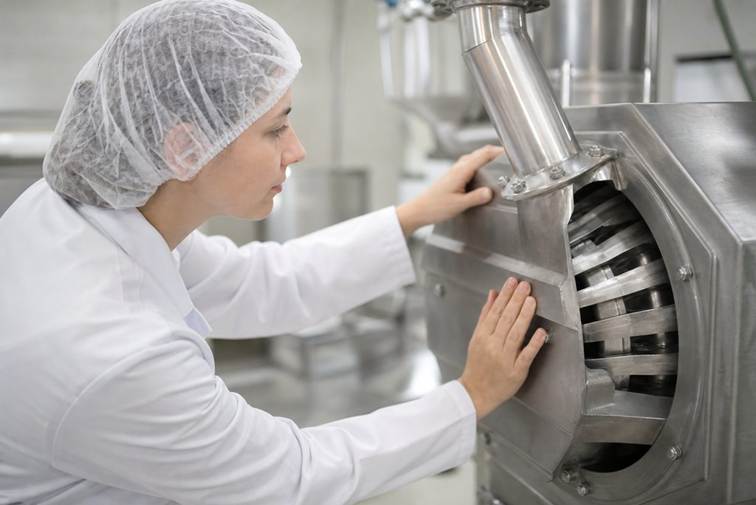
Certification is product- and application-specific, as further explained on this page. Altering certified equipment by changing gasket materials, adding an uncertified coating, modifying welds, or using components in ways or combinations for which they weren’t certified could impact suitability.
Certification helps identify equipment that’s independently evaluated and found to facilitate cleanability, with smooth, durable, easily cleaned and inspected surfaces and free of challenging-to-clean areas, and suitable materials and construction to help reduce the potential for product contamination. Equipment that doesn’t come into direct product contact, such as machine frames, legs, enclosures, conveyors, guards, work surfaces, and more, should also be evaluated for cleanability. Equipment frames and legs, for example, should be evaluated not just on top but underneath, too, checking if hollow legs are properly sealed, if fasteners are sealed, and if there are challenging-to-clean gaps behind equipment guards.
Installation and Records
Certification applies to specific equipment configurations and applications, and certified equipment can still be improperly applied. Before equipment is installed, consider:
- Is clearance above, below, and around equipment adequate for inspection and cleaning consistent with your sanitation procedures? (Equipment set flush against walls or directly on uneven floors, for example, may make it challenging for employees to inspect and clean equipment where residue is likely to accumulate.)
- Are components that come into contact with product appropriate for the application?
- Have replacement components been certified to the same specifications as the original component?
- Can employees adequately access and clean and inspect surfaces?
- Are sanitation procedures (cleaning agents, water temperature, etc.) compatible with equipment components (elastomers, plastics, coatings, etc.)?
- Do customers or regulatory agencies require additional documentation?
Certification documentation, meaning retaining and referencing product data sheets and other documentation that indicate certification and model numbers, approved applications, and other pertinent information. File sanitation procedures and equipment maintenance and repair documentation together and make them easily accessible. Questions can become investigations when documentation isn’t readily available, and investigations can be challenging when equipment is purchased used without certification and other documentation indicating original construction and materials, approved applications, subsequent modifications, etc.
Certification is not necessarily an investment for office chairs and other equipment with no bearing on processing, sanitation, potable water, or food contact applications, but certification documentation can help streamline equipment selection and application and is well worth the effort in processing environments.






