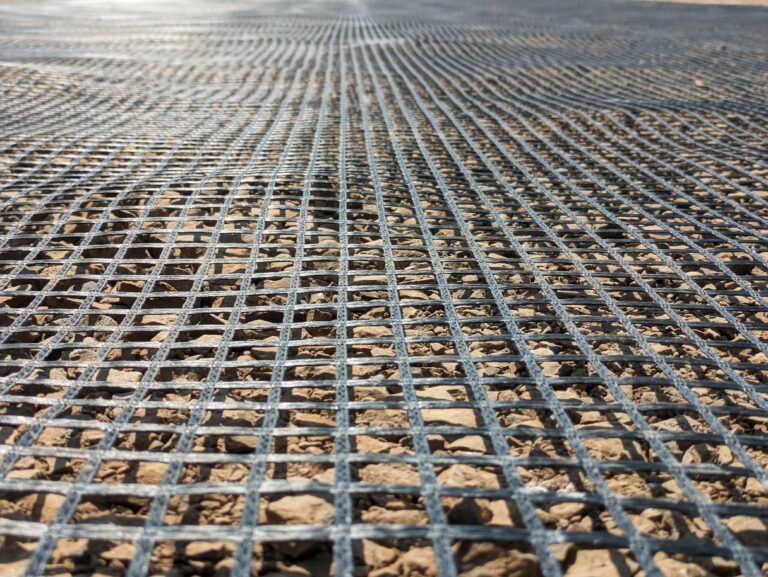
Soil, by nature, has excellent compressive strength but performs poorly under tension. This limitation often leads to instability, excessive deformation, or even structural failure. Uniaxial geogrids address this weakness by introducing tensile reinforcement in a single direction, thereby transforming weak soil into a stable composite system capable of supporting heavy loads.
What Are Uniaxial Geogrids?
Uniaxial geogrids are planar polymeric materials designed with a grid-like structure, characterized by high tensile strength in one direction,typically the longitudinal or machine direction. They belong to the broader category of geosynthetics used in soil reinforcement.
These geogrids consist of a network of ribs connected at junctions, forming apertures that allow soil particles to interlock. This interlocking mechanism enhances frictional resistance and improves the load-bearing capacity of the soil-geogrid system.
The term “uniaxial” refers to the material’s ability to resist tensile forces primarily along one axis, making it particularly suitable for structures where loads are predominantly directional, such as retaining walls and steep slopes.
Material Composition and Structure
Polymer Materials
Uniaxial geogrids are typically manufactured from durable polymers that provide strength, flexibility, and resistance to environmental degradation. Common materials include:
- High-Density Polyethylene (HDPE)
- Polypropylene (PP)
- Polyester (PET)
Each material offers specific advantages. For example, polyester geogrids are known for high tensile strength and low creep, while polyethylene-based geogrids offer excellent resistance to chemicals and environmental conditions.
Structural Components
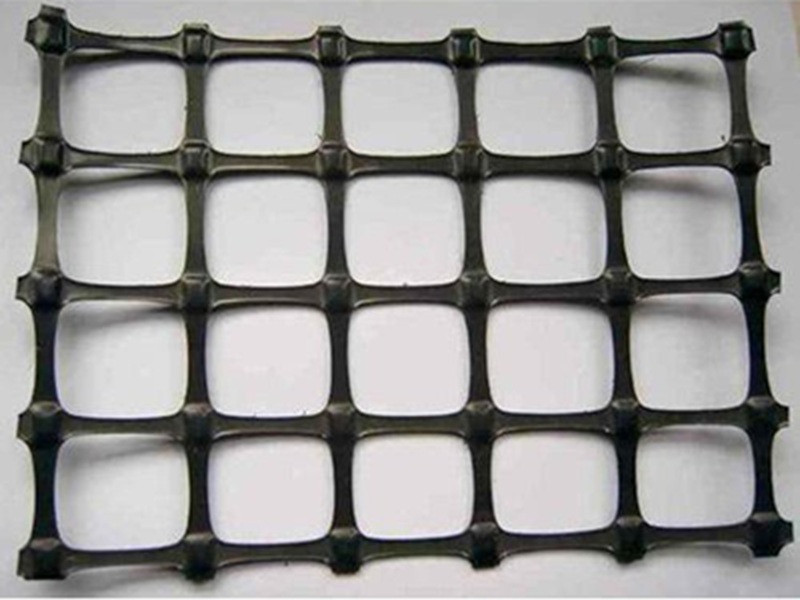
The structure of a uniaxial geogrid consists of:
- Longitudinal Ribs: These are the primary load-bearing elements aligned in the direction of maximum tensile strength.
- Transverse Ribs: These provide lateral stability and maintain spacing between longitudinal ribs.
- Junctions (Nodes): Points where ribs intersect, ensuring structural integrity.
- Apertures: Open spaces between ribs that allow soil or aggregate particles to pass through and interlock.
This open-grid configuration is essential for mechanical interlock, which is the key mechanism behind soil reinforcement.
Manufacturing Process
The performance of uniaxial geogrids is largely determined by their manufacturing process, which involves several carefully controlled steps:
- Extrusion
Polymer resin is melted and extruded into flat sheets. - Perforation
A regular pattern of holes is punched into the sheet to create the grid structure. - Unidirectional Stretching
The perforated sheet is stretched in one direction. This aligns the polymer molecules, significantly increasing tensile strength along that axis. - Cooling and Finishing
The stretched material is cooled to lock in its molecular orientation and then cut into rolls for transportation and installation.
This process results in a product with high tensile strength, stiffness, and durability, particularly in the direction of stretching.
Applications
Mechanically Stabilized Earth (MSE) Walls
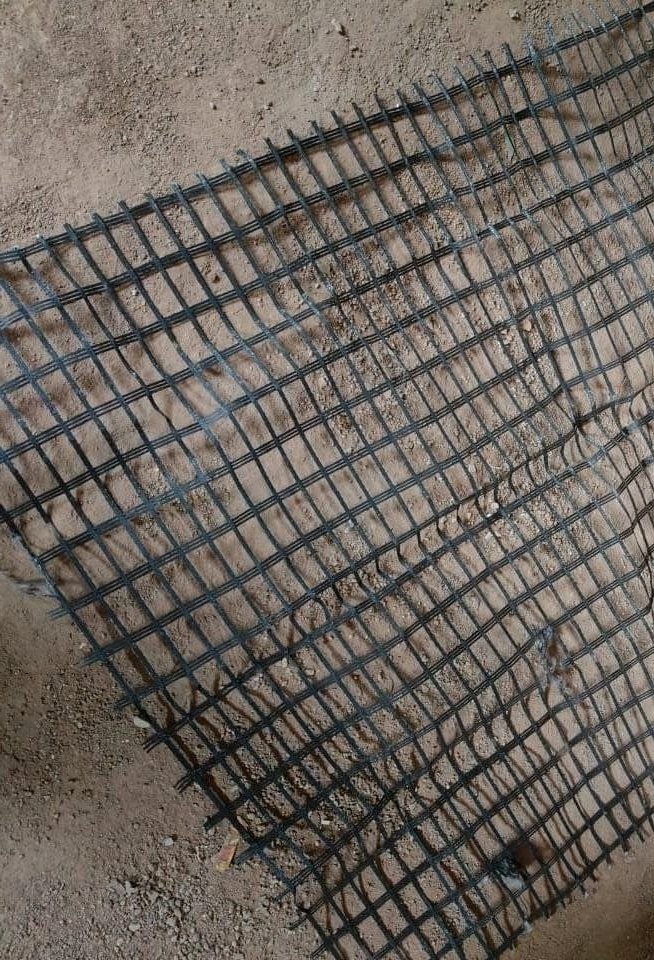
Uniaxial geogrids are widely used in reinforced soil retaining walls, also known as MSE walls. In these structures, layers of geogrids are placed horizontally within the soil to resist lateral earth pressures and maintain wall stability.
Slope Reinforcement
They are used to stabilize steep slopes by reinforcing soil layers and preventing sliding or erosion. This is particularly important in hilly terrains and infrastructure corridors.
Embankments on Weak Soil
Uniaxial geogrids enable the construction of embankments over soft or weak subgrades by improving load distribution and reducing settlement.
Bridge Abutments
They are used in reinforced soil structures supporting bridge abutments, offering a cost-effective alternative to traditional concrete systems.
Road and Highway Construction
In road construction, uniaxial geogrids improve subgrade strength and reduce rutting, thereby extending pavement life.
Railway Infrastructure
They enhance the stability of railway track beds, reducing maintenance requirements and improving safety.
Erosion Control and Coastal Protection
Uniaxial geogrids are also used in erosion control systems, often combined with other materials to protect riverbanks, slopes, and coastal structures.
Advantages of Uniaxial Geogrids
High Strength Efficiency
They provide exceptional tensile strength in the required direction, making them highly efficient for specific applications.
Cost Savings
By reducing the need for traditional construction materials like concrete and deep foundations, they significantly lower project costs.
Ease of Installation
Lightweight and flexible, geogrids are easy to transport, handle, and install on-site.
Environmental Benefits
They support sustainable construction practices by:
- Reducing material consumption
- Allowing use of locally available soils
- Minimizing carbon footprint
Long-Term Performance
Their resistance to environmental degradation ensures reliable performance over extended periods.
Mechanical and Engineering Properties
Tensile Strength
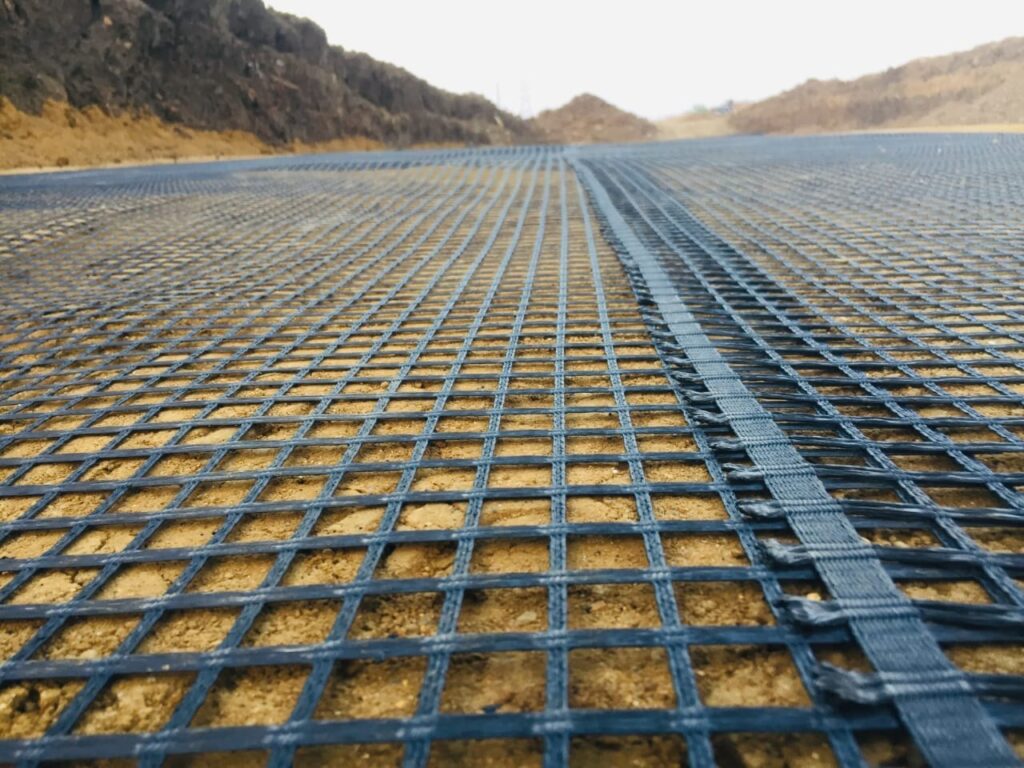
The most defining property of uniaxial geogrids is their high tensile strength in one direction. This strength can vary depending on the product type but is generally sufficient to resist significant lateral earth pressures in reinforced soil structures.
Modulus of Elasticity
Uniaxial geogrids exhibit a high modulus of elasticity, meaning they can resist deformation under applied loads. This stiffness is crucial for maintaining structural stability.
Creep Resistance
Creep refers to the gradual deformation of a material under sustained load. High-quality geogrids are engineered to resist creep, ensuring long-term performance even under continuous stress.
Durability
These geogrids are highly resistant to environmental factors such as:
- Ultraviolet (UV) radiation
- Chemical exposure (acids, alkalis)
- Biological degradation (microorganisms)
This durability ensures a long service life, often exceeding several decades.
Functions of Uniaxial Geogrids
Uniaxial geogrids perform multiple engineering functions that contribute to the stability and performance of soil structures:
Soil Reinforcement
They provide tensile strength to soil, compensating for its natural weakness in tension.
Load Distribution
They spread applied loads over a larger area, reducing stress concentrations and preventing localized failure.
Confinement
By interlocking with soil particles, geogrids restrict lateral movement, increasing shear strength.
Stabilization
They enhance the overall stability of slopes, embankments, and retaining structures.
Settlement Reduction
They minimize differential settlement, which can lead to cracking or structural damage.
Design Considerations
Effective use of uniaxial geogrids requires careful design, taking into account:
- Soil characteristics (strength, density, moisture)
- Load conditions (static and dynamic)
- Geogrid properties (strength, stiffness, creep resistance)
- Reinforcement layout (spacing, length, orientation)
Advanced design methods often incorporate principles from Soil Mechanics to ensure optimal performance and safety.
The use of uniaxial geogrids continues to evolve with advancements in materials and design technologies. Innovations include:
- Development of high-performance polymers
- Integration with smart monitoring systems
- Hybrid geosynthetics combining multiple functions
- Increased focus on sustainable and recycled materials
These developments are shaping the future of infrastructure by making it more resilient, efficient, and environmentally responsible.
Conclusion
Uniaxial geogrids have revolutionized soil reinforcement techniques in civil engineering. Their ability to provide high tensile strength in a single direction makes them an ideal solution for retaining walls, slopes, embankments, and other load-bearing structures.
By improving soil stability, reducing construction costs, and supporting sustainable practices, uniaxial geogrids play a vital role in modern infrastructure development. As engineering challenges grow more complex, their importance in delivering safe, durable, and efficient solutions will only continue to increase.