
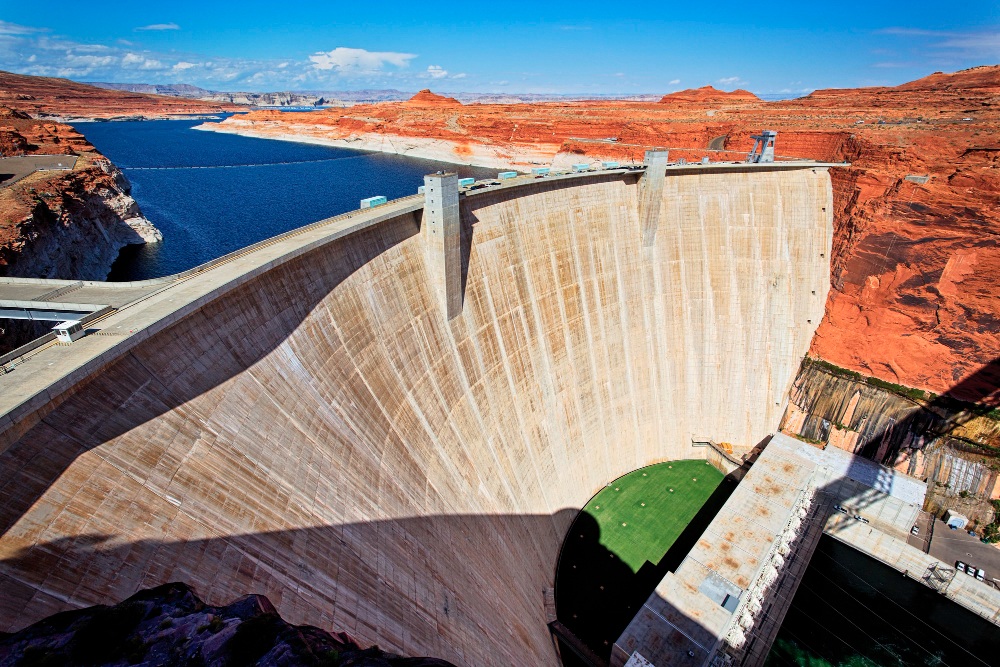
Gravity dams are among the most robust and time-tested hydraulic structures used in modern civil engineering. Designed to resist the horizontal pressure of water primarily through their own weight, these dams rely on gravity as the main stabilizing force, ensuring safety, durability, and long-term performance. Widely constructed using mass concrete or masonry, gravity dams play a critical role in water storage, hydropower generation, flood control, and irrigation infrastructure across the globe.
With increasing demand for sustainable water resource management and energy generation, gravity dams continue to be a preferred choice for sites with strong rock foundations and suitable topographical conditions. Their straightforward design principles, high structural stability, and minimal maintenance requirements make them one of the most reliable dam types in large-scale infrastructure projects.
According to global dam statistics, a significant number of large dams, especially in regions with stable geological formations, are gravity-based structures due to their inherent resistance to overturning, sliding, and structural failure.
Applications of Gravity Dams
Gravity dams are versatile and serve multiple infrastructure purposes:
Water Supply Reservoirs – These dams store large volumes of water for domestic, industrial, and municipal supply. Their low permeability and rigid structure ensure minimal leakage and long-term storage efficiency.
Hydropower Generation – Gravity dams are extensively used in hydroelectric projects due to their ability to support large reservoirs and integrate powerhouse structures. Many major hydropower stations depend on gravity dam systems for consistent energy production.
Flood Control Systems – By regulating river flow and storing excess water during heavy rainfall, gravity dams help mitigate downstream flooding risks, protecting urban and rural settlements.
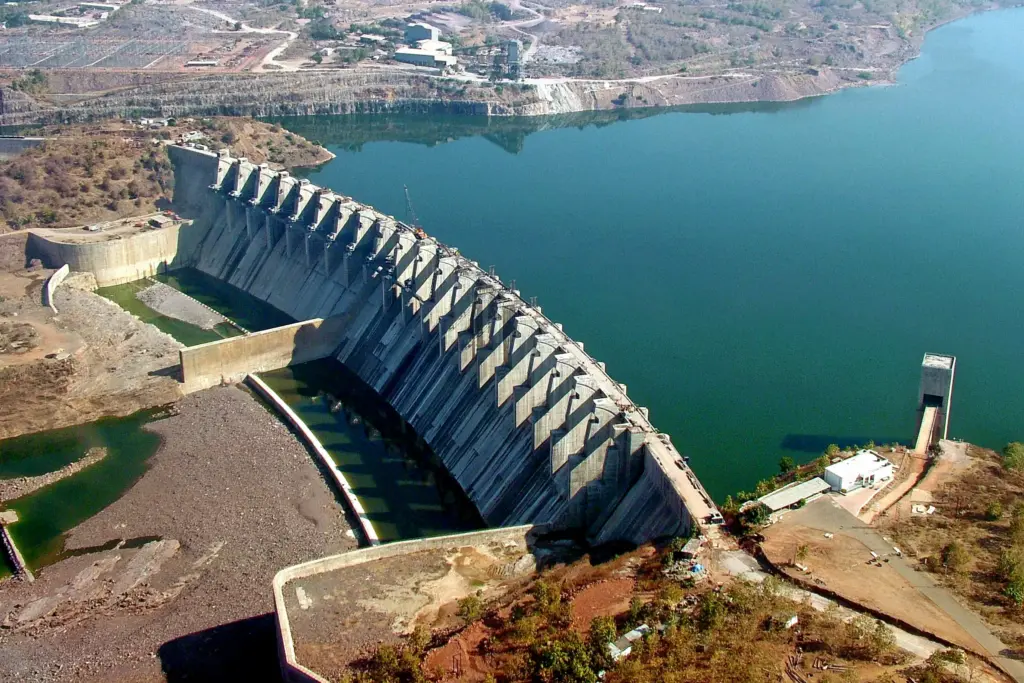
Advantages of Gravity Dams
Gravity dams offer several engineering and economic advantages:
- Exceptional structural stability due to self-weight resistance
- Long service life with minimal maintenance requirements
- High resistance to overturning, sliding, and shear forces
- Suitable for large storage capacities and high dam heights
- Low seepage when constructed with proper joints and drainage systems
- Ability to integrate spillways and outlet works within the dam body
- Proven performance in extreme environmental conditions
- Durable against weathering, erosion, and aging
Types of Gravity Dams
Gravity dams can be classified based on design and construction approach:
Solid Gravity Dam
These are conventional dams constructed using mass concrete or masonry. The structure is solid throughout and relies entirely on its weight to resist water pressure.
Hollow Gravity Dam
Hollow dams incorporate internal voids or galleries to reduce material usage and overall weight. They are more economical but require precise engineering and construction control.
Arch-Gravity Dam
This type combines gravity action with arch action, where part of the load is transferred to the abutments. It is suitable for narrow valleys with strong side supports.
Stepped Gravity Dam
These dams have a stepped downstream face, which helps in energy dissipation and reduces uplift pressure. They also improve structural efficiency.
Design Principles of Gravity Dams
The design of a gravity dam is governed by fundamental engineering principles to ensure stability under all loading conditions.
Stability Against Overturning
The dam must resist overturning caused by water pressure. The resultant force should fall within the middle third of the base to avoid tensile stresses.
Sliding Resistance
Adequate friction and shear strength must be provided at the base to prevent sliding. Shear keys and foundation treatment are often used to enhance resistance.
Stress Distribution
The stresses developed within the dam body must remain within permissible limits. Proper design ensures no excessive compression or tension occurs.
Uplift Pressure Control
Water seepage beneath the dam creates uplift pressure, which reduces stability. Drainage galleries and grouting are used to minimize this effect.
Seismic Considerations
In earthquake-prone regions, dynamic forces are considered in design to ensure structural integrity during seismic events.
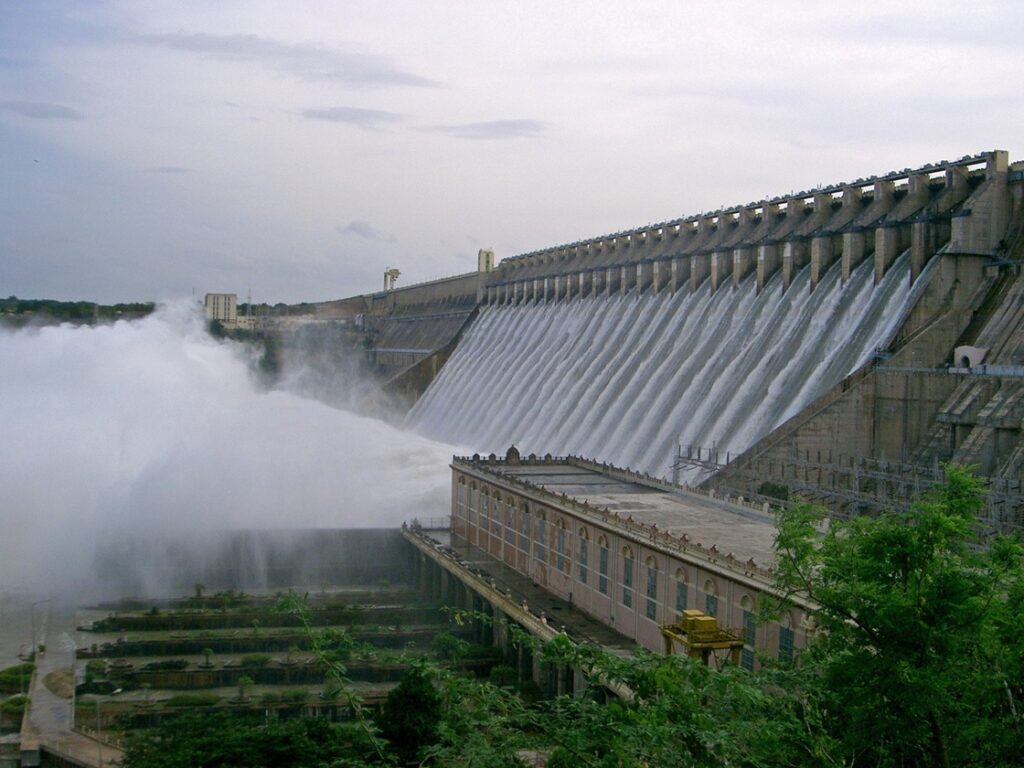
Materials Used in Gravity Dam Construction
Mass Concrete
The primary material used in gravity dams is mass concrete, designed to withstand high compressive stresses while minimizing heat generation during curing.
Cement & Admixtures
Specialized cement and chemical admixtures are used to control setting time, reduce thermal cracking, and improve durability.
Aggregates
High-quality aggregates provide strength and stability to the concrete mix. Locally available materials are often used to reduce costs.
Water Stops & Joint Materials
Construction joints are sealed using water stops and sealants to prevent seepage and ensure watertightness.
Construction Methodology of Gravity Dams
Gravity dam construction involves a systematic and highly controlled process:
Foundation Preparation
The foundation is excavated to reach sound rock. Surface cleaning, grouting, and leveling are carried out to ensure a strong base.
Formwork & Block Construction
The dam is constructed in blocks using formwork systems. This allows controlled placement and reduces thermal stress.
Concrete Placement
Concrete is placed in layers and compacted using vibrators. Temperature control measures are implemented to prevent cracking.
Cooling Systems
Embedded cooling pipes are sometimes used to control heat generated during cement hydration in mass concrete.
Joint Treatment
Construction joints are treated with grouting and sealing materials to ensure structural continuity and prevent leakage.
Installation of Spillways & Outlets
Spillways, sluice gates, and outlet systems are integrated into the dam structure for controlled water discharge.
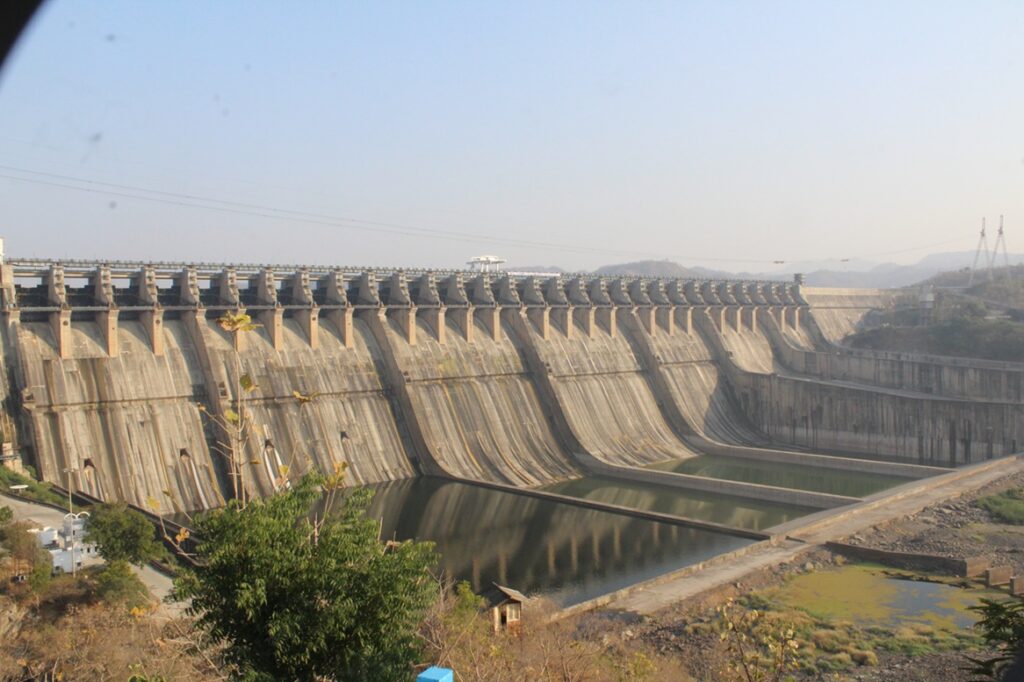
Key Gravity Dams in India
India is home to several prominent gravity dams that play a crucial role in water resource management and energy generation:
- Bhakra Dam – The highest straight concrete gravity dam in India (226 m high), built on the Sutlej River, serving irrigation, hydropower, and flood control needs.
- Sardar Sarovar Dam – A major gravity dam on the Narmada River, critical for water supply, irrigation, and power generation across multiple states.
- Nagarjuna Sagar Dam – One of the largest masonry gravity dams in the world, constructed across the Krishna River.
- Indira Sagar Dam – A key multipurpose project on the Narmada River with one of the largest reservoirs in India.
- Rihand Dam – Also known as Govind Ballabh Pant Sagar, this gravity dam plays an important role in power generation and water storage.
Conclusion
Gravity dams remain one of the most dependable and structurally sound solutions in hydraulic engineering. Their ability to utilize self-weight for stability, combined with advancements in concrete technology and construction techniques, ensures their continued relevance in modern infrastructure development. As demand for water security, renewable energy, and flood management increases, gravity dams will continue to play a pivotal role in shaping resilient and sustainable infrastructure systems worldwide.






