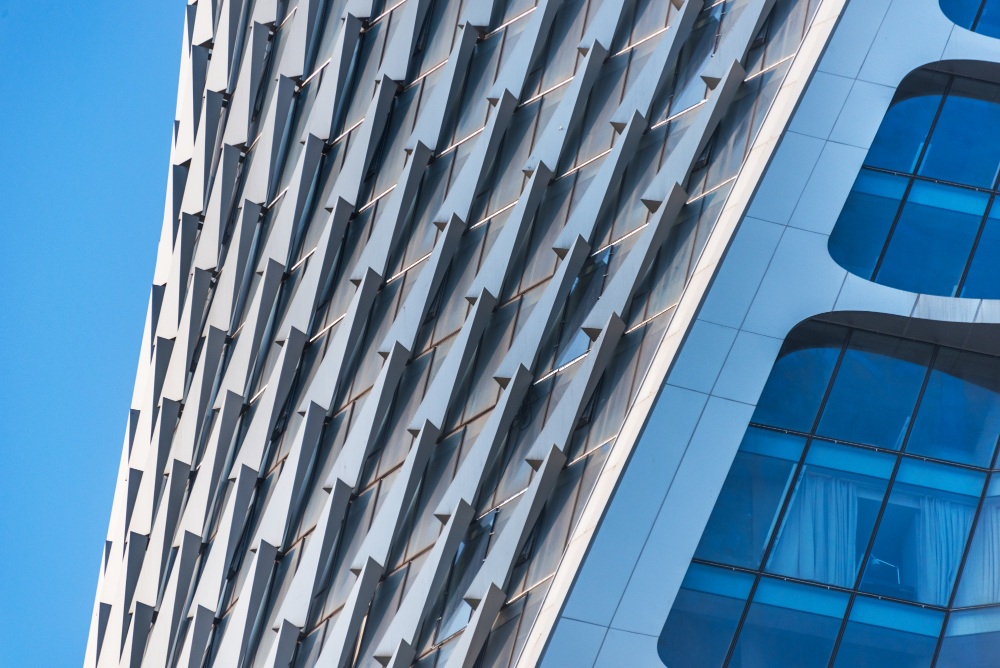
In modern architecture, few elements define the visual identity of a building as strongly as its façade. Among the various façade systems in use today, the curtain wall façade stands out as one of the most widely adopted solutions for commercial towers, institutional buildings, airports, and high-rise developments. Characterized by its sleek appearance, lightweight construction, and ability to maximize natural light, the curtain wall has become synonymous with contemporary urban skylines.
What Is a Curtain Wall Façade?
A curtain wall façade is a non-structural outer covering of a building. Unlike load-bearing walls, it does not support the building’s structural weight. Instead, it is attached to the building’s structural frame (typically concrete or steel) and is designed to resist environmental forces such as wind, rain, and temperature variations.
The term “curtain wall” comes from the idea that the façade hangs like a curtain from the building structure. Because it is not load-bearing, it can be made from lightweight materials, most commonly glass and aluminum.
Key Components of a Curtain Wall System
A curtain wall façade is a complex assembly of multiple components working together:
1. Mullions (Vertical Members)
These are vertical framing elements that transfer loads (such as wind pressure) to the building structure.
2. Transoms (Horizontal Members)
Horizontal elements that connect mullions and support glazing panels.
3. Glazing Panels
Typically made of glass, these panels provide transparency and daylight. They may include:
- Single glazing
- Double glazing (insulated glass units)
- Triple glazing for higher performance
4. Anchors and Brackets
These connect the curtain wall system to the building’s structural frame.
5. Seals and Gaskets
Used to prevent air and water infiltration, ensuring weather tightness.
6. Insulation
Thermal insulation materials improve energy performance and reduce heat transfer.
Advantages of Curtain Wall Façades
1. Aesthetic Appeal
Curtain walls create a sleek, modern look with large glass surfaces and clean lines.
2. Natural Light
Extensive glazing allows daylight to penetrate deep into interior spaces, reducing the need for artificial lighting.
3. Lightweight Construction
Compared to traditional masonry walls, curtain walls are significantly lighter, reducing structural load.
4. Faster Construction (Unitized Systems)
Pre-fabrication speeds up installation and reduces on-site labor.
5. Flexibility in Design
Curtain walls can accommodate complex geometries and customized designs.
Applications of Curtain Wall Façades
- Commercial Office Buildings
Widely used in corporate offices and IT parks to create a modern, professional appearance while maximizing natural daylight. - High-Rise Towers
Ideal for skyscrapers due to their lightweight nature, which reduces structural load and allows faster construction. - Shopping Malls & Retail Spaces
Enhances visual appeal and transparency, helping attract customers and showcase interiors effectively. - Airports & Transportation Hubs
Used in terminals and stations to create large, open, well-lit spaces with a contemporary design. - Hotels & Hospitality Buildings
Provides panoramic views, enhances aesthetics, and improves guest experience with natural light. - Institutional Buildings
Common in universities, hospitals, and research centers for their clean design and functional performance. - Showrooms & Exhibition Centers
Ideal for displaying products due to high transparency and sleek façade design. - Mixed-Use Developments
Used in projects combining residential, commercial, and retail spaces for a unified architectural look. - Residential High-End Apartments
Increasingly used in luxury housing for better views, daylight, and modern aesthetics. - Atriums & Entrance Lobbies
Frequently applied in large entrance areas to create visually striking and open interior spaces.
Types of Curtain Wall Façade Systems
Stick System Curtain Wall:
The stick system curtain wall is one of the most traditional and widely used façade systems, where all components such as mullions (vertical members) and transoms (horizontal members) are transported to the site and assembled piece-by-piece. Glass or infill panels are then installed within this framework. This method offers high flexibility in design, making it suitable for projects with complex geometries or frequent design changes. It is generally more economical in terms of initial cost, especially for low- to mid-rise buildings. However, it is labor-intensive and requires skilled workmanship, which can increase construction time and affect quality if not executed properly.
Unitized Curtain Wall:
The unitized curtain wall system is a modern approach where large façade panels are pre-fabricated in a factory under controlled conditions and then transported to the site for installation. Each unit typically includes framing, glass, and sometimes insulation, making it a complete module. This system significantly speeds up installation and ensures consistent quality, as most of the work is done off-site. It is particularly suitable for high-rise buildings and large commercial projects where time and precision are critical. While the upfront cost is higher compared to the stick system, savings in labor, time, and reduced on-site errors often balance the investment.
Semi-Unitized Curtain Wall:
The semi-unitized system combines the advantages of both stick and unitized systems. In this approach, certain components such as mullions are installed on-site, while other elements like panels or glazing units are pre-fabricated. This hybrid method allows for faster installation than a fully stick-built system while maintaining some level of flexibility for on-site adjustments. It is often used in medium-scale projects where full unitization may not be feasible due to budget or logistical constraints. The system provides a good balance between cost efficiency, speed, and customization.
Structural Glazing Curtain Wall:
Structural glazing curtain walls are designed to create a clean and seamless glass appearance by eliminating visible external framing. In this system, glass panels are bonded to the supporting structure using high-strength silicone sealants or adhesives. The result is a smooth, continuous glass surface that enhances the aesthetic appeal of the building. This type of façade is commonly used in premium office buildings, malls, and corporate headquarters. While visually striking, it requires precise engineering, high-quality materials, and careful installation to ensure durability, safety, and weather resistance.
Double-Skin Curtain Wall:
A double-skin curtain wall consists of two layers of façade, typically made of glass, separated by a ventilated air cavity. This cavity acts as a thermal buffer, improving insulation and reducing energy consumption. The system can be naturally or mechanically ventilated, allowing for better control of temperature and airflow. It also helps in reducing external noise, making it ideal for buildings in busy urban environments. Although highly effective in enhancing energy efficiency and occupant comfort, double-skin façades are more expensive and complex to design and maintain.
Pressure-Equalized Curtain Wall:
The pressure-equalized curtain wall system is specifically designed to improve resistance to water infiltration. It works by balancing the air pressure between the exterior and interior of the façade, minimizing the force that drives water into the building. This is achieved through a system of compartments, seals, and drainage paths. It is particularly useful in regions with heavy rainfall, high winds, or extreme weather conditions. The system enhances durability and performance but requires careful detailing and engineering to function effectively.
Bolt-Fixed (Spider Glazing) Curtain Wall:
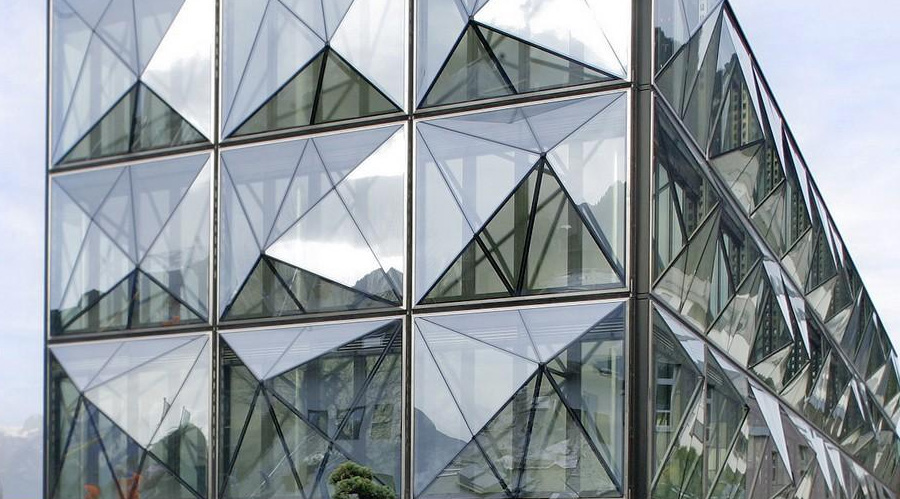
Bolt-fixed or spider glazing systems use stainless steel fittings, often called “spiders,” to hold glass panels in place without the need for traditional framing. This allows for maximum transparency and a highly modern, open appearance. The system is commonly used in atriums, showrooms, airports, and entrance lobbies where visual impact is important. While it offers excellent aesthetics and daylighting, it requires precise structural support and high-quality glass to ensure safety and performance. Maintenance and installation costs can also be higher compared to conventional systems.

Materials Used in Curtain Wall Façades
1. Glass
The most prominent material in curtain walls. Types include:
- Float glass
- Tempered glass (for safety)
- Laminated glass (for security and sound insulation)
- Low-E glass (for energy efficiency)
2. Aluminum
Used for framing due to its lightweight, corrosion resistance, and ease of fabrication.
3. Steel
Occasionally used for additional strength in specific applications.
4. Sealants and Coatings
Silicone sealants and protective coatings enhance durability and performance.
Performance Characteristics
1. Structural Performance
Curtain walls must withstand wind loads, seismic forces, and thermal expansion without failure.
2. Thermal Performance
Modern curtain walls incorporate insulated glazing and thermal breaks to reduce heat transfer and improve energy efficiency.
3. Acoustic Performance
Double or triple glazing helps reduce external noise, improving indoor comfort.
4. Water and Air Tightness
Proper sealing ensures resistance to water penetration and air leakage.
Conclusion
Curtain wall façades have revolutionized modern architecture by enabling buildings to be lighter, taller, and more visually striking. Their ability to combine aesthetics, functionality, and performance makes them a preferred choice for contemporary construction. As cities expand and architectural ambitions grow, curtain wall façades will remain at the forefront of building design – shaping skylines and redefining how we experience the built environment.