
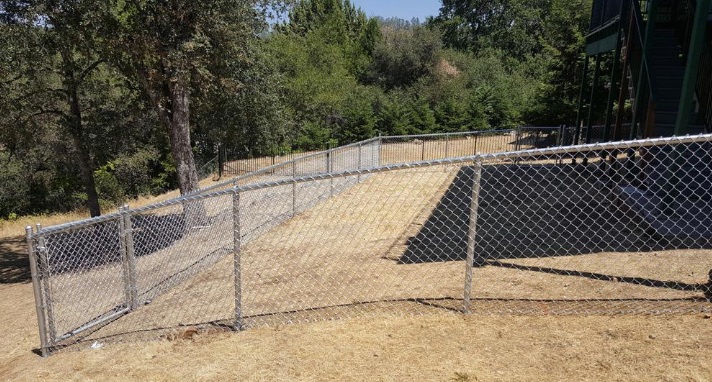
Flat yards make fence building look easy. Sloped yards tell a different story. When the ground rises and falls along a fence line, every post sits at a different height, every section of mesh has to follow the ground, and small mistakes show up as gaps, leaning posts, or a top rail that looks like a staircase gone wrong. Chain-link is a popular choice for sloped yards precisely because it can adapt to uneven ground, but adapting well takes planning, not just flexible material. Local installers such as Terek Fencing see these slopes every day.
In the Vancouver-Portland area, slopes come in many forms: a gentle rise from the street to the house, a backyard that drops toward a greenbelt, or a side yard that pitches sharply between two homes. Each shape calls for different decisions. Understanding the main ways a chain-link fence can follow a slope, and where each approach works best, helps homeowners choose a result they will be happy to live with rather than a fence that technically stands but never quite looks right.
Two Main Ways to Follow a Slope
Chain-link fences on slopes generally follow one of two approaches. In the first, the fence follows the contour of the ground, rising and falling gradually so the bottom of the mesh stays close to the soil all the way along. This is often called racking, and it works well on gentle, even slopes. The fence looks natural, gaps underneath stay small, and pets and children stay contained without extra barriers.
In the second approach, each section stays level while the posts step down the hill, like a staircase. This stepping approach suits steeper or uneven ground where following every dip would make the fence look wavy. The trade-off is the gap that opens under each level section where the ground drops away. Those gaps may need filling with soil, boards, or extra mesh, depending on what the fence is meant to keep in or out. Neither method is right for every yard, and a single fence line may even use both, racking where the slope is gentle and stepping where it steepens.
Gaps, Pets, and Practical Containment
For many homeowners, the real test of a sloped fence is not how it looks from the street but whether it does its job at ground level. A gap of a few inches may not matter for marking a boundary, but it matters a great deal if the fence is meant to contain a small dog or keep wildlife out of a garden. Before choosing an approach, decide what the fence must contain and be honest about the smallest gap that would defeat it.
Walk the slope and look for the low spots where gaps will be largest. Dips, drainage channels, and places where soil has washed away are the trouble areas. Options for closing gaps include grading the soil to smooth out dips before building, adding a bottom rail or tension wire to hold the mesh close to the ground, or installing a barrier along the base in the worst spots. Discuss these options before posts go in, because fixing a gap after the fence is finished usually means extra work and extra material. A fence that contains what it should, on the first try, is worth the extra planning.
Posts, Drainage, and Hillside Stability
Slopes add stress that flat ground does not. Water runs downhill, so posts at the bottom of a slope may sit in wetter soil, while posts on a steep pitch carry loads at an angle rather than straight down. Corner posts and end posts matter even more on a slope, because they anchor the tension of the mesh as it changes direction and height. Bracing those posts properly, and giving them firm footings, keeps the whole line from creeping downhill over time.
Drainage deserves attention too. A fence should not dam water or redirect runoff toward a house, a neighbor’s yard, or a walkway. Leaving room for water to pass, keeping the bottom of the mesh clear of soil buildup, and watching how the yard drains after heavy rain all help the fence and the hillside last longer. If your slope shows signs of erosion, such as exposed roots, rills in bare soil, or soil piling against an existing barrier, raise it before building, because a new fence will not fix an unstable slope on its own.
When a Different Material Fits the Slope Better
Chain-link is flexible, open, and practical on slopes, but it is not the only answer. A homeowner who wants privacy on a sloped lot, for example, may find that a stepped wood fence gives a cleaner look and blocks sightlines more completely, even if it costs more and needs more upkeep. Comparing materials honestly, including how each one handles your particular slope, height needs, and maintenance appetite, leads to a better long-term choice than picking a material first and forcing it onto the ground.
That comparison is worth doing with a local installer who has built on slopes like yours. Ask to see how a stepped section would look on your steepest stretch, how gaps would be handled, and what maintenance each option needs over the years. If privacy and a solid appearance matter more than openness and low upkeep, looking into wood fence installation services in the Vancouver-Portland area as an alternative can clarify the trade-offs, even if you ultimately return to chain-link as the right fit for your yard and budget.
Decisions to Settle Before Installation Day
A smooth sloped-yard project comes down to a handful of decisions made early. First, choose between following the contour and stepping, section by section, rather than leaving it to chance on the day. Second, set a clear standard for gaps at ground level, especially if pets are involved. Third, agree on how drainage and erosion spots will be handled. Fourth, decide where gates will go, because a gate on a slope needs level ground to swing properly and may need its site graded or moved.
Gates deserve special mention. A gate that swings uphill can drag, a gate on a steep cross-slope may never sit level, and a gate at the bottom of a slope can collect water and mud. Sometimes the best answer is to move the gate a few feet to flatter ground. That small change can save years of annoyance. In the end, a chain-link fence on a slope succeeds when the builder respects the shape of the land instead of fighting it. Work with the slope, plan for water and gaps, and the result will look settled and natural, as if the fence had always belonged to that hillside.






