
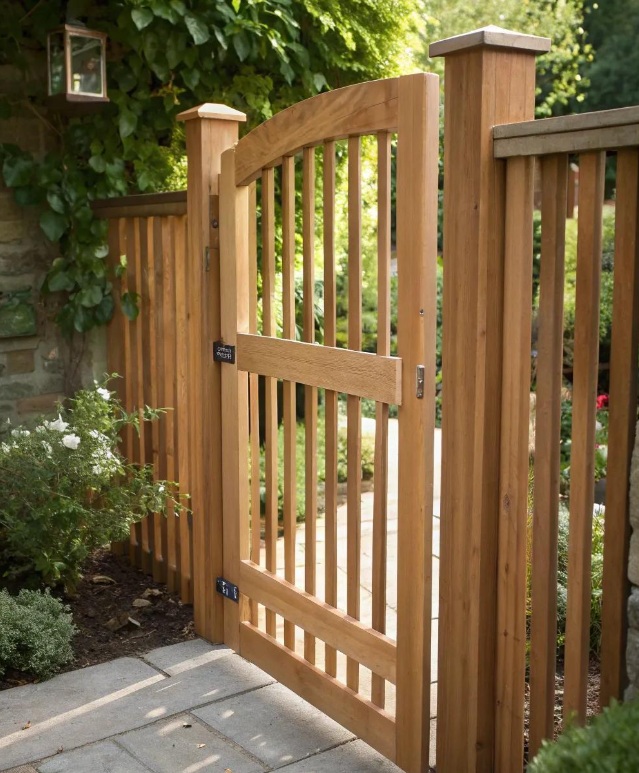
A fence is only as useful as its gates. A beautiful fence with a gate that sticks, drags, or will not latch becomes a daily annoyance, while a well-planned gate makes the whole property easier and safer to use. Gates are also the part of a fence that moves, carries weight, and gets used in all weather, so they deserve more planning than they usually get. Whether you need a simple garden gate or an automated driveway gate, the same questions apply: who will use it, how often, in what conditions, and what happens when something goes wrong?
Start with how the gate will be used. A garden gate used a few times a day has different needs from a driveway gate used by several vehicles, a side gate used for bins and deliveries, or a pool gate that must stay secure. Think about width as well: a gate that is just wide enough for a person may be too narrow for a wheelbarrow, a mower, or a pram. Think about direction too: a gate should swing away from steps, slopes, and public paths where possible, and it should not block a driveway or footpath when open. Sketching the swing on paper before installation can reveal problems that are hard to see in a simple line drawing.
Swing, slide, and space
The two main gate movements are swing and slide, and each suits different spaces. A swing gate needs clear space to open, which works well in a garden or a wide driveway entrance. A sliding gate needs space along the fence line instead, which can suit a narrow driveway or a site where a swinging gate would block a path or a road. Sliding gates also handle slopes differently from swing gates, since a swing gate on a slope may drag or fail to open fully. The right choice depends on your ground, your available space, and how the gate will be used every day, not just on which type looks more impressive.
Frames, posts, and hinges: the parts that carry the weight
A gate is only as strong as its frame, posts, and hinges. The gate post takes the full weight of the gate plus the force of opening and closing, so it needs to be firm and well set. Hinges need to suit the weight and size of the gate, and they need to stay adjustable as the gate settles over time. The frame needs to stay square, otherwise the gate will sag, drag, or fail to latch. When a gate starts to fail, the cause is often a post or hinge problem rather than a problem with the gate panel itself, which is why those supporting parts deserve attention during planning and not just when a repair is needed.
Latches, locks, and everyday security
A latch should be easy to use with one hand, reliable in wet and cold weather, and secure enough for its purpose. A garden gate may need a simple, child-friendly latch, while a side gate or driveway gate may need a lockable latch or a keypad. For pool areas, safety rules often require specific latch heights and self-closing behaviour, so check those requirements early. Whatever latch you choose, test it in real conditions: can you open it while carrying groceries, in gloves, or in the dark? A latch that works well in a showroom but frustrates you at home will soon be left unlatched, which defeats its purpose.
Automation: convenience, safety, and upkeep
Automation can make a driveway gate much more convenient, especially in rain, at night, or when you arrive home with passengers or goods. It can also improve security by keeping a gate closed by default. But automation adds parts that need power, maintenance, and occasional repair: motors, sensors, remotes, and safety devices. Before choosing automation, think about power supply, what happens during a power cut, how visitors and deliveries will gain entry, and how pedestrians will pass safely without walking through a vehicle gate. Automation should make daily life simpler, not add a new set of problems to manage.
Safety around automated gates
Safety is the most important part of automation planning. An automated gate must be able to detect obstacles, stop or reverse when needed, and avoid trapping a person, pet, or vehicle. Pedestrian access should be separate from vehicle access where possible, so people do not need to walk through a moving vehicle gate. Children and pets need special consideration, since they may not understand a moving gate or may try to slip through as it closes. Regular checks of sensors and safety features are part of owning an automated gate, not an optional extra, and any fault should be treated as a reason to stop using automation until it is fixed.
Matching gates to the fence and the property
Gates should match the fence in style, height, and character, but they also need to work with the wider property. A heavy, solid gate on a light, open fence can look out of place, while a light gate on a solid fence may feel under-built. Consider the driveway surface, the slope, and the space beside the gate, since all of these affect how it moves. For properties where visibility and durability matter, comparing different fence materials for the gate area can help: for example, looking at chain-link fence options can show how an open, practical material works for gates and enclosures where airflow and visibility are useful.
Discussing the gate, the fence, and the ground together with Rare Bears Fencing usually produces a better result than choosing a gate as an afterthought to a finished fence.
A quick test before installation
Before a gate is installed, test the plan in the real space. Mark the swing or slide path on the ground, walk through it with the items you usually carry, and check that the gate does not block a path, a step, or a parking space when open. If the gate will be automated, check where remotes, keypads, or intercoms will sit, and whether visitors can reach them safely without stepping into traffic. A few minutes of testing on the ground can reveal problems that are much harder to fix once posts are set and motors are wired.
Conclusion
Good gate decisions are practical decisions. Plan the width, swing, and location for real daily use, give the frame, posts, and hinges the strength they need, choose a latch you can actually live with, and treat automation as a system that needs power, safety checks, and a plan for failures. When those pieces are planned together, a gate stops being a weak point in a fence and becomes one of its most useful parts.






