Most people underestimate how much a fastener choice affects the final result. Pick the wrong one, and a structure can loosen prematurely, weaken under load, or simply look wrong. Carriage bolts and hex bolts are both workhorses in construction, woodworking, and mechanical assembly, but they are built for different jobs. A clear grasp of each type saves time, prevents rework, and keeps projects structurally sound from the start.
What Are Carriage Bolts?
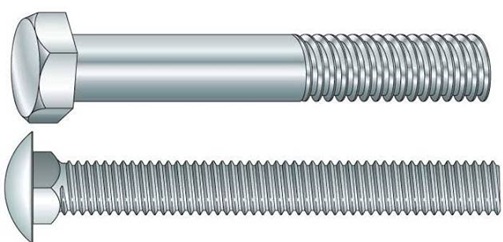
A carriage bolt has a smooth, rounded head and a square shank that sits just beneath it. When the nut is tightened, that square section embeds itself into the surrounding material, stopping the bolt from rotating. No wrench is needed on the head side, which is part of what makes installation so straightforward.
That self-locking quality is what makes carriage bolts a staple in wood-to-wood connections. Deck frames, fencing, and playground equipment all rely on this design for clean, secure, and tamper-resistant results.
When to Use Them
Timber framing and outdoor furniture are natural fits. Searching for carriage bolts for sale turns up a broad selection covering multiple diameters, lengths, and finishes, including galvanized and stainless variants built to hold up in wet or high-humidity conditions. The variety available makes it easy to match the fastener precisely to the job.
What Are Hex Bolts?
Hex bolts have a six-sided head that requires a wrench or socket on both ends during installation. That tool-driven design is intentional. It allows for controlled torque and makes disassembly straightforward whenever a project needs to come apart.
Steel fabrication, automotive repair, and heavy equipment assembly are common applications. Metal-to-metal and metal-to-wood connections both benefit from the grip and adjustability hex bolts provide.
When to Use Them
Any project involving periodic reassembly is a strong candidate for hex bolts. The exposed head allows precise torque control, which matters in load-bearing applications. Higher-grade options, such as Grade 8, handle significant shear and tensile forces without compromising joint integrity.
Key Differences at a Glance
Head Design
The domed head of a carriage bolt sits flat and unobtrusive against the surface. A hex bolt’s angular head protrudes and needs clear tool access. That difference shapes both the look of the finished joint and the installation process itself.
Installation Method
Carriage bolts require only a nut and wrench on one side. Hex bolts need tool access at both ends or a backing surface that prevents the bolt from spinning during tightening.
Material Compatibility
The square shank on a carriage bolt grips wood and composite materials effectively, but it cannot bite into metal. Hex bolts work across wood, metal, and plastic, making them the more versatile option for mixed-material builds.
Finish Options
Both types are available in zinc-plated, hot-dip galvanized, and stainless steel finishes. Interior dry environments tolerate zinc plating well. Outdoor, coastal, or high-moisture applications call for galvanized or stainless steel to prevent corrosion over time.
Strength and Load Considerations
Carriage bolts generally meet Grade 2 or Grade 5 specifications, which covers the demands of most structural wood applications. Hex bolts span a wider strength range, from Grade 2 through Grade 8, along with metric classes such as 8.8 and 10.9.
High-vibration equipment and heavy mechanical assemblies benefit from higher-grade hex bolts. Standard timber connections, by contrast, rarely exceed Grade 5 requirements.
Making the Right Choice
Three questions tend to clarify the decision quickly. What materials are being joined? Does the connection need to come apart at any point? What environmental conditions will the fastener face over time?
Permanent outdoor wood structures favor carriage bolts. Metal assemblies and anything requiring disassembly lean toward hex bolts. Neither type is inherently better; the application determines the answer.
Conclusion
Carriage bolts and hex bolts both perform well, but only in the right context. Matching fastener type to material, environment, and assembly needs is what produces a connection that holds safely over time. Getting this right before purchasing prevents the far more frustrating process of correcting it mid-project. Whether the task involves deck framing, structural timber, or mechanical assembly, a properly chosen fastener delivers reliability that less careful selections simply cannot.