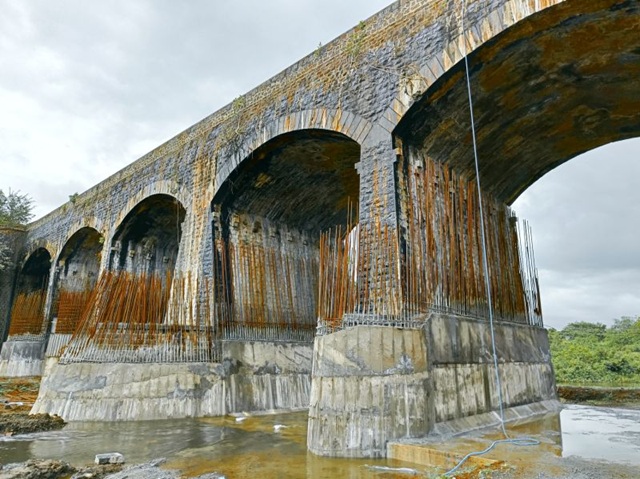
RCC aqueducts are hydraulic structures used to convey canal water across obstacles such as rivers, valleys, and roads. These structures play a vital role in irrigation networks, ensuring uninterrupted water distribution over long distances. However, over time, RCC aqueducts are subjected to deterioration due to continuous water flow, environmental exposure, material aging, and structural stresses.
Repair and rehabilitation are therefore essential to maintain their safety, functionality, and long-term durability. While repair focuses on addressing localized defects such as cracks or leakage, rehabilitation involves strengthening, upgrading, and restoring the aqueduct to meet modern design and performance standards.
Need for Repair and Rehabilitation
With many aqueducts in India and across the world operating for decades, the need for rehabilitation has become increasingly important. Aging infrastructure, combined with higher hydraulic demands and environmental challenges, has made timely intervention essential.
Key reasons include:
- Aging and degradation of concrete and reinforcement
- Continuous exposure to flowing water causing wear and tear
- Increase in discharge capacity requirements
- Changes in design standards and safety regulations
- Foundation settlement or instability
- Leakage and seepage affecting efficiency
- Abrasion due to sediment-laden water
Common Problems in RCC Aqueducts
Over time, RCC aqueducts develop various structural and functional issues that can affect their performance and safety.
Common issues include:
- Cracking due to shrinkage, thermal effects, or loading
- Leakage through joints, cracks, or porous concrete
- Spalling and deterioration of concrete surfaces
- Corrosion of reinforcement due to moisture ingress
- Abrasion damage in trough surfaces from flowing water
- Joint failure and displacement
- Uneven settlement of piers and supports
- Reduced hydraulic efficiency due to surface roughness
If left untreated, these problems can lead to serious structural damage and operational failure.
Investigation and Assessment
A thorough investigation is the first step in any repair and rehabilitation project. Understanding the root cause and extent of damage is essential for selecting appropriate solutions.
Assessment methods include:
- Visual inspection to identify cracks, leakage, and surface damage
- Non-destructive testing (NDT) such as ultrasonic pulse velocity and rebound hammer
- Core sampling to evaluate concrete strength and durability
- Monitoring structural behavior (deflection, settlement, etc.)
- Inspection of reinforcement condition and corrosion levels
- Hydraulic assessment to evaluate flow efficiency
- Risk analysis to prioritize important repairs
A well-planned assessment ensures effective, safe, and economical rehabilitation strategies.
Major Repair and Rehabilitation Techniques
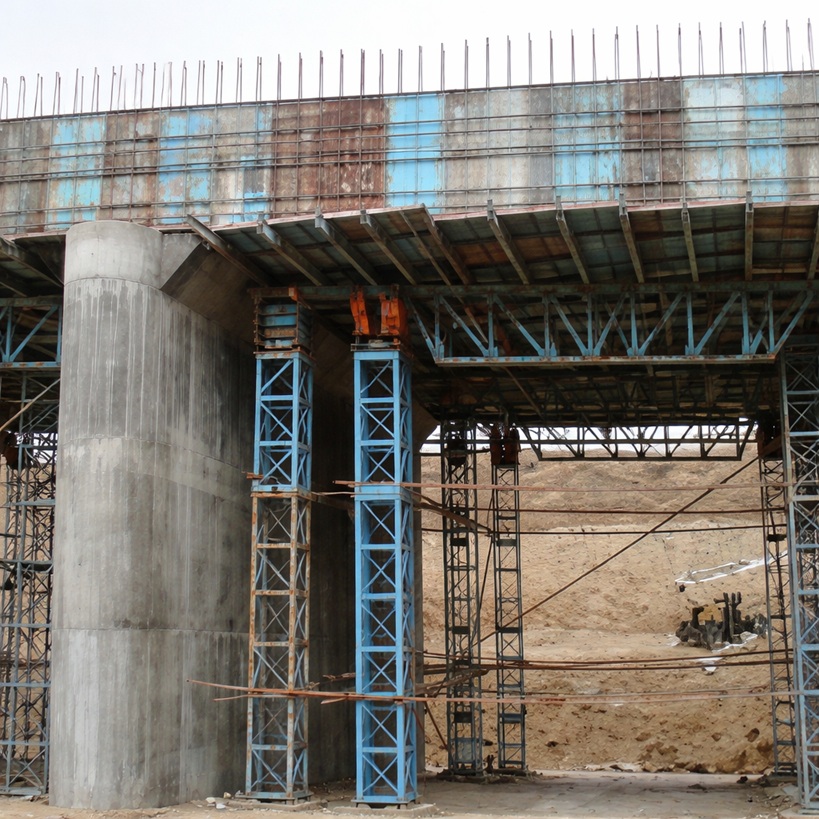
Repair and rehabilitation of RCC aqueducts involve a combination of conventional techniques and modern engineering solutions to restore structural integrity and improve performance.
Crack Repair and Sealing
Cracks are among the most common defects in RCC aqueducts and must be treated promptly to prevent further deterioration.
Techniques include:
- Epoxy injection for structural cracks to restore strength
- Polymer or cementitious sealants for non-structural cracks
- Routing and sealing for surface cracks
These methods help prevent water ingress and protect reinforcement.
Seepage and Waterproofing Treatment
Leakage and seepage reduce efficiency and accelerate structural deterioration.
Common methods:
- Application of waterproof coatings and membranes
- Crystalline waterproofing to block capillary pores
- Injection grouting to seal internal voids and joints
These measures improve water tightness and durability.
Structural Strengthening
Strengthening is required when the aqueduct is subjected to increased loads or shows signs of reduced capacity.
Widely used methods:
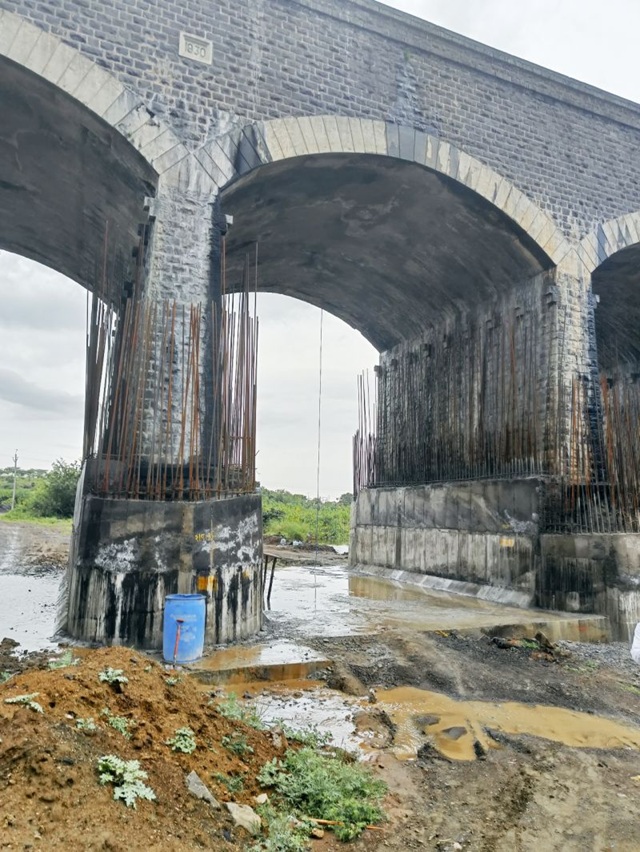
- RCC jacketing of troughs, piers, and supports
- Fiber Reinforced Polymer (FRP) wrapping for enhanced strength
- Steel plate bonding for additional reinforcement
- External post-tensioning where required
These techniques enhance load-carrying capacity and structural stability.
Surface Repair and Concrete Restoration
Damaged concrete surfaces must be repaired to restore durability and functionality.
Typical techniques:
- Shotcrete or guniting for surface strengthening
- Micro-concrete for repairing spalled or damaged sections
- Use of repair mortars with high bonding strength
This improves resistance to environmental and hydraulic stresses.
Corrosion Protection
Corrosion of reinforcement is a major issue in water-retaining structures.
Preventive measures:
- Application of anti-corrosion coatings
- Use of corrosion inhibitors
- Cathodic protection systems
These techniques significantly extend the life of the structure.
Joint Rehabilitation
Expansion and construction joints are important points prone to leakage and failure.
Rehabilitation methods:
- Replacement of damaged joint fillers and sealants
- Installation of water stops
- Sealing joints with flexible waterproof materials
Proper joint treatment ensures watertightness and accommodates movement.
Foundation Stabilization
Foundation issues can lead to misalignment and structural distress.
Common solutions:
- Pressure grouting to strengthen foundation soil or rock
- Underpinning of piers in case of settlement
- Drainage improvement to reduce uplift pressure
These measures restore stability and prevent further settlement.
Hydraulic Performance Improvement
Improving flow efficiency is also an important part of rehabilitation.
Measures include:
- Smoothing of trough surfaces
- Application of abrasion-resistant linings
- Removal of obstructions and deposits
This ensures efficient and uninterrupted water flow.
Use of Modern Materials
Modern materials play a significant role in enhancing the durability and performance of repaired aqueducts.
Examples include:
- Fiber Reinforced Polymer (FRP) composites
- High-performance and self-compacting concrete
- Polymer-modified repair mortars
- Geosynthetic liners for waterproofing
These materials offer superior strength, durability, and resistance to environmental damage.
Challenges in RCC Aqueduct Rehabilitation
Rehabilitation of aqueducts is complex and involves several practical challenges.
Major challenges include:
- Difficulty in accessing elevated or water-filled sections
- Maintaining water supply during repair works
- High cost of large-scale rehabilitation
- Ensuring quality control in repair materials and workmanship
- Environmental and safety considerations
- Requirement of skilled labor and specialized equipment
Proper planning and execution are essential to overcome these challenges.
Conclusion
Repair and rehabilitation of RCC aqueducts are essential to ensure the safety, reliability, and efficiency of water conveyance systems. Selecting the right contractor for such works is a important decision, as it directly impacts the quality, durability, and long-term performance of the structure. As aqueducts age and hydraulic demands increase, the importance of timely maintenance and modernization becomes even more significant. Through proper condition assessment, appropriate repair techniques, and the use of advanced rehabilitation strategies, the service life of RCC aqueducts can be substantially extended while minimizing the risk of structural failure and operational disruptions.
Image Credit: Linkedin,