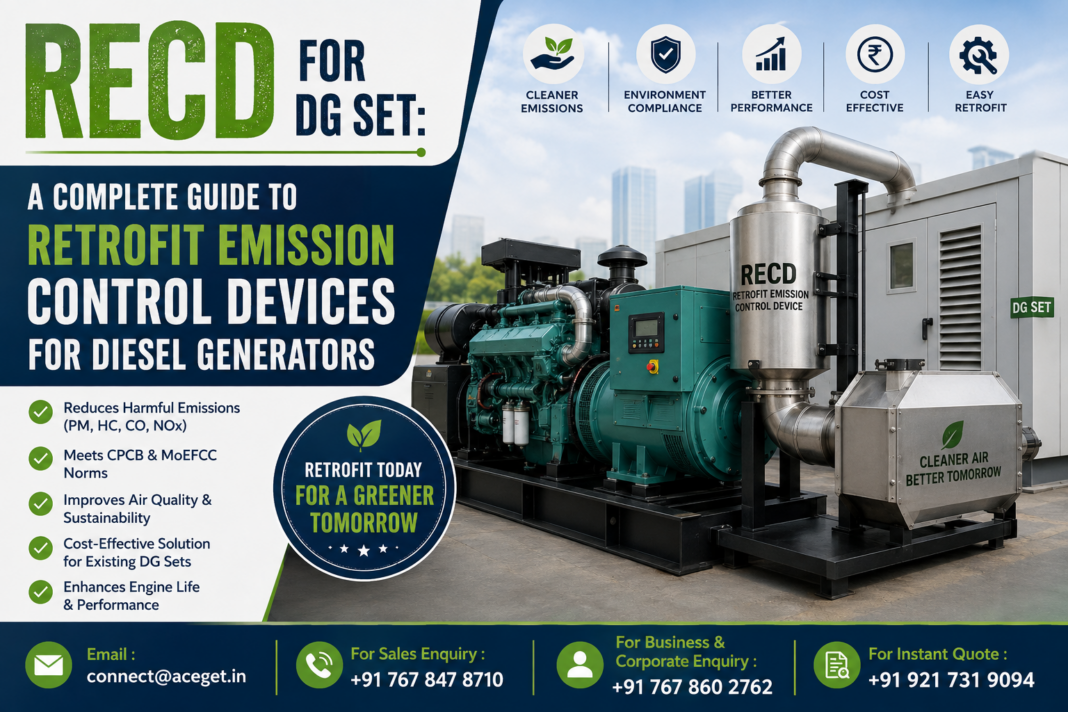
Diesel generator (DG) sets are widely used across industries, commercial buildings, hospitals, data centers, and residential complexes as a reliable backup power source. However, diesel generators release harmful pollutants such as particulate matter (PM), carbon monoxide (CO), hydrocarbons (HC), and nitrogen oxides (NOx), which can impact air quality. To reduce these emissions and comply with environmental regulations, industries are increasingly adopting RECD for DG set solutions.
A Retrofit Emission Control Device (RECD) is an advanced emission control system installed on existing diesel generator exhaust systems to reduce harmful pollutants without replacing the complete DG set. It is a cost-effective solution that helps businesses maintain compliance with emission standards while continuing to use their existing power backup systems.
What is RECD for DG Set?
RECD for DG set stands for Retrofit Emission Control Device for Diesel Generator sets. It is a pollution control technology designed to capture and reduce particulate emissions generated during diesel combustion.
Unlike traditional exhaust systems, RECD uses filtration and treatment mechanisms to trap harmful particles before they are released into the atmosphere. These devices are installed in the exhaust line of existing DG sets, making them suitable for upgrading older generators.
The main purpose of RECD installation is to:
- Reduce particulate matter emissions
- Improve air quality around DG operating areas
- Help businesses follow pollution control guidelines
- Extend the usability of existing diesel generators
Why is RECD Required for DG Sets?
Diesel generators are essential for uninterrupted power supply, but their emissions can contribute to environmental pollution. Governments and pollution control authorities have introduced stricter emission norms to control air pollution from diesel-powered equipment.
Installing RECD for DG set helps organizations meet these requirements without investing in a completely new generator. It provides an economical approach to emission reduction while maintaining the performance and reliability of the DG system.
Some major reasons for installing RECD include:
1. Compliance With Environmental Regulations
Industries and commercial establishments operating DG sets must follow emission control guidelines issued by regulatory authorities. RECD helps reduce emissions and supports compliance with applicable pollution control requirements.
2. Reduced Particulate Matter Emissions
The primary function of an RECD system is controlling particulate matter produced during diesel combustion. The device captures soot and other fine particles, reducing their release into the environment.
3. Cost-Effective Upgrade Solution
Replacing an existing DG set with a newer emission-compliant model can be expensive. RECD provides a practical alternative by upgrading the exhaust system of existing generators.
4. Better Environmental Performance
By reducing harmful exhaust emissions, RECD contributes to cleaner surroundings and supports sustainable energy practices.
How Does RECD Work?
A RECD for DG set is installed between the diesel generator exhaust outlet and the final exhaust discharge point. The device uses advanced filtration technology to capture pollutants from exhaust gases.
The working process generally involves:
- Exhaust gases produced by the DG engine enter the RECD unit.
- The filtration system captures particulate matter and soot particles.
- Cleaner exhaust gases pass through the outlet.
- The collected particles are managed through cleaning or maintenance procedures.
Different RECD systems may use technologies such as diesel particulate filters (DPF), catalytic converters, or other advanced filtration methods depending on the generator capacity and emission requirements.
Benefits of Installing RECD for DG Set
Businesses across different sectors can benefit from installing retrofit emission control devices. Some key advantages include:
Improved Air Quality
RECD significantly reduces harmful particles released from diesel exhaust, helping create a cleaner environment.
Easy Installation
Since RECD systems are designed for existing generators, installation is usually faster compared to replacing complete DG equipment.
Lower Operational Costs
Upgrading an existing DG set with an emission control device can reduce the need for purchasing new equipment.
Supports Sustainable Operations
Companies implementing emission reduction technologies demonstrate their commitment toward environmental responsibility.
Suitable for Various DG Applications
RECD solutions can be used in:
- Manufacturing facilities
- Hospitals
- Commercial buildings
- Construction sites
- Educational institutions
- Data centers
- Residential complexes
Factors to Consider Before Choosing an RECD System
Selecting the right RECD for DG set requires careful evaluation of several factors, including:
DG Set Capacity
The RECD system should match the power capacity and exhaust flow requirements of the diesel generator.
Emission Reduction Requirements
Different applications may require different levels of emission control. Choosing a suitable device ensures effective pollution reduction.
Maintenance Requirements
Regular inspection and maintenance help maintain the efficiency and performance of the RECD system.
Quality and Certification
Organizations should choose reliable RECD manufacturers that provide tested and compliant solutions.
Maintenance of RECD for DG Set
Proper maintenance is essential to ensure long-term performance. Common maintenance practices include:
- Regular inspection of filters
- Cleaning accumulated particulate matter
- Checking exhaust pressure levels
- Monitoring emission performance
- Following manufacturer maintenance schedules
A well-maintained RECD system ensures consistent emission reduction and prevents unnecessary downtime.
RECD vs Replacement of DG Set
Many organizations face the decision of whether to replace an old diesel generator or install an emission control device. While new DG sets may offer updated technology, replacement involves higher investment, installation time, and disposal challenges.
A retrofit solution allows businesses to improve emission performance while continuing to use their existing generators. This makes RECD for DG set a practical choice for organizations looking for an affordable pollution control solution.
Future of RECD Technology
With increasing focus on environmental protection and cleaner industrial operations, the demand for retrofit emission control technologies is expected to grow. Businesses are adopting RECD solutions to reduce their environmental impact while maintaining reliable backup power systems.
As emission regulations become more advanced, RECD technology will continue to play an important role in improving diesel generator efficiency and reducing air pollution.
Conclusion
RECD for DG set is an effective solution for controlling diesel generator emissions and improving environmental performance. By installing a Retrofit Emission Control Device, organizations can reduce harmful pollutants, meet emission requirements, and extend the operational life of existing DG systems.
For industries and businesses seeking a practical approach to pollution control, RECD offers a reliable, economical, and sustainable way to upgrade diesel generator operations.