
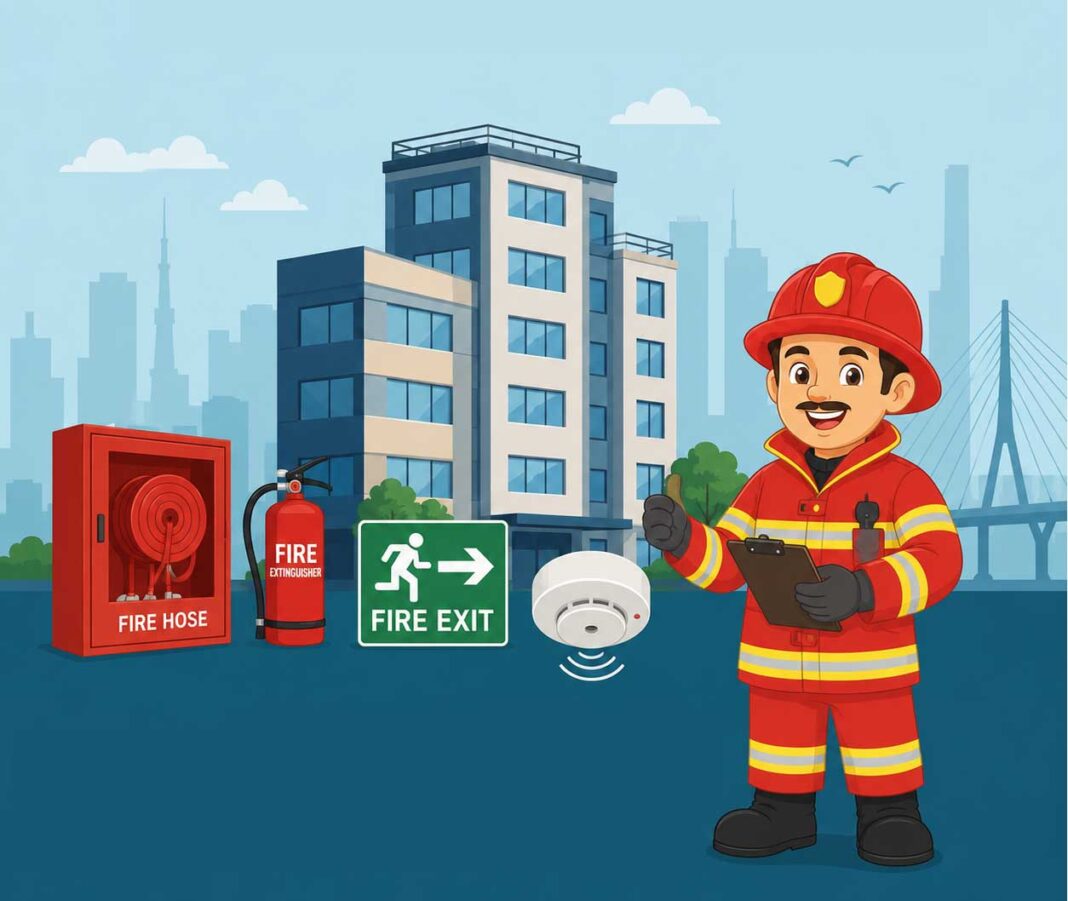
In a significant overhaul of India’s building regulatory framework, the government has replaced the National Building Code (NBC) with a new system titled National Building Construction Standards (NBCS). The newly notified standards aim to shift the approach from prescriptive compliance to a more flexible, performance-oriented framework, while also redefining how critical aspects such as fire and life safety are treated.
Why NBC Was Replaced
The transition from NBC to NBCS was driven largely by regulatory and legal concerns. Although NBC was technically voluntary, the use of the term “code” created widespread confusion, often leading stakeholders to assume it was legally binding. This misunderstanding resulted in disputes and litigation, with courts questioning builders and authorities over adherence.
To address this issue, the Deregulation Cell under the Cabinet Secretariat recommended replacing the code with a standard-based framework. The intent was to reduce ambiguity and create a system that acts as a guiding reference rather than a mandatory rulebook.
Fire and Life Safety: Advisory, Not Mandatory
One of the most critical and debated aspects of NBCS is the treatment of fire and life safety provisions. Initially, the Deregulation Cell had suggested excluding this section altogether. However, due to strong objections from fire safety experts, it was ultimately retained.
That said, the nature of these provisions has undergone a fundamental shift. Under NBC, fire safety clauses used the term “shall,” indicating mandatory compliance. In NBCS, this has been replaced with “should,” significantly reducing enforceability and making these provisions advisory.
The NBCS document explicitly states that “fire and life safety” is meant only for “guidance and referral for state govt and local authority in respect of fire safety in buildings considering that ‘fire services is a state subject and a municipal function’ as per the Constitution.” This marks a clear shift of responsibility from a centralized guideline to decentralized implementation.
Key Change: Height Threshold Increased to 24 Metres
- The new National Building Construction Standards (NBCS) increases the height threshold for mandatory fire and life safety compliance from 15 metres to 24 metres
- Under the earlier National Building Code of India (NBC), many mid-rise residential buildings fell within strict safety provisions
- With the revised limit, a large segment of mid-rise buildings now falls outside direct regulatory coverage
What this means:
This shift significantly changes the safety landscape in urban housing. Buildings between 15 and 24 metres—previously regulated—may now depend on separate or evolving state-level rules. Experts warn that this could create gaps in safety enforcement, especially given past fire incidents in buildings within this height range.
Greater Responsibility for States and Local Authorities
- NBCS places stronger emphasis on decentralised governance of construction norms
- State governments and urban local bodies are now expected to:
- Frame detailed building regulations
- Define height and spatial requirements
- Establish enforcement and compliance mechanisms
- The Bureau of Indian Standards (BIS) provides the framework, but implementation lies with local authorities
S. K. Dheri, heading the fire safety committee at BIS, clarified that the standards act as a guiding framework, while ensuring structural and occupant safety is the responsibility of states and municipalities.
Why This Shift Matters
- Moves India toward a federal, flexible regulatory model rather than a uniform national code
- Allows region-specific adaptation based on urban density, infrastructure, and risk factors
- However, it also creates a need for:
- Stronger local governance capacity
- Clear enforcement systems
- Consistent safety benchmarks across states
In essence, while NBCS provides greater flexibility, it also demands higher accountability and technical preparedness at the state and city level to maintain safety standards.

Shift to Performance-Based Approach
The NBCS document notes that the nature of standards and codes has evolved “from a prescriptive regime, under which states and local authorities required handholding, to a more performance-oriented outlook, giving ample scope for innovation and decision-making.”
This shift is designed to accommodate changes that have taken place since the last NBC revision in 2016, including reduced per capita land availability, increasing infrastructure demands, changing socio-economic conditions, and advancements in construction technology.
By focusing on outcomes rather than rigid specifications, NBCS allows engineers, architects, and developers greater flexibility in choosing materials and methods that meet performance goals.
Concerns Raised by Experts
Despite its intended advantages, the new framework has raised several concerns among experts. One key issue is the capacity of municipal bodies to independently formulate and enforce detailed safety norms.
“While state fire authorities could earlier simply follow norms specified in NBC, now they have to make detailed provisions for compliance. It remains to be seen how this plays out,” an expert involved in the revision process noted.
Additionally, Ajit Kumar SM, a committee member and president of the Karnataka Professional Civil Engineers Act Steering Consortium, warned about potential inconsistencies. He highlighted that increased state-level variation could result in uneven safety standards across regions.
He also pointed to rising liability concerns for professionals, noting that without strong regulatory backing, architects and engineers may face greater risks, potentially affecting both professional integrity and public safety.

Way Forward
The introduction of National Building Construction Standards marks a major transition in India’s construction regulatory landscape. By replacing the National Building Code, the government aims to eliminate legal ambiguity, promote flexibility, and encourage innovation.
However, the move also places significant responsibility on state governments and local authorities to ensure that safety standards are not compromised. As implementation unfolds, the effectiveness of NBCS will depend on how well these bodies adapt to their expanded role while maintaining robust safeguards for public safety.
Info- Times of India






