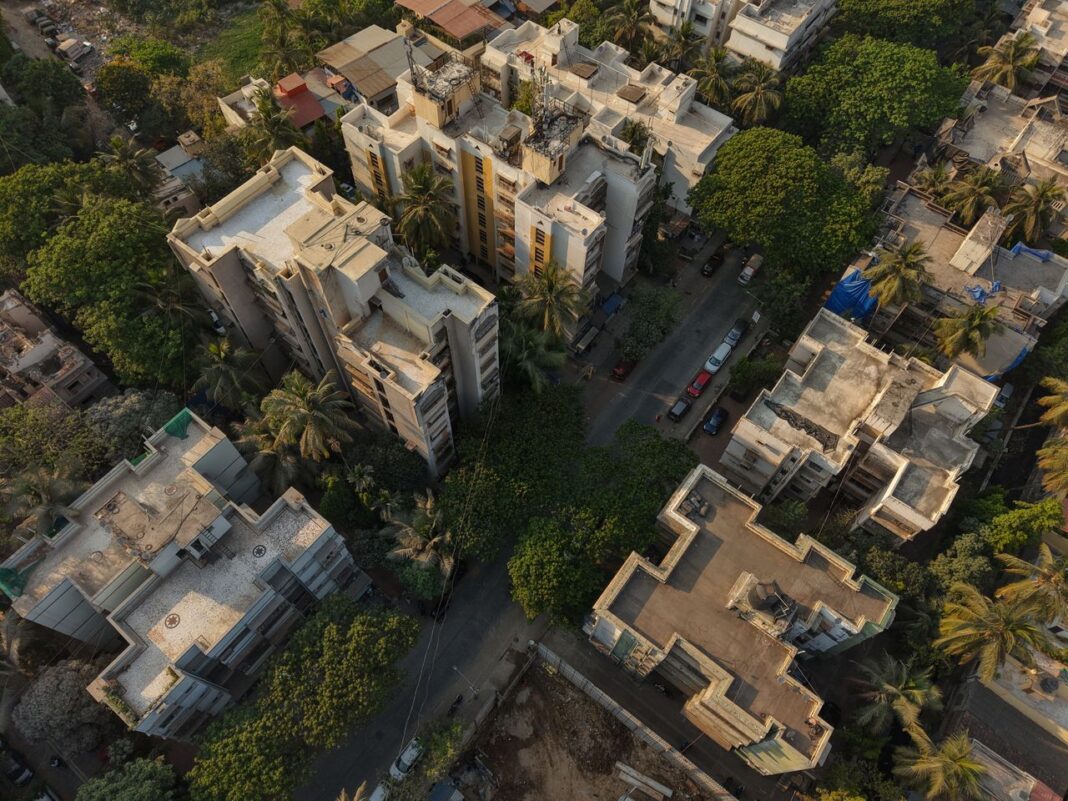
More than 5,000 suggestions and objections have been received on Maharashtra’s proposed housing society bylaws, with parking, electric vehicle (EV) charging facilities, maintenance charges and the powers of managing committees emerging as the main areas of feedback.
The Maharashtra government had invited suggestions from residents, housing societies and their federations after publishing the draft bylaws for more than 117,000 housing societies across the state.
According to officials from the cooperation department, most of the suggestions received so far concern parking provisions, EV charging stations, maintenance fees and the powers of managing committees.
EV Charging Rules Draw Feedback
The draft bylaws state that EV charging equipment installed exclusively by a member within their allocated parking space will be the financial responsibility of that member.
However, several suggestions have called for housing societies to take responsibility for making suitable spaces available, establishing common EV charging stations and maintaining them.
Parking provisions have also generated considerable feedback. Under the draft rules, common parking areas, visitor parking spaces, parking decks and mechanical parking systems are classified as common areas and facilities. These are to be maintained by the society at its cost.
Stakeholders have sought clearer categorisation of open parking slots, stilt parking and podium parking. They have also asked for these categories to be specifically addressed in the bylaws to avoid disputes over their use and maintenance.
Maintenance Charges Proposed on Equal Basis
The draft bylaws propose changes to the way housing societies calculate maintenance charges. Common service charges would be divided equally among flats, while water charges would be based on the number and size of taps or inlets.
The proposed equal-sharing model has drawn objections from owners of smaller flats, who have sought maintenance charges based on the area of individual units.
According to an official quoted by Hindustan Times, some larger flat owners have supported equal charges for common services such as security, electricity, housekeeping and management services. The official said the provision follows the applicable rules and law.
The proposed framework could therefore change how societies structure recurring charges for common facilities and services once the new bylaws are adopted.
Managing Committee Powers Under Review
Several suggestions have also sought to limit the powers of housing society managing committees.
According to officials, residents have raised concerns about committee powers relating to no-objection certificates (NOCs) and sale- and lease-related matters. Suggestions have called for these powers to be reduced or more clearly defined.
The feedback reflects demands from residents for clearer boundaries around the authority exercised by managing committees in housing society matters.
New Bylaws Expected by October
Shahaji Patil, joint registrar and head of the committee working on the bylaws, said around 90% of the work had been completed. The committee is expected to hold a few more meetings before finalising the provisions, with the new bylaws expected to be completed by the first week of October.
Most of the suggestions have reportedly come from Mumbai, the Mumbai Metropolitan Region (MMR) and Nashik. Officials said suggestions that fall within the scope of existing rules and laws have been considered, while those outside the legal framework could not be incorporated.
The new bylaws are also intended to provide greater clarity in areas where existing provisions have resulted in differing interpretations. Officials cited leakage-related issues in flats as one area where the current bylaws have grey areas.
Once published, housing societies will be required to adopt the new bylaws within three months. Societies seeking changes to specific provisions would also need approval from the registrar.
The proposed rules will have implications for day-to-day management of housing societies, particularly in areas such as parking, EV infrastructure, maintenance costs and the authority of managing committees.