Home additions are one of the most effective ways to increase living space, improve functionality, and enhance long-term property value. Whether it is an expanded kitchen, second-storey extension, family room, or garage conversion, an addition can transform how a home performs. However, unlike interior cosmetic renovations, additions involve major structural integration with the existing building.
That is where many projects become complicated.
A home addition is not simply new space attached to old space. It requires foundations, framing, load transfer, roof continuity, moisture protection, and code compliance to work as one stable structure. If these factors are not handled correctly, issues such as cracking, sagging, water intrusion, and uneven settlement may follow.
Understanding common structural challenges early can help homeowners plan smarter projects and avoid costly corrections later.
Matching the Existing Foundation
One of the most common challenges in home additions is connecting new foundations to an older structure. Existing homes may have shallow footings, aging concrete, minor settlement, or construction methods no longer commonly used. New additions, meanwhile, must meet current engineering and code standards.
If the new foundation is not properly designed in relation to the old one, differential movement can occur. This may appear as cracks where the addition meets the original home, sticking doors, uneven floors, or wall separation.
Solution
A proper site assessment and structural review should be completed before excavation begins. Soil conditions, existing footing depth, drainage, and the condition of the current foundation all need evaluation. In many projects, underpinning, stepped footings, or engineered connection details are used to improve compatibility between old and new structures.
Load-Bearing Wall Removal
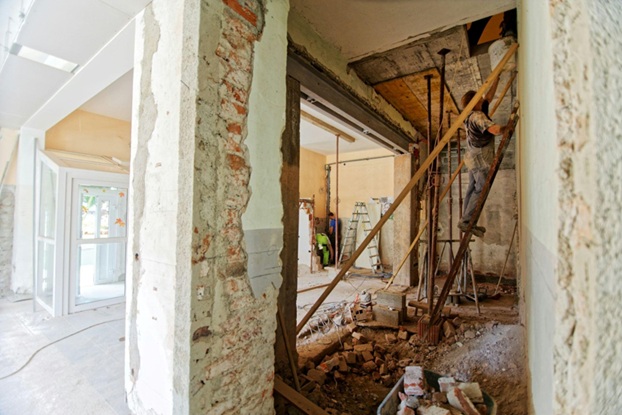
Many additions involve opening up the rear wall of the home to connect new and existing spaces. Homeowners often want large open-concept kitchen and family room layouts, but those walls frequently carry structural loads from upper floors or roof systems.
Removing a load-bearing wall without adequate support can lead to sagging floors, cracked drywall, roof deflection, and serious structural instability.
Solution
A structural engineer or qualified contractor should determine load paths before any demolition occurs. Beams made of steel, LVL, or engineered wood are commonly installed to redistribute loads safely. Temporary shoring is also essential during construction to protect the existing structure while changes are made.
Floor Level Differences Between Old and New Areas
Many homeowners are surprised to learn that the floor in a new addition may not naturally align with the existing home. Older homes may have settled over time, contain multiple floor transitions, or use framing dimensions that differ from current standards.
Even a small height difference can create awkward thresholds, visible slopes, and finish complications.
Solution
Detailed measurements during the planning phase are critical. Contractors often adjust joist sizing, beam placement, subfloor thickness, or finished floor assemblies to create smoother transitions. In some cases, slight level changes are intentional and handled with well-designed thresholds rather than abrupt steps.
Roof Tie-In Problems
Connecting a new roof to an existing one sounds simple until framing begins. Existing rafters may be undersized, roof slopes may not match modern preferences, and hidden damage may only be discovered once finishes are removed.
Poor roof integration can lead to leaks, trapped water, snow load issues, and awkward exterior appearance.
Solution
Roof tie-ins should be designed before construction starts, not improvised on site. Proper flashing systems, drainage planning, matching pitch where practical, and reinforcement of older framing members all help ensure a durable result. In some cases, rebuilding a portion of the existing roof creates a cleaner long-term solution than forcing a weak connection.
Inadequate Lateral Support
Homes are designed to resist not only gravity loads, but also wind movement and lateral forces. When walls are removed or expanded for an addition, the building may lose some of its original bracing strength.
This is especially important in large rear openings, second-storey additions, and projects with extensive window walls.
Solution
Engineered shear walls, steel moment frames, hold-down hardware, and modern fastening systems may be required to restore structural rigidity. These components are often hidden behind finishes, but they play a major role in long-term stability.
Moisture at the Connection Point
Where the original house meets the new addition is one of the highest-risk areas for water intrusion. Different wall assemblies, roof lines, flashing details, and foundation joints create multiple opportunities for leaks if workmanship is poor.
Water problems often remain hidden until mold, staining, or material deterioration appears.
Solution
Water management should be treated as a structural priority, not just a finishing detail. Membranes, flashing, drainage planes, sloped surfaces, and proper sealing methods must all be coordinated carefully. Experienced builders understand that durability often depends on the details nobody sees after completion.
For larger or more complex residential expansions, working with firms experienced in structural planning and execution, such as Grand Building & Contracting, can help reduce common risks tied to additions and major rebuilds.
Older Materials and Unknown Conditions
Once walls and ceilings are opened, surprises are common. Homeowners may discover undersized framing, outdated wiring, previous DIY modifications, water damage, or structural elements altered during past renovations.
These discoveries can affect budget, engineering, and schedule.
Solution
A contingency allowance should always be included in addition budgets. Selective demolition during pre-construction can also expose hidden conditions early. The more information gathered before full construction begins, the fewer reactive decisions are needed later.
Second-Storey Additions and Existing Capacity
Adding a second floor creates major new loads on walls and foundations originally designed for less weight. Not every home can support vertical expansion without reinforcement.
Solution
Engineers typically assess footings, bearing walls, beam spans, and framing conditions before approving upper-level additions. Reinforcement may involve foundation upgrades, new posts, beam installation, or wall strengthening. Skipping this step can compromise the entire structure.
Final Thoughts
Home additions can deliver meaningful lifestyle and property benefits, but they are structural projects first and design projects second. The visible finishes matter, but the hidden engineering determines whether the space performs well for decades.
Foundation compatibility, load transfer, roof integration, moisture control, and structural reinforcement should never be afterthoughts. When addressed properly during planning and construction, an addition can feel seamless, stable, and original to the home.
When ignored, the house tends to comment later. Usually through cracks.