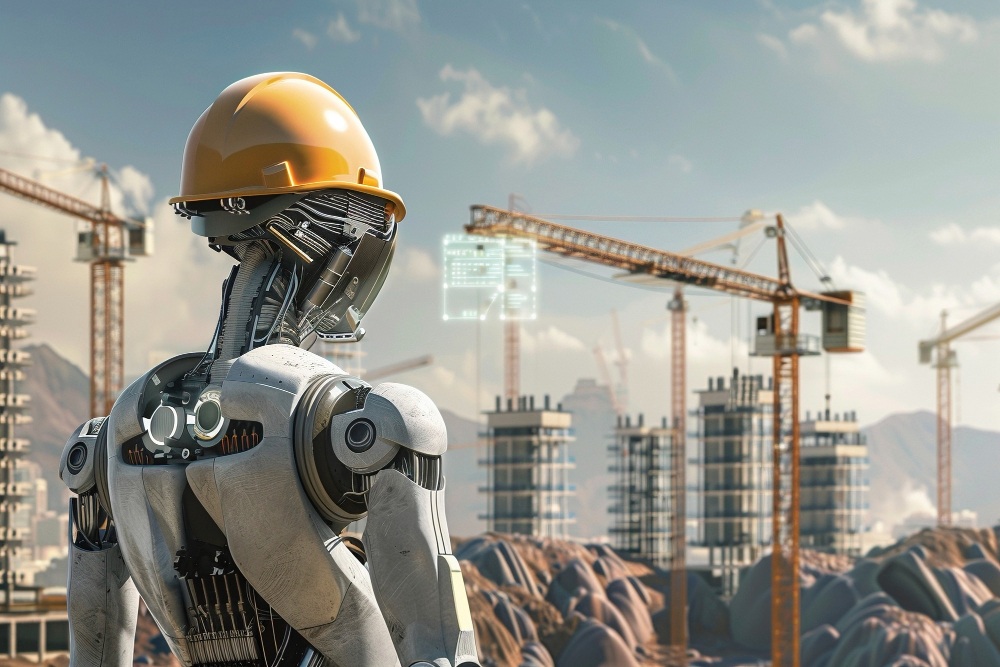

The construction industry was often perceived as slow to adopt innovation, in which projects usually take longer than scheduled and often go over budget. Today the same industry is undergoing a significant shift driven by Artificial Intelligence (AI). Starting from project planning to execution, AI has become a crucial step on how it is built, managed and the infrastructure is sustained. Today, it is more about building smarter, safer and sustainable rather than building faster. This transformation is a strategic backbone and a core business discipline for developers and consultants alike.
Predictive analytics and project planning
Traditionally, project planning depended heavily on manual estimations, historical data and a little human intuition. With predictive analysis, project planning has become more proactive, changing how construction projects are conceptualized. Moreover, AI- powered tools helps in enhancing decision making by processing vast datasets in real time. These tools can analyze land conditions, weather predictions, material costs and regulatory frameworks to provide highly accurate timelines and cost forecasts, reducing delays and budget overruns. Predictive analysis also allows stakeholders to identify delays and problems in advance even before the construction begins.
Enhancing On-Site Efficiency and Safety
Construction sites are complex environments and often dangerous where efficiency and safety is critical. AI- driven technologies such as drones, computer vision and IoT- enabled devices provide real time monitoring of activities. They can track movement of workers, detect unsafe practices and issue alerts to prevent accidents. This is important in an industry like construction where safety risks are high and compliance is non-negotiable. AI helps in minimizing human error and adherence to safety protocols as a result it is not only saving cost by saving lives. AI also monitors how the equipment is used and material is consumed and optimizes resource allocation with precision, reducing wastage and ensuring the project stays in schedule.
Driving Sustainability and Green Construction
In today’s construction landscape, sustainability is more than just a buzzword- it is crucial need. It helps in optimizing energy consumption during construction and analyzing environmental impact of materials. AI provides actionable insights to support sustainable decision making. Smart algorithms can suggest eco- friendly practices, help reduce carbon footprint and enhance energy efficient buildings. In a market where buyers and investors are increasingly becoming conscious of environmental impact, integrating AI to drive sustainable construction is becoming a competitive advantage.
Improving Post-Construction Asset Management
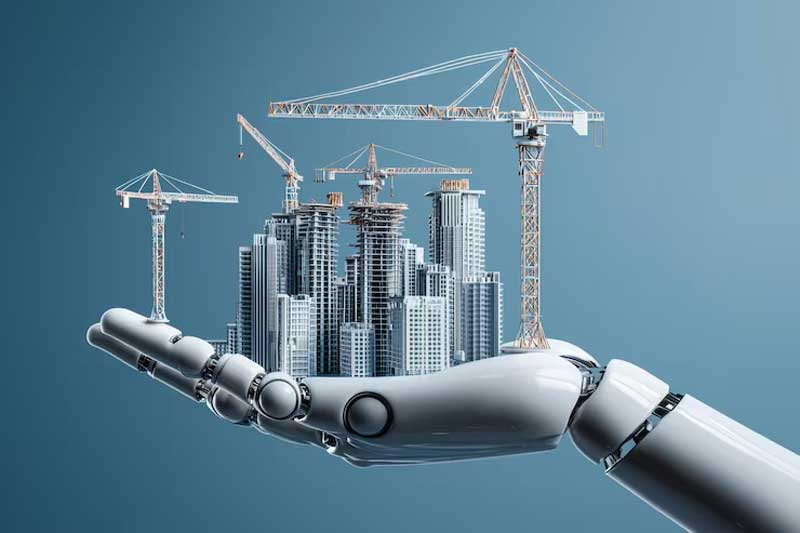
The role of AI does not end once a building is completed but it extends throughout the lifecycle of real estate assets. AI- enabled systems can be used to monitor building performance, predict maintenance requirements as well as extend the lifespan of critical infrastructure. Intelligent analytics continuously monitor system performance and environment conditions, allowing real- time adjustments. It turns a dumb pile of bricks into a smart machine that saves money, consumes less energy and makes a comfortable space for people inside.
Challenges in adopting AI
Every coin has two sides. Similarly, AI adoption in construction comes with its own set of challenges. High initial investment, lack of skilled workforce and resistance to change remain significant barriers. Every project is unique, variables like weather, soil conditions make it difficult to apply one AI model that fits all. These systems also rely highly on accurate, structured data and so data availability and quality remain concerns. Additionally, here might be a cultural resistance to change within the industry. The construction industry has long depended on traditional practices and experiential knowledge. Shifting mindsets towards technology- driven decisions might be time- taking. Simply put, it is important to see AI as not a replacement for human expertise but a powerful companion.
Conclusion
AI is here and shaping the real estate industry’s evolution. From planning to execution its impact is wide- ranging. The integration of AI is not just a technological advancement but a core strategic requirement. What was once an industry led by manual practices and reactive decision- making is now drifting towards a data- led, highly optimized ecosystem. Those who want to position themselves as leaders in a rapidly transforming market and gain operational efficiencies, need to embrace it promptly with a balanced approach.
With AI as a catalyst, buildings are not just being constructed but the future of real estate is being built and it will continue to push boundaries of what can be constructed. It is essential to stay relevant and competitive in a rapidly evolving industry.
About Author
Mr. Gaurav Mavi, Co-founder of BOP Group, is a seasoned real estate expert with over 20 years of industry experience. Known for his strategic vision and client-centric approach, he has played a pivotal role in shaping BOP into a leading real estate consultancy in India. Under his leadership, the company has introduced innovative financing and payment solutions, making homeownership more accessible. An MBA in Finance and Marketing, Mr. Mavi brings a strong blend of business acumen and market insight. He is widely recognized for driving growth, fostering industry professionalism, and delivering value-driven solutions across the real estate ecosystem.