Sustainability is no longer a parallel consideration in workplace design. It has become central to how organisations in India are planning and delivering office environments, driven by the increasing importance of ESG (Environmental, Social, and Governance) commitments.
Across the country, this shift is visible not just in intent, but in measurable change. According to Colliers India’s Office Outlook 2026, sustainability-led design is now a key driver of asset competitiveness, with climate-resilient and energy-efficient workplaces becoming a priority for both occupiers and investors. The scale of this transition is significant. Nearly two-thirds of India’s office stock, estimated at over 574 million sq. ft., is already green-certified, and more than 80% of new office supply is expected to follow the same path. Over time, green-certified buildings are projected to account for nearly 70–75% of total office stock in the country.
This is not just a shift in construction practices, but in how organisations define value. Workplaces are no longer seen as static, cost-driven environments. They are increasingly being treated as strategic assets that influence operational efficiency, employee experience, and long-term brand positioning. With Grade A office demand projected at 70–75 million sq. ft. in 2026, the preference is clearly moving toward higher-quality, sustainable spaces.
The growing influence of ESG is playing a decisive role in this transformation. Corporate occupiers today are not only expected to comply with sustainability norms, but also to demonstrate measurable impact. This is reflected in leasing trends as well. Industry data indicates that nearly 75% of office leasing in recent years has taken place in green-certified buildings, which also tend to achieve higher occupancy levels and command rental premiums. Sustainability, in this context, is no longer a differentiator, it is becoming a baseline expectation.
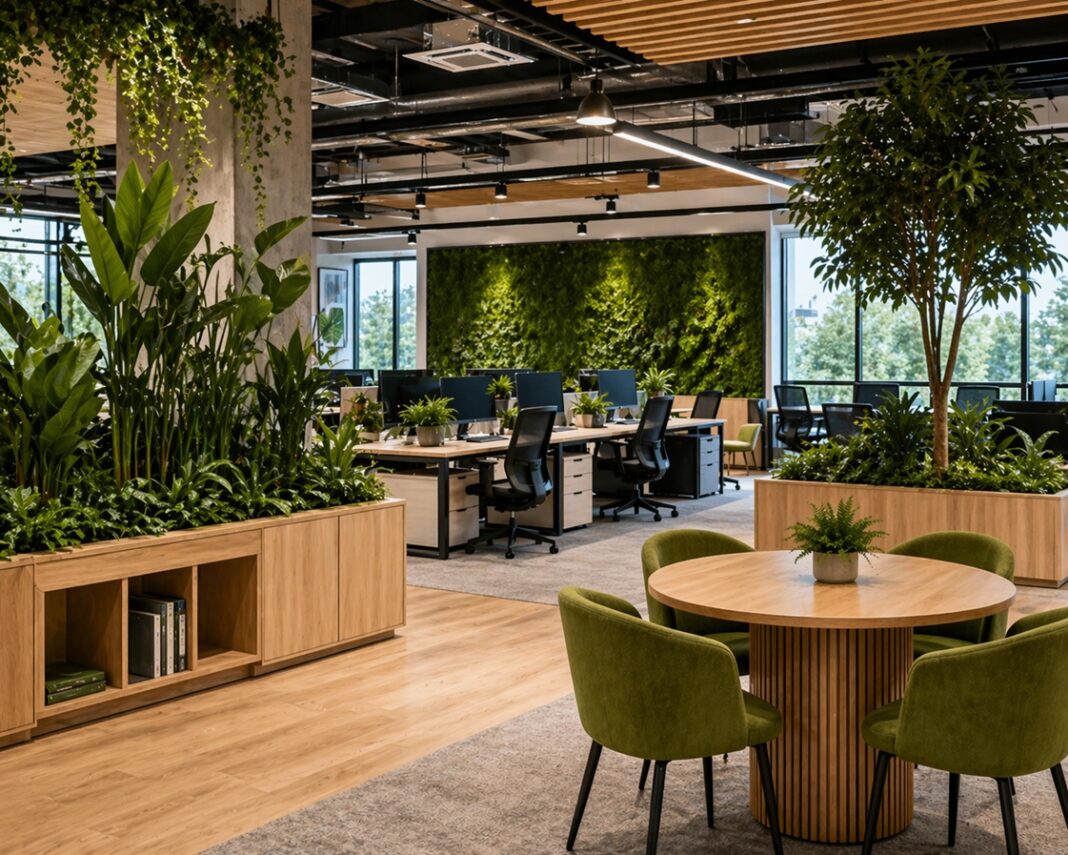
While much of the early focus has been on green buildings at a structural level, the conversation is now moving inward, towards the fit-out. Organisations are increasingly recognising that interior environments are where ESG commitments are truly experienced and measured on a day-to-day basis. This has led to a growing emphasis on energy-efficient lighting, optimised HVAC systems, and smart technologies that enable real-time monitoring and control. At the same time, there is a clear move toward flexible layouts that support evolving work patterns, reducing the need for frequent modifications and material waste.
India also presents a significant opportunity in this space through retrofitting. A large portion of the country’s office stock is over a decade old, and upgrading these spaces to meet current sustainability standards is becoming a priority. This shift is not only environmentally relevant, but also economically viable, as it enhances performance and extends the lifecycle of existing assets.
Material selection is emerging as another critical factor in sustainable fit-outs. There is a growing awareness around the impact of materials on both environmental outcomes and occupant health. The use of low-emission finishes, recycled and renewable resources, and locally sourced materials is becoming more common. These choices contribute to better indoor air quality while also supporting responsible sourcing practices. At a broader level, the construction and interiors sector plays a significant role in global emissions, making material decisions an important part of ESG implementation.
India’s progress in sustainable development further reinforces this momentum. According to the U.S. Green Building Council, the country ranks second globally in terms of LEED-certified building space, with over 7,500 certified projects. This reflects both the scale of adoption and the growing maturity of sustainability practices within the built environment.
At the same time, sustainability is increasingly being linked to human experience. Workplaces today are being designed to support well-being through improved air quality, access to natural light, and more flexible, ergonomic environments. These factors are not just desirable, they are becoming essential. There is a clear correlation between well-designed, sustainable spaces and higher levels of employee engagement, satisfaction, and productivity.
The business case for sustainable office fit-outs is therefore becoming stronger. Organisations are recognising that such environments not only reduce long-term operating costs but also enhance employee retention and strengthen brand perception. In a competitive market, workplace design is increasingly being used as a strategic tool to attract both talent and investment.
Looking ahead, the trajectory is clear. India’s office market continues to grow, with leasing activity remaining strong across major cities. At the same time, sustainability, flexibility, and technology are emerging as the defining factors of workplace design. ESG is no longer an external requirement; it is shaping core business decisions.
The demand for sustainable office fit-outs is not a passing trend. It represents a structural shift in how workplaces are conceived, designed, and delivered. For organisations, the challenge lies in translating ESG intent into meaningful, measurable outcomes within their spaces. For the industry, it is an opportunity to redefine the role of design, ensuring that it contributes not just to aesthetics or functionality, but to long-term environmental and human impact.
Ultimately, the future of workplace design in India will be defined by how effectively sustainability is integrated, not as an addition, but as a foundation.
Authored By Nikhil Khadilkar, Studio Head, Eleganz Interiors Limited
Architecture & Interior Design | Multidisciplinary Design Practice