What is Early-Age Cracking in Concrete?
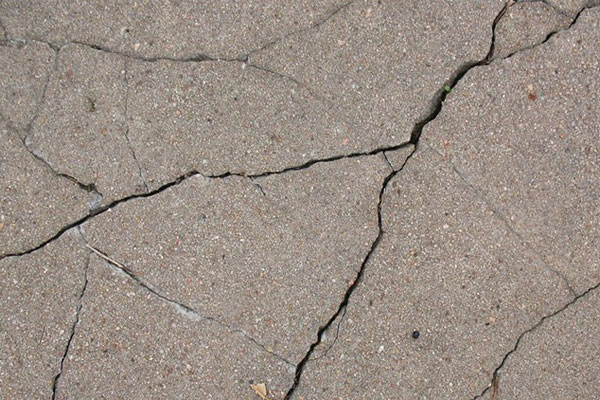
Early-age cracking refers to the formation of cracks in fresh or young hardened concrete, typically within the first 24 hours to 7 days after casting. It occurs before concrete has achieved sufficient tensile strength to resist internal stresses caused by shrinkage, temperature variations, and external restraint. Unlike long-term cracking, early-age cracks are mainly caused by rapid volume changes and restraint conditions rather than structural overload.
Types of Early-Age Cracking
1. Plastic Shrinkage Cracking
Plastic shrinkage cracks occur when concrete is still in its plastic state. Rapid evaporation of surface water leads to shrinkage, while the underlying concrete remains plastic, creating tensile stresses on the surface.
2. Plastic Settlement Cracking
This type occurs when solid particles in fresh concrete settle under gravity, and bleeding water rises to the surface. If movement is restrained by reinforcement or formwork, cracks form along the restraint points.
3. Thermal Cracking
Thermal cracks occur due to temperature differences between the interior and surface of concrete. Hydration of cement generates heat, and when this heat dissipates unevenly, tensile stresses develop.
4. Drying Shrinkage Cracking
Although more common at later stages, early drying shrinkage can begin soon after setting, especially in low humidity or windy conditions.
5. Autogenous Shrinkage Cracking
This occurs in low water-cement ratio concrete where internal water is consumed during hydration, leading to self-desiccation and volume reduction.

Causes of Early-Age Cracking in Concrete
Early-age cracking is a complex phenomenon influenced by material properties, environmental conditions, and construction practices.
1. Rapid Evaporation of Water
High temperature, low humidity, and wind speed accelerate evaporation from the concrete surface, leading to plastic shrinkage.
2. High Water-Cement Ratio Fluctuations
While higher water content may improve workability, it increases bleeding and shrinkage potential, making concrete more vulnerable.
3. Poor Curing Practices
Inadequate curing reduces moisture retention, causing rapid drying and shrinkage stresses.
4. Temperature Gradients
Heat of hydration causes internal temperature rise, and rapid cooling at the surface leads to thermal stress differentials.
5. Restraint Conditions
External restraints such as reinforcement bars, subgrade friction, or formwork restrict free movement of concrete, increasing tensile stresses.
6. Cement Characteristics
Different cement compositions influence heat of hydration and shrinkage behavior. High-heat cement tends to increase thermal cracking risk.
7. Improper Mix Design
Lack of balance between cement, water, and aggregates leads to unstable concrete prone to cracking.
8. Inadequate Compaction
Poor vibration leads to voids, weak zones, and uneven stress distribution.
Mechanism of Early-Age Cracking
Early-age cracking occurs due to the imbalance between tensile stress and tensile strength development in young concrete.
At early stages:
- Concrete is weak in tension
- Moisture loss or temperature change induces shrinkage
- Restraint prevents free deformation
When induced stress exceeds the tensile strength of concrete, cracks initiate. Once formed, these cracks may propagate and become permanent weaknesses in the structure.
Effects of Early-Age Cracking on Structures
Early-age cracks may appear minor but have serious long-term consequences:
1. Increased Permeability
Cracks provide pathways for water and aggressive chemicals, accelerating corrosion of reinforcement.
2. Reduced Durability
Exposure to moisture, chlorides, and sulfates reduces service life.
3. Corrosion of Reinforcement
Ingress of oxygen and chlorides leads to steel corrosion, expansion, and further cracking.
4. Loss of Structural Integrity
In severe cases, cracks can affect load distribution and stiffness.
5. Aesthetic Issues
Visible cracking reduces surface quality and architectural appearance.
Prevention Techniques for Early-Age Cracking
Preventing early-age cracking requires a combination of good design, proper material selection, and careful construction practices.
1. Proper Mix Design Optimization
A well-designed mix is the first step in crack prevention.
- Maintain optimal water-cement ratio
- Use well-graded aggregates
- Avoid excessive cement content
- Ensure proper proportioning of fines
Supplementary Cementitious Materials (SCMs) like fly ash, slag, and silica fume help reduce heat of hydration and shrinkage.
2. Effective Curing Methods
Curing is the most critical factor in preventing early-age cracking.
Recommended methods:
- Water ponding
- Wet burlap covering
- Curing compounds
- Plastic sheet coverings
Proper curing ensures hydration continues and prevents rapid moisture loss.
3. Temperature Control in Concrete
Temperature control is essential, especially in mass concrete structures.
- Use chilled water or ice in mixing
- Cool aggregates before batching
- Avoid pouring during peak heat hours
- Use low-heat cement for large pours
This reduces thermal gradients and internal stresses.
4. Reducing Evaporation Rate
To prevent plastic shrinkage cracks:
- Use windbreaks on site
- Spray fogging systems
- Apply evaporation retarders
- Schedule concreting during cooler periods
5. Proper Reinforcement Detailing
Reinforcement helps distribute stresses and control crack widths.
- Provide adequate minimum reinforcement
- Use proper spacing of bars
- Avoid congestion that restricts concrete flow
- Ensure correct cover thickness
6. Use of Fibers in Concrete
Fiber-reinforced concrete improves crack resistance.
- Polypropylene fibers reduce plastic shrinkage cracking
- Steel fibers improve tensile capacity
- Synthetic fibers enhance ductility
7. Controlled Placement and Compaction
Good construction practices significantly reduce cracking risks.
- Ensure proper vibration to remove air voids
- Avoid segregation during pouring
- Place concrete in layers for uniform compaction
8. Use of Shrinkage-Reducing Admixtures
Chemical admixtures help minimize shrinkage strains.
- Shrinkage-reducing agents
- Plasticizers and superplasticizers
- Air-entraining agents
9. Joint Planning and Crack Control Systems
Proper joint design reduces random cracking.
- Contraction joints
- Expansion joints
- Control joints in slabs and pavements
These joints guide crack formation in controlled locations.
10. Subgrade Preparation and Restraint Reduction
A well-prepared base reduces restraint forces.
- Use smooth, uniform subgrade
- Apply slip membranes where required
- Reduce friction between slab and base
Repair of Early-Age Cracks
If cracks appear, timely repair is essential to prevent long-term damage.
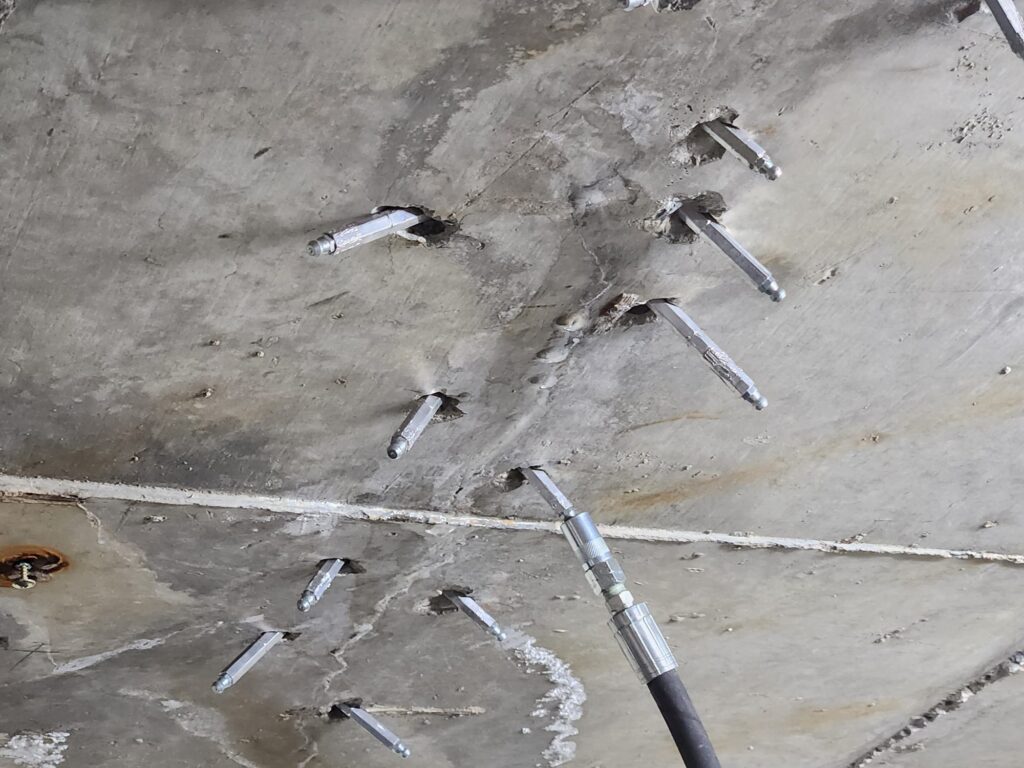
1. Epoxy Injection
Used for structural cracks to restore monolithic behavior.
2. Surface Sealing
Protects against moisture ingress in non-structural cracks.
3. Polymer Modified Mortars
Used for patch repairs and surface restoration.
4. Routing and Sealing
Cracks are widened slightly and filled with sealant materials.
Conclusion
Early-age cracking in concrete is a preventable but critical issue in construction. It results primarily from shrinkage, thermal effects, poor curing, and restraint conditions. By adopting proper mix design, controlled construction practices, effective curing, and modern reinforcement techniques, engineers can significantly reduce the risk of cracking.
In modern infrastructure projects, ranging from buildings to bridges and industrial structures, crack control at early stages ensures durability, safety, and long service life. Prevention is always more economical and effective than repair, making early-age crack control a fundamental aspect of quality concrete construction.