
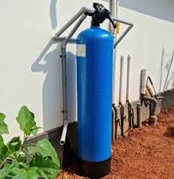
If you rely on well water, you already know it’s a different experience compared to municipal supply. It’s yours, it’s untreated, and it comes with its own set of quirks. Sometimes it tastes fine. Other times, you start noticing stains in the sink, a metallic smell, or that faint orange tint that doesn’t quite go away.
That’s usually when the question comes up: is this iron, and do I actually need to do something about it?
The short answer is, it depends. Not every well has problematic iron levels, but when it does, it tends to show up in ways that affect both water quality and daily use.
What iron in well water actually looks like
Iron isn’t always obvious at first. In some cases, the water looks clear when it comes out of the tap but turns reddish or brown after sitting for a while. That’s oxidized iron reacting with air.
Other times, the signs are more immediate:
- Orange or rust-colored stains in sinks, tubs, and toilets
- Metallic taste in drinking water
- Laundry coming out with yellow or brown marks
- Slimy buildup in pipes or fixtures
There’s also a type called iron bacteria, which creates a sticky, sometimes foul-smelling residue. It’s not usually harmful, but it can clog plumbing and affect water flow.
When iron becomes a problem
A small amount of iron in water isn’t unusual. In fact, it’s one of the most common well water issues in rural areas.
Problems tend to start when concentrations rise above about 0.3 milligrams per liter. That’s the point where staining and taste become noticeable.
Higher levels can lead to:
- Frequent plumbing maintenance
- Reduced efficiency of appliances like water heaters
- Clogged pipes or reduced water pressure
So while iron isn’t typically a health concern at these levels, it becomes a practical issue fairly quickly.
Do you actually need an iron filter?
Not always. The need depends on both the iron level and how it’s affecting your water use.
If you’re dealing with visible staining, unpleasant taste, or buildup in fixtures, an iron filter is usually the most effective long-term solution.
If the issue is minor, some homeowners choose to manage it with regular cleaning or by tolerating small inconveniences. But that tends to work only up to a point.
Testing your water is the first step. Without knowing the concentration and type of iron present, it’s difficult to choose the right approach.
At that point, the focus usually shifts from whether you need a solution to who can properly size and install it. Choosing the right iron filter for well water often depends on accurate testing, system design, and local water conditions, so working with an experienced provider can make a noticeable difference in long-term performance.
Types of iron and why they matter
Not all iron behaves the same way, and this affects how it’s treated.
Ferrous iron (clear-water iron)
This type is dissolved in water and not visible at first. It becomes noticeable only after oxidation.
Ferric iron (red-water iron)
This is already oxidized and appears as visible particles. It’s easier to filter but more noticeable immediately.
Iron bacteria
This isn’t just iron, but microorganisms that feed on it. It requires a different treatment approach, often involving disinfection alongside filtration.
Understanding which type you’re dealing with helps determine whether a basic filter is enough or if you need a more advanced system.
How iron filters work
Iron filters typically use oxidation and filtration to remove iron from water.
In simple terms, the system converts dissolved iron into solid particles and then filters those particles out. Some systems use air injection, while others rely on chemical oxidizers or specialized media.
The process is automatic in most modern systems, with periodic backwashing to clean the filter media and maintain performance.
Maintenance is still required, but it’s generally manageable once the system is set up correctly.
Alternative solutions and when they make sense
Iron filters aren’t the only option, though they are often the most comprehensive.
In some cases:
- Water softeners can remove small amounts of iron
- Sediment filters can handle visible particles but not dissolved iron
- Shock chlorination can address iron bacteria temporarily
These solutions can work depending on the situation, but they often serve as partial fixes rather than complete ones.
Signs it’s time to take action
If you’re unsure whether to invest in an iron filter, a few indicators usually make the decision clearer:
- Stains keep returning despite cleaning
- Water taste or odor affects daily use
- Appliances show signs of buildup or reduced efficiency
- Plumbing requires frequent attention
When these issues become consistent, the cost and effort of managing them manually often outweigh the investment in proper filtration.
Final thoughts: practical improvements over perfect water
Well water doesn’t have to be perfect, but it should be usable without constant frustration.
Iron is one of those issues that starts small and gradually becomes more noticeable. Addressing it early can save time, reduce maintenance, and improve overall water quality.
An iron filter isn’t always necessary, but in many rural settings, it ends up being one of the more practical upgrades you can make.
The key is understanding your specific water conditions first. Once you have that, the decision becomes much more straightforward.






