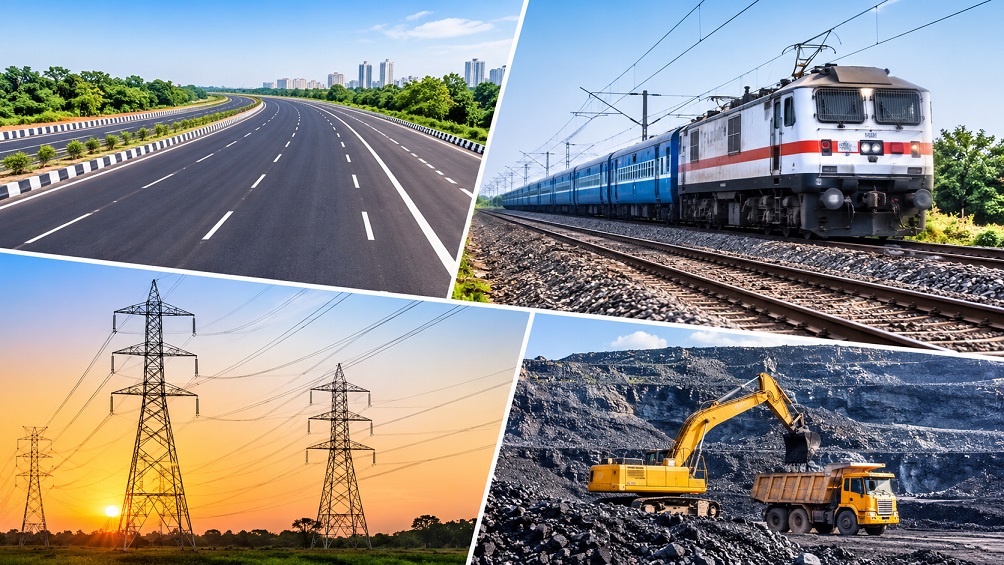
Prime Minister Narendra Modi has reviewed five major infrastructure projects involving a combined investment of more than Rs 78,000 crore across the road, railway, power and coal sectors during the 55th meeting of PRAGATI (Pro-Active Governance and Timely Implementation). The meeting was held at Seva Teerth on November 25, 2026, as part of the Centre’s efforts to monitor infrastructure development, address implementation challenges and accelerate the completion of key projects.
During the meeting, the Prime Minister assessed the progress of five critical infrastructure projects and reviewed issues affecting their execution. The projects cover multiple sectors, including road transport, railways, power generation and coal, reflecting the government’s focus on coordinated infrastructure development.
PRAGATI is an Information and Communication Technology (ICT)-enabled governance platform that facilitates direct interaction between the central government, state governments and project authorities. It is designed to monitor major projects, resolve administrative bottlenecks and ensure timely implementation through regular reviews at the highest level.
Focus on Timely Infrastructure Project Execution
During the review, PM Modi highlighted that delays in infrastructure projects have consequences beyond cost escalation. He noted that delayed execution also postpones the benefits that projects are intended to deliver to citizens, businesses and the wider economy.
He called upon officials and implementing agencies to identify and resolve pending issues with clearly defined responsibilities and realistic timelines. The Prime Minister emphasised that project execution should be supported by accountability at every level, ensuring that administrative and operational challenges do not unnecessarily delay infrastructure development.
He also stressed that timely completion must go hand in hand with maintaining high construction standards. Infrastructure projects, he noted, should not be assessed only on the basis of expenditure or investment commitments but also on the outcomes they deliver.
Road Infrastructure and Outcome-Based Development
Reviewing the road infrastructure projects, the Prime Minister reiterated the importance of focusing on outcomes rather than outlays. He called for expeditious implementation and highlighted the need to ensure that infrastructure investments translate into improved connectivity and tangible benefits.
The emphasis on outcome-based project monitoring is relevant to India’s expanding road network, where large-scale highway and connectivity projects require coordination among multiple government departments, agencies and state authorities.
Road infrastructure development also plays an important role in improving the movement of passengers and freight, reducing travel time and supporting economic activity across regions. Timely completion of such projects can improve connectivity between industrial centres, commercial hubs, logistics facilities and urban areas.
Coordination Across Infrastructure Sectors
The review of projects spanning roads, railways, power and coal also highlights the importance of coordination across different infrastructure sectors. Delays in one sector can affect the progress and operational efficiency of projects in another, making integrated planning and timely resolution of implementation issues important.
The Prime Minister’s review under PRAGATI reinforces the Centre’s approach towards monitoring large infrastructure investments through regular assessments, interdepartmental coordination and defined implementation timelines.
With more than Rs 78,000 crore worth of projects reviewed during the 55th PRAGATI meeting, the focus remains on addressing execution challenges, maintaining construction quality and ensuring that infrastructure investments deliver their intended economic and public benefits.