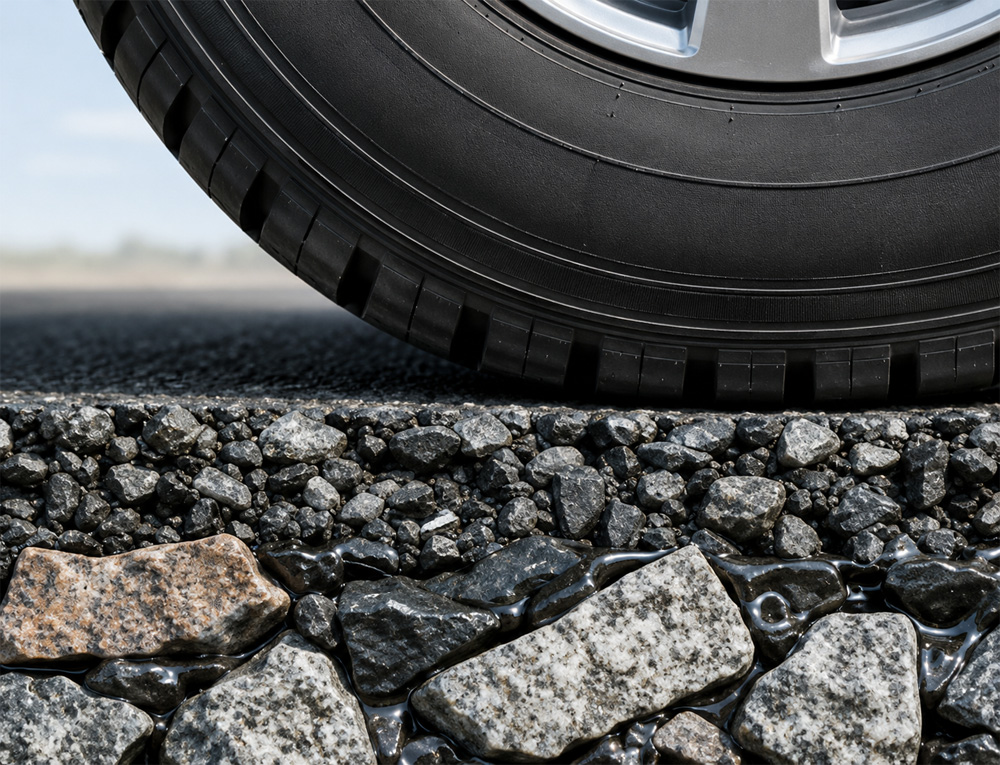
Asphalt road construction requires materials that can withstand repeated traffic loads, temperature variations and environmental exposure. Bituminous roads, in particular, are subjected to stresses that can lead to rutting, fatigue cracking, binder drainage and surface deterioration. Improving the stability and performance of asphalt mixes is therefore an important consideration in highway and road infrastructure projects.
Fibre reinforcement technology offers an approach to improving the properties of bituminous mixtures. By incorporating specially designed glass fibres into asphalt mixes, it helps create a reinforcement network that supports aggregate stability, binder distribution and resistance to deformation.
DD Solutions, based in Nagpur, Maharashtra, is a supplier of glass fibre reinforcement products. Its Glassman® AR Glass Micro Fibres are designed for bituminous road construction, while its Glassman® MICRO FIBRES product range also caters to concrete and cement-based applications. With over a decade of experience in the construction materials industry, the company serves infrastructure and construction requirements across different sectors.
Glassman® AR Glass Micro Fibres by DD Solutions
Glassman® AR Glass Micro Fibres are designed to reinforce bituminous mixtures through three-dimensional fibre distribution. When incorporated into asphalt mixes, the fibres form a reinforcing network that interacts with the bitumen binder and aggregates.
This network helps improve the stability of the asphalt mixture by supporting uniform binder distribution and reducing binder drainage. It also helps maintain the distribution of aggregates within the mix, contributing to improved resistance to deformation under repeated traffic loading.
The reinforcement mechanism allows fibres to function throughout the asphalt mixture rather than providing reinforcement at a single location. This helps improve mixture stability and supports resistance to common pavement-related issues such as rutting and fatigue cracking.
DD Solutions supplies Glassman® AR Glass Micro Fibres for applications where improved asphalt mix performance and pavement service life are important considerations.
Key Advantages of Glassman® AR Glass Micro Fibres
The incorporation of AR glass micro fibres in suitable bituminous mixtures can offer several benefits for road construction.
- Creates a distributed fibre network throughout the asphalt mixture.
- Helps maintain aggregate distribution and mixture cohesion.
- Supports binder retention and helps minimise excessive drainage during handling and placement.
- Contributes to improved resistance to permanent deformation under repeated traffic loads.
- Helps improve the ability of asphalt mixtures to withstand repeated loading.
- Supports more consistent interaction between the fibres, bitumen and aggregates.
- Helps maintain the structural integrity of the bituminous mixture under demanding operating conditions.
Applications of Glassman® AR Glass Micro Fibres in Road Construction
Glassman® AR Glass Micro Fibres can be considered for suitable bituminous road construction and pavement applications where asphalt mix stability and resistance to traffic-related stresses are important.
Highways and Expressways
Highways and expressways experience continuous traffic movement, including heavy commercial vehicles. Fibre-reinforced asphalt mixes can help improve resistance to rutting and fatigue-related pavement distress.
Urban Roads
Urban roads are exposed to frequent braking, acceleration and turning movements. Incorporating glass micro fibres into suitable asphalt mixtures can support improved mix stability under these traffic conditions.
Airport Runways and Taxiways
Airport pavements experience repeated aircraft loading and operational stresses. Fibre reinforcement can be considered in suitable bituminous pavement mixes to improve stability and resistance to deformation.
Heavy-Duty Industrial Roads
Industrial roads and access routes in manufacturing facilities, logistics parks and industrial zones are subjected to heavy vehicle movement. Reinforced asphalt mixtures can help improve resistance to traffic-related deformation.
Road Overlays and Pavement Rehabilitation
Bituminous overlays are used to improve existing road surfaces and restore pavement performance. Glass fibre reinforcement can be considered in suitable asphalt overlay mixes to support resistance to rutting and fatigue cracking.
Asphalt Wearing Courses
The wearing course is the uppermost layer of a bituminous pavement and is directly exposed to traffic and environmental conditions. Glass micro fibres can help improve asphalt mixture stability and binder retention in suitable wearing course applications.
How Do AR Glass Micro Fibres Work in Asphalt Road Construction?
AR glass micro fibres work by forming a distributed reinforcement network within the bituminous mixture. Their incorporation helps stabilise the asphalt mix and improve the interaction between aggregates and bitumen.
The process involves the following stages:
Step 1: Adding AR Glass Micro Fibres
The specified quantity of AR glass micro fibres is introduced into the bituminous mixture according to the recommended mix design and application requirements.
Step 2: Fibre Dispersion
During mixing, the fibres spread throughout the asphalt mixture and form a three-dimensional network. Proper dispersion is important for achieving consistent reinforcement.
Step 3: Binder Interaction
The fibre network interacts with the bitumen binder, helping support uniform binder distribution and reducing the possibility of excessive binder drainage.
Step 4: Aggregate Stabilisation
The distributed fibres help stabilise the aggregate structure within the asphalt mixture, supporting better mixture cohesion and resistance to particle movement.
Step 5: Improved Pavement Performance
The reinforced asphalt mixture can offer improved resistance to rutting, deformation and fatigue cracking under traffic loading, depending on the mix design and operating conditions.
Watch the video below to understand how AR glass micro fibres work in bituminous road construction and improve asphalt mix performance.

Glass Fibre Reinforcement for Concrete Applications
In addition to bituminous road construction, glass fibre reinforcement technology is used in concrete and cement-based applications When properly mixed, the fibres become distributed across the cementitious material and help bridge developing microcracks. This supports shrinkage crack control and improves the performance of concrete systems.
Some of the applications include:
- Industrial Flooring: Helps control shrinkage-related cracking in industrial floors exposed to regular traffic and operational loads.
- Precast Concrete Elements: Supports crack control and consistent reinforcement in suitable precast concrete components.
- Tunnels and Underground Construction: Can be considered for compatible cementitious systems, depending on structural design requirements.
- Plaster and Cement-Based Applications: Helps control shrinkage cracking in selected plastering and cement-based materials.
- Thin Concrete Panels: Provides distributed reinforcement in suitable thin-section concrete applications.
Understanding the Difference Between Glass Fibre Reinforcement in Asphalt and Concrete
Glass fibres can be incorporated into both bituminous and cement-based materials, but their functions depend on the properties of the respective mixtures.
In bituminous road construction, AR glass micro fibres form a network within the asphalt mixture. They help stabilise the binder and aggregate structure, reduce binder drainage and improve resistance to rutting and fatigue cracking.
In concrete applications, glass micro fibres are distributed throughout the cementitious matrix. They help bridge developing microcracks, control shrinkage-related cracking and support improved concrete performance.
The fibre type, dosage and mixing procedure vary according to the application. Therefore, product selection should be based on the specific requirements of the road or concrete project.
DD Solutions is a Nagpur-based supplier of glass fibre reinforcement products, offering Glassman® AR Glass Micro Fibres for bituminous road construction and Glassman® MICRO FIBRES for concrete and cement-based applications.
With more than 10 years of experience in the construction materials industry, the company has served over 750 clients globally. Its project portfolio includes flooring and concrete works covering more than 5 million sq. ft., along with involvement in over 20 tunnel and other infrastructure projects.
Through its Glassman® product range, DD Solutions caters to contractors, road construction companies, infrastructure developers, concrete manufacturers and other construction professionals seeking glass fibre reinforcement materials.
Asphalt road performance is influenced by the stability of the bituminous mix and its ability to withstand changing traffic and weather conditions. The use of AR glass micro fibres adds another consideration to asphalt mix design, particularly for projects requiring better binder retention and resistance to pavement distress. Glassman® by DD Solutions brings this reinforcement material to road construction, supporting contractors and infrastructure developers in meeting the material requirements of modern road projects.

For more details;
DD Solutions
Plot No. 1-B, Nagpur Industrial Estate, Kamptee Road, Uppalwadi, Nagpur- 440026, Maharashtra- India
Mobile: +91-9373212250
Email: info@ddsolutions.co.in
Website: www.ddsolutions.co.in