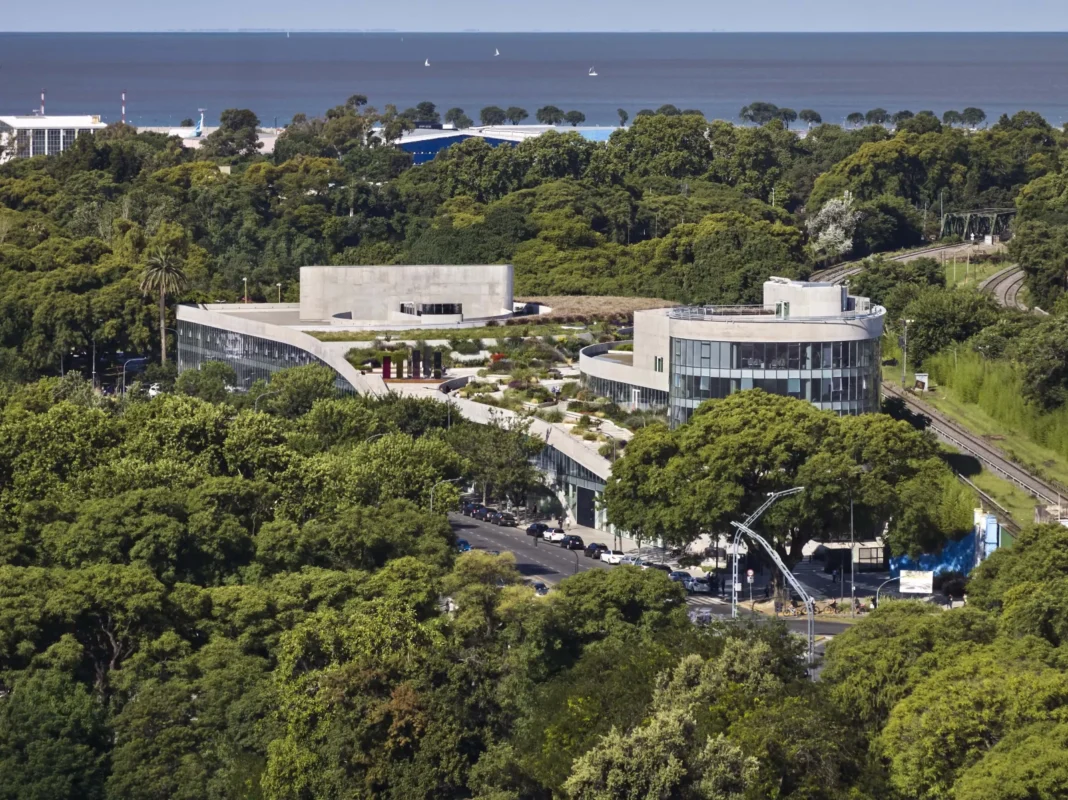
In Buenos Aires, a former parking structure known as Playa Gigena has undergone a transformation. The site, once dedicated to vehicle storage for the nearby Palermo Hippodrome, has been converted into Ola Palermo—a structure that now includes commercial, office, and public space. This project focuses on modifying existing infrastructure instead of removing it, aiming to align architectural intervention with urban needs.
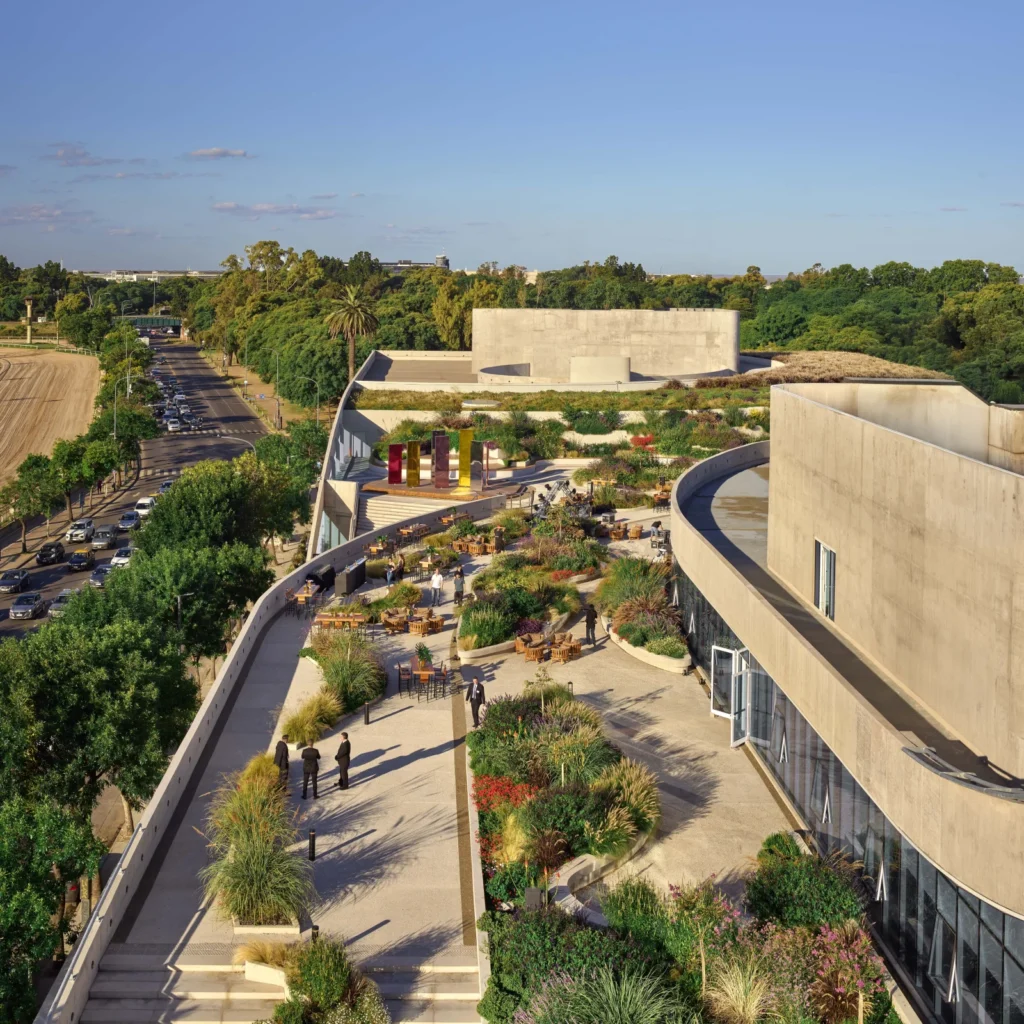
Located near the Palermo Woods and the city’s botanical gardens, the project redefines the original structure’s function. Where once the building served a singular purpose, it now offers multiple access points, open-air circulation, and publicly accessible areas, including a rooftop park.
Project Background and Original Structure
The original structure was built as a parking deck, servicing events at the Hippodrome. Its layout included multiple parking ramps, internal circulation focused on vehicular access, and perimeter walls that visually and physically separated it from the surrounding public areas.
The Buenos Aires city government sought proposals to activate the site. ODA, a New York-based architecture firm, was selected, working in collaboration with local studio Aisenson. Instead of demolishing the structure and building anew, the team proposed an adaptive reuse approach.
“We saw an opportunity to redefine how cities handle their existing infrastructure,” said Eran Chen, founder of ODA. “Instead of discarding what’s already there, we looked for ways to evolve it.”
Design Approach: Reuse and Addition
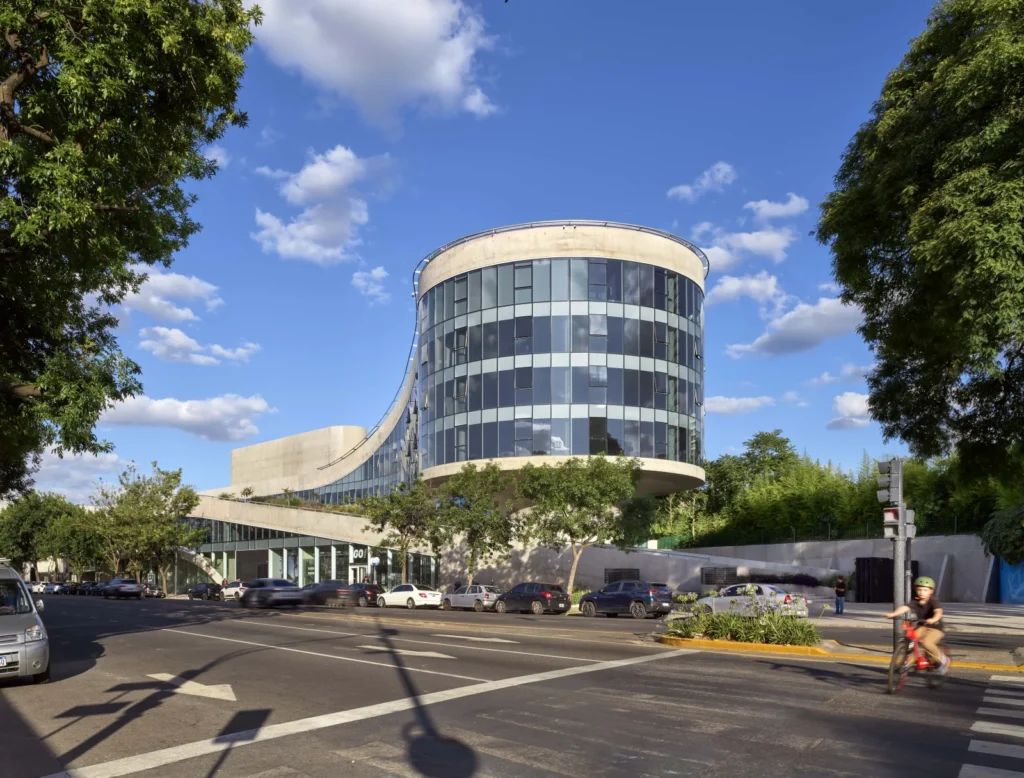
ODA retained a large portion of the original concrete frame. Approximately 80 percent of the building’s existing structure—including floor slabs and columns—was kept intact. Select components such as access ramps and the external facade were removed. The removal of these elements allowed for new circulation paths, glazing, and terraces to be added without altering the building’s core load-bearing elements.
New components were added where required: vertical circulation cores were inserted to provide elevator and stair access to different levels, particularly for office and retail spaces; two additional floors were constructed above the original roof to accommodate more built area; and a new basement was excavated to provide an underground parking facility for 250 vehicles. This retained-and-inserted strategy allowed the building to accommodate a wider variety of uses without exceeding the original zoning envelope.
Architectural Elements and Materials
The transformation of Ola Palermo required a careful balance between retaining structural integrity and introducing new architectural features to meet the demands of its new uses.
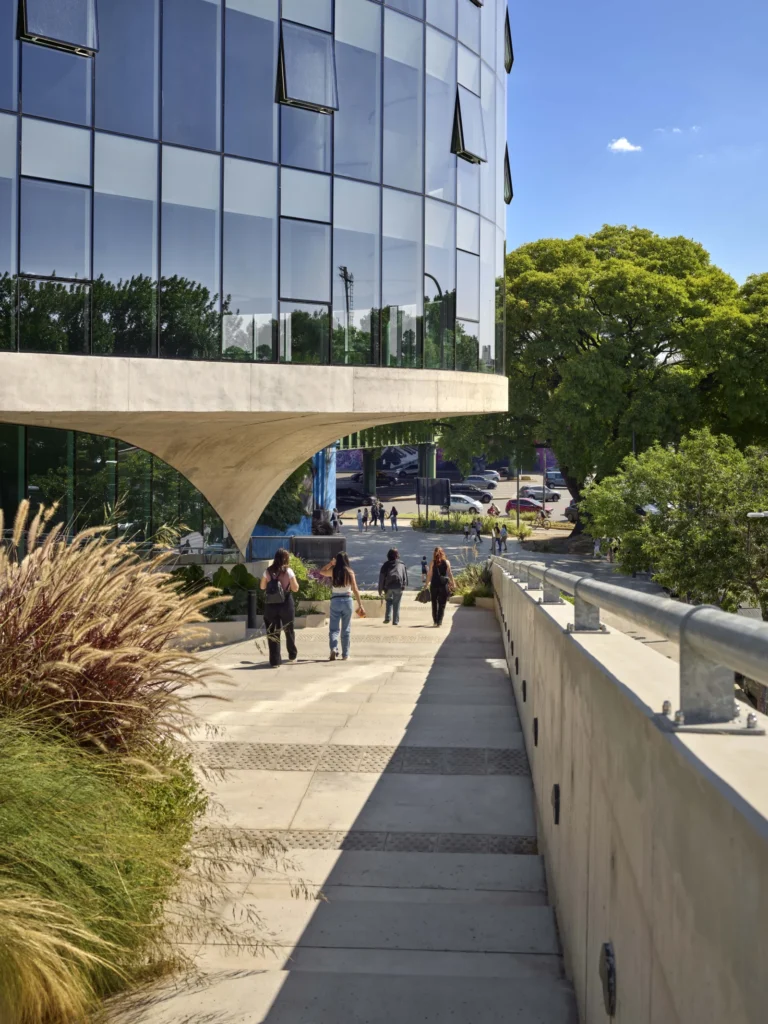
A key visual intervention is the new facade system. Transparent materials—such as glazed curtain walls—were introduced to replace the former solid walls. This strategy enhanced visual permeability and daylight penetration, making the building more welcoming to the public and better integrated with the surrounding parkland. In select areas, the facade features a repeating curved pattern. This wave-like form is a reference to the project’s name—“Ola”, the Spanish word for “wave.”
To support the change in function and structural loads, several architectural and technical elements were added:
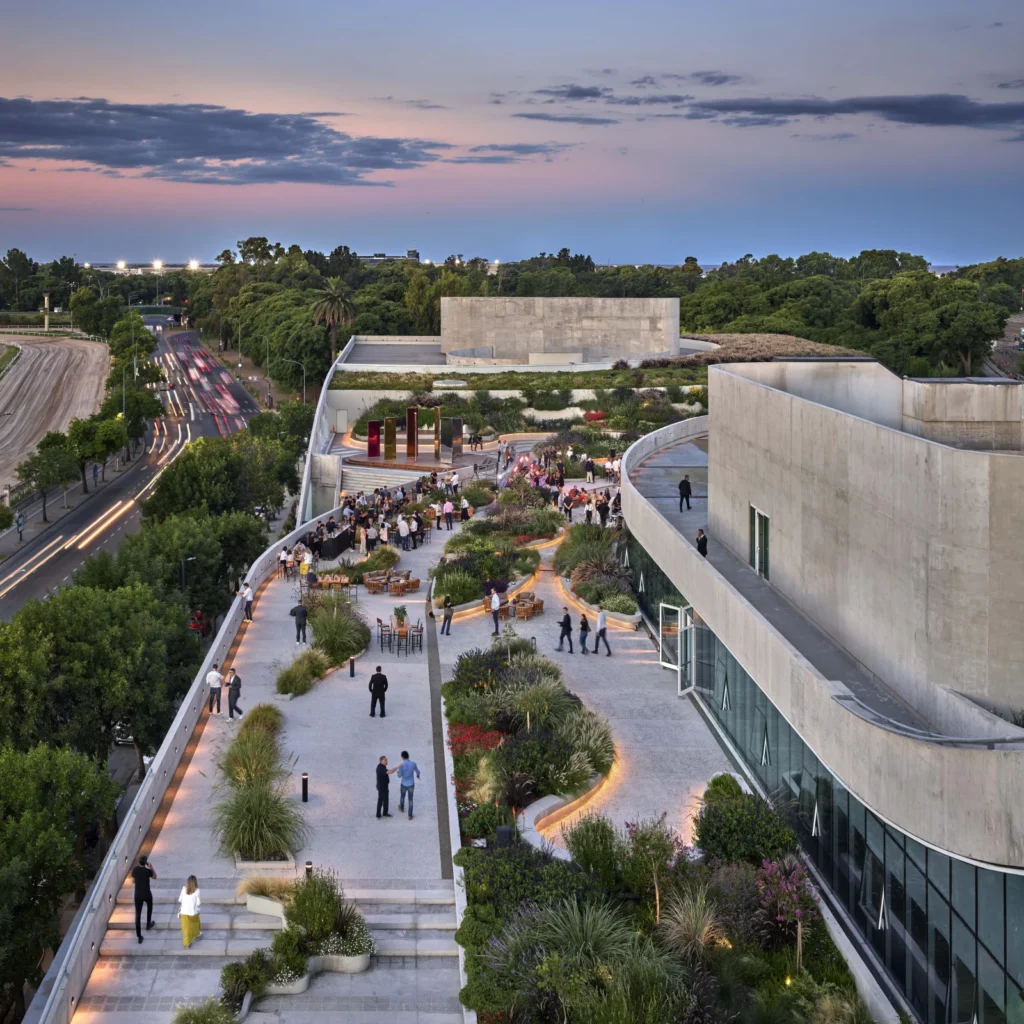
- Structural reinforcement of existing floor slabs to carry the weight of vegetation, furniture, and people on the rooftop park.
- Drainage and irrigation systems integrated into the roof to support planting and manage water runoff.
- Mechanical, electrical, and plumbing (MEP) upgrades, tailored to accommodate retail, restaurant, and office operations.
- New vertical circulation cores, including elevators and staircases, were inserted into the building footprint to connect all levels.
- Terraces and patios, carved out by removing sections of the original structure, enhance outdoor usability and improve spatial diversity.
The architectural language of the intervention does not aim to erase the old structure but rather exposes parts of the original frame while integrating new materials. This layered approach allows the project to retain its original identity while adapting to present-day urban demands.
Functional Components
The readapted building contains several distinct uses:
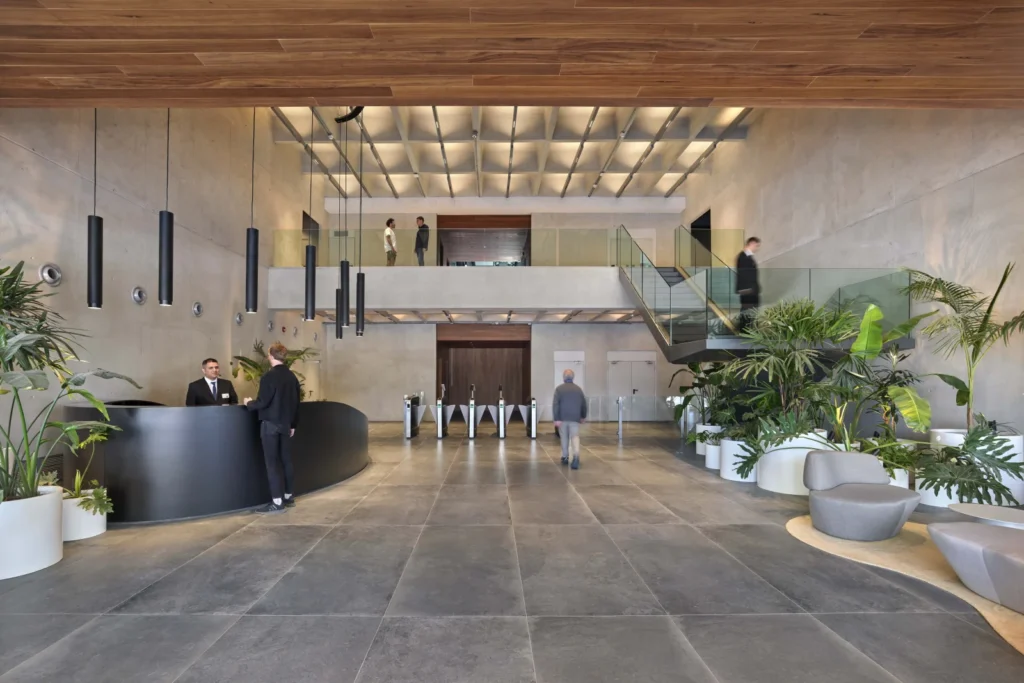
- Retail and Dining Spaces: The lower levels contain areas allocated for shops, cafes, and restaurants. These spaces open onto outdoor terraces or semi-enclosed patios.
- Offices: Upper floors contain commercial office spaces with flexible layouts.
- Parking: The new underground level houses the primary vehicle storage, replacing the function originally performed by the now publicly accessible upper floors.
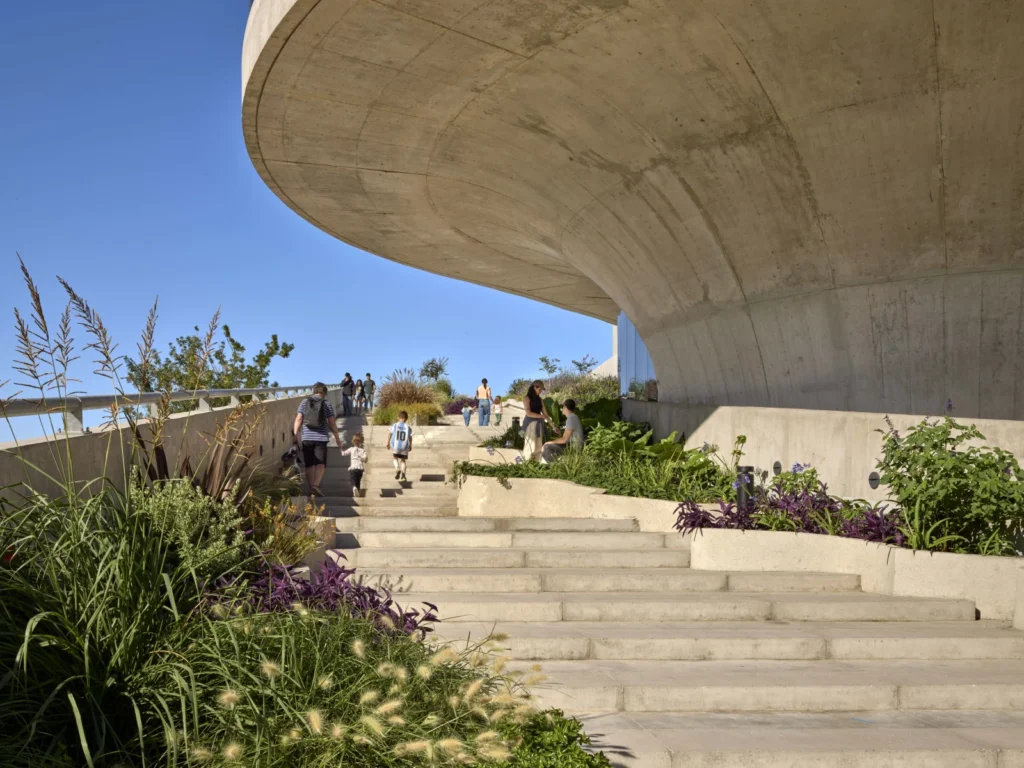
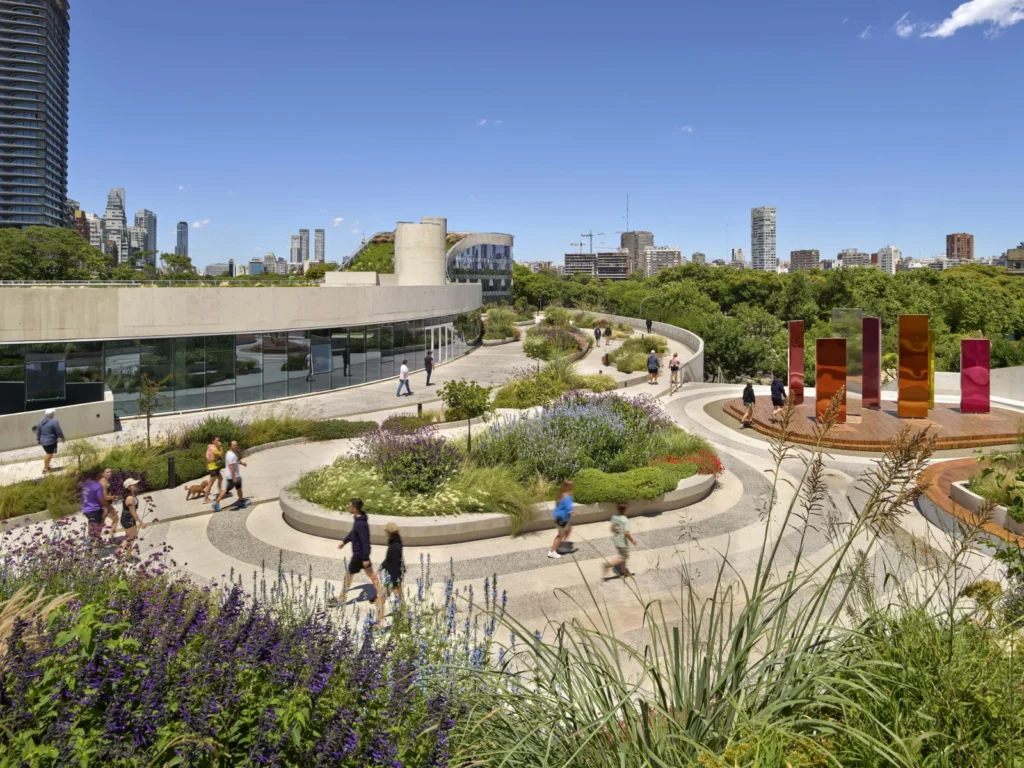
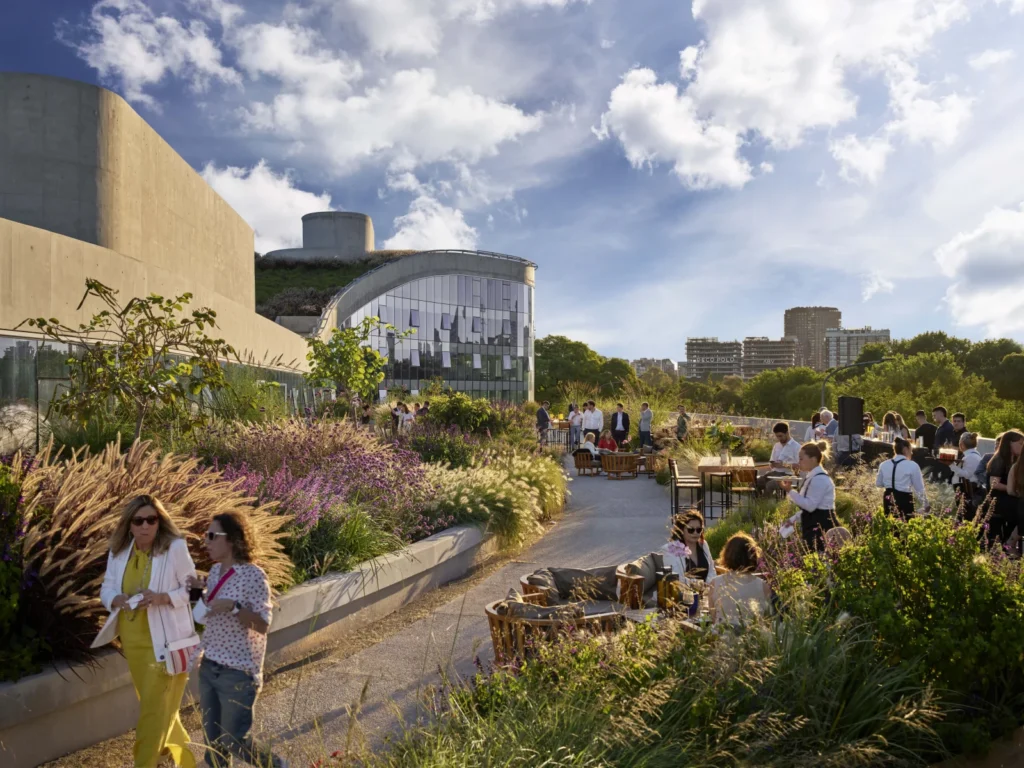
- Public Roof Park: The most visible intervention is a 40,000-square-foot rooftop park, which includes walkways, seating, and planting areas.
Urban Integration and Pedestrian Access
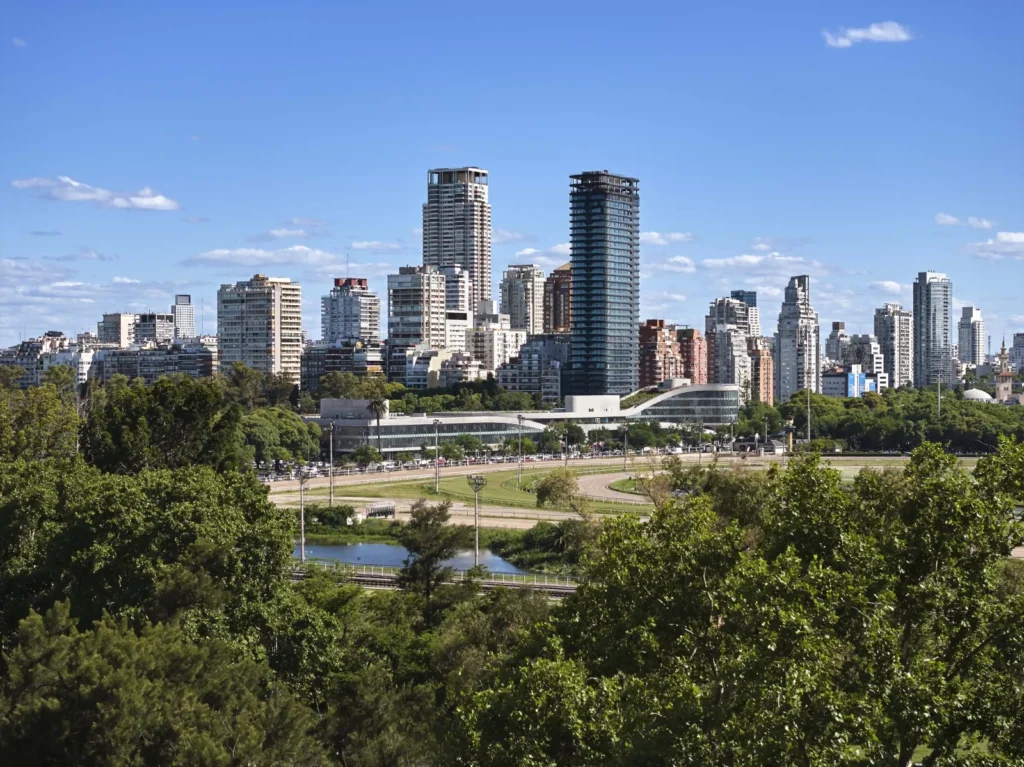
One of the project’s key objectives was to improve the connection between adjacent areas. The previous structure created a barrier between the Palermo Hippodrome and El Rosedal Park. By removing portions of the facade and introducing open circulation routes, the redesign allowed continuous pedestrian flow across the site.
“The building now operates as a bridge rather than a wall,” observed Chen. “You can walk from the racetrack to the park without ever noticing you’re crossing a former garage.”
This permeability was achieved through grade-level access points on all sides, sloped ramps to upper terraces, and transparent facade elements that visually open the structure to the surroundings.
Operation and Maintenance Model
The project is operated under a public-private partnership model. BSD Investments holds the responsibility for maintaining the structure, including its retail, office, and landscape components. While commercial spaces are leased out, the rooftop park remains accessible to the public, maintained by the private operator under guidelines established by the municipal authority. This approach allows for long-term oversight without the requirement for public sector capital investment in daily upkeep.
Broader Relevance
Ola Palermo reflects a growing tendency among architects and developers to consider adaptive reuse as a design strategy. In urban areas with limited undeveloped land, existing structures often offer opportunities for spatial reinvention.
“There’s economic value in reuse, but also a social one,” said Chen. “It’s about memory, context, and respect for how cities grow over time.”
This perspective aligns with trends seen in other global projects where transportation hubs, industrial warehouses, and commercial centers have been reimagined to serve changing urban functions.
Project Timeline and Status
The conceptual design work began in 2020 when the city issued a call for proposals to redevelop Playa Gigena. ODA and Aisenson were appointed following a competitive selection process. By 2021, initial works commenced on site, beginning with structural evaluations, partial demolition of non-load-bearing elements, and excavation for the new underground parking level. Throughout 2022 and 2023, core construction progressed on the upper levels, vertical access cores, and new facades.
As of early 2025, a significant portion of the structure has been completed and is already operational. Some office spaces are occupied, and several retail units have opened to the public. The 40,000-square-foot rooftop park is accessible during defined hours and serves as a connector between adjacent public areas. Full completion, including interior fit-outs and landscaping works on the eastern edge of the site, is expected by September 2025.
The total built-up area of Ola Palermo stands at approximately 160,000 square feet. The underground parking facility accommodates 250 vehicles. The development is managed under a public-private partnership model led by BSD Investments, which is responsible for long-term operation and maintenance, while the city retains oversight on compliance and public use.
Conclusion
Ola Palermo is an example of how an old structure can be reused instead of demolished. The project turned a former parking facility into a mix of commercial, public, and open spaces. New circulation paths were added, and parts of the original building were adapted to suit current needs. It highlights how cities can make better use of existing buildings, reduce construction waste, and create more accessible public areas.
Image sources- parametric-architecture.com, designboom.com