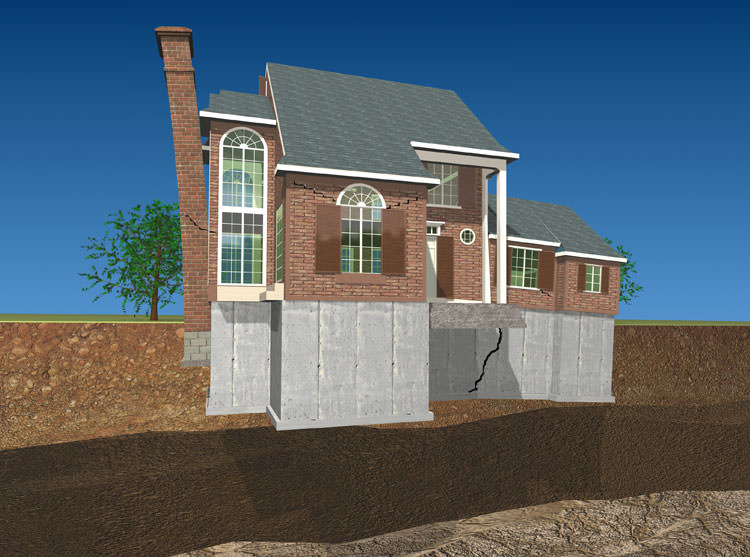
Settlement mostly comes down to the ground you are building on and how it reacts after loading. Sandy soils usually settle early during construction itself, while clay behaves differently, it keeps adjusting over time. Water in the soil also affects this, especially when levels change due to seasons or site conditions. Because of this, checking soil layers and drainage at the start is not something to skip. In many cases, the issues don’t show immediately but start appearing later, once the soil begins to adjust under load.
Settlement Patterns in Foundations
Settlement is usually looked at based on how the movement happens across the foundation. The pattern gives a clear idea if it will stay manageable or start causing issues.
- Uniform settlement
The entire structure moves down by roughly the same amount. This is generally manageable, but it can still affect external levels, drainage flow, and service connections. - Differential settlement in buildings
Different parts of the foundation settle by different amounts. This is where most problems are seen, as the structure does not move together and cracks or alignment issues start showing up. - Tilt or rotation
One side settles more than the other, so the structure starts leaning. This is usually noticed where loading or soil condition is not even across the foundation. - Curvature settlement
Settlement varies along the length of the foundation, creating a bending effect. Common in rafts and long strip footings where soil response is not consistent throughout.
Causes of Foundation Settlement
Settlement usually comes from a mix of soil condition and what is happening on site before and after construction.
- Low soil bearing capacity
Soft or weak soil layers cannot carry the load properly, so settlement continues after construction. - Poor site preparation
Fill placed without proper compaction tends to settle later under the building load. - Moisture changes in soil
Soil expands or shrinks with moisture changes, especially in clay. - Groundwater level changes
Changes in water level can alter how the soil behaves under load. - Erosion or voids below foundation
Water movement can remove soil and create gaps under the footing. - Nearby construction activity
Excavation or dewatering nearby can disturb the supporting soil. - Vegetation near the structure
Tree roots draw moisture unevenly, leading to local settlement.
Signs of Foundation Movement
Most signs show up during normal use of the building and are linked to uneven movement.
- Cracks in walls or masonry – Diagonal cracks near openings or corners are often the first visible sign
- Doors and windows not closing properly – Slight frame movement makes them hard to open or align
- Uneven or sloping floors – Floor levels feel off while moving across the space
- Gaps at joints or service connections – Small separations appear near skirting, frames, or pipe entries
Prevention of Foundation Settlement
Settlement control starts during planning, based on soil condition and basic design decisions.
- Soil testing helps understand layers, strength, and variation across the site
- Foundation type is selected based on what the ground can safely carry
- Load is distributed evenly to avoid pressure concentration in one area
- Weak soil areas may need basic ground improvement before construction
- Site levels and drainage are planned to avoid water buildup near the foundation
Foundation Settlement Repair Methods
When settlement goes beyond limits, corrective work is carried out based on site condition and type of issue.
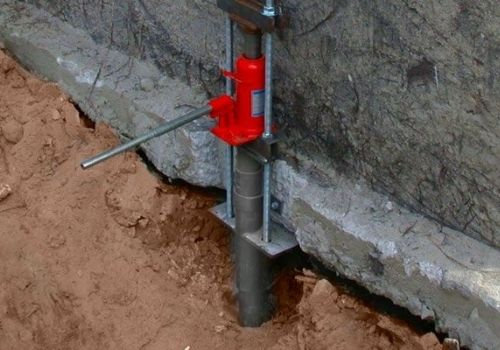
- Underpinning transfers load to deeper and more stable soil layers
- Grouting fills voids and improves support below the foundation
- Slab lifting is used where floors or slabs have settled locally
- Soil treatment improves strength and reduces further movement
Site Considerations for Settlement Control
Settlement is not only about design; site conditions and execution also affect how the foundation behaves. Soil data, load assumptions, and actual construction need to match closely, otherwise uneven movement can develop later.
Basic monitoring during and after construction helps track early movement. This allows issues to be addressed before they develop into larger repairs.