Understanding Differential Settlement in Concrete
Concrete foundations and structural elements are designed to distribute loads uniformly to the underlying soil. However, when the supporting ground does not compress or shift evenly, differential settlement occurs. Unlike uniform settlement—where the entire structure moves downward evenly—differential settlement happens when one part of the foundation settles more than the other.
Even small variations in settlement can introduce cracks, distortions, and severe stresses in concrete members. If not addressed promptly, these movements can compromise not only the serviceability but also the safety and long-term durability of buildings, bridges, pavements, and other concrete infrastructure.
Differential settlement is one of the most subtle yet important forms of concrete distress. Its identification and mitigation require an integrated approach involving geotechnical investigation, structural assessment, and remedial engineering.
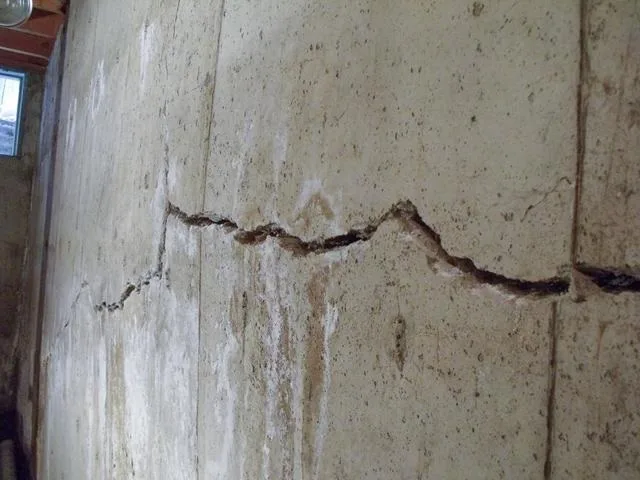
Causes of Differential Settlement
Differential settlement arises from a combination of soil behavior, loading conditions, groundwater changes, and construction practices. The following are the key contributing factors:
1. Variability in Subsoil Conditions
The natural ground beneath a structure may contain layers of soil with differing compressibility. For example, clay and silt compress more under load compared to sand or gravel. When footings rest on these varying strata, parts of the foundation settle faster, creating uneven deformation.
2. Unequal Foundation Loads
Buildings rarely carry uniform loads across their entire footprint. Columns supporting heavy walls, water tanks, or machinery transfer greater stresses to the soil. Without proper design adjustments, these areas sink more, leading to tilting or cracking in rigid concrete elements.
3. Poor Compaction and Fill Materials
Improperly compacted backfill or uncontrolled filling with loose materials under slabs can settle over time as they densify under load or vibration. This delayed settlement affects slabs-on-grade, retaining walls, and mat foundations.
4. Moisture Variation and Groundwater Fluctuation
Changes in moisture content—due to seasonal drying, leaks, or tree root absorption—cause swelling or shrinkage in expansive clays. Similarly, lowering of groundwater can lead to consolidation of soft soils. Both mechanisms create differential ground movement beneath concrete foundations.
5. Inadequate Drainage or Erosion
Poor surface drainage around structures may allow water to accumulate near foundation edges. Over time, soil softening or erosion beneath slabs and footings can cause one side of the structure to settle more rapidly.
6. Adjacent Excavation or Construction Activities
Deep excavations for nearby buildings, basements, or utilities can remove lateral support, disturbing equilibrium and triggering settlement in existing structures. Heavy construction vibrations may also accelerate differential movement.
7. Structural or Construction Deficiencies
Irregular footing sizes, uneven reinforcement, inconsistent curing, or deviations in concrete thickness can increase stiffness differences between members, amplifying the effects of minor settlements.

Impact on Concrete Structures
Differential settlement affects concrete performance at multiple levels—structural, service, and durability.
1. Structural Cracking and Bending
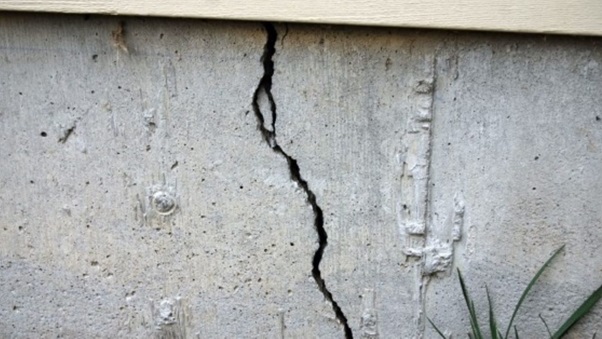
When one portion of a footing or slab sinks, the rigid concrete resists movement, resulting in bending stresses beyond design limits. These stresses cause tension cracks in walls, slabs, and beams—especially near junctions and supports.
2. Shear and Torsional Distress
In framed structures, uneven foundation movement induces shear stresses in columns and joints. Beams connected to displaced supports may twist or deflect abnormally, threatening overall stability.
3. Joint Separation and Leakage
Differential movements open joints in retaining walls, tunnels, and pavements. Water ingress through these joints accelerates reinforcement corrosion, efflorescence, and chemical attack, further degrading the concrete.
4. Serviceability Loss
Cracked slabs and misaligned floors affect usability, architectural finishes, and equipment alignment in industrial setups. Vibrations and resonance issues may also increase in affected structures.
5. Long-Term Durability Reduction
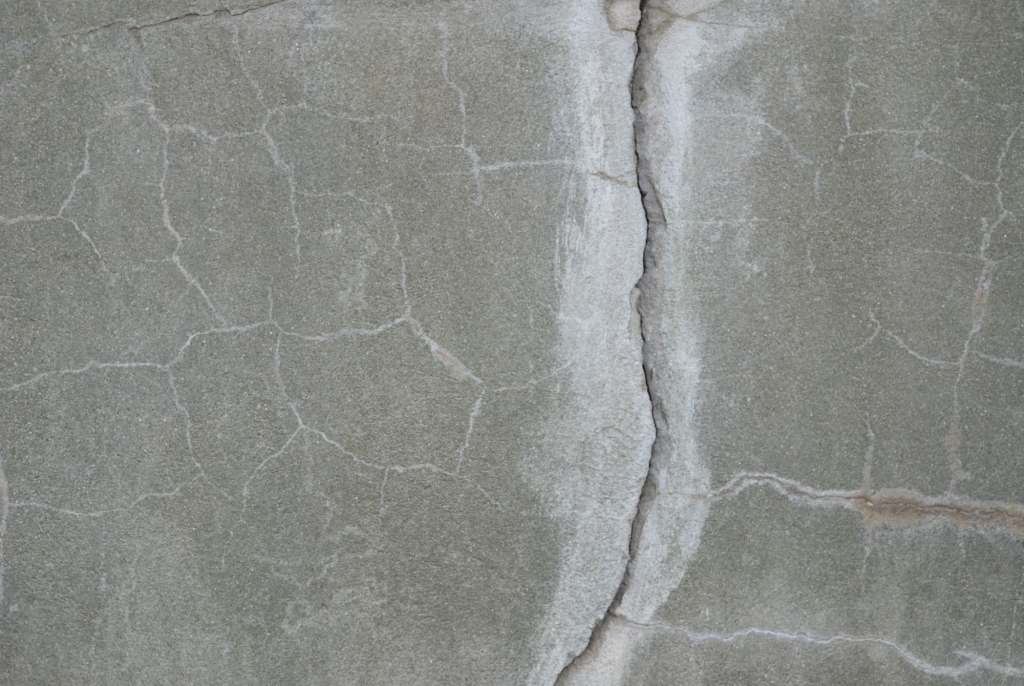
Open cracks and microfissures created by settlement act as pathways for moisture, chlorides, and sulfates, promoting corrosion and freeze-thaw damage. Once deterioration begins, it often progresses rapidly without repair.
Types of of Differential Settlement
1. Based on Cause
a) Structural Load-Induced Settlement- Occurs when parts of the foundation carry heavier loads than others. For example, columns supporting heavy machinery or water tanks may settle more than lightly loaded areas, causing tilting or cracks.
b) Soil-Induced Settlement- Caused by variability in soil properties beneath the foundation. Soft clays, compressible silts, or loose fill can compress unevenly, leading to differential movement.
c) Moisture-Related Settlement- Triggered by changes in soil moisture content, such as shrinkage of clay due to drying or swelling when saturated. Nearby trees, leakage, or seasonal water fluctuations can worsen this effect.
d) Construction-Induced Settlement- Results from improper compaction, poor backfill, or uneven curing during construction. Foundations or slabs laid over loosely compacted fill are particularly susceptible.
2. Based on Pattern of Settlement
a) Uniform Settlement- Although technically not differential, it’s often noted alongside. Entire foundation sinks evenly; usually non-damaging structurally but may affect serviceability.
b) Stepped Settlement- Settlement occurs in discrete steps or zones, typically due to isolated weak soil pockets. Appears as “stepped” cracks in walls or beams.
c) Tilt or Rotational Settlement- One side of a foundation settles more than the other, causing rotation of slabs, walls, or columns. Common in sloped or uneven soils.
d) Localized Settlement- A small portion of the foundation settles excessively, often near load concentrations or voids under the footing. Can cause concentrated cracks or slab depressions.
3. Based on Timing
a) Immediate Settlement- Happens during or shortly after construction due to rapid consolidation of soil under load. Usually minor but must be considered in design.
b) Primary Consolidation Settlement- Occurs over weeks or months as saturated cohesive soils compress under structural loads. Influenced by soil type, load magnitude, and drainage.
c) Secondary or Creep Settlement- Slow, long-term settlement over years caused by plastic flow of soil under constant stress. Often subtle but can aggravate cracks from earlier settlement.
Assessment and Investigation Techniques
Identifying the extent, rate, and cause of settlement is pivotal before deciding on remedial measures. Engineers typically adopt the following methods:
1. Geotechnical Investigation
Soil borings, cone penetration tests (CPT), and plate load tests determine soil strength, compressibility, and bearing capacity. Groundwater monitoring helps predict seasonal effects.
2. Structural Survey and Level Monitoring
Precision leveling surveys and laser scanning help detect vertical displacement patterns over time. Crack gauges and settlement markers quantify ongoing movement.
3. Ground Penetrating Radar (GPR) and NDT
GPR and ultrasonic pulse velocity tests identify voids, honeycombing, or differential density in concrete foundations. Rebound hammer and core tests assess in-situ strength loss.
4. Foundation Load Testing
For heavily loaded footings or columns, load tests help verify performance and determine whether distress is due to soil settlement or structural inadequacy.

Mitigation and Repair Techniques
Once the cause and magnitude of differential settlement are established, appropriate corrective measures are implemented. These methods fall under stabilization, underpinning, or re-leveling techniques.
1. Grouting and Pressure Injection
Cementitious or polyurethane grouts are injected under foundations to fill voids and stabilize the subgrade. Compaction grouting densifies loose soils, while permeation grouting improves cohesion in sandy strata.
2. Underpinning
Underpinning strengthens and deepens existing foundations to reach more competent strata. Common techniques include:
- Mass Concrete Underpinning: Sequential excavation and casting of new footing segments beneath the existing one.
- Pile or Micropile Underpinning: Mini piles transfer load to deeper, stable layers and are tied to the existing foundation via reinforced caps.
- Beam and Base System: Reinforced beams spanning between stable zones distribute loads evenly.
3. Slab Jacking (Mudjacking)
For sunken floor slabs, a slurry of cement, sand, and additives is pumped through drilled holes to lift the slab back to its original position. Modern variants use polyurethane foam injection, offering faster curing and precise control.
4. Soil Stabilization
Chemical stabilization using lime, fly ash, or polymer solutions reduces soil compressibility and moisture variation. Geotextiles and soil nails can reinforce loose embankments adjacent to foundations.
5. Structural Strengthening
If differential settlement has induced cracks or deformation, the structural elements themselves must be rehabilitated:
- Epoxy Crack Injection: Bonds separated concrete sections and restores load transfer.
- FRP Wrapping or Jacketing: Enhances flexural and shear strength in columns and beams.
- Concrete Jacketing: Adds a new reinforced concrete layer to improve stiffness and confinement.
6. Drainage and Moisture Control
Perimeter drains, sump pumps, and surface grading prevent water accumulation near foundations. Root barriers and controlled irrigation around buildings reduce differential moisture variations in clayey soils.
7. Complete Reconstruction
In extreme cases—such as collapse-prone structures or massive settlement beyond recovery—partial demolition and reconstruction may be the safest and most economical long-term option.
Preventive Design and Construction Practices
While repair techniques can restore functionality, prevention is always more effective and economical. The following practices minimize the risk of differential settlement during design and construction:
- Detailed Geotechnical Analysis: Site-specific soil profiling and foundation design based on realistic settlement predictions.
- Uniform Load Distribution: Using raft or mat foundations for non-uniform loads to equalize pressure on subsoil.
- Proper Compaction and Layer Control: Ensure uniform compaction of fill and backfill materials in layers.
- Adequate Drainage and Waterproofing: Prevent infiltration of surface or subsurface water that can soften soils.
- Avoiding Large Moisture Gradients: Control landscaping and avoid deep-rooted trees near foundations.
- Use of Ground Improvement Techniques: Vibro-compaction, stone columns, or preloading to improve bearing capacity before construction.

Conclusion
Differential settlement remains one of the most important yet preventable causes of concrete distress in foundations and structural members. Its effects—ranging from aesthetic cracking to major structural instability, can be mitigated through careful investigation, proper foundation design, and timely intervention. By combining geotechnical understanding, structural rehabilitation methods, and preventive engineering, designers and builders can ensure the long-term performance and safety of concrete structures under varying ground conditions.