
A street legal electric bike in the United States must meet the applicable electric bicycle classification rules and be permitted on the roads or paths where its owner intends to ride. Motor power, assisted speed, throttle functionality, and local regulations all affect whether a particular model qualifies.
As electric bikes become part of everyday urban transportation, understanding these requirements is increasingly important. A bicycle suitable for commuting in one state may face different access restrictions in another.
Before purchasing, riders should look beyond the manufacturer’s advertised top speed and check how the bike fits into their local transportation network.
What Makes an Electric Bike Street Legal in the US?
A street legal electric bike must comply with the laws of the state and locality where it will be used.
Many US states use a three-class electric bicycle system based on how the motor operates and the speed at which assistance stops.
The three classes commonly follow these definitions:
| E-Bike Class | Motor Assistance | Assistance Limit |
| Class 1 | Pedal assistance only | 20 mph |
| Class 2 | Throttle assistance permitted | 20 mph |
| Class 3 | Pedal assistance only | 28 mph |
These definitions describe the widely adopted three-class framework, not a single nationwide rule. State laws may differ in their technical definitions, permitted equipment, and where each class can operate.
Many states also apply motor power limits and require suitable class labels. Buyers should confirm the exact requirements rather than assuming that all electric bicycles are treated alike.
Why Do E-Bike Classes Matter for Urban Transportation?
E-bike classes help transportation authorities distinguish between different types of electric assistance when managing roads and cycling infrastructure.
Shared paths, protected cycle lanes, and busy urban streets create different conditions for riders and other road users.
A lower-speed pedal-assist bike may be permitted on a particular shared-use path, while a faster-assist model may face additional restrictions.
These distinctions affect how cities plan and manage cycling networks. They can also influence signage, access policies, and safety guidance.
For everyday riders, the practical lesson is straightforward: a bicycle’s class matters not only when buying it, but also when choosing where to ride.
Does a 750W Motor Automatically Make an E-Bike Street Legal?
No. A 750W motor rating alone does not establish whether an electric bike is legal for a particular road or cycling facility.
Motor power is one part of the classification process. Assistance speed, throttle operation, working pedals, and the applicable state definition also matter.
Buyers should distinguish continuous rated motor power from peak power. Manufacturers sometimes advertise both figures, but local regulations may specify which measurement is relevant.
The bicycle’s configured operating limits are equally important. A model capable of providing assistance at different speeds should not be assigned a legal class solely from its maximum advertised performance.
Before purchasing, check the complete technical specifications, the manufacturer’s classification information, and current local requirements.
Can Street Legal Electric Bikes Use Bike Lanes and Shared Paths?
A street legal electric bike may be allowed in bike lanes and on shared-use paths, but access is not identical across every US jurisdiction.
Roads, protected bike lanes, recreational paths, and natural-surface trails may be governed by different authorities.
For example, a city transportation department may establish rules for urban cycling facilities, while a park agency may regulate electric bicycle access on trails.
Even within the same state, local restrictions can affect where particular e-bike classes are permitted.
Riders should check the rules for their regular commute and recreational routes before relying on an e-bike for daily transportation.
Understanding these restrictions is especially important when a journey crosses city boundaries or includes several types of cycling infrastructure.
What Features Should Commuters Consider Beyond Legal Classification?
Once legal compatibility has been checked, buyers should focus on comfort, predictable assistance, braking, and practical range.
For urban travel, frequent stops can make an accessible frame and manageable riding position particularly valuable.
Pedal-assist sensors also influence the riding experience. A torque sensor responds to pedalling effort, while a cadence sensor detects pedal rotation. Combining the two can help deliver more responsive assistance during starts and changes in pace.
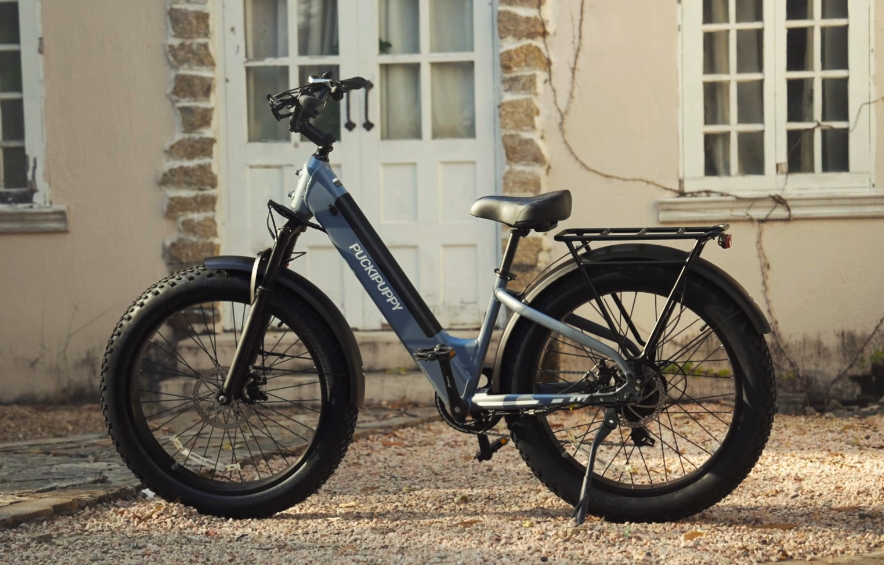
The Puckipuppy Poodle Pro provides an example of these commuter-focused features. This US-market step-through electric bike uses torque and cadence sensors, an eight-speed Shimano drivetrain, and hydraulic disc brakes.
Its low-entry frame is designed for easier mounting and dismounting, while the sensor system supports smoother assistance during everyday journeys. Puckipuppy also lists a removable 48V 15Ah battery and an estimated range of 45–75 miles, depending on riding conditions.
However, the model’s 750W rated motor and advertised assistance capabilities should not be treated as proof of a particular legal class. Buyers must verify its configured settings and eligibility under the rules where they intend to ride.
This distinction matters for any commuter ebike, regardless of brand.
How Can Buyers Check an E-Bike’s Road Legality Before Purchasing?
The most reliable approach is to verify the bicycle’s technical configuration and compare it with current state and local rules.
Start by checking the motor’s rated power, pedal-assist cutoff speed, throttle behaviour, and any manufacturer-provided class designation.
Next, review the rules governing the roads, cycle lanes, and shared-use paths on the intended route.
Manufacturers may group products under categories such as street legal electric bikes, but a retail category should be treated as a starting point for research, not an independent legal certification.
Buyers comparing different electric bikes should also consider battery safety documentation, braking performance, warranty coverage, and access to replacement parts.
For authoritative information, consult the relevant state transportation or motor vehicle agency and local authorities responsible for cycling infrastructure. Industry resources from PeopleForBikes can provide useful background on the three-class framework.
Choosing an E-Bike That Fits the Road Ahead
A suitable electric bike should meet two requirements: it must fit the rider’s transportation needs and comply with the rules governing the routes they plan to use.
The three-class system offers a useful way to understand different forms of electric assistance, but local requirements ultimately determine road and path access.
Before buying, confirm the bicycle’s actual configuration, check the relevant laws, and consider how its comfort, braking, and battery performance will support everyday travel.
For riders making electric cycling part of their routine, that preparation is more valuable than choosing a bike based on speed or motor power alone.






