
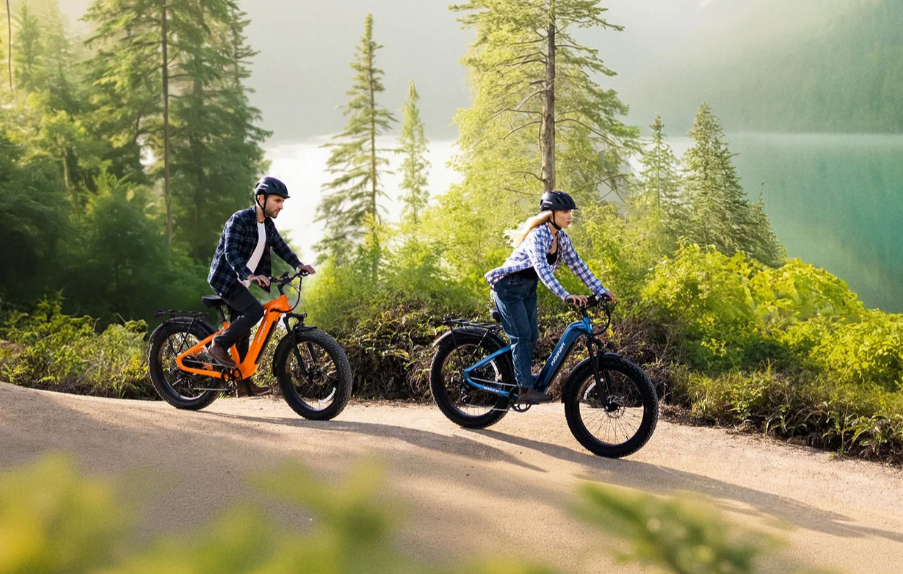
Choosing an e-bike for different road conditions requires more than looking at motor power or tyre size. Road surface, gradient, braking performance, suspension, and rider comfort all influence how a bicycle performs.
For everyday commuters and recreational riders, a suitable fat tyre e-bike can provide a practical balance between paved-road use and maintained gravel or dirt routes. The key is matching the bicycle’s design to the terrain it will encounter most often.
How Do Different Road Surfaces Affect E-Bike Choice?
The best e-bike configuration depends on the surface, riding distance, and expected obstacles.
- Paved roads: Narrower tyres generally offer lower rolling resistance, while predictable handling and reliable brakes are priorities.
- Uneven pavement: Wider tyres and front suspension can help absorb bumps and improve comfort.
- Gravel roads: Fat tyres can provide additional cushioning and traction when inflated appropriately for the surface.
- Compacted dirt paths: A versatile e-bike may handle these routes comfortably, provided the path is maintained and suitable for cycling.
- Rocky or technical trails: These require more skill and a bicycle designed for the terrain. Fat tyres alone do not make a standard e-bike suitable for demanding off-road riding.
Riders should also consider weather conditions. Wet surfaces, loose stones, and muddy sections can reduce grip regardless of tyre width.
Are Fat Tire E-Bikes Better for Uneven Roads?
A fat tire electric bike can be a practical choice for uneven pavement, gravel tracks, and other maintained mixed-surface routes.
Tyres around four inches wide have a larger contact area than typical narrow bicycle tyres. When properly inflated, they can help absorb minor surface irregularities and provide useful traction.
However, tyre pressure must suit the rider’s weight and terrain. Excessively high pressure can reduce comfort on rough surfaces, while pressure that is too low can increase rolling resistance or risk tyre damage.
Suspension is another consideration. A front suspension fork helps reduce impacts reaching the handlebars, but it does not provide the same cushioning as a full-suspension system with both front and rear shocks.
For most everyday riders, the right combination of tyres, suspension, and sensible riding speed matters more than tyre width alone.
What Other Features Matter When Riding on Different Surfaces?
Motor output, battery range, brakes, and frame design should be considered alongside tyre choice.
A motor can help riders manage hills, but performance also depends on gearing, rider input, total load, and the type of terrain.
Battery range matters for longer journeys, particularly when routes include repeated climbs. Manufacturer estimates should be treated as reference figures because temperature, wind, assistance settings, and surface conditions affect actual distance.
Brakes are equally important. Hydraulic disc brakes can provide responsive stopping performance, but braking distance still depends on speed, surface grip, and maintenance.
Frame design affects everyday convenience. A step-through frame can make mounting and dismounting easier for riders who make frequent stops or prefer not to lift a leg over a high top tube.
Is a Step-Through E-Bike Suitable for Everyday and Mixed-Road Riding?
A step-through electric bike can be a convenient option for riders who prioritise easy mounting, comfortable positioning, and frequent stops.
The frame design can be particularly useful for neighbourhood errands, commuting, and recreational rides where getting on and off the bicycle is part of the journey.
The Puckipuppy Beagle 2 ST is one example. It combines a step-through frame with 26 × 4-inch fat tyres and 110mm of front suspension travel, making it suitable to consider for paved streets, uneven pavement, and maintained gravel routes.
Its 750W rated motor has a peak output of 960W, while the removable 48V 15Ah battery has a manufacturer-stated maximum range of 60 miles. Actual range varies with riding conditions.
The bike also features hydraulic disc brakes and a maximum load capacity of 400 lb, including the rider and carried equipment.
The Beagle 2 ST uses front suspension rather than a full-suspension setup, so riders regularly tackling rough, technical trails may need a different design. At approximately 76 lb, it is also heavier than many conventional commuter bicycles.
How Can Buyers Compare E-Bikes for Different Road Conditions?
Before choosing among electric bikes for sale, consider the routes most frequently travelled rather than the most demanding route imaginable.
For predominantly paved commuting, handling, braking, and manageable weight may take priority. For regular gravel riding, wider tyres and front suspension can improve comfort. Riders planning technical off-road routes should look for a bicycle specifically designed and rated for those conditions.
It is also important to check local e-bike regulations and trail-access rules. A route that permits conventional bicycles may not automatically permit every class of electric bike.
The most suitable e-bike is one that matches the rider’s regular terrain, practical range needs, storage arrangements, and experience.
Choose for the Roads You Actually Ride
Road conditions should guide the choice of tyres, suspension, brakes, and motor assistance. A fat tyre e-bike can offer useful versatility on maintained mixed surfaces, while a step-through frame can make everyday riding more convenient.
Compare the specifications with the routes you expect to use, check the manufacturer’s limits, and prioritise control and comfort over headline numbers alone.






