
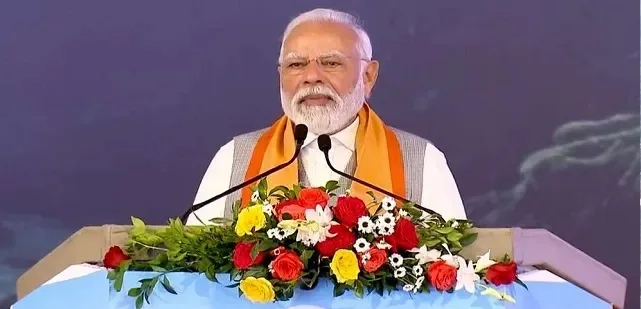
On Tuesday, Prime Minister Narendra Modi inaugurated the Delhi–Dehradun Expressway, a six-lane access-controlled corridor designed to enhance connectivity between the national capital and the capital of Uttarakhand. Constructed at an estimated cost of ₹12,000 crore, the expressway spans approximately 210–213 km, thereby reducing the previous route of about 235 km. Officials indicated that the project is anticipated to significantly decrease travel time between the two cities.
Prior to the inauguration, Modi paid his respects at the Maa Dat Kali Temple located near Dehradun and assessed the wildlife passage along an elevated section of the highway. The expressway commences near Akshardham in Delhi and concludes in Dehradun, traversing towns in Uttar Pradesh such as Baghpat, Baraut, Muzaffarnagar, Shamli, and Saharanpur. It has been constructed in four phases, integrating both greenfield and brownfield segments.
A link road connects the corridor to Haridwar, while its integration with the Char Dham highway network is expected to enhance access to significant pilgrimage sites in Uttarakhand. The project encompasses numerous entry and exit points, interchanges, bridges, and service roads to facilitate traffic flow and local connectivity. The expressway is projected to cut travel time between Delhi and Dehradun from approximately six hours to about 2.5 hours, contingent on traffic conditions.
The maximum speed limit is set at 100 km/h. Indicative travel durations from nearby cities include roughly 2 hours 15 minutes from Ghaziabad, around 2 hours 45 minutes from Noida, and between 3.5 to 4 hours from Gurugram. Toll collection has not commenced yet. Reports indicate a one-way toll of approximately ₹670 for cars, although the National Highways Authority of India will announce the final rates.A 12-kilometer elevated segment traverses Rajaji National Park in the Shivalik hills, creating one of the longest wildlife corridors in Asia.
The design incorporates two elephant underpasses, each approximately 200 meters in length, along with six additional animal crossings. Authorities have also implemented sound barriers and controlled lighting to minimize disturbances to wildlife. Additional features comprise seven interchanges, two rail overbridges, ten major bridges, and fourteen wayside amenities, including rest areas, fuel stations, and food courts.
The project also includes 113 vehicular underpasses, 62 bus shelters, and systems for rainwater harvesting and traffic management. Officials indicated that the corridor is anticipated to alleviate congestion on current routes and bolster tourism and economic activities across Delhi, western Uttar Pradesh, and Uttarakhand.






