
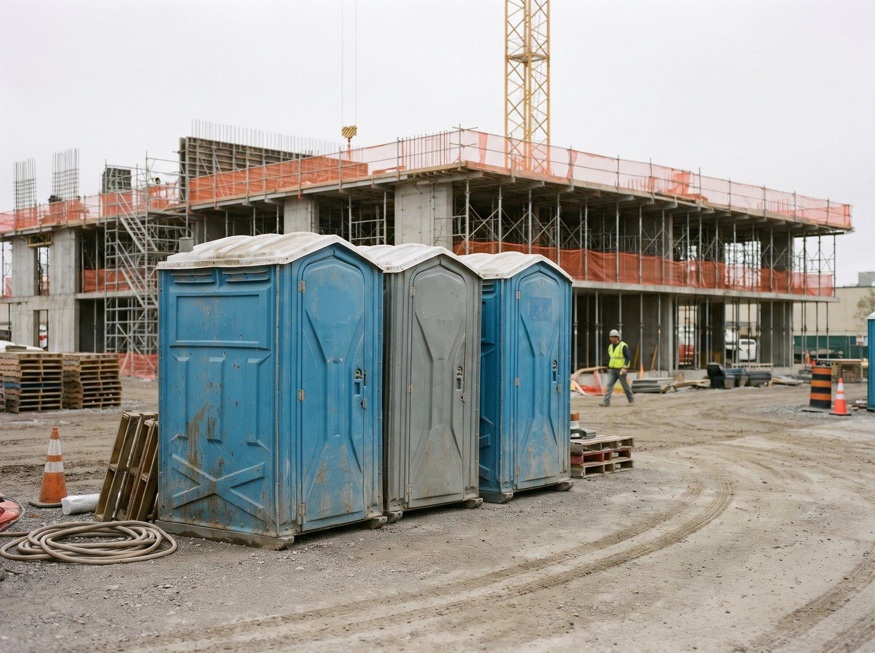
Sanitation is the line item nobody budgets for until an inspector or an unhappy crew raises it. On a short job, renting a few units and forgetting about them works fine. On a long job, a multi-site program or a project where headcount keeps climbing, that habit gets expensive and risky.
The better approach is to size the facilities properly, decide how you’ll source them, and plan servicing before the first unit arrives. Here’s how site managers can work through each step.
Start With Headcount, Not the Price List
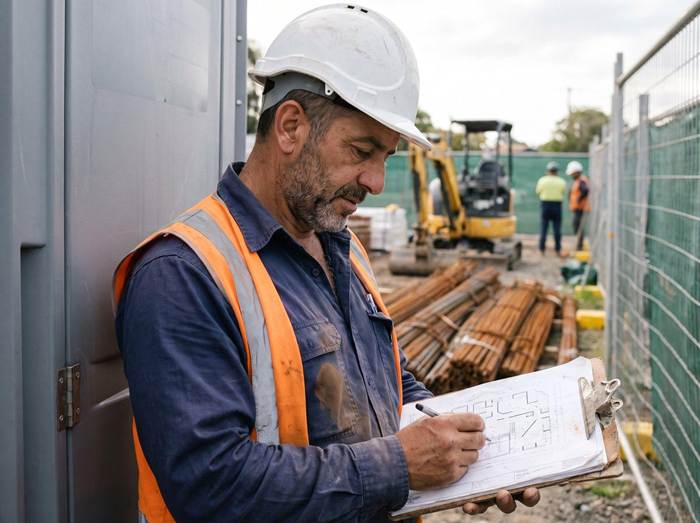
A site manager checking restroom placement against the crew layout before a new project phase
Most sanitation problems begin with a headcount that nobody updated. A contractor starts a project with 35 workers, then ramps to 90 once the structure goes up. The units ordered for phase one are suddenly short, and a second and third batch of rentals gets added at the monthly rate.
At that point the real question is rent or own. If your headcount will stay high for a year or more, or you run several sites in sequence, it’s worth pricing a porta potty for sale against the cumulative rental invoices. Owned units move from job to job, and you can service them with your own vacuum truck or hire a contractor to do it. Renting still wins for short, one-off jobs where you’d never recoup the purchase.
What the Rules Say About Numbers
Regulators set the floor. Under OSHA’s sanitation standard, 29 CFR 1926.51, a site with 20 or fewer workers needs one facility. Beyond 20, you need one toilet seat and one urinal per 40 workers, and one per 50 once you pass 200. Under temporary field conditions at least one toilet must be available, and mobile crews with ready transport to nearby facilities are exempt. You can read the full table in OSHA’s sanitation rule.
ANSI’s guidance is stricter. It recommends one portable restroom per 10 crew members, relaxed to one per 15 if units are serviced more than once a week, according to ANSI’s portable bathroom guidance.
Take that 90-worker crew as an illustration. OSHA’s minimum works out to three seats (90 divided by 40, rounded up). ANSI-style planning points to nine units, or six with frequent servicing. The gap is large, and crews notice it. Plan for the higher figure when morale and productivity matter, and treat OSHA as the legal minimum.
India and Mixed-Market Compliance
Contractors working in India face a different rulebook. The Building and Other Construction Workers (BOCW) Act of 1996 requires employers to provide latrines and urinals at building sites. Municipal bodies add detail; Delhi’s MCD Swachh Bharat guidelines call for toilets at sites with 25 or more workers, and you can check them in the Delhi MCD sanitation guidelines.
Local codes can be stricter than any OSHA-style count, so check with the municipal authority before you finalize numbers. If you run projects in more than one country, size to the strictest rule that applies and use that figure everywhere. It’s simpler than juggling separate standards, and our guide to setting up units on a live site covers the practical side.
Placement and Servicing Decide Whether Units Get Used
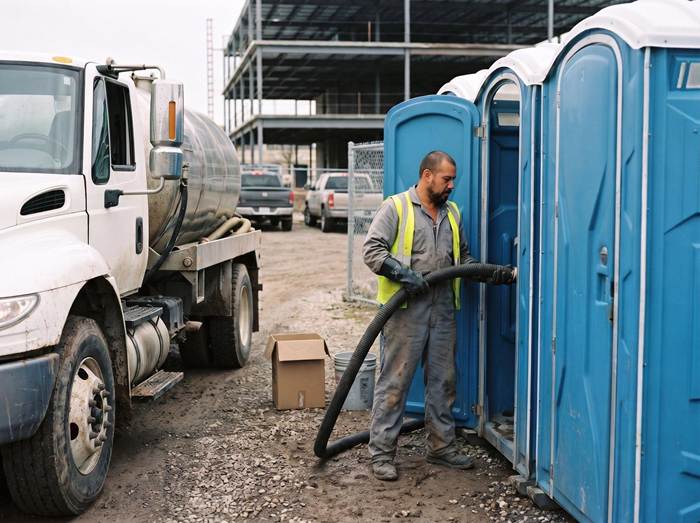
A vacuum truck servicing portable units on a scheduled route at a job site
Workers won’t walk far for a toilet. Put units close to active work faces, on firm, level ground, with lighting for early and late shifts and a handwashing station beside each cluster. Keep a clear lane for the service truck; a unit that the truck can’t reach doesn’t get pumped.
Work zones move, and so should your units. As a project advances from groundwork to structure to finishing, relocate them rather than leave them where the first crew set them up. We’ve looked at how mobile sanitation across project types adapts to each stage.
Tie service frequency to headcount. A crew of 90 fills units much faster than a crew of 30, and weekly pumping that suited phase one won’t hold in phase two. Waste handling is the other piece: whoever owns the units also owns the disposal plan, including local rules on where septic waste can go.
A Simple Checklist Before You Commit
Before you rent another batch or buy a fleet, run through these points:
- Headcount forecast for each project phase, not just today’s number
- Expected duration of the job and the number of sites in your pipeline
- Who services the units, how often, and where the waste goes
- Handwashing stations matched to the number of toilet units
- Local code requirements, including any rule stricter than OSHA or ANSI
- Separate, lockable units for women workers where the crew is mixed
If three or more of those answers point to long duration or repeat use, ownership deserves a serious look. If most point to a single short job, rent.
Market Direction and Why Availability Matters
Demand for portable sanitation is growing. Research and Markets projects the global portable toilet sales market will reach $3.8 billion in 2026, up from $3.55 billion in 2025, and climb to $4.93 billion by 2030, a growth rate of about 7% a year according to its portable toilets sales report. Construction is the largest application segment, though reports differ on the exact share.
For a contractor, the practical lesson is lead time. When demand rises, rental fleets in busy regions get tight, and a delivery that took days can stretch into weeks. Owning a few units gives you a buffer. Sanitation also belongs in the plan we outline in our piece on site health and safety planning, so build it in from day one.
Size for the Next Phase
Size your facilities for the peak headcount of the next phase, not the crew on site today. Then decide on ownership once you know the duration. A two-month job should be rented without a second thought. A two-year program across several sites usually makes owning cheaper and more reliable, as long as you have a servicing plan in place.
Toilets rarely win a project, but a shortage of them can slow one down. Plan the numbers early and the problem never reaches the site office.






