I walked into a Melbourne office tower during a routine switchboard inspection. Within minutes, a poorly maintained residual current device, or RCD, tripped and shut down an occupied floor.
Lifts stopped, point-of-sale terminals froze, and emergency exit lighting failed on one stairwell.
The building still had a valid compliance certificate. The electrical contractor had signed off on maintenance, yet the system failed when people depended on it.
That gap matters. Paper compliance is not the same as electrical reliability.
According to the Department of Climate Change, Energy, the Environment and Water, commercial buildings use about 25 per cent of Australia’s electricity and produce about 10 per cent of total carbon emissions.
For owners and facility teams, one serious outage can mean lost revenue, tenant complaints, safety exposure, and hard questions from insurers and directors.
Treat the electrical system as a managed asset, not a hidden utility, and it becomes a lever for safety, uptime, and energy performance.
Key Takeaways
Reliable electrical work protects safety, compliance, uptime, and efficiency at the same time.
- Reliability is measurable. It starts in design, is proven at commissioning, and is sustained through planned maintenance and documented testing.
- Compliance is the floor, not the finish line. The Wiring Rules, National Construction Code Section J, site standards, and Victorian Certificate of Electrical Safety requirements all shape reliable outcomes.
- Outages are expensive. Uptime Institute’s 2024 analysis found that 54 per cent of operators said their most recent significant outage cost more than US$100,000.
- Energy performance depends on electrical quality. Good controls, clean commissioning, and regular tuning support stronger NABERS results and lower operating costs.
- Procurement needs evidence. Licensing, testing records, emergency lighting logs, RCD policy, and clear service metrics tell you more than a low quote ever will.
What Reliable Means in Commercial Electrical Services
Reliable electrical service is a measurable outcome, not a sales claim.
In commercial buildings, reliability covers the full job cycle. That includes design input, fit-out work, testing and commissioning, verification, Certificate of Electrical Safety paperwork, planned maintenance, emergency callouts, and upgrades as the building changes.
A reliable contractor gets compliance right the first time and can prove performance with records. Useful evidence includes RCD trip-time results, emergency lighting discharge logs, thermal imaging reports, insulation resistance tests, and closeout dates for defects.
I look for three things when I review a provider. Do they understand the codes, can they show the data, and will they commit to service-level agreements, or SLAs, that a client can audit.
If one of those pieces is missing, reliability is still a promise. It is not yet a controlled result.
Regulatory Bedrock: Codes That Make Reliability Non-Negotiable
The code stack sets the minimum standard, and reliable providers know it in detail.
AS/NZS 3000, the Wiring Rules, governs electrical design, installation, and verification across Australia. It is the base document for commercial work, and non-compliance can affect insurance, connection approvals, and legal liability.
National Construction Code Section J sets energy efficiency requirements for commercial buildings. Its rules shape lighting power density, controls, metering, and the way electrical systems support the broader mechanical and building fabric strategy.
Safe Work Australia’s workplace guidance requires an RCD with a tripping current not exceeding 30 mA where one is required and electricity is supplied through a socket outlet not exceeding 20 A. Those workplace RCDs must be tested by a competent person, and the records need to be kept until the next test or until disposal.
AS/NZS 3012:2019 applies to construction and demolition sites. Regulators call it up because temporary site power creates higher risk, and electrocution remains a leading cause of traumatic death in construction.
In Victoria, prescribed installation work needs a Certificate of Electrical Safety, or COES, and inspection before connection. Energy Safe Victoria, or ESV, requires copies of prescribed COES to be given to the customer, the distribution business, and ESV within 16 calendar days of completion.
That deadline sounds administrative, but it is part of reliability. Sloppy paperwork usually points to sloppy controls elsewhere.
Safety First: RCD Policy and Emergency Lighting
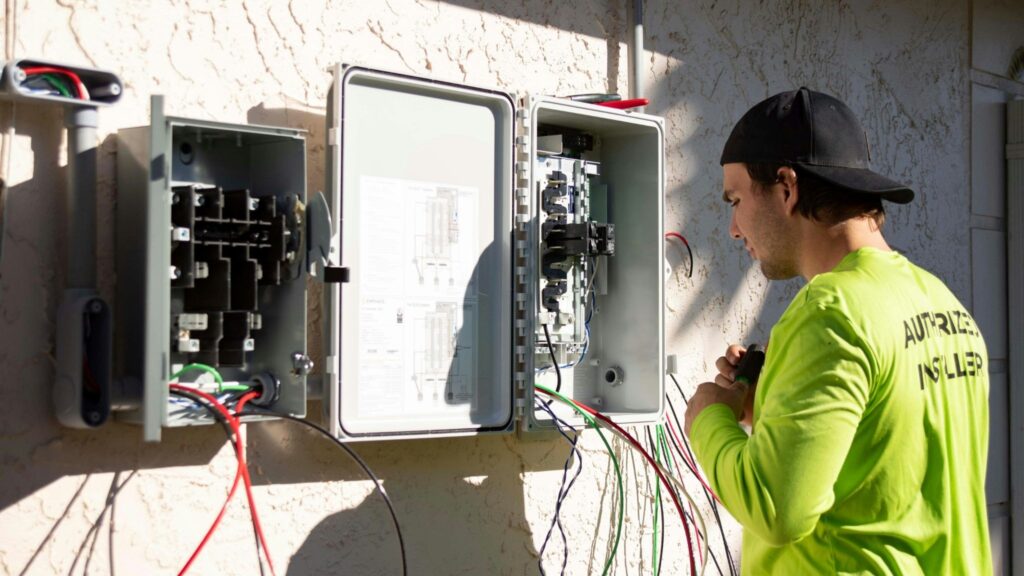
RCD policy and emergency lighting give you the fastest safety return for the least operational friction.
From 1 May 2023, Type AC RCDs must not be installed in Australia. Only Type A, Type B, and Type F devices are allowed under the national advisory adopted by state and territory regulators, and ESV repeats that position by reference to AS/NZS 3000 Clause 2.6.2.2.2.
That change matters because modern commercial loads are full of electronics. Variable-speed drives, LED drivers, EV chargers, and server equipment can create fault conditions that older Type AC devices do not manage well.
Emergency and exit lighting is the other fast risk reducer. AS/NZS 2293.2 requires six-monthly and twelve-monthly inspection and testing, including simulated mains-failure discharge tests for the period set by the Standard, with results recorded in fire-safety documentation.
A practical site walk should confirm the RCD type at each board, check current test records, look for failed lamps or damaged fittings, and review the emergency lighting logbook. Those checks take little time and expose major gaps quickly.
Procurement Playbook: How to Buy Reliability
You get reliable outcomes only when you specify them before work starts.
Start with credentials. Require a current Registered Electrical Contractor licence, verified worker licences, current insurance, a named supervisor structure, and clear experience on comparable occupied sites.
Then set the technical scope. Ask for an RCD policy that confirms Type A, B, or F devices only, emergency lighting maintenance templates, test sheets, labelling standards, as-built drawings, and power quality review where the load profile justifies it.
Define reporting and service metrics. Set response times for critical, urgent, and routine work. Require monthly or quarterly reporting on first-time-fix rate, planned versus unplanned work ratio, outstanding defects, and repeat faults.
Check safety and quality systems. Review the quality of recent job safety analyses, safe work method statements, commissioning records, and defect closeouts. A contractor who can produce clear artefacts from recent work is far less risky than one who relies on verbal reassurance.
Finally, compare references by building type. A strong industrial contractor is not always the right fit for a multi-tenant office tower, and a good retail fit-out team may not be strong on life-safety maintenance. Reliability depends on context.
If your project is in Victoria and you need a provider you can benchmark against clear commercial criteria, compare firms that routinely handle COES obligations, ESV inspections, planned shutdowns, occupied fit-outs, maintenance reporting, emergency response, distributor coordination, and compliance-led upgrades across offices, retail sites, and industrial facilities, then review a reliable commercial electrician in Melbourne to see whether the scope, records, and service model match your risk profile.
Uptime Economics: Power Quality and Service Discipline
Good power quality and fast service response protect revenue as much as they protect equipment.
Planned maintenance nearly always costs less than an outage. Uptime Institute’s 2024 analysis found that 54 per cent of operators said their most recent significant outage cost more than US$100,000, and 16 per cent reported costs above US$1 million.
Commercial buildings also suffer from hidden electrical losses. Harmonics, which are distortions caused by electronic loads, along with voltage sags and poor power factor, can trigger nuisance trips, overheat equipment, and shorten asset life.
That risk rises in sites with EV chargers, lifts, refrigeration, data rooms, and building management system, or BMS, controls. Reliable contractors test the supply, review major loads, and commission protection settings instead of waiting for repeat faults.
Service discipline matters just as much. Contracts should define priority response times, mean time to restore, first-time-fix targets, and defect closeout dates, so maintenance becomes a managed performance system rather than a vague promise.

Energy and Emissions: Reliable Work Supports NCC and NABERS
Reliable electrical work improves energy results because waste usually starts with poor control, poor data, or poor commissioning.
The Commercial Building Disclosure program links energy ratings to the sale and lease of large office space, and NABERS sits at the centre of that process. That gives electrical performance a direct connection to asset value, not just utility bills.
In practice, the most common wins come from better lighting controls, cleaner schedules for fans and pumps, and more accurate commissioning of sensors and timers. Building tuning is widely associated with energy reductions of 15 to 30 per cent when systems have drifted away from their intended operation.
Power factor correction also matters in the right setting. Power factor is a measure of how efficiently equipment uses supplied power, and poor results can increase demand costs and stress switchgear.
With later code changes tightening controls and supporting more on-site solar and electrified loads, future-ready electrical design reduces the risk of costly retrofit work.
Why Local Delivery Matters in Melbourne Projects
Local knowledge changes how smoothly a Victorian project moves from approval to handover.
Melbourne projects bring practical constraints that do not show up in a basic quote. Contractors may need to plan weekend switchboard shutdowns, work around central business district access rules, coordinate with building managers, and stage occupied fit-outs so tenants can keep trading.
When you compare providers, look at how clearly they describe commercial scope, documentation, and after-hours capability. A detailed commercial electrician in Melbourne service page is useful because it shows whether a contractor understands offices, retail sites, and industrial facilities rather than only small domestic work.
For Victorian jobs, also check how they handle prescribed work, ESV inspection triggers, and distributor coordination for new connections or supply upgrades. Those details affect program risk, tenant disruption, and final compliance.
Before appointing anyone, confirm their Registered Electrical Contractor licence, review recent COES examples from similar projects, and inspect sample maintenance records. Those checks take minutes and save months of argument later.
Make Reliability Work for You
Reliability improves when owners review the electrical system on a set rhythm, not only after faults.
Write the expectations into the contract, then verify them at handover with commissioning results, completed COES paperwork where required, emergency lighting records, and a clear defects list with closeout dates.
After handover, track a simple quarterly scorecard. Use measures such as RCD pass rate, emergency lighting compliance, outage frequency, repeat callouts, and energy intensity by floor area.
The best-performing buildings do not treat electrical work as a reactive trade purchase. They manage it as an operating system that supports safety, tenant confidence, and building value.
FAQ
The right questions reveal whether a contractor understands risk, documentation, and long-term performance.
What Is the Difference Between Residential and Commercial Electrical Work?
Commercial work supports higher-consequence systems such as life safety, lifts, switchboards, and building controls. It also involves more documentation, more coordination, and stricter compliance obligations than a standard house job.
How Often Should We Test RCDs and Emergency Lighting?
Workplace RCDs should be tested at the intervals required by the applicable workplace guidance and site risk, with records kept until the next test or disposal. Emergency and exit lighting under AS/NZS 2293.2 needs six-monthly and twelve-monthly inspection and discharge testing.
We Are Adding EV Chargers. What Changes Electrically?
Check load capacity, fault levels, protection settings, labelling, and the correct RCD type. EV charging adds electronic load that can affect power quality and protection selection, so a simple like-for-like install is rarely enough.
What Documents Should We Demand at Handover?
Ask for COES where applicable, as-built drawings, test sheets, commissioning results, circuit schedules, labels, and maintenance templates. Those records form the evidence base for future troubleshooting, compliance reviews, and planned maintenance.
How Does Reliability Link to NABERS Ratings?
Reliable systems waste less energy because controls work as intended and faults are found earlier. Better commissioning and tuning support lower base building energy use, which helps protect or improve NABERS performance.
How Do We Verify a Melbourne Contractor Is Properly Licensed?
Use Energy Safe Victoria’s public register to confirm the company’s Registered Electrical Contractor status and the individual worker licences involved in the job. Then ask for recent commercial references and sample compliance paperwork from similar projects.