
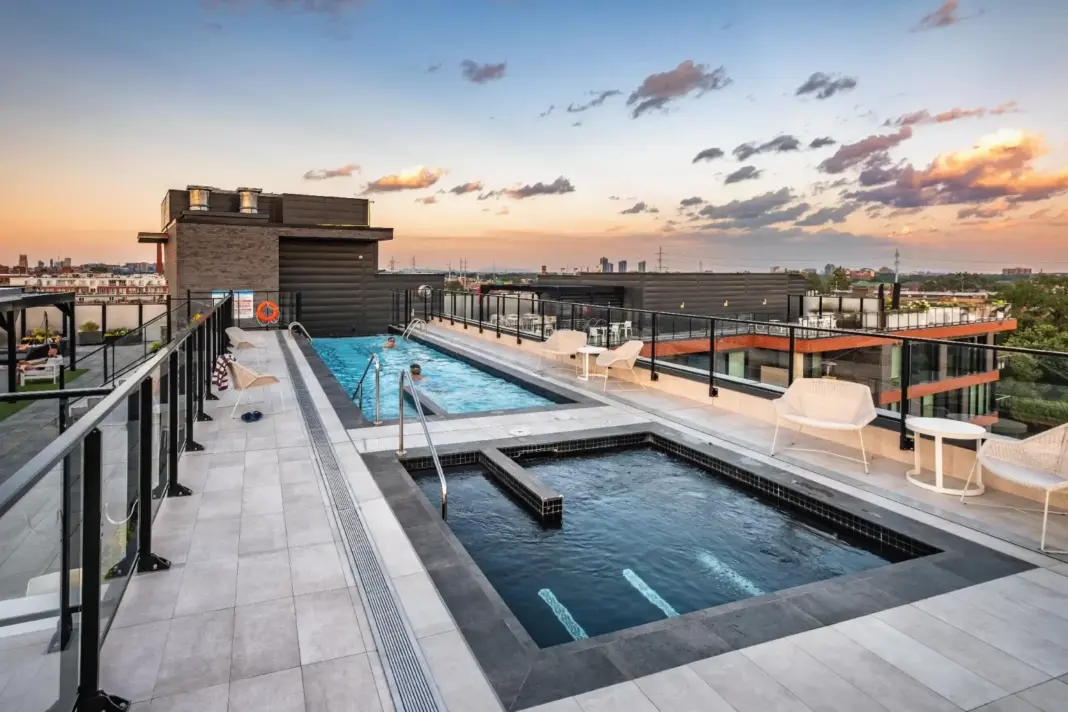
Rooftop swimming pools are becoming a key feature in modern high-rise buildings, luxury residences, and hospitality projects. While they enhance aesthetics and increase property value, they also bring significant challenges, especially when it comes to waterproofing.
Unlike conventional pools, rooftop pools are built above occupied spaces, making waterproofing extremely important. Any leakage can directly affect the building’s structure, interiors, and service systems. Even minor seepage can lead to dampness, corrosion of reinforcement, and long-term damage.
Therefore, waterproofing in rooftop swimming pools is not just a protective layer – it is a critical system that must be carefully planned, selected, and applied. A well-executed system ensures proper water retention, protects the structure, and delivers long-term durability with minimal maintenance.
Key Requirements for Roof Swimming Pool Waterproofing
A reliable waterproofing system must meet several essential performance requirements.
Structural Compatibility
The waterproofing system must be compatible with the concrete structure and capable of bonding strongly to the substrate without delamination.
Resistance to Hydrostatic Pressure
Since the pool holds water continuously, the system must withstand constant hydrostatic pressure without failure.
Flexibility and Crack Bridging
Rooftop slabs are exposed to thermal expansion and contraction. The waterproofing layer must accommodate movement and bridge minor cracks.
Durability
The system should have a long service life and resist wear due to environmental exposure and mechanical stress.
Chemical Resistance
Pool water contains chemicals such as chlorine, which can degrade inferior waterproofing materials over time.
Seamless Application
The system should minimize joints or seams, as these are common leakage points.
Compatibility with Finishes
It must work well with tile adhesives, grouts, and other finishing materials without affecting performance.
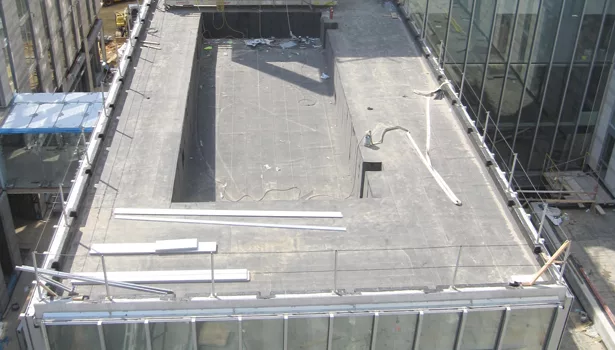
Advantages of Proper Waterproofing
- Prevents water leakage into lower floors, protecting ceilings, walls, and electrical systems
- Safeguards structural integrity by preventing corrosion of reinforcement steel
- Reduces long-term maintenance and repair costs
- Prevents tile-related issues such as debonding and efflorescence
- Enhances overall lifespan of the swimming pool structure
- Improves user safety by avoiding hidden structural damage
- Maintains durability of finishes and surface performance
- Increases property value in premium developments
- Builds buyer confidence through reliable, long-term performance
Where Roof Swimming Pool Waterproofing is Used
- High-rise residential buildings with terrace or podium-level pools
- Luxury hotels and resorts featuring rooftop or infinity pools
- Commercial complexes with rooftop leisure or recreational zones
- Mixed-use developments integrating lifestyle amenities
- Private villas with terrace swimming pools
- Penthouses with exclusive rooftop pool installations etc.
Waterproofing systems for roof swimming pools
Cementitious Waterproofing
Cementitious waterproofing is one of the most commonly used systems for rooftop swimming pools due to its strong compatibility with concrete structures. It consists of cement-based coatings modified with polymers to improve adhesion and flexibility. This system is easy to apply and cost-effective, making it suitable for both residential and commercial projects. However, it is relatively less flexible compared to advanced systems, so it is typically used as a base waterproofing layer along with a protective finish such as tiles.
Liquid Applied Membranes (Polyurethane / Polyurea)
Liquid applied membranes are high-performance waterproofing systems that are applied in liquid form and cure to form a seamless, elastic layer. Materials like polyurethane and polyurea offer excellent flexibility, allowing them to bridge cracks and accommodate structural movement. Since there are no joints or seams, the risk of leakage is significantly reduced. These systems are highly suitable for rooftop swimming pools where thermal expansion and contraction are major concerns.
Sheet Membrane Waterproofing (PVC / HDPE)
Sheet membrane systems involve the installation of pre-manufactured waterproofing sheets made from materials like PVC or HDPE. These membranes provide uniform thickness and high resistance to hydrostatic pressure, making them ideal for large or high-end rooftop pools. The sheets are laid over the surface and joints are heat-welded to create a continuous barrier. While highly durable, their effectiveness depends heavily on proper installation and skilled workmanship.
Epoxy Waterproofing Systems
Epoxy waterproofing involves the application of epoxy-based coatings that create a hard, impermeable, and chemically resistant surface. These systems are particularly useful in areas exposed to pool chemicals such as chlorine. They provide a smooth and hygienic finish, making them suitable for internal pool surfaces.
Crystalline Waterproofing
Crystalline waterproofing is an advanced system that works by penetrating into the concrete and forming crystals within its pores and capillaries. These crystals block the pathways through which water can travel, effectively making the concrete itself water-resistant. This system is often used as an integral or supplementary waterproofing method. It is highly durable and long-lasting but is usually combined with other surface waterproofing systems for rooftop pools.
Integral Waterproofing (Admixture-Based)
Integral waterproofing involves adding waterproofing admixtures directly into the concrete mix during construction. These admixtures reduce the permeability of concrete, making it more resistant to water ingress. While this method enhances the base structure’s resistance to water, it is not sufficient on its own for rooftop swimming pools. It is typically used in combination with external waterproofing systems to provide a multi-layered protection approach.
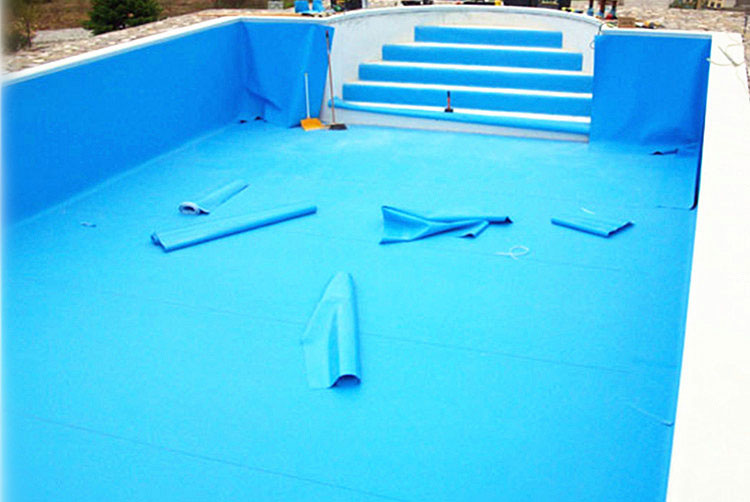
Application Method: Step-by-Step Process
A systematic application process ensures long-term performance.[ might vary a bit as per waterproofing selected]
Surface Preparation
The concrete surface must be clean, smooth, and free from dust, oil, or loose particles. Cracks and voids should be repaired before application.
Joint and Detail Treatment
Critical areas such as joints, corners, and pipe penetrations must be treated using sealants, water stops, and reinforcement mesh.
Application of Waterproofing Layer
The membrane is applied in multiple coats to achieve the required thickness.
Best practices include:
- Uniform application
- Cross-layer coating
- Reinforcement at vulnerable areas
Protective Layer
A protective screed is applied to safeguard the membrane from damage during finishing work.
Tile Fixing and Finishing
Tiles are installed using compatible adhesives and waterproof grouts to ensure durability.
Flood Testing
The pool is filled with water and monitored for leakage over several days. This step confirms system integrity before use.
How to Select the Right Waterproofing System
Choosing the correct system depends on several project-specific factors.
Structural Condition
If the structure is prone to movement or cracking, flexible systems like polyurethane membranes are more suitable.
Project Type
Large commercial projects may benefit from sheet membrane systems, while smaller projects may use cementitious coatings.
Exposure Conditions
Rooftop pools exposed to extreme weather require UV-resistant and durable systems.
Budget vs Performance
While cost is a factor, selecting a low-cost system without considering performance can lead to higher long-term expenses.
Compatibility
Ensure that all components – membrane, adhesive, grout – are compatible with each other.
Conclusion
Roof swimming pool waterproofing is a highly specialized process that demands careful planning, correct material selection, and precise execution. It must withstand continuous water pressure, environmental exposure, and structural movement without failure. A successful waterproofing system is not defined by a single product but by a well-integrated approach that includes structural design, proper detailing, and quality application.
When done correctly, it ensures a leak-free, durable, and low-maintenance pool. However, any compromise, whether in design, material, or workmanship—can lead to significant structural and financial consequences. In modern construction, as rooftop pools continue to gain popularity, the importance of robust waterproofing cannot be overstated. It remains the foundation for ensuring both performance and longevity.
Image Credit: buildingenclosureonline.com,






