Modern road construction relies on advanced pavement materials and construction techniques that deliver strength, durability, and superior riding comfort. Among these, Dense Bituminous Macadam (DBM) and Bituminous Concrete (BC) play a vital role in flexible pavement systems. Together, they determine the road’s ability to bear heavy traffic loads while enhancing resistance to cracking, deformation, and environmental stresses.
Advantages of DBM and BC Layers
- High Structural Strength: DBM provides the necessary load-bearing capacity to handle heavy and repetitive traffic.
- Smooth Surface Finish: BC offers excellent riding comfort and skid resistance.
- Waterproofing: The dense texture of BC prevents moisture infiltration, protecting lower layers.
- Durability: Properly constructed DBM and BC layers can last 10–15 years with minimal maintenance.
- Ease of Maintenance: Damaged sections can be repaired quickly using overlay or milling methods.
- Adaptability: Suitable for highways, urban roads, industrial corridors, and airports.
- Thermal Resistance: BC surface resists temperature fluctuations, reducing cracking.
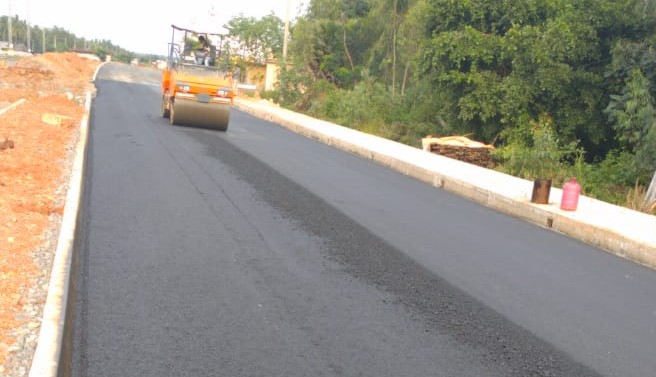
Understanding Dense Bituminous Macadam (DBM)
Dense Bituminous Macadam (DBM) acts as a structural base or binder course in flexible pavement. It consists of a dense mix of coarse aggregates, fine aggregates, filler, and bituminous binder, designed to resist deformation under repeated traffic loading. The mix is laid hot and compacted to achieve a dense, impermeable layer that distributes traffic stresses efficiently to lower layers.
Key features of DBM:
- Serves as the principal load-bearing layer of flexible pavement.
- Possesses excellent durability, strength, and fatigue resistance.
- Typical layer thickness ranges from 50 mm to 100 mm.
- Binder content generally varies between 4% and 4.5% using VG-30 or VG-40 bitumen.
- Ideal for heavy-traffic highways, expressways, and urban arterial roads.
The dense gradation minimizes air voids, reducing the chances of water infiltration and moisture-related damage. A properly constructed DBM layer provides a stable foundation for the Bituminous Concrete surface course above it.
Construction Process of Dense Bituminous Macadam (DBM)
Building a DBM layer involves several carefully controlled steps to ensure desired strength, density, and uniformity. Each stage must adhere to specifications laid out in MoRTH (Ministry of Road Transport & Highways) and IRC (Indian Roads Congress) guidelines.
- Surface Preparation- The base course, usually Wet Mix Macadam (WMM), is cleaned thoroughly and leveled. A tack coat of bitumen emulsion is applied to promote adhesion between layers.
- Mix Production- Aggregates and bitumen are heated and blended in a batch or drum-type hot mix plant. Proper temperature control ensures uniform coating and prevents binder aging.
- Transport and Laying- The hot mix is transported to the site in insulated tippers to maintain temperature. It is laid with a sensor-controlled paver finisher to achieve the desired thickness, line, and level.
- Compaction- Rolling begins immediately after laying to ensure density before cooling. Vibratory rollers perform the initial compaction, followed by pneumatic tyred rollers for surface sealing.
- Quality Control- Tests such as Marshall stability, binder content, density, and thickness checks are performed regularly to ensure compliance with specifications.
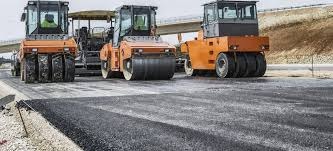
Understanding Bituminous Concrete (BC)
Bituminous Concrete (BC) forms the topmost wearing course of a flexible pavement. It provides a smooth, durable, skid-resistant, and weatherproof surface that enhances ride comfort and safety. The mix design for BC is more refined than DBM, incorporating smaller aggregates and higher binder content to achieve compactness and impermeability.
Key features of BC:
- Functions as the wearing course protecting lower layers.
- Provides smooth riding quality and excellent skid resistance.
- Typical layer thickness varies between 25 mm and 50 mm.
- Bitumen content ranges from 5% to 6%.
- Uses VG-30, VG-40, or Polymer Modified Bitumen (PMB) depending on climate and traffic load.
The BC layer not only improves driving comfort but also acts as a protective seal against moisture and oxidation, extending the service life of the pavement.
Construction Process of Bituminous Concrete (BC)
The BC construction process is more precise because surface appearance, smoothness, and durability depend on it.
- Surface Preparation and Tack Coat- The existing DBM surface is cleaned with air blowers and coated with a thin tack coat to ensure strong bonding between layers.
- Hot Mix Preparation- Aggregates and bitumen are mixed in a hot mix plant at a controlled temperature ensure uniform coating and consistency.
- Laying the Mix- The hot BC mix is laid using a sensor-guided paver finisher that controls thickness, cross slope, and smoothness.
- Compaction- Compaction is performed using steel-wheel and pneumatic rollers in sequence to achieve the required density and eliminate surface voids.
- Finishing and Curing- Once cooled, the pavement is checked for surface evenness and texture. The road can be opened to traffic after 24 hours of curing at ambient temperature.
Essential Equipments and Tools Used
High-quality DBM and BC construction relies on specialized road construction equipment:
- Hot Mix Plant: Ensures accurate heating, mixing, and uniform coating of aggregates and bitumen.
- Bitumen Sprayer: Applies tack and prime coats evenly for proper layer bonding.
- Sensor Paver Finisher: Lays mix precisely with controlled grade and slope.
- Vibratory Roller: Achieves primary compaction through vibration.
- Pneumatic Tyred Roller: Provides final sealing and uniform compaction.
- Insulated Tippers: Maintain mix temperature during transportation.
- Thermal Scanner or Infrared Thermometer: Monitors surface temperature to prevent premature cooling.
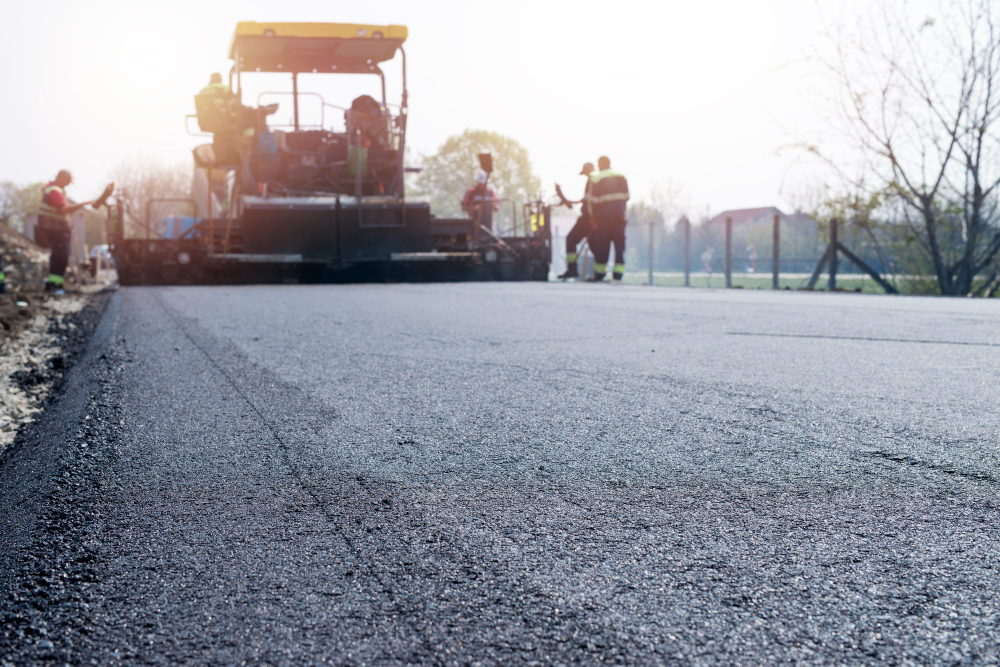
Common Construction Challenges
Despite technological advancements, several issues may occur if construction practices are not followed properly:
- Rutting: Excessive binder or poor compaction can lead to surface depressions.
- Cracking: Occurs due to temperature variations or poor bonding between layers.
- Bleeding: Caused by over-rolling or excessive bitumen.
- Segregation: Improper mix handling may separate coarse and fine aggregates.
- Poor Drainage: Inadequate slope or water stagnation weakens the pavement structure.
Timely detection and rectification using surface dressing or overlay techniques prevent premature failures.
Sustainability and Emerging Technologies
The road construction industry is shifting toward greener, smarter, and more sustainable practices. In DBM and BC construction, these innovations are gaining traction:
- Reclaimed Asphalt Pavement (RAP): Recycling old pavement materials reduces waste and raw material costs.
- Warm Mix Asphalt (WMA): Allows mixing and laying at lower temperatures, saving energy and cutting emissions.
- Polymer Modified Bitumen (PMB): Enhances elasticity, temperature resistance, and fatigue life.
- Fiber Reinforcement: Improves tensile strength and crack resistance.
- IoT-Based Compaction Systems: Provide real-time data on density and temperature during rolling.
- GPS-Controlled Paving: Ensures perfect level and grade accuracy, reducing material wastage.
These advancements not only improve performance but also contribute to India’s sustainable infrastructure development goals.
Applications of DBM and BC Pavements
- National Highways and Expressways
- Urban Arterial Roads
- Industrial Corridors and Port Roads
- Airport Runways and Taxiways
- Parking Lots and Logistic Parks
- Rural Roads (PMGSY Upgrades)
Conclusion
Dense Bituminous Macadam (DBM) and Bituminous Concrete (BC) together represent the essence of durable and high-performance road construction. DBM provides the strength and resilience needed for load distribution, while BC ensures a weather-resistant, smooth riding surface. When constructed with precision, using high-quality materials, modern equipment, and strict quality control, these layers guarantee long service life and cost-effective maintenance. As India continues to expand its road network under programs like Bharatmala and PMGSY, the role of DBM and BC in achieving safe, sustainable, and efficient pavements will remain unmatched.