Volumetric modular construction, also known as volumetric prefabrication, is a method where building modules are fabricated offsite under controlled conditions and then transported to the construction site for assembly. Each module is a complete three-dimensional unit, including walls, floors, ceilings, electrical and plumbing services, and sometimes interior finishes. Once delivered, the modules are assembled in a sequence to form a complete structure.
This construction method has been increasingly adopted in residential, commercial, healthcare, and hospitality projects due to its potential to reduce project duration, improve quality control, and optimize resource use. Volumetric modular units differ from panelized systems because they are fully enclosed and integrated, rather than being flat panels that require on-site assembly.
Fabrication Process
The production of volumetric modular units typically occurs in specialized offsite factories or workshops. The process involves several steps:
- Design and Engineering: Detailed architectural and structural designs are developed. Coordination with mechanical, electrical, and plumbing (MEP) systems are pivotal to ensure that all utilities are integrated within the modules. Building Information Modeling (BIM) is often employed to detect conflicts and improve accuracy.
- Material Preparation: Materials such as concrete, steel, timber, or lightweight composites are prepared and cut to the required dimensions. Standardized components are used to ensure repeatability and ease of assembly.
- Module Fabrication: Each module is constructed in a controlled environment, which reduces exposure to weather conditions and enables consistent quality. Walls, floors, ceilings, and services are integrated during fabrication.
- Quality Checks: Modules undergo inspections for structural integrity, alignment, and functionality of MEP systems. Factory-controlled environments facilitate stricter quality assurance compared to traditional site-based construction.
- Finishing: Internal finishes such as wall panels, flooring, and ceilings are installed before transportation. This reduces the need for finishing work on-site, speeding up overall project completion.

Advantages of Volumetric Modular Units
Volumetric modular construction offers several operational and technical advantages over conventional construction methods:
- Reduced Construction Time: Modules are fabricated simultaneously with site preparation, shortening the overall project timeline. Projects that traditionally require 12–18 months can often be completed in 6–9 months using volumetric modular units.
- Quality Control: Factory conditions allow for standardized quality checks and reduce variability caused by on-site environmental factors, such as temperature, humidity, or weather delays.
- Material Efficiency: Offsite fabrication allows better control of material usage, reducing waste and optimizing cost. Standardized production minimizes excess ordering and on-site cutting.
- Labor Optimization: Skilled labor is concentrated in the factory, which can reduce reliance on large on-site workforces. This is particularly useful in urban areas where space and labor availability may be limited.
- Safety: Onsite construction hazards are reduced because major structural work occurs offsite. Risks related to height work, heavy machinery, or environmental exposure are minimized.
- Flexibility and Scalability: Modular units can be designed for various building types, including multi-story residential buildings, hotels, student housing, and healthcare facilities. Modules can be added or removed to modify the building layout.
- Sustainability: Controlled manufacturing reduces waste and energy consumption. Modules can be reused or reconfigured, supporting circular construction practices.
- Reduced Site Disruption: With a significant portion of work completed offsite, the on-site construction phase is shorter and less disruptive to surrounding areas.
Types of Volumetric Modular Units
1. Structural Steel Frame Units
Structural steel frame units are widely used in modular construction due to their strength and adaptability. These units are fabricated from steel columns, beams, and cross-bracing, forming a rigid skeleton that can withstand significant loads. They are suitable for multi-storey developments and applications requiring large spans or open interiors, such as offices, hotels, or institutional buildings. The steel framework allows for precise dimensional control, easy transportation, and quick alignment during assembly on-site.
2. Concrete Modular Units
Concrete modular units are manufactured using precast reinforced or prestressed concrete panels formed into three-dimensional modules. These units provide excellent load-bearing capacity and durability, making them suitable for high-rise structures, residential complexes, and infrastructure-related facilities. Due to their thermal mass and inherent fire resistance, concrete modules are frequently applied where performance standards demand robust structural integrity. While heavier than steel or timber alternatives, their strength allows stacking to greater heights.
3. Timber Frame Modular Units
Timber frame modular units are constructed using engineered wood components such as laminated veneer lumber (LVL), cross-laminated timber (CLT), or traditional framing. These units are lightweight, easy to handle, and can be produced with a high degree of precision. They are commonly used in low- to mid-rise housing, schools, and community facilities. Timber modules are often chosen for their ease of on-site installation and reduced foundation requirements, although their use in taller structures requires hybrid approaches with steel reinforcement.
4. Hybrid Modular Units
Hybrid modular units combine different structural systems—typically steel frames for load-bearing capacity with timber or light-gauge steel infill for walls and partitions. This approach allows manufacturers to optimize material performance while maintaining flexibility in design. Hybrid modules are commonly applied in projects that demand both structural robustness and rapid installation, such as mixed-use developments, hospitals, and educational institutions. They are also suited for custom architectural features where a single material system may not provide the required versatility.
5. Container-Based Units
Container-based volumetric units repurpose shipping containers as structural frames for modular construction. The steel shell of the container serves as the primary load-bearing structure, which is then modified internally with insulation, wall linings, and mechanical systems to form habitable spaces. Container modules are cost-effective, stackable, and relatively easy to transport. They are often used for temporary housing, site offices, pop-up retail, or small residential projects. However, modifications are required to address thermal performance and compliance with building codes.
6. Light-Gauge Steel Units
Light-gauge steel volumetric units are fabricated using thin, cold-formed steel sections that are easy to assemble in factory conditions. These units are lighter than structural steel frames but still provide good dimensional accuracy and load-bearing ability. They are typically used in housing, student accommodations, and healthcare facilities where speed of delivery is important. Light-gauge steel units can be transported with reduced logistical complexity compared to heavier alternatives, making them suitable for remote or urban infill sites.
7. Specialized Functional Units
Different volumetric modular units are produced with pre-integrated mechanical, electrical, and plumbing (MEP) systems or tailored for specific uses, such as bathroom pods, kitchen units, or plant rooms. These specialized units are manufactured separately and later inserted into larger structures. Their prefabricated nature ensures consistency in finishes, reduced site labor, and simplified coordination of building services. They are widely used in hotels, hospitals, and large residential projects where repetitive functional spaces are needed.
Design Considerations
The design of volumetric modular units requires careful attention to structural, functional, and logistical factors:
- Structural Integrity: Modules must be capable of withstanding transportation loads, lifting operations, and stacking forces during assembly. Steel frames, reinforced concrete, or composite structures are commonly used.
- Dimensional Accuracy: Transportation constraints limit module dimensions. Width, height, and weight are designed to comply with road transport regulations. Modules are typically 3–5 meters wide and up to 12 meters long, depending on logistics.
- Service Integration: Electrical wiring, plumbing, HVAC, and fire protection systems are integrated within the modules. Careful planning ensures that connections between modules are precise and allow easy maintenance.
- Connection Detailing: Modules are connected using mechanical fasteners, welding, or interlocking systems. Joints must account for movement, tolerance, and weatherproofing.
- Transport and Lifting: Crane capacity and site access determine module size and weight. Proper lifting points are incorporated during design.
Site Assembly Techniques
On-site assembly of volumetric modular units involves a systematic sequence:
- Site Preparation: Foundations are prepared according to module design. Utilities such as water, sewer, and electrical connections are positioned to align with the modules.
- Module Delivery: Modules are transported to the site using trucks equipped for oversized loads. Delivery schedules are coordinated to minimize site congestion.
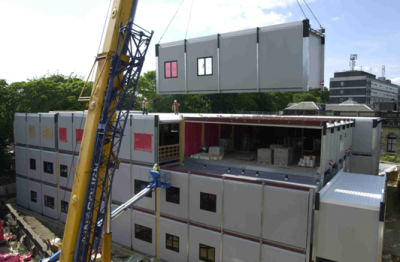
- Positioning and Placement: Cranes lift the modules from trucks to the foundation. Modules are placed sequentially according to the structural layout, starting from the base level.
- Alignment and Securing: Modules are aligned and secured to the foundation and adjoining modules. Connections are checked for level, plumb, and lateral stability.
- Utility Integration: Pre-installed MEP systems are connected between modules. Mechanical joints, electrical cables, and plumbing pipes are tested to ensure functionality.
- Finishing and Inspection: Exterior and interior finishes, including façade elements, painting, and flooring, are completed. Final inspections confirm compliance with design and building codes.
Applications
Volumetric modular units are used across several sectors:
- Residential: Multi-story apartments, student housing, and social housing projects.
- Commercial: Hotels, serviced apartments, and office buildings.
- Healthcare: Hospitals, clinics, and emergency medical facilities.
- Education: Classrooms and dormitories for schools and universities.
- Temporary Facilities: Disaster relief shelters, worker accommodations, and modular offices.
Conclusion
Volumetric modular units represent a significant advancement in modern construction methods. By fabricating complete building modules offsite and assembling them on-site, this approach provides faster construction, higher quality control, reduced labor requirements, and better material efficiency. It is suitable for a wide range of building types and urban conditions. Successful implementation requires careful design, logistics planning, and coordination between design, fabrication, and construction teams.