
In the last few decades, the Indian real estate expansion has been marked by glittering skylines, corporate centers and high-rises which represent vision and desire. However, as the dust of over-urbanization settles, a less noisy but more forceful pattern is being calculated nationally, the emergence of semi-urban residing ecosystems.
It is not only a matter of expansion shifting, it is a matter of evolution. It is an indication of a shift in the aspirations of Indians of living not only to get homes but a community that is balanced in terms of affordability, accessibility, and sustainability.
The Semi-Urban Momentum
The post-pandemic era redefined priorities. Remote work, digital connectivity, and improved infrastructure have made it possible for people to live meaningfully outside major metros. Families who once struggled with the cost and congestion of big cities are now rediscovering the comfort of smaller towns with better air, open spaces, and a sense of community.
Semi-urban centers such as Indore, Surat, Lucknow, Coimbatore, and Bhubaneswar are becoming magnets for both homebuyers and developers. These regions offer a unique combination of affordability and growth potential where an individual can own a spacious home without compromising on modern amenities.
According to government and industry estimates, Tier-2 and Tier-3 cities will contribute nearly 45–50% of India’s housing demand by 2030. This surge isn’t accidental; it’s powered by better road connectivity, the rise of small and medium enterprises, and the rapid spread of digital infrastructure.
From Housing Projects to Ecosystems
However, building in these regions requires a shift in mindset. Semi- urban housing is not the imitation of the metropolitan model: it is the invention of self-sufficient ecosystems.
Metros, in terms of housing, is normally pushed in a vertical direction due to land shortage and the increase in prices. There’s space to breathe, both physically and conceptually. In this case, developers can come up with integrated townships that consider sustainability, community living and efficiency on the use of resources.
The future is in the so-called smart semi-urban ecosystems in which housing would be supported by solar energy, by rainwater harvesting, digital connection, accessible healthcare, and localized employment possibilities. It’s simply about houses that do not only offer shelter, but create lifestyles based on well-being.
Affordability Without Compromise
The semi-urban housing wave also addresses one of the country’s deepest challenges: affordability. Real estate in metros has long been out of reach for the middle class. Semi-urban India, however, offers a fresh opportunity to bridge the gap between aspiration and accessibility.
With land costs nearly 60–70% lower than in major metros, developers can design more spacious, well-planned communities at prices that remain attainable. At the same time, government initiatives like PMAY (Pradhan Mantri Awas Yojana) and infrastructure development through Smart City Mission have further fueled this transition.
The interesting part is the rising demand not only of affordable housing but good affordable housing. The semi-urban consumer today is digitally aware, design conscious and gives preference to long-term sustainability. They do not seek a compromise, but rather in search of a superior alternative.
Sustainability: The New Foundation
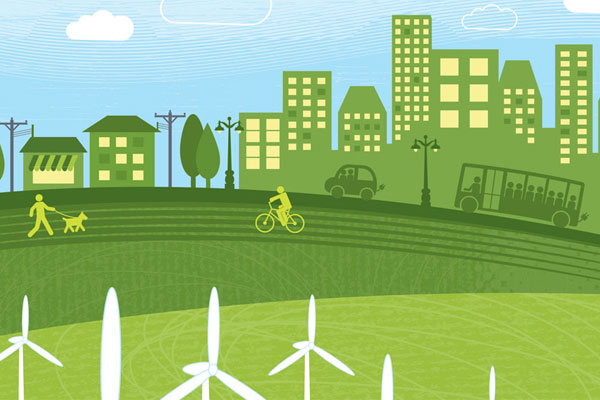
The future is always about planning ahead and sustainability cannot be a mere appendix, it should be integrated into it. With a blank canvas to work with, semi-urban India presents the developer with a clean slate to include green practices in their development.
This includes:
- Natural lighting and ventilation construction with a passive approach.
- Water-efficient systems like rainwater harvesting and greywater recycling.
- Use of renewable energy, particularly solar rooftops for residential clusters.
- Smart Trash Management systems can be replicated to small communities.
These measures not only lower operational costs but also future-proof developments against environmental challenges. It is not merely about constructing more homes but to obtain and construct them in a responsible manner.
Digital Inclusion: The Silent Game-Changer
Digital connectivity is possibly one of the most influencing forces behind the semi-urban boom. The ubiquity of fast internet has opened up the possibilities which all but major cities were previously restricted to.
It has made the life of semi-urban people convenient and connected through remote work, online education, telemedicine, and e-commerce. The next wave of digital-first township is being defined by the developers who incorporate digital infrastructures such as high-speed internet, smart security facilities, and energy monitoring.
By doing so, they are not only providing housing to people, but are acting to support local economies and communities to succeed in the digital age.
The Human Element: Building with Empathy
The triumph with the semi-urban development is beyond technology and sustainability as it is empathy, a kind of understanding of human need of belonging, safety and identification. By going to build smaller towns, you aren’t only developing land but you are also creating culture and livelihood.
This ecosystem incorporates local artisans, construction laborers and suppliers. The ripple effect of one project can transform local employment, skills, and pride. And that is what the real change in the semi-urban housing revolution is, inclusive.

Looking Ahead: The Next Chapter of India’s Growth Story
The semi-urbanisation of housing is not a temporary trend, it is India that is entering a new growth book. It constitutes replenishment of opportunities, with development having a uniform distribution on the country rather than being concentrated on a limited number of cities.
Our role in all this, as developers, urban planners, and policymakers, is to carry on with this momentum with the vision of creating, not just modern, but meaningful communities.
The goal isn’t to replicate the metros, it’s to redefine progress: homes that are smarter, greener, and rooted in humanity.
Because the future of Indian real estate doesn’t lie in taller towers it lies in stronger communities. And the heartbeat of that future is already pulsing through the semi-urban landscape of tomorrow.
About Author
The author is is India’s leading Real Estate Coach, bestselling author, builder-developer, and Founder of AJ Academy & Amvisha Real Estate Developers. With a mission to democratize real estate education, he has mentored over 5 lakh individuals and created India’s first Real Estate Club to empower aspiring investors and first-time buyers. His vision focuses on driving India’s next housing revolution through affordable housing and financial independence, especially in tier-2 and tier-3 cities.