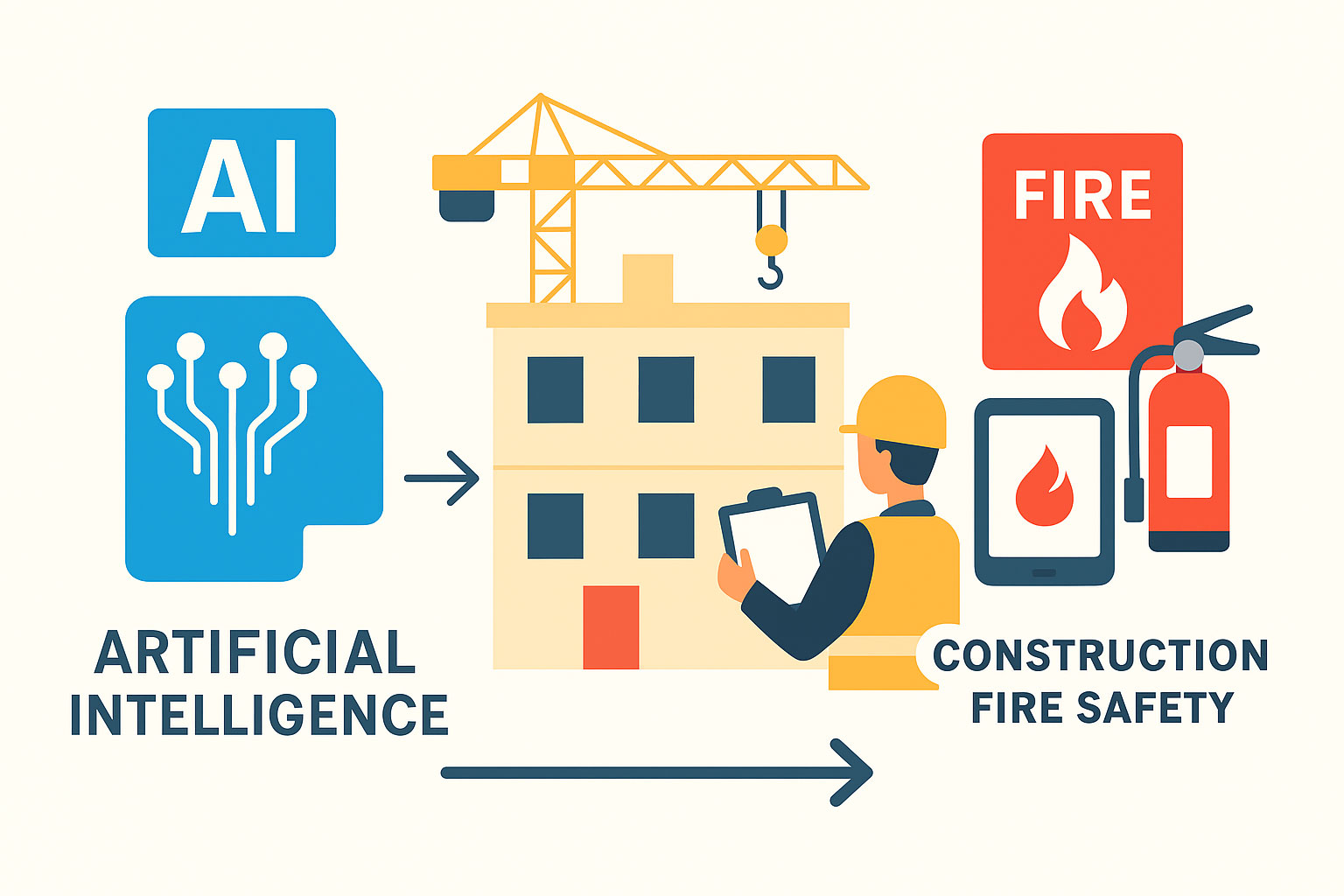
Fire remains one of the most devastating hazards in the construction industry—causing severe injuries, project delays, insurance losses, and in extreme cases, total site destruction. Traditional fire safety measures in construction sites have largely been reactive: installing extinguishers, conducting routine checks, and complying with safety codes. However, as project scales grow and urban sites become more complex, the industry is shifting toward predictive fire risk management, powered by data analytics, IoT sensors, and artificial intelligence (AI).
Predictive analytics enables construction stakeholders to anticipate potential fire risks before ignition occurs, using data patterns derived from equipment performance, environmental conditions, human activity, and material properties. This approach marks a profound evolution—from responding to incidents to preventing them through foresight.
The Rising Need for Predictive Fire Safety in Construction
Construction projects are inherently dynamic environments—electrical systems evolve, temporary structures shift, and combustible materials accumulate rapidly. According to NFPA and global insurance data, construction sites account for thousands of fire incidents annually, with leading causes including:
- Hot work operations (welding, cutting, grinding)
- Electrical faults due to temporary wiring
- Improper storage of flammable materials
- Negligent smoking or ignition sources
- Equipment overheating or fuel leaks
In traditional fire safety management, these risks are addressed through inspections, signage, and periodic supervision. Yet, such methods depend heavily on human vigilance and may not capture subtle risk patterns developing in real time.
Predictive analytics bridges this gap—transforming isolated safety checks into a continuous, data-driven risk monitoring system. By integrating sensor data, environmental readings, and operational logs, predictive systems identify deviations that precede fire hazards, enabling early interventions.

Benefits of Predictive Analytics in Fire Safety
When effectively implemented, predictive analytics provides measurable gains:
- Early Risk Identification: Detects precursors before visible fire hazards emerge.
- Reduced Site Downtime: Preventive maintenance avoids stoppages due to fire-related damage.
- Insurance Optimization: Demonstrated risk reduction can lead to premium discounts.
- Worker Safety: Real-time alerts protect workers from high-risk zones.
- Data-Driven Compliance: Simplifies reporting and auditing for safety authorities.
- Sustainability: Minimizes material waste and environmental damage from fire events.
How Predictive Fire Analytics Works
At its core, predictive analytics in fire safety relies on data collection, modeling, and real-time interpretation. The system combines multiple layers of intelligence:
- Data Acquisition
Sensors and IoT devices deployed across the construction site collect parameters such as:
- Ambient temperature, humidity, and air quality
- Gas concentrations (e.g., CO, CO₂, VOCs)
- Electrical current fluctuations
- Machine vibration and heat signatures
- Worker movement and equipment usage patterns
- Data Integration and Storage
All this information is transmitted to a centralized platform—often cloud-based—where it’s aggregated and organized for analysis. - Machine Learning Models
Historical fire incident data and site-specific records train algorithms to detect correlations—such as how specific temperature rises, electrical loads, or weather conditions have preceded fires in similar contexts. - Risk Scoring and Alerts
The system assigns real-time fire risk scores to various zones or equipment. When thresholds are exceeded, automated alerts are sent to supervisors, enabling proactive measures like isolating equipment, inspecting circuits, or adjusting ventilation. - Continuous Feedback Loop
Each incident or near miss refines the model further, making predictions more accurate over time.
This cyclical intelligence turns passive monitoring into predictive protection, enhancing both worker safety and project resilience.

Key Applications of Predictive Analytics in Fire Risk Management
Hot Work Monitoring
Hot work—like welding or cutting—is among the top causes of fire on construction sites. Predictive analytics systems integrate with thermal cameras and gas sensors to detect abnormal heat accumulation or gas concentration spikes during such operations.
If the temperature exceeds safe limits or if oxygen and fuel levels approach flammable thresholds, the system can automatically trigger ventilation systems or pause machinery before ignition occurs.
Electrical System Prediction
Temporary electrical setups are common on construction sites. Predictive models analyze current flow, load patterns, and voltage irregularities to identify potential short circuits or overloads. AI-driven systems can even forecast component degradation, allowing maintenance teams to replace cables or panels before faults occur.
Material Storage Risk Assessment
Combustible materials like insulation, solvents, or wooden formwork pose fire risks if stored improperly. By integrating RFID tags and environmental sensors, predictive tools track storage temperature, chemical proximity, and humidity, ensuring compliance with fire codes. If an unsafe combination or environmental anomaly is detected, the system alerts safety officers instantly.
Workforce Behavior Analytics
Human error accounts for a large portion of fire incidents. Predictive analytics can incorporate data from wearable devices or site access systems to monitor unsafe behaviors—such as unauthorized hot work, smoking in restricted zones, or improper tool usage. AI-based image analytics can also analyze CCTV feeds to detect sparks, smoke, or unprotected flame usage in real time.
Equipment and Machinery Risk Prediction
Heavy equipment, generators, and fuel-driven systems can overheat or leak. Predictive systems use thermal imaging sensors and vibration analytics to forecast failure points—signaling when a motor or pump is at risk of overheating. Preventive maintenance based on this insight reduces both fire and downtime risks.
Integrating Predictive Fire Analytics with Site Safety Systems
Predictive fire risk systems do not operate in isolation—they integrate with the broader safety ecosystem of a construction project.
Integration Components:
- Fire Detection Systems: Predictive algorithms enhance conventional smoke or heat detectors by adding contextual data—helping differentiate between harmless dust and real smoke signatures.
- Building Information Modeling (BIM): Fire risk data overlays onto digital construction models, offering visual insights into high-risk areas.
- Site Management Platforms: Predictive alerts feed directly into project management dashboards, enabling coordination with safety officers and emergency responders.
- Emergency Response Systems: If risk escalation is detected, evacuation or suppression systems (like mist sprays or alarms) can be automatically triggered through IoT-enabled controls.
Technologies Powering Predictive Fire Safety
- Internet of Things (IoT): Provides the sensory foundation—capturing data continuously from field devices.
- Artificial Intelligence (AI) and Machine Learning (ML): Learns from historical data to refine predictive models.
- Big Data Analytics: Processes large datasets from multiple construction sites to identify emerging risk patterns.
- Digital Twins: Virtual replicas of construction sites that simulate fire behavior and predict spread dynamics based on real-time input.
- Edge Computing: Enables instant data processing at the site level, pivotal for low-latency decision-making.
- Cloud-Based Dashboards: Offer centralized monitoring and reporting for multi-site contractors or large developers.
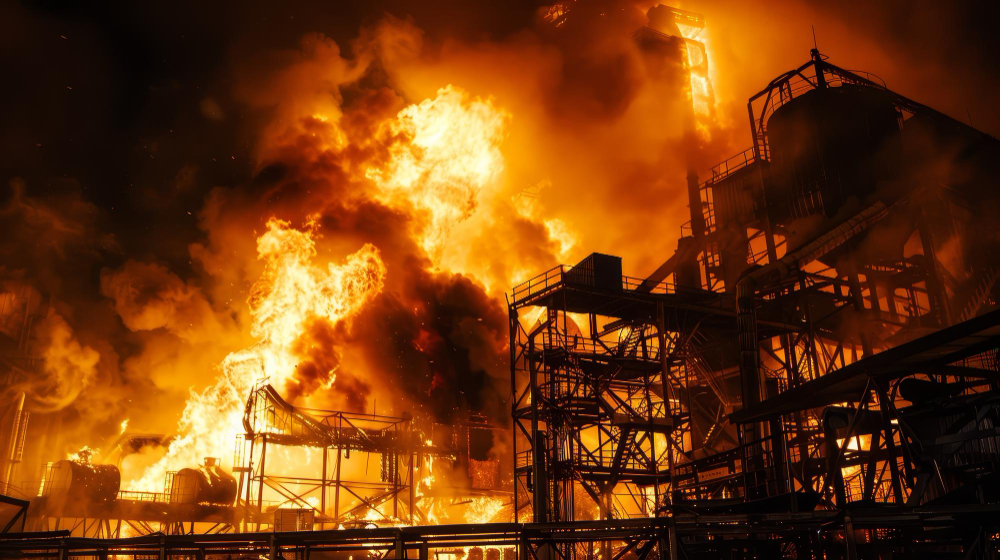
Challenges and Implementation Barriers
Despite its promise, predictive fire analytics faces several practical and organizational hurdles:
- Data Availability and Quality: Many construction sites lack historical or consistent data, reducing model accuracy.
- Sensor Durability: Dust, vibration, and weather conditions affect sensor reliability on active sites.
- Integration Complexity: Aligning predictive systems with legacy fire protection or alarm systems requires technical interoperability.
- Cost Constraints: Smaller contractors may view advanced analytics as a non-essential investment.
- Human Resistance: Workers and supervisors may be hesitant to rely on AI-based safety recommendations.
- Regulatory Adaptation: Fire codes and insurance frameworks are still catching up with predictive technologies.
Addressing these challenges demands training, stakeholder buy-in, and phased deployment, starting with pilot projects and gradually scaling across larger developments.
The Future: AI, Robotics, and Autonomous Response
As predictive systems mature, the next frontier involves autonomous fire response.
AI-driven drones could perform early-stage inspections of hotspots, while robotic extinguishers might engage before humans even arrive.
Integration with 5G connectivity will enhance data transmission speeds, and AI co-pilots embedded in construction management software will continuously recommend preventive safety actions.
Predictive models will also evolve into prescriptive analytics, advising not only what could go wrong but how to prevent it most efficiently. This shift from prediction to prevention will redefine construction safety standards globally.
Conclusion
Fire safety in construction is moving from reaction to prediction. With predictive analytics, project managers can foresee risks, intervene early, and save lives and assets. By combining IoT sensors, AI, and data modeling, predictive systems bring intelligence to every phase of construction—from foundation to finishing.