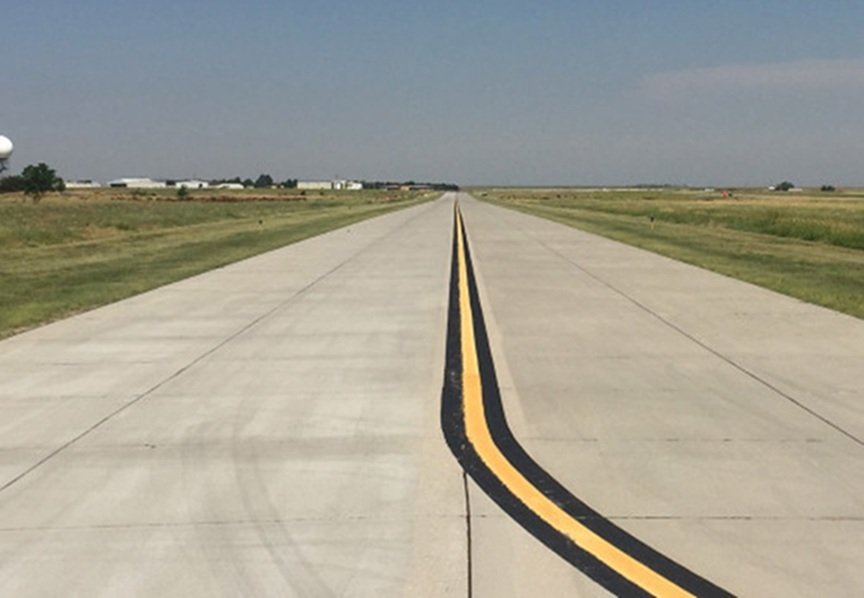
Airports are some of the most complex civil engineering projects in the world. The runway, being the most important part, must support the repeated takeoffs and landings of heavy, high-speed aircraft while withstanding dynamic loads, braking forces, environmental stress, and temperature variations. In addition, the runway surface must ensure proper friction, effective drainage, and long-term durability. Constructing a runway for a high-performance airport involves a combination of careful planning, material selection, advanced engineering techniques, and meticulous construction processes.
Design Considerations for High-Performance Runways
The design phase of a runway is fundamental to its performance and longevity. Several factors must be taken into account to ensure the runway can handle current and future operational demands:
- Aircraft Load and Traffic Characteristics– The runway must be designed to accommodate the expected types of aircraft, including wide-body jets and cargo planes, considering their weight, landing gear configuration, braking forces, and traffic frequency. Proper structural design ensures the pavement can resist repeated heavy wheel loads without deformation or failure.
- Subgrade Conditions– The strength and stability of the underlying soil are pivotal. Weak soils require stabilization through compaction, additives, or geosynthetic reinforcement. A thorough analysis of soil properties determines the depth and type of pavement layers required.
- Pavement Thickness and Layering– Runways are built in multiple layers, typically including the subgrade, sub-base, base, and surface layers. Each layer contributes to load distribution, stability, and drainage. Depending on aircraft weight and soil quality, total pavement thickness may exceed.
- Drainage and Environmental Management– Efficient drainage prevents water accumulation, which can weaken the subgrade, cause hydroplaning, and reduce pavement longevity. Runway design incorporates surface slopes, subsurface drainage, and collection systems to manage rainfall and runoff.
- Surface Friction and Skid Resistance– The runway surface must provide high friction to ensure aircraft safety during landing and takeoff, even under wet conditions. Surface texture, grooving, and material selection are pivotal in preventing aquaplaning.
- Safety Zones and Buffer Areas– Modern runways incorporate safety areas beyond the runway thresholds to accommodate aircraft overrun or undershoot scenarios. These areas are kept clear of obstacles and sometimes reinforced to safely decelerate an aircraft in emergencies.

Pavement Materials and Selection
Selecting the appropriate pavement material is an important step in runway construction. The two primary options are concrete (rigid pavements) and asphalt (flexible pavements), with many high-performance runways adopting composite or hybrid structures.
Concrete Pavements
Concrete is widely used for major airport runways due to its strength, durability, and resistance to heavy aircraft loads.
- Strength and Durability: Concrete provides high compressive strength, maintaining stability under repeated heavy loads without excessive deformation. Its rigidity ensures a smooth, safe surface for aircraft operations.
- Long Service Life: Concrete pavements generally offer decades of service with minimal deformation, making them ideal for high-traffic airports.
- Resistance to Chemicals and Fuel Spills: Concrete surfaces resist damage from fuel, hydraulic fluids, and de-icing chemicals.
- Variants: High-performance concrete, fiber-reinforced concrete, and roller-compacted concrete are commonly used to enhance durability, reduce cracking, and enable rapid construction.
- Challenges: Concrete has higher initial costs, requires precise curing, and can be prone to cracking if joints are improperly designed or the subgrade is unstable.
Asphalt Pavements
Asphalt is a flexible material that allows minor movements without cracking.
- Flexibility and Repair: Asphalt can accommodate slight soil movement and is easier to repair than concrete, minimizing runway downtime during maintenance.
- Cost and Construction Speed: Asphalt is often less expensive and faster to construct, making it suitable for airports with budget constraints or phased construction requirements.
- Surface Treatments: Specialized asphalt mixes and porous friction courses improve drainage, friction, and durability.
- Challenges: Asphalt has a shorter lifespan under heavy aircraft traffic and may require more frequent resurfacing. It is also susceptible to rutting and deformation under repeated loads.

Composite Pavements
Composite or hybrid pavements combine the benefits of both concrete and asphalt, typically layering a cement-treated base beneath an asphalt or concrete surface. This approach improves load distribution, reduces deformation, and balances construction cost and performance.
Soil Stabilization and Subgrade Preparation
A runway’s performance heavily depends on the stability of the subgrade soil. Weak or variable soil requires careful stabilization to prevent settlement and cracking.
- Soil Compaction: Layers of subgrade soil are compacted to achieve the required density. Soft spots are replaced or treated to ensure uniform support.
- Soil Treatment: Lime, cement, fly ash, or other stabilizing agents are used to enhance soil strength.
- Geosynthetics and Geogrids: Modern construction often employs geosynthetic materials to reinforce the subgrade and base layers, distributing loads more evenly and improving overall pavement stability.
- Drainage Integration: Geotextiles and geocomposites facilitate water movement, preventing waterlogging and preserving subgrade strength.
Construction Process
The construction of a high-performance runway follows a systematic sequence to ensure quality and durability.
- Subgrade Preparation– The subgrade is graded, compacted, and stabilized. Weak areas are corrected, and proof-rolling is performed to verify uniform density.
- Base and Sub-base Layer Placement– Crushed aggregates form the sub-base and base layers, distributing load and supporting the surface pavement. Cement-treated bases may be used for additional strength.
- Surface Pavement Installation
- Concrete Runways: Poured in slabs with proper curing, grooving, and jointing. Laser-guided equipment ensures flatness and alignment.
- Asphalt Runways: Hot-mix asphalt is laid in layers and compacted. Advanced mixes or warm-mix asphalt may be used to improve durability and reduce environmental impact.
- Concrete Runways: Poured in slabs with proper curing, grooving, and jointing. Laser-guided equipment ensures flatness and alignment.
- Grooving and Texturing
Grooves or surface texturing enhance drainage and friction, pivotal for safe braking and handling under wet conditions. - Quality Control– Throughout construction, rigorous testing ensures proper compaction, layer thickness, surface smoothness, and material quality. Any deviation is corrected immediately to maintain standards.
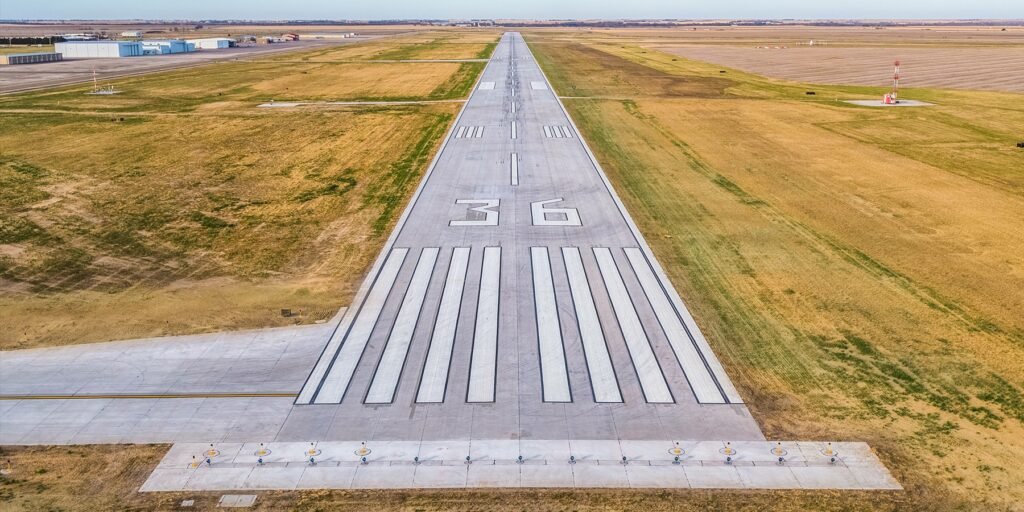
- Drainage, Lighting, and Markings– Surface and subsurface drainage systems are installed. Runway lighting, signage, and markings are applied according to aviation standards to ensure operational safety under all conditions.
Maintenance and Performance Optimization
Constructing a runway is only the first step; ongoing maintenance ensures safety and performance:
- Surface Maintenance: Aircraft tires leave rubber deposits, reducing friction. Regular rubber removal via mechanical or water-blasting methods is essential.
- Resurfacing and Rehabilitation: Asphalt or composite surfaces may require periodic overlays, while concrete slabs may need joint repair or replacement.
- Structural Monitoring: Regular inspections, including advanced technologies like UAV imaging and remote sensing, detect cracks, settlement, or deformation early.
- Sustainability Practices: Modern airports incorporate recycled materials, low-carbon concrete, and eco-friendly asphalt mixes to reduce environmental impact while maintaining durability.
Emerging Innovations
Runway construction continues to evolve with new technologies:
- High-Performance Materials: Advanced concrete and polymer-modified asphalt improve strength, longevity, and resistance to environmental factors.
- Geosynthetic Reinforcement: Geogrids and geotextiles enhance subgrade stability and load distribution.
- Sustainable Construction: Recycled aggregates, low-carbon cements, and eco-friendly paving materials reduce environmental impact.
- Simulation and Modeling: Advanced software predicts stress, load distribution, and material performance, optimizing design and reducing over- or under-engineering.
- Smart Monitoring: UAV-based inspection and AI analysis enable proactive maintenance and extend pavement life.
Challenges in Runway Construction
Constructing a runway for high-performance airports is complex due to:
- Variable Soil Conditions: Weak or unstable subgrade requires extensive stabilization.
- Cost vs. Longevity Trade-offs: Balancing initial costs with long-term durability is important, especially when choosing between concrete, asphalt, or hybrid pavements.
- Environmental Constraints: Meeting sustainability requirements while maintaining performance can be challenging.
- Extreme Weather Conditions: Runways must withstand heavy rainfall, temperature variations, and freeze-thaw cycles without performance degradation.
- Operational Disruption: Major airports cannot afford long runway closures, requiring staged or rapid construction methods.
Conclusion
Constructing a high-performance airport runway is a complex integration of engineering, materials science, and project management. Success depends on thorough planning, precise material selection, advanced construction techniques, and ongoing maintenance. Modern runways are designed not only to meet immediate operational requirements but to remain safe, durable, and sustainable over decades of heavy aircraft use. By combining strong subgrade preparation, optimized pavement structures, surface treatments, drainage, safety features, and innovative technologies, high-performance airports can ensure efficient, safe, and long-lasting runway operations for the aviation industry of today and tomorrow.