
India’s temple cities have always been custodians of civilisational memory. They embody unwavering faith, unbroken heritage and cultural continuity dating back over 5000 years. Today, they are also becoming engines of economic growth and urban transformation. Rising pilgrimage mobility, expanding domestic tourism and global curiosity about India’s spiritual traditions are repositioning these cities as international destinations. This shift requires infrastructure that respects antiquity while enabling scale, efficiency and sustainability.
Spiritual tourism already constitutes a substantial portion of the country’s travel ecosystem. According to a recent report by KPMG, over 60 percent of domestic travel in India is linked to spiritual tourism, with 1.43 billion domestic pilgrim visits recorded in 2022 and 6.64 million foreign visitors arriving for pilgrimage-related travel. This volume signals both opportunity and responsibility. Cities built for devotional intimacy must now accommodate global footfalls without eroding their cultural essence.
Recent visitor trends illustrate the pace of transformation. Tourist arrivals in Varanasi rose from roughly 6.8 million in 2019 to nearly 72 million in 2022, while spiritual destinations in Madhya Pradesh collectively drew over 112 million visitors in 2023, with Ujjain alone receiving more than 52 million pilgrims.
Such growth has been enabled not only by faith but by infrastructure investment. Improved connectivity, accessibility and public facilities have been identified as central drivers behind rising footfall, with redevelopment initiatives at Kashi Vishwanath Temple significantly expanding annual visitation levels. Another stellar example of infrastructure-led sacred revitalisation is the Shree Jagannath Heritage Corridor at Puri, centred around the Jagannath Temple.
A compelling contemporary parallel can be seen in Yadadri, formerly Yadagirigutta, where the redevelopment of the Sri Lakshmi Narasimha Swamy Temple integrates expanded pilgrim circulation systems, widened access roads, organised amenities and a planned township ecosystem. This the temple town is evolving from a regional shrine into a structured spiritual city that stimulates hospitality, employment and peri-urban economic activity across eastern Telangana. The message for urban planners and developers is clear. While faith attracts the pilgrim, it is infrastructure that sustains the journey.
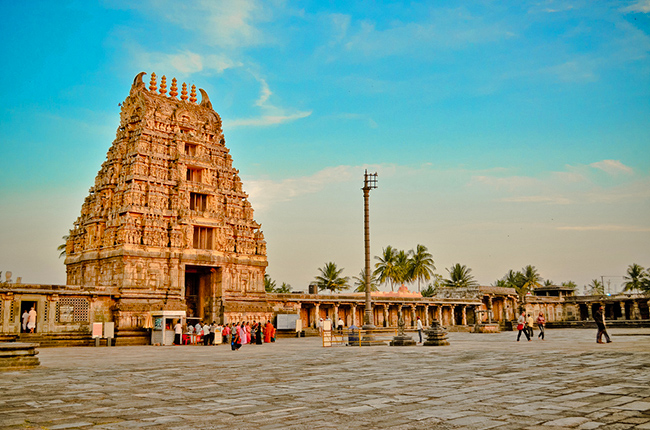
The Hyderabad metropolitan region has also emerged as a dispersed pilgrimage ecosystem, where rather than functioning as a single temple city, Hyderabad hosts a constellation of significant shrines across urban and suburban zones, enabling multi-shrine circuits within a contemporary metropolitan framework. Modern highways, metro connectivity and digital navigation tools integrate sacred destinations seamlessly into daily urban life, demonstrating how devotional landscapes can coexist with commercial dynamism. Similarly, the Vijayawada–Andhra Pradesh belt represents one of India’s highest-density temple corridors. Anchored by the revered Kanaka Durga Temple, this clustered sacred geography encourages circuit-based pilgrimage. Comparable principles are visible in Yadadri and in the broader Hyderabad–Vijayawada corridor, where coordinated investments in highways, rail upgrades, regional airport connectivity and digital crowd-management systems are transforming pilgrimage from a single-point devotional visit into a networked spiritual journey supported by logistics, planning and technology. The Yadadri–Hyderabad–Vijayawada corridor illustrates how temple cities increasingly function as interconnected regional systems rather than isolated sacred nodes.
Spiritual tourism produces quantifiable economic cascading effects. High visitor concentrations generate demand across transport, hospitality, urban services and construction. Large-scale pilgrimages trigger significant state investment in logistics and amenities, with multiplier effects reverberating through regional economies. In Telangana and Andhra Pradesh, the rise of interconnected temple corridors is strengthening informal economies, sustaining artisanal communities and reinforcing cultural entrepreneurship. When infrastructure planning aligns with local enterprise participation, temple regions transform into self-reinforcing economic ecosystems rather than seasonal destinations.
Temple cities are not only tourism centres. They are living and evolving ecosystems. Designing inclusive public realms, heritage walks, interpretive cultural districts and accessible civic spaces strengthens community wellbeing. Digital navigation tools, crowd management systems and integrated hospitality planning further enhance visitor comfort while maintaining urban resilience.
Infrastructure-led planning is transforming India’s temple cities from pilgrimage endpoints into globally competitive spiritual destinations. As development continues to integrate sustainability, heritage stewardship and urban intelligence, these cities will continue to emerge as exemplars of how faith-based tourism and modern infrastructure coexist. The future lies in alignment between vision and execution. When planning, policy and design converge with cultural sensitivity, temple cities will not merely accommodate growth. They will shape global benchmarks for sustainable spiritual urbanism for centuries to come.
About Author
The author is the Founder & Managing Director of Stonecraft Group, a visionary leader driving sustainable real estate projects with a strong focus on biophilic design, environmental preservation, and innovative urban development. With a deep commitment to integrating nature into built environments, he has pioneered eco-conscious residential and mixed-use developments that enhance well-being and quality of life. Under his leadership, Stonecraft Group continues to push the boundaries of responsible urban growth through technology-led, future-ready solutions.