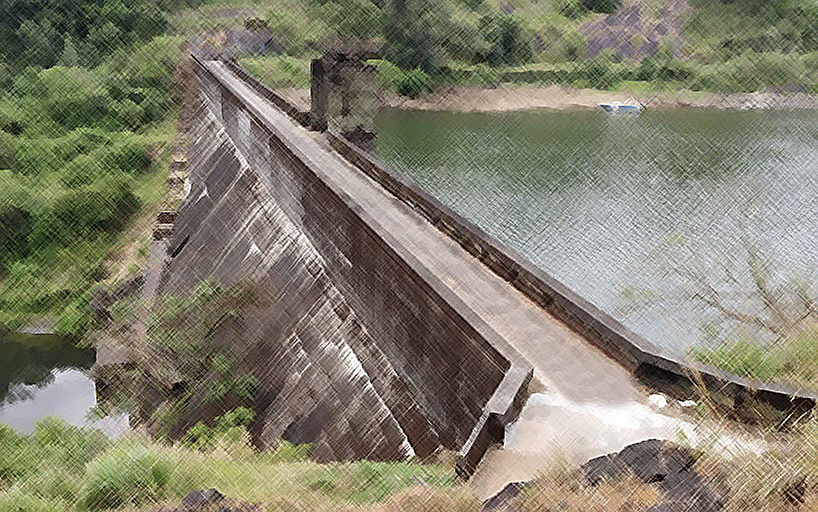
Saddle dams are auxiliary structures built to contain water in reservoirs where natural low-lying points, or “saddles,” exist around the main dam. Unlike the primary dam, which focuses on water retention, hydroelectric generation, flood control, or irrigation, saddle dams prevent spillover at these secondary low points, ensuring the reservoir maintains its full supply level. They function as part of a multipurpose water management system, supporting storage, power generation, irrigation, and flood control, and are essential in large-scale projects to optimize reservoir capacity and operational safety.
Purpose and Significance
Saddle dams address several operational and safety requirements for reservoirs:
- Reservoir Containment: By sealing low-lying areas around the reservoir, saddle dams allow the main dam to achieve full capacity without risking uncontrolled water overflow.
- Flood Risk Reduction: These dams provide additional flood protection by ensuring that water does not escape through surrounding terrain, which could damage settlements, agricultural areas, or downstream infrastructure.
- Optimized Water Storage: With saddle dams, reservoirs can store water at maximum designed levels, supporting irrigation, municipal supply, and hydropower generation.
- Environmental Management: Properly designed saddle dams help maintain reservoir stability, preventing soil erosion and preserving surrounding ecosystems.

Location and Site Selection
The design and placement of a saddle dam require careful geological and hydrological assessment:
- Topographical Surveys: Engineers conduct detailed surveys to identify low points around the primary reservoir. These areas, if left unaddressed, could allow water to escape once the reservoir reaches its full supply level.
- Geological Investigations: Understanding soil and rock characteristics is crucial. Stable foundation conditions reduce seepage risk and prevent structural failure. Soils prone to settlement, liquefaction, or erosion require special attention.
- Hydrological Analysis: Saddle dam design considers inflow rates, maximum flood levels, reservoir fluctuations, and spillway capacity to ensure that the dam functions effectively under all operational conditions.
Saddle dams are often constructed in series if multiple low points are present, with each dam designed based on site-specific requirements.
Types of Saddle Dams
Earthfill Saddle Dams
Earthfill saddle dams are constructed using compacted soil and locally available earth materials. These dams rely on a carefully designed impervious core, proper slope gradients, and layered compaction to minimize seepage and maintain stability. Drainage systems such as toe drains and filter layers are often incorporated to prevent internal erosion and piping. Earthfill dams are generally suitable for moderate heights and are widely used where sufficient earth material is accessible. They provide an economical solution while maintaining reservoir containment and operational safety.
Rockfill Saddle Dams
Rockfill saddle dams are made of compacted rock fragments with an impervious core or upstream membrane to control seepage. They are ideal in locations where large quantities of rock are available and where foundation conditions may not support extensive earth embankments. Rockfill dams have higher resistance to hydraulic pressures and are less susceptible to settlement compared to earthfill dams. Their structural design allows them to accommodate higher embankments, making them suitable for reservoirs with significant water loads.
Concrete Saddle Dams
Concrete saddle dams are constructed using gravity or roller-compacted concrete and are generally employed for smaller saddle dams or sites with space constraints. These dams offer high strength and durability with minimal maintenance requirements. Concrete structures are particularly effective in rocky terrain or locations where earth or rockfill options are not feasible due to limited material availability or unstable foundation conditions. Despite higher construction costs, concrete saddle dams provide precise engineering control and reliable performance.
Composite Saddle Dams
Composite saddle dams combine two or more construction materials, such as an earthfill core with a rockfill shell or concrete sections integrated with earth embankments. This design approach is applied when site conditions vary along the dam alignment, allowing optimal use of available materials while ensuring stability and seepage control. Composite dams provide flexibility in design, accommodating foundation variability, operational requirements, and reservoir safety standards, while effectively integrating the advantages of each construction material.
Design Considerations
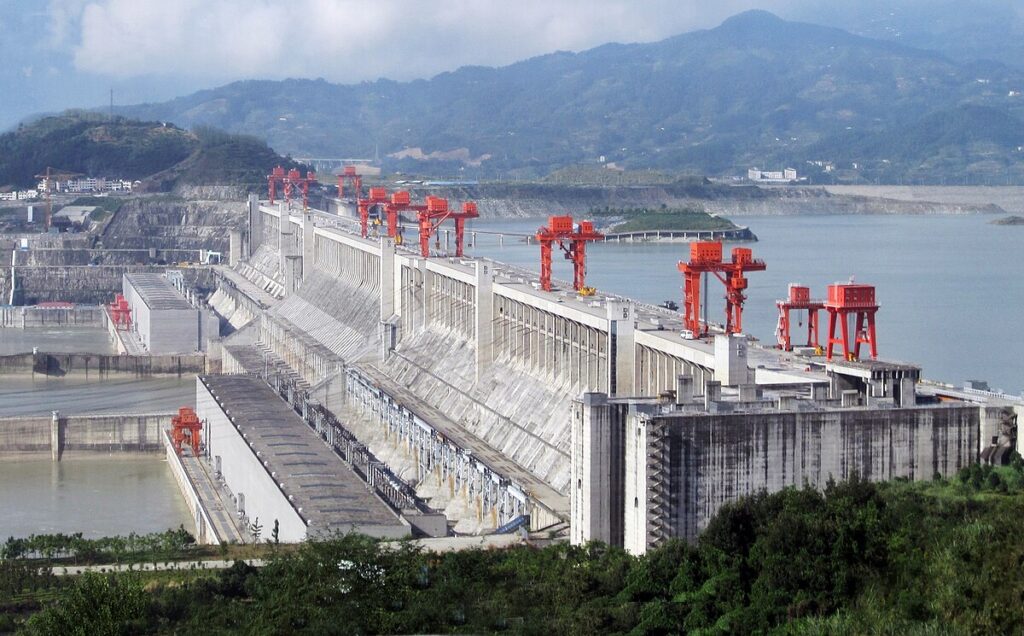
Saddle dam design follows engineering principles similar to main dam design, with adjustments for the auxiliary role:
- Height and Crest Width: Determined by maximum water level, freeboard requirements, and flood considerations.
- Seepage Control: Impervious cores, cutoff walls, and drainage blankets are used to minimize water infiltration.
- Slope Stability: Analysis includes static and dynamic conditions, including earthquake forces where applicable.
- Spillways and Relief Structures: Although saddle dams typically lack primary spillways, auxiliary spillways or channels may be included to prevent overtopping.
- Instrumentation: Monitoring devices, such as piezometers and inclinometers, are installed to detect seepage, settlement, and structural deformation.
Design must adhere to national and international dam safety standards to ensure operational reliability.
Construction Methods
The construction of a saddle dam involves sequential steps:
- Site Preparation: Clearing vegetation, removing unsuitable soil, and leveling the foundation.
- Foundation Treatment: Excavation to competent rock, grouting, or installation of cutoff walls to reduce seepage risk.
- Material Placement: Earth, rock, or concrete placement in layers with compaction and quality control checks.
- Drainage Installation: Upstream and downstream drains to manage seepage and prevent internal erosion.
- Crest and Slope Protection: Rock armoring, riprap, or protective concrete layers to resist wave action and erosion.
- Monitoring Systems: Installation of instruments to track performance during construction and operation.
Notable Examples
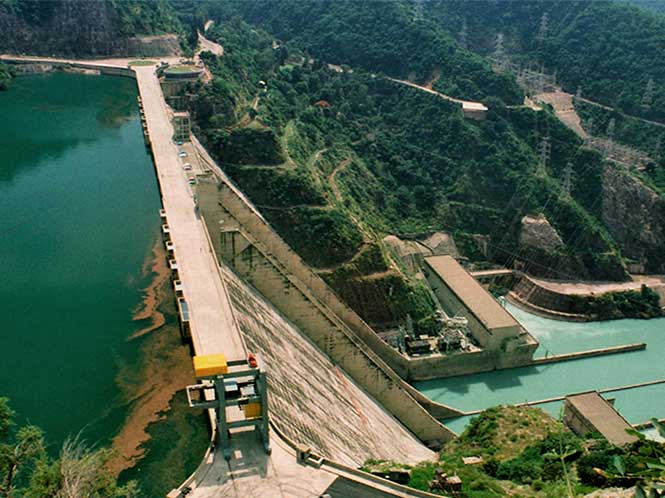
Several large reservoirs worldwide employ saddle dams to optimize storage capacity:
- Bhakra Reservoir, India: Multiple saddle dams complement the main Bhakra Dam, facilitating hydroelectric generation and irrigation.
- Sardar Sarovar Project, India: Auxiliary saddle dams manage low-lying points around the reservoir rim.
- Three Gorges Project, China: Secondary dams assist in controlling floodwaters and maintaining reservoir levels.
Conclusion
Saddle dams are integral components of reservoir systems, extending the capacity and safety of the main dam by sealing natural low points around the reservoir. Their design, construction, and operation require careful planning, material selection, and ongoing monitoring to prevent failures and ensure effective water management. By combining engineering expertise with hydrological and geological analysis, saddle dams support multipurpose projects, enhance flood control, and contribute to sustainable water resource utilization.