
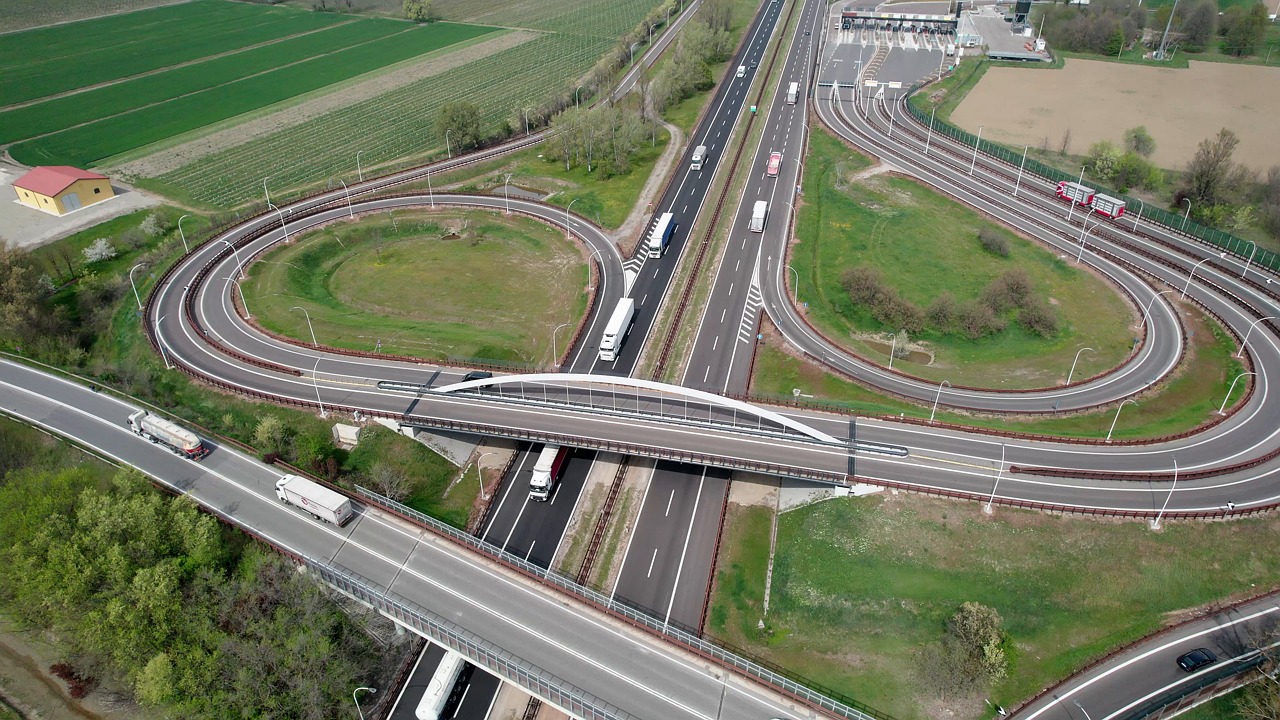
India’s Union Budget 2026 reinforces a principle long understood by market practitioners. Urban real estate demand is fundamentally shaped by public investment in infrastructure, mobility networks and city planning. Rather than relying on short-term stimulus measures, the Budget places emphasis on capital expenditure directed toward transport integration, connectivity corridors and urban system upgrades. These commitments carry direct implications for property markets, as infrastructure expansion influences land valuation, development feasibility and buyer behaviour. In an environment where accessibility and liveability increasingly determine asset desirability, the policy focus on connectivity and planning signals a structural recalibration of where demand emerges and how it evolves across urban India.
Infrastructure Spending as a Forward Indicator for Property Markets
From a financial standpoint, infrastructure spending acts as a forward indicator for real estate markets. Investments in highways, metro rail expansion, logistics corridors, and last-mile connectivity do more than improve mobility. They reprice land, redistribute population flows, and alter risk–return calculations for both developers and investors. By prioritising urban transport integration, transit-oriented growth, and city-level infrastructure upgrades, Budget 2026 signals sustained public-sector commitment to the underlying drivers of property absorption rather than short-term demand stimulus.
Connectivity, Mobility and the Expansion of Urban Catchments
The relationship is measurable. Enhanced connectivity compresses travel times, broadens labour catchments, and increases the effective economic radius of cities. Peripheral micro-markets once considered speculative begin to attract institutional development once infrastructure visibility improves. Office occupiers recalibrate location strategies based on workforce accessibility, while residential buyers increasingly evaluate properties through the lens of commute certainty rather than mere distance from central business districts.
From Centralised Cities to Multi-Nodal Growth Corridors
This shift is already evident across major urban regions. Metro extensions and expressway-linked corridors have begun influencing both land monetisation strategies and asset allocation patterns. Budget-led infrastructure prioritisation strengthens these trends, supporting a transition from monocentric urban expansion toward multi-nodal growth clusters. Such spatial restructuring has implications for capital deployment, valuation stability, and inventory absorption cycles across residential, commercial, and mixed-use segments.
Urban Planning, Sustainability and Asset Resilience
Equally significant is the Budget’s continued focus on urban planning and service provisioning. Real estate demand is no longer shaped solely by built form; it is shaped by the economics of sustainability. This includes access to healthcare, education, digital infrastructure, green space, and civic amenities. Financially literate buyers are increasingly factoring these into purchase decisions, treating quality-of-life indicators as proxies for long-term asset resilience. Institutional investors, too, are incorporating planning depth and infrastructure certainty into underwriting models, recognising their correlation with rental sustainability and capital appreciation.
Shifting Buyer Preferences in a Connected Urban Ecosystem
Improved urban ecosystems also reshape product preferences. Better-connected districts encourage demand for integrated townships, transit-linked housing, and mixed-use developments that reduce dependence on private mobility. Retail and hospitality formats align with these evolving catchments, while office occupiers gravitate toward locations that combine accessibility with amenity depth. In effect, infrastructure investment does not simply expand demand, but rather redefines its very nature.
Capital Allocation, Location Strategy and Market Positioning
For policymakers, developers, and financial institutions, the Budget’s infrastructure-centric orientation provides a predictable macro signal. Urban property markets will increasingly be governed by network efficiency rather than geographic proximity alone. Capital allocation decisions, land banking strategies, and project positioning must therefore account for mobility trajectories and planning frameworks as much as current demand indicators.
The Emerging Geography of Real Estate Opportunity
India’s urban real estate sector stands at a point where value creation is inseparable from public investment in connectivity and city systems. Budget 2026 reinforces that alignment. As infrastructure corridors extend and planning frameworks mature, the geography of opportunity will continue to shift, rewarding those who recognize that the future of real estate demand lies not just in buildings, but in the networks that connect them.
Authored by;

Executive Director – Finance & Group CFO of Elan Group



