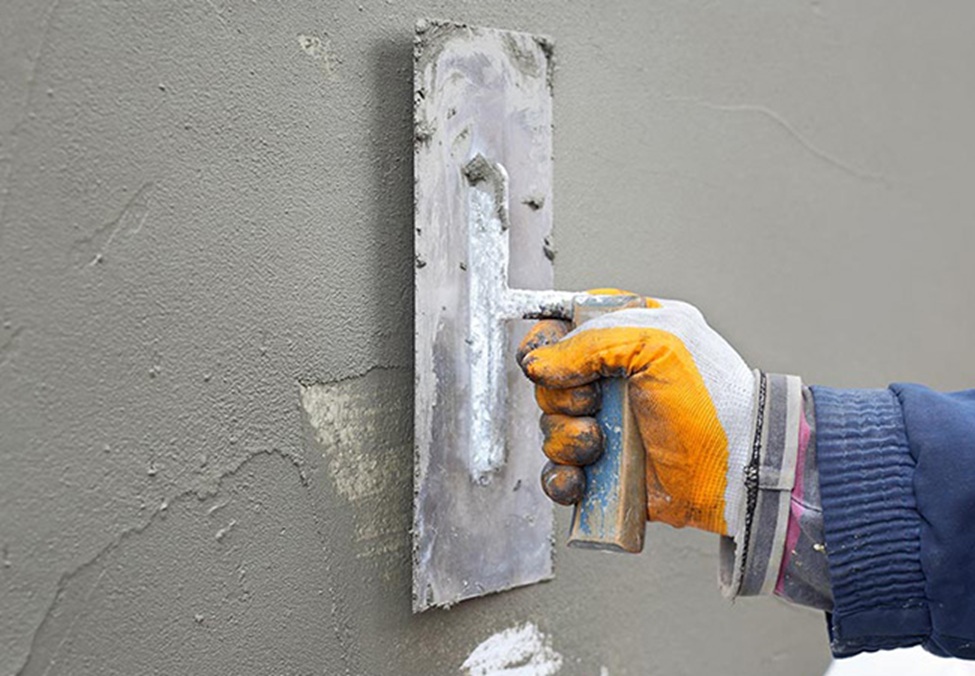
Plastering is one of the most visible stages of construction – and also one of the most common sources of problems. In India, plaster is usually mixed on-site using sand, cement, and water, often without consistent proportions. This leads to uneven quality, cracks, and poor long-term performance.
Differences in materials and workmanship make the results unpredictable, increasing the chances of rework and maintenance.
Dry mix plastering mortars offer a better solution.By reducing manual errors and improving workability, dry mix mortars help achieve smoother finishes, less wastage, and faster construction. They also improve durability, making them a more reliable choice for modern building projects.
What Are Dry Mix Plastering Mortars?
Dry mix plastering mortars (also known as dry mix mortars) are factory-manufactured, pre-blended dry material combinations of cementitious binders, fine aggregates (e.g., graded sand), and performance-enhancing additives. These mortars are produced in controlled industrial environments and delivered to the site in a ready-to-use form. At the construction site, workers only need to add the specified amount of clean water and mix briefly before application.
The key difference from traditional site-mixed plaster lies in the precision of the mix: strict material ratios, consistent raw material quality, and carefully designed additives ensure predictable properties such as workability, strength, adhesion, and water retention.
The Traditional Problem in India’s Construction Sites
In India, most conventional plastering still follows on-site mixing with basic materials – cement and sand – measured by volume. This approach suffers from multiple issues:
- Inconsistent Mixing Ratios: Manual batching often leads to variable cement-sand ratios from batch to batch, affecting compressive strength and durability.
- Variable Raw Materials: Sand quality varies widely in terms of particle size, impurities, and moisture content, causing irregular workability and performance.
- Skill Dependency: Quality depends heavily on the experience and diligence of individual masons and laborers, leading to inconsistencies across walls and buildings.
- Poor Quality Control: On most sites, there isn’t any systematic testing or control of plaster quality once it’s applied.
- Frequent Defects: Cracks, hollow patches, weak adhesion, and efflorescence are common quality defects arising from poor mixing, inadequate curing, and uncontrolled workmanship.
These issues not only compromise aesthetics but also reduce the long-term durability of walls and coatings, leading to frequent repair costs.
How Dry Mix Mortars Address On-Site Quality Challenges
1. Factory-Controlled Precision and Consistency
The fundamental advantage of dry mix mortars lies in factory-controlled formulation. In a dry mix plant, raw materials—cement, sand, mineral fillers, and additives—are automatically weighed, metered, and blended under standardized conditions. As a result:
- Every batch adheres to specified mix ratios.
- Variability due to human error on site is eliminated.
- Key mortar properties (compressive strength, setting time, water retention, adhesion) conform closely to performance standards.
2. Improved Workability and Performance
Dry mix mortars use engineered additives such as polymers, cellulose ethers, and water-retaining agents. These additives enhance key functional properties:
- Better workability and ease of application, even in high temperatures.
- Controlled setting times aligned with site work schedules.
- Superior water retention, reducing shrinkage cracking.
- Stronger adhesion to substrates (e.g., cement blocks, bricks).
This enables masons to achieve smoother surfaces with fewer defects, regardless of individual skill level.
3. Reduced Material Waste and Better Site Management
Traditional on-site mixing often results in material spills, wastage, and inconsistent disposal of leftovers. Dry mix mortars, supplied in pre-measured bags or silos, optimize site logistics:
- Lower material wastage and better inventory control.
- Cleaner site conditions with less dust and material tracking.
- Easier planning for procurement and storage.
This leads to improved productivity and reduced indirect costs.
4. Stronger Durability and Long-Term Performance
Dry mix mortars tend to produce plaster layers that:
- Resist shrinkage cracks due to better water retention and controlled hydration.
- Provide uniform strength, reducing hollowing or weak areas.
- Enhance adhesion with substrate surfaces due to consistent formulation.
These properties result in plaster finishes that perform better over time, reducing lifecycle repair costs.
Types of Dry Mix Plastering Mortars
Dry mix mortars are designed to meet different construction requirements. The main types include:
- Cement Plaster Mortars: Traditional sand-cement mixes with additives to improve workability, bonding, and water retention. Suitable for interior and exterior walls.
- Lime-Based Mortars: Incorporate lime to provide flexibility, reduce shrinkage, and allow breathable finishes. Often used in heritage and low-rise residential projects.
- Gypsum-Based Mortars: Fast-setting and ideal for interior finishing. Offers smooth surfaces for decorative plaster and wall panels.
- Specialty Mortars: Include fiber-reinforced, lightweight, waterproofing, or heat-insulating formulations. Designed for specific site challenges like high-rise walls, exposed facades, or wet areas.
Each type is formulated to address particular performance and application needs while maintaining factory-controlled consistency.
Applications in India
Dry mix plastering mortars are increasingly relevant in the Indian context due to rapid urbanization, labor variability, and climatic challenges:
- Residential Buildings: Interior and exterior walls benefit from smoother finishes, faster application, and fewer reworks.
- High-Rise Construction: Uniformity and faster setting times help reduce labor dependency and ensure structural aesthetics.
- Commercial and Institutional Projects: Large-scale plastering projects benefit from reduced material wastage, controlled quality, and predictable project timelines.
- Heritage Renovation: Lime-based dry mix mortars provide compatibility with old masonry while improving durability.
- Climate-Sensitive Applications: Waterproofing and thermal insulating mortars are especially useful in India’s monsoon-affected and hot regions.
Conclusion
Dry mix plastering mortars offer a modern solution to longstanding on-site quality challenges in India. Factory-controlled formulations ensure uniform strength, workability, and durability, while engineered additives reduce cracks, peeling, and other common plaster defects. With their versatility across residential, commercial, high-rise, and heritage projects, dry mix mortars are set to redefine plastering standards in India.