
1. Introduction
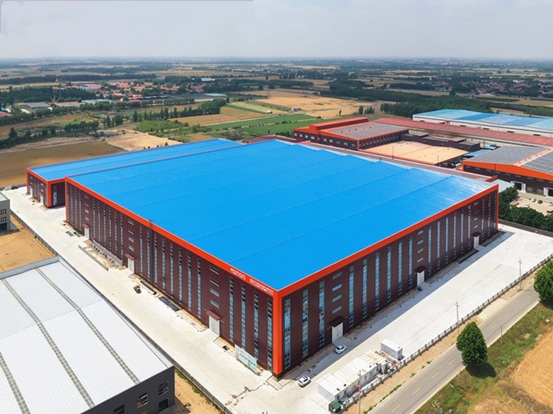
In the current construction and engineering field, steel structure buildings serve as the main choice for industrial, commercial, and large-scale projects. Steel structures gain recognition for their excellent strength-to-weight ratio, strong seismic resistance, and unmatched durability. Steel structures change the city outlines around the world and the work functions of industrial areas. Steel also works as an easily recycled and long-lasting material. Steel points to the path for green construction.
Steel appears in large manufacturing plants with wide spans, logistics centers, tall commercial towers, and detailed sports venues. As a leading international supplier of complete steel structure solutions, XINGUANGZHENG (XGZ) leads this field. XINGUANGZHENG uses high-quality manufacturing rules, new smart technology, and a focus on quality. XINGUANGZHENG supports clients around the world. XINGUANGZHENG provides safe, quick, and custom building spaces.
2. Planning and Design
The full success of any detailed steel structure project starts with careful early planning and exact blueprint work.
Architectural Design and Blueprints: Our official Engineering Design Qualification Certificate gives XINGUANGZHENG the full ability to manage complete project cycles. XINGUANGZHENG handles all tasks from basic city planning and building outline designs to structure engineering, MEP (Mechanical, Electrical, and Plumbing) engineering, interior design, and advanced Building Information Modeling (BIM). Our team applies 3D BIM technology. The team performs space improvement and conflict checks before construction starts. Clients gain full control over the final product.
Structural Engineering: Our focused team of skilled structural engineers carries out exact mechanical calculations. The calculations fit the real conditions at the project site, which include strong winds, heavy snow loads, and seismic zones. The team designs for industrial areas, cultural and educational centers, or residential buildings. Our structural engineering follows the top local and international building codes.
Permits and Approvals: Our strong design skills and full set of compliance documents support the project management team. The project management team helps property owners move through the regulatory system. The project management team obtains all required pre-construction permits and government approvals. The process ensures a smooth and legal project start.
3. Site Preparation
A building without structural issues needs a well-prepared foundation. Site preparation forms the key first physical step.
Clearing and Excavation: The construction team starts work. The team clears the site of all surface blocks, plants, and waste right away. Then, large excavation equipment moves in to handle soil work and site leveling. The work matches the exact heights in the blueprints. The subgrade gains even and code-matching load support.
Foundation Construction: The foundation acts as the main support for the building. Our construction teams pour strong reinforced concrete foundations. This phase requires great care. The placement of the built-in anchor bolts holds the most importance. Surveyors use precise laser tools to make sure the bolts match the pre-drilled holes in the steel column base plates. The XINGUANGZHENG factory machines these base plates with exact care. This exact placement creates a solid base for the frame assembly that follows.
4. Delivery of Steel Components
The prefabricated main steel columns and beams reach the site. XINGUANGZHENG’s strong technology management skills stand out at this point.
Digitalized Logistics and Materials: In June 2025, XINGUANGZHENG started its new Manufacturing Execution System (MES) and Production Digitalization System. This system connects the full supply chain without issues. The system covers contract handling, production planning, technical checks, and delivery logistics. Site staff use mobile app reports and IoT barcode scans. The staff verifies component details against the BIM model with accuracy. The process creates a smooth, error-free shift from the factory to the construction site.
Tools and Smart Equipment: The site needs large cranes and strong torque wrenches in place before arrival. The fitting steel components that arrive come from XINGUANGZHENG’s updated smart factories. These factories use local advanced smart machines. The machines include laser plate cutters, smart profile cutters, robotic welding stations, laser pipe cutters, and large bending machines. Our production accuracy ensures fast and smooth on-site assembly.
5. Framework Assembly
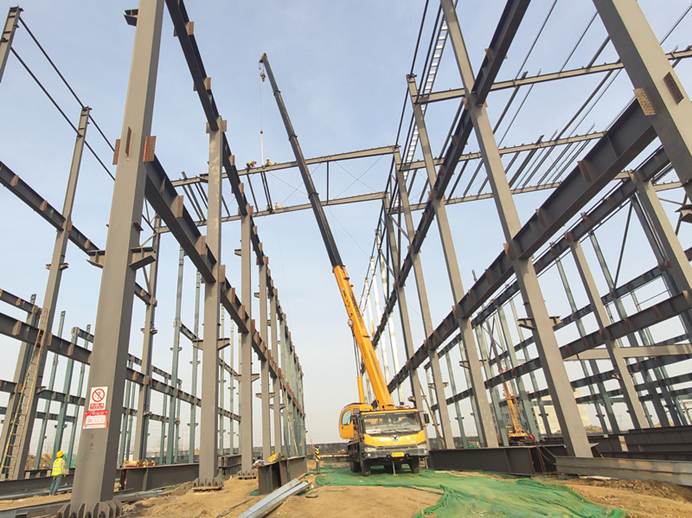
The framework rises upward. This phase draws the most attention in the project. The phase demands close teamwork and strict safety measures.
5.1 Installing Steel Columns: The main frame assembly begins with lifting the steel columns. Cranes raise columns that weigh several tons. The cranes place the columns exactly onto the built-in anchor bolts. Ironworkers use theodolites to check the straight-up position of each column. The position stays within close limits. Then, the workers tighten the large nuts to set the vertical line.
5.2 Installing Steel Beams: The column layout takes shape. Then, the main and secondary steel beams go in. XINGUANGZHENG leads with box beam automatic production lines and welded H-steel production lines. Each beam’s connection end-plates receive strict quality checks for size accuracy. Workers in aerial lifts apply high-strength structural bolts. Workers also perform field penetration welding at a high level. These methods secure the beams to the columns.
5.3 Installing Bracing and Cross-Bracing: Diagonal bracing and cross-tie rods go between columns and across the roof structure. These elements counter side shear forces from strong winds or earthquakes. The bracing system works with the main beam-column framework. The combination forms a firm space for load support. The setup greatly improves the building’s overall structure stability.
6. Roof Structure Installation
The main framework locks into place. The work turns to building a safe, weather-proof outer layer. The process starts at the top and moves down.
Roof Trusses and Panels: The framework assembly ends. Cranes lift the prefabricated roof trusses to their spots. Next, the purlin system is installed. The outside receives corrugated metal sheets or standing-seam roof panels. These systems resist wind uplift well. The systems direct heavy rainwater to the gutter systems without standing water.
Insulation and Waterproofing: Modern energy and heat rules demand compliance. High-density insulation materials like fiberglass or rigid foam go under the roof panels. At the same time, weather sealants, mastics, and flashing are applied to key joints, ridges, and eaves with care. The layers form a water barrier. The barrier keeps the building interior fully dry.
7. Wall Construction
The perimeter closes in. This step offers physical protection. This step sets the building’s visual style. This step forms the first barrier against outside conditions.
Steel Wall Panel Installation: The installation team adds prefabricated, efficient, insulated steel wall panels to the exterior wall girts in order. Polyurethane sandwich panels serve as an example. These panels provide strong thermal insulation and sound reduction. The panels come in many colors and shapes. The options give the industrial or commercial building a strong design and visual appeal.
Window and Door Installation: The early BIM model reserves exact opening sizes. Construction staff installs heavy industrial overhead doors, secure entry doors, and daylight windows with efficiency. Local reinforcement strengthens the framing around these openings. Weather-resistant caulking applies strictly. The caulking removes risks of air leaks or water entry.
8. Internal Structure and Finishing
The exterior shell seals up. The interior space adjusts to meet the client’s operational needs.
Internal Framing: Certain areas need office spaces, R&D laboratories, or separate fine-manufacturing zones. Light-gauge steel stud framing systems build internal partition walls in these spots. The systems allow flexible and effective space division.
Electrical and Plumbing Systems: Steel structures feature an open-web design. The walls have hollow cavities. These elements create clear paths for MEP network installation. Electrical cable trays, fire sprinkler pipes, HVAC ductwork, and smart factory sensor networks hang from the roof structure. The items also hide within the walls in a planned way.
Painting and Complex Coatings: Anti-corrosion and fire protection rank as top priorities. XINGUANGZHENG maintains fully automated spraying lines. XINGUANGZHENG leads the field in complex coating processing and inspection. AISC experts praised our skills in complex coating treatments during a recent review. Every steel component receives treatment to handle harsh conditions. Each component meets fire-resistance standards. The standards protect the structure during emergencies.
9. Inspection and Final Approval
A building is prepared for handover only after it passes tough quality control and safety checks.
Uncompromising Quality Checks: XINGUANGZHENG’s internal quality control goes beyond usual industry methods. Site rules require torque testing for high-strength bolts. Site rules also demand Non-Destructive Testing (NDT) for key welds. XINGUANGZHENG passed the strict audit from the American Institute of Steel Construction (AISC). The pass came with a rare “Zero Non-Conformance” result. This certification proves our manufacturing, processing, and quality inspection systems stand among the top worldwide.
Global Certifications and Government Inspections: Our production systems match US, European, Russian, and Chinese standards. We earned the respected EAC Certification recently. This certification opens access to the Eurasian Union market, which covers Russia, Kazakhstan, and Belarus. The certification shows XINGUANGZHENG’s products pass strict building safety and operation approvals in most countries.
10. Conclusion
Steel structure construction leads global engineering forward. The leadership comes from a mix of good efficiency, environmental sustainability, and solid structural performance. However, these large projects demand full respect for safety and quality to succeed.
Selecting XINGUANGZHENG involves working with a strong global company. The company holds full engineering design qualifications. The company uses integrated MES digital production systems. Top international approvals like AISC and EAC back the company. Our main focus on intelligent manufacturing and full quality drives XINGUANGZHENG. XINGUANGZHENG commits to providing high-performance, reliable steel structure projects. These projects endure over time for clients everywhere.
FAQ
Q: How does XINGUANGZHENG ensure production transparency and on-time delivery for large-scale or urgent projects?
A: To bridge the gap between production and delivery, we fully implemented our Production Digitalization System (MES) in June 2025. This system integrates contract management, production scheduling, technical oversight, and logistics tracking. By combining IoT (Internet of Things) with BIM visualization, every stage of your project is data-driven and transparent. This not only boosts our operational efficiency but also ensures that your project is delivered precisely on schedule and to exact specifications.
Q: Can XINGUANGZHENG’s products meet the requirements for projects that must adhere to international building standards?
A: Absolutely. XGZ maintains production systems compliant with American, European, Russian, and Chinese standards. Notably, we recently passed the AISC (American Institute of Steel Construction) audit with a “Zero Non-Conformance” score. We also hold the EAC Certification, the “quality passport” for the Eurasian Union (Russia, Kazakhstan, Belarus, etc.). This ensures our products can pass the most rigorous technical inspections in any global market.
Q: What professional design support can XINGUANGZHENG provide during the preliminary planning phase of a project?
A: XINGUANGZHENG is more than just a manufacturer; we are a comprehensive engineering service provider. Holding an official Engineering Design Qualification Certificate, we provide end-to-end services including urban planning, architectural schematic design, structural engineering, MEP (Mechanical, Electrical, and Plumbing), and interior design. Utilizing advanced BIM (Building Information Modeling), we conduct 3D spatial optimization and precise calculations before construction begins, delivering high-quality, integrated solutions for the entire building lifecycle.



