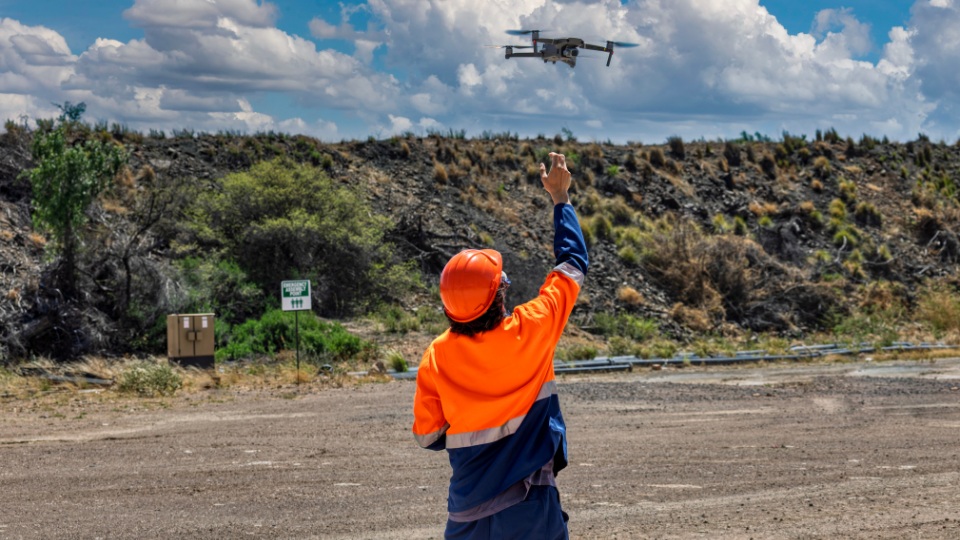
Infrastructure failures don’t announce themselves with fanfare. They happen quietly until the consequences become catastrophic. Traditional inspection practices across nuclear plants, offshore rigs, and chemical processing facilities routinely place workers in hazardous positions , often with inconsistent inspection outcomes.
This is an apparent challenge in the market, as drone inspection technology was worth $11.64 billion in 2024 and will be worth 25.82 billion in 2028. This is a booming growth that indicates a paradigm change: finally industries are discovering safer and more efficient methods to keep track of their most high-risk assets without jeopardising human lives.
Through the integration of a drone, sensors with high-resolution, and artificial intelligence-based analytics, UAV inspections provide superior performance in terms of quicker execution, safety, and precision of the data. With growing pressure on infrastructure owners to ensure that their assets are maintained effectively and meet high standards of safety, UAV inspections are quickly becoming the option of choice.
The Critical Challenge of High-Risk Infrastructure Safety in Modern Industrial Operations
The contemporary industrial business is experiencing a safety crisis that has never been seen before and it goes far beyond warning signs . Critical infrastructure in the UK is increasingly putting pressure on its services, with outdated structures being overloaded with tasks that they were not originally meant to perform.
Rising Infrastructure Failures and Their Devastating Financial Impact
Infrastructure failures don’t just disrupt operations, they devastate entire business models. A single power plant shutdown can cost millions per day, while a chemical facility incident might trigger environmental fines exceeding £50 million.
The impact of the effects is not limited to short-term losses. Insurance premiums soar following the event, inspecting regulators are on the increase and trust diminishes. The failure costs to companies are frequently found to outweigh their conventional inspection budgets.
With an advanced sensor-based, remotely piloted specialised UAV inspection, teams can collect highly detailed data. This approach is used for bridges, powerlines, flare stacks, and industrial environments with constrained access. It eliminates the need to place human personnel in hazardous positions . Inspections can also be completed without interrupting ongoing operations.
Why They Fail in High-Risk Environments
The traditional methods of inspection do not fit the modern environment, which is highly complex and hazardous. Inspections performed manually involve multiple scaffolds and long closures as well as groups of experts working under hazardous conditions.
The visual inspection can capture only the surface level problems but the internal problems intensify without detection. The delay between inspection and analysis implies that the problems get worse before the team can take action.
UAV Inspections: A Revolutionary Approach to High-Risk Infrastructure Safety
UAV inspections mark a fundamental switch from traditional methods of monitoring, combining the latest sensor technology with autopilot flight features. This ground breaking approach will turn unsafe, hazardous, and time-consuming inspections into secure and effective data gathering operations.
High-end Sensor Integration
Current UAV inspections use several sensor arrays which record data that cannot be detected by human inspectors. Thermal imaging detects heating patterns suggesting an electrical malfunction or insulation damage, and LiDAR generates accurate 3D solutions to structural defects .
Hyperspectral sensors are able to detect chemical indicators of material degradation at the molecular level. Early warning systems are a benefit of the gas detectors, which can detect a leak before it becomes dangerous compared to the traditional methods, which can never compete.
Real-Time Data Analysis and Edge Computing
Edge computing converts the raw sensor data to actionable intelligence as the UAV is flying. High-tech processors detect thermal patterns, structural anomalies, and red flags indicating possible safety risks in real-time.
This real time processing ability ensures that inspection teams do not get the critical information days after the mission but during the mission itself. UAV could be diverted to investigate suspicious areas more effectively with the help of teams in order to cover the possible sources of concern.
AI-Based Defect Recognition and Predictive Analytics
Thousands of infrastructure images trained to generate machine learning algorithms can detect defects that human inspectors can overlook. Such systems identify trends of initial failures, which allows predictive maintenance plans.
AI implementation does not stop at defect detection. Predictive analytics compare the present situation with previous data, detecting trends that indicate possible future failures. This is a preactive measure that avoids the occurrence of devastating events.
Although the technological basis of autonomous UAV inspections is based on AI-based defect detection and on-the-fly data analysis, the largest safety benefits are the true distinguishing feature of this method. Here, we examine how advanced UAV systems are shifting the limits of what is possible in extreme environment operations.
Cutting-Edge UAV Safety Advantages for Extreme Environment Operations
The benefits of UAV safety are far greater than being able to take humans out of dangerous areas. These advanced systems develop a brand new paradigm in monitoring high-risk infrastructure and maintaining operational continuity.
Zero-Entry Hazardous Zones Inspection Procedures
Zero-entry procedures prevent the exposure of human beings to radiation, toxic gases, and close spaces altogether. Nuclear containment vessels can be inspected with UAVs that have the advantages of having radiation-hardened electronics, while chemical-resistant UAVs can be used to evaluate processing equipment without exposing personnel to any risk.
Such protocols do not affect the quality of inspections. In many cases, they make inspections better. UAVs also ensure uniform patterns of flight and location of sensors, which minimise the variability that characterises conventional inspections. Standard methods provide uniform methods that enable each mission to record similar data in order to analyse trends.
Multi-Environmental Adaptability
Specialised UAV platforms are designed to work in harsh conditions that would subject even the most seasoned inspectors to. Waterproof versions are used when working in the offshore environment, and high temperature models are used in the environment of industrial furnaces and flare stacks.
Wind-resistant designs allow stable flights during the bad weather and the inspections can be extended, which was previously limited due to human safety concerns. These features ensure that critical inspections are not delayed because of difficult circumstances.
Advanced Collision Avoidance
Autonomous flight systems are used in industrial environments that are difficult to navigate. Sensors designed for obstacle avoidance identify the presence of pipes, cables, and structural elements and change flight paths to prevent collisions .
These systems are effective in GPS-denied settings that are common in industrial establishments. Visual navigation and indoor positioning systems allow full inspection of closed areas such as storage tanks and processing vessels.
Integration of Emergency Response and Crisis Management
Incident command systems incorporate UAV systems in emergency response planning. In emergency scenarios, UAVs offer situational awareness as the emergency unfolds, keeping response teams away from danger .
Quick deployment and long flight times are beneficial to crisis management. Critical visual intelligence is delivered to the emergency response teams within minutes, allowing them to make informed decisions about resource allocation and safety perimeters.
Zero-entry systems and automatic flight systems are only the tip of the iceberg when it comes to the capabilities of UAVs in dangerous areas. This really changes when the next-generation technologies in the aerial inspection field work together to produce comprehensive solutions that are industry game-changers.
Future-Proofing Your Infrastructure with Advanced Drone Inspections
Drone inspections continue to evolve rapidly, with emerging technologies and regulatory changes creating new opportunities for infrastructure management. Forward-thinking organisations position themselves to capitalise on these developments.
By allowing drone inspections, companies can examine bridges, power lines, offshore platforms, and industrial establishments without exposing workers to unsafe conditions and interrupting operations.
Emerging Regulatory Frameworks and BVLOS Expansion
Beyond Visual Line of Sight (BVLOS) operations dramatically expand UAV inspection capabilities. In May 2024, the agency approved a BVLOS flight for a drone for the first time, signalling a broader acceptance of extended-range operations.
BVLOS capabilities enable comprehensive inspection of linear infrastructure like pipelines and transmission lines. Extended range operations reduce mission frequency while increasing coverage areas and improving operational efficiency significantly.
Integration With Smart City and Industrial IoT Ecosystems
Smart infrastructure integration creates comprehensive monitoring networks that combine UAV inspections with permanent sensor installations. This integration provides continuous oversight with periodic detailed assessments.
IoT connectivity enables real-time data sharing between UAV systems and facility management platforms. Integrated systems automatically trigger inspection missions when sensor networks detect anomalies requiring visual confirmation.
Essential team structures and certification requirements provide the framework for successful UAV inspections, but nothing demonstrates the technology’s transformative power quite like real-world results. Examine how leading organisations have achieved game-changing outcomes through strategic UAV implementation.
Making the Smart Choice for Infrastructure Safety
High-risk infrastructure safety demands solutions that traditional methods simply can’t provide safely or efficiently. UAV technology offers proven capabilities that transform dangerous inspection challenges into manageable operational processes.
The evidence is clear: organisations implementing strategic UAV programmes achieve measurable improvements in safety, efficiency, and cost control. Perhaps it’s time to consider whether your infrastructure safety programme is keeping pace with available technology.
Your Essential Questions About High-Risk Infrastructure UAV Inspections
- What makes UAV inspections superior to traditional methods for high-risk infrastructure?
UAVs eliminate human exposure to dangerous environments while providing superior data quality through advanced sensors and real-time processing capabilities.
- How do UAV inspections handle extreme weather conditions and hazardous environments?
Specialised weather-resistant platforms operate in conditions that ground conventional aircraft, while autonomous systems maintain operations during communication disruptions.
- What regulatory approvals are needed for UAV inspections of high-risk infrastructure?
Requirements vary by location and application, typically involving commercial pilot certification, facility-specific permissions, and safety management system documentation.