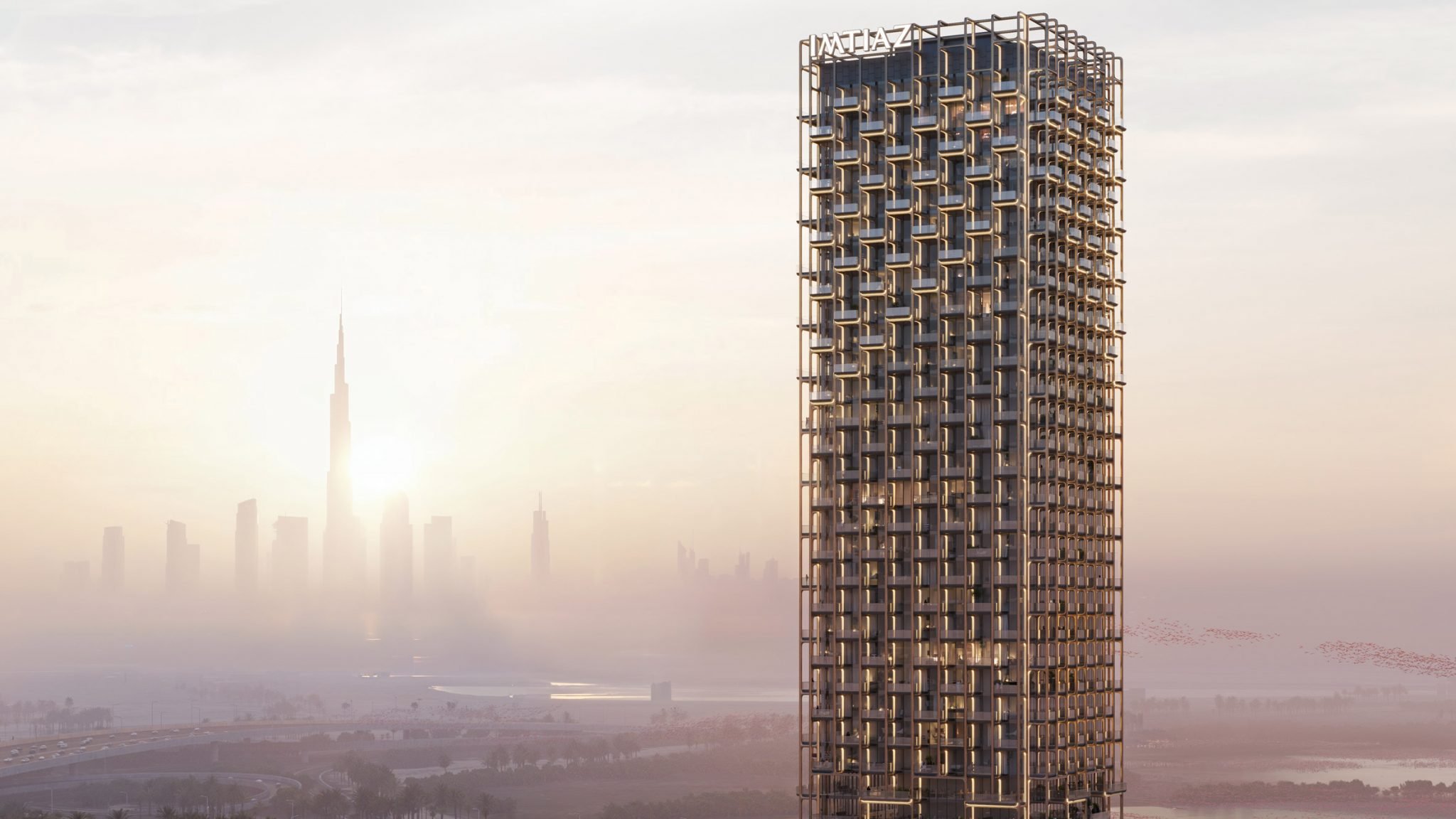
Zaha Hadid Architects (ZHA) has made public the blueprints for Symphony Tower, a residential high-rise that will be located along Dubai Creek. The 160-meter tower merges a modular structural system with a unique lattice exoskeleton that was derived from the handicraft of the Emirati people. The concept is to amalgamate the cultural references, the environmental performance, and the modern construction methods in one architectural expression.
Drawing from Emirati Embroidery Traditions
One of the main aspects of Symphony Tower is its lit-up exoskeleton, a structure and shading system that is based on the cultural heritage of Emiriti embroidered geometries and patterned embroidery. The studio claims that the lattice is a reference to the repeated geometric threads in the textile crafts of the region.
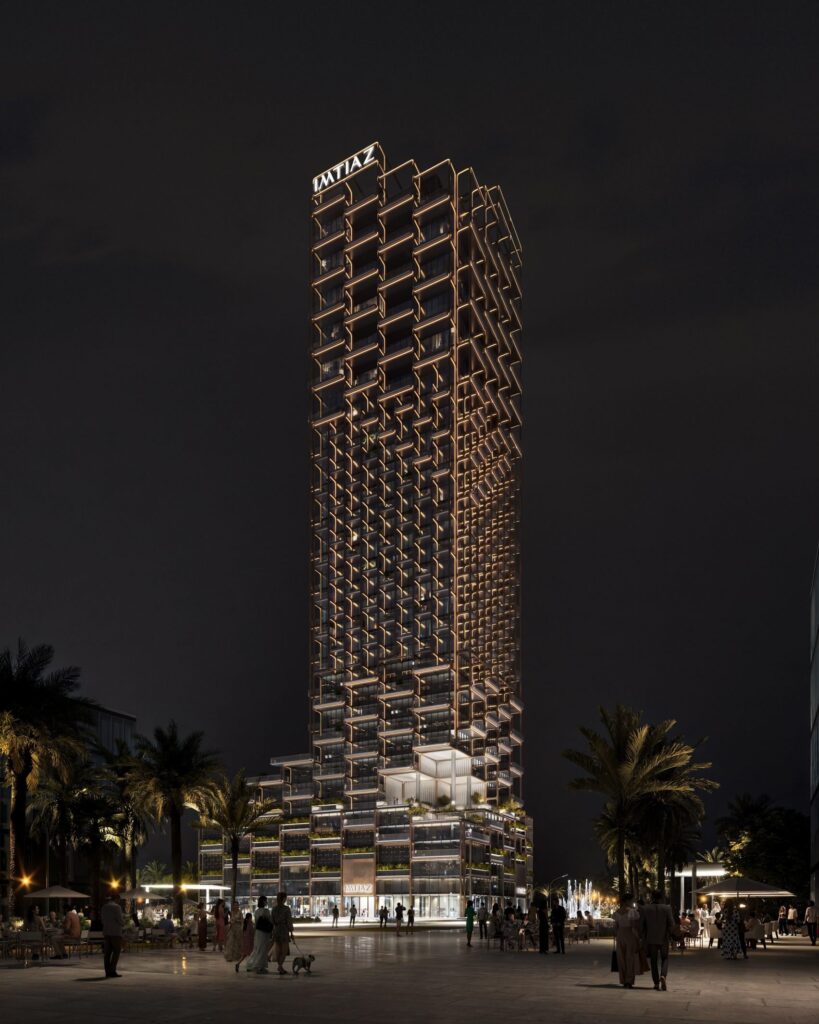
Quite a few of the facade’s panels will be outfitted with photovoltaics to light the whole surface with the energy they harnessed during the day. Hence after sunset, the exoskeleton will be able to cast a controlled amber glow. The lighting is intended to emphasize the repetition of the patterns in the lattice and help the link between the tower’s shape and the embroidery-inspired geometry be more apparent.
Modular Structure and Vertical Arrangement
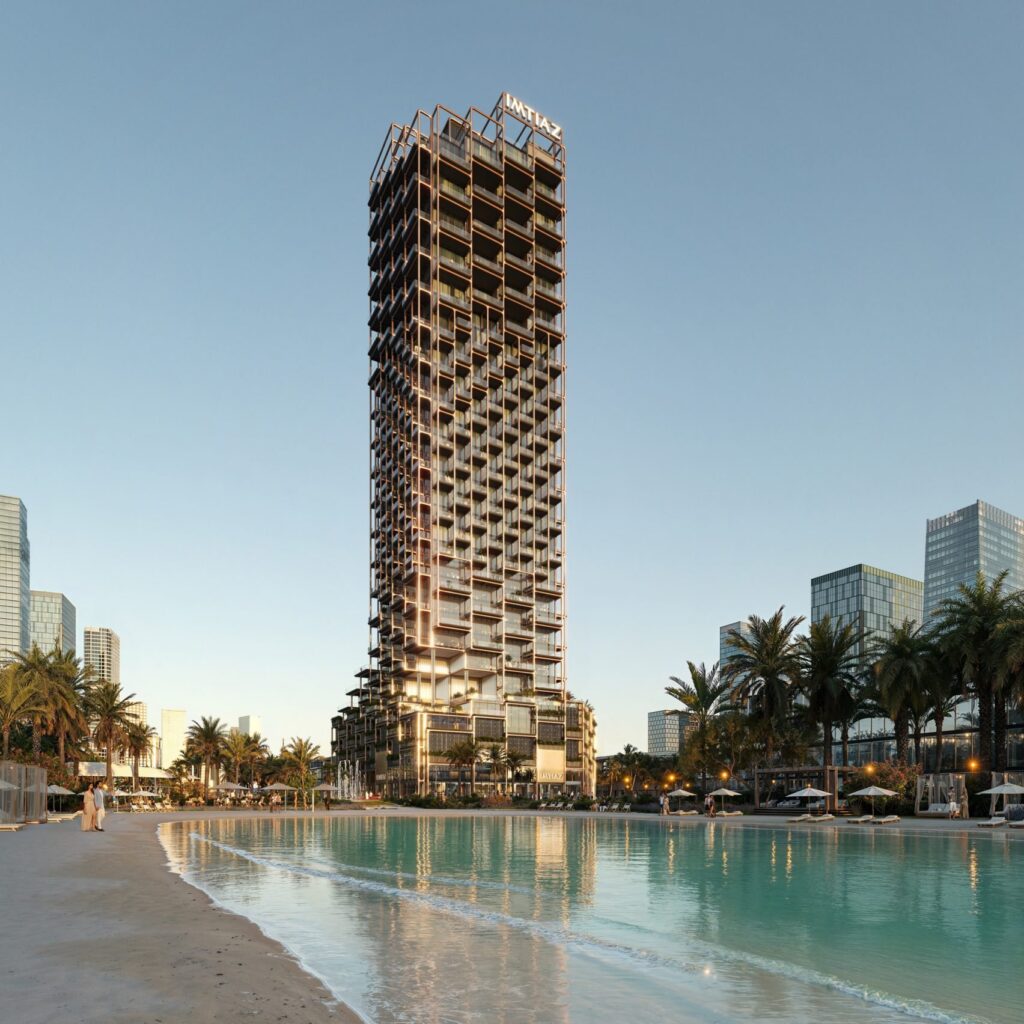
The tower is planned as a modular stainless steel and concrete structure, with apartments arranged around staggered terraces. The base of the building will include a glazed ground floor, above which the residential levels stack in a series of inset balconies.
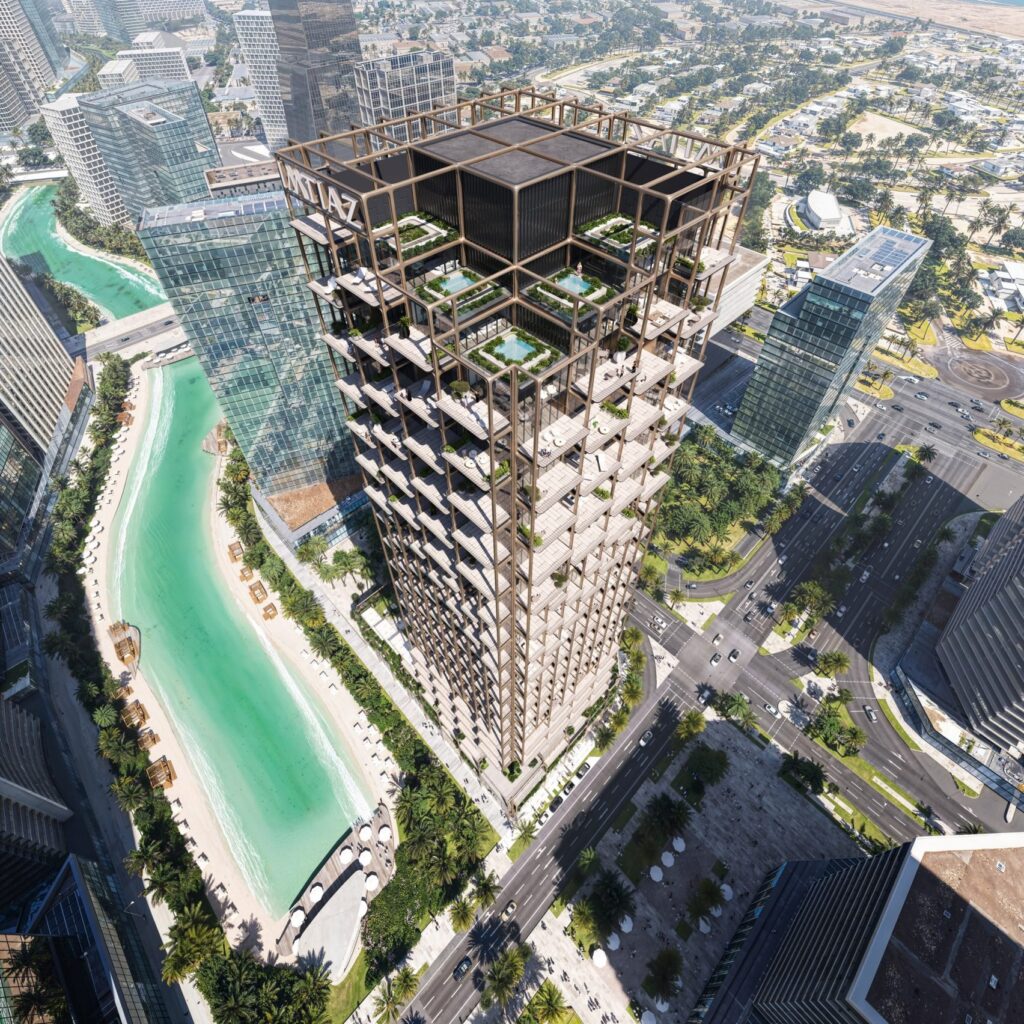
The upper section of the tower incorporates a swimming pool deck, followed by additional residential floors arranged around a series of open-air terraces formed by cut-outs in the building volume. Balconies at each apartment level are intended to extend outdoor living space while simultaneously providing areas of shading.
Rendered images show the facade composed of glazing and bronze-toned cladding panels, with living spaces positioned behind the structural grid. The exoskeleton frames the interior volumes while functioning as a layer of environmental control.
Dual Function of the Precision-Engineered Exoskeleton
Zaha Hadid Architects mentions that the exoskeleton is not only structurally stable but it is also environmentally efficient. The structural grid that wraps the building helps to transfer the loads down the structure and also serves as a shading device.
By limiting solar gain over the main facade areas, the mesh decreases the cooling load and thus, newly created protected external terraces will be more comfortable. The project design is such that residents will be able to use outdoor spaces for longer periods during the whole year, although the area is known for its high temperatures.
Daylighting and Interior Conditions
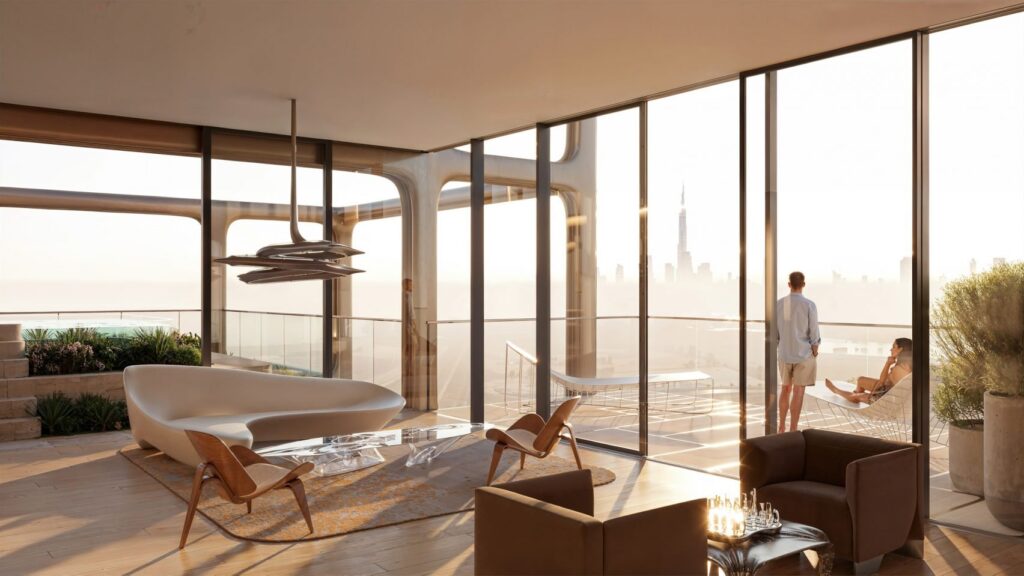
The purpose of the glazing strategy is to bring in as much daylight as possible into the interiors. The large glass panels are supported by the surrounding exoskeleton in such a way that interior spaces are not only well-lit but also shaded from direct sunlight. The apartments’ balconies, which jut out on both sides, also add a layer of shading and extend the facade depth.
Layouts inside are aimed at turning living spaces toward external views while at the same time ensuring that there are uninterrupted visual connections with the lattice grid. Although no detailed interior plans have been made public, the renderings suggest that the interiors will be open-plan living spaces with full-height glazing.
Sustainable Construction and Water Efficiency
The studio points out that the use of recycled steel and low-carbon concrete in Symphony Tower will lower the building’s embodied carbon in comparison with a typical high-rise of the same size. The modular strategy is likely to decrease material wastage and speed up the construction process.
Besides the structural sustainability features, the tower will be fitted with greywater recycling systems. Such measures are anticipated to cut down on the use of drinking water for irrigation and other non-potable needs. The planting of drought-resistant vegetation will thus decrease the water demand of the building and make it compatible with regional conservation priorities.
ZHA’s Ongoing Global Portfolio
Symphony Tower follows several recent ZHA projects in Asia, including a charity headquarters in Shenzhen that recently topped out and a curving pedestrian footbridge designed for Hangzhou. The firm continues to work across urban, cultural and infrastructural typologies, often incorporating parametric geometries and environmental systems informed by local conditions.
The Dubai tower adds to ZHA’s longstanding presence in the region, where the firm has completed and proposed several large-scale developments.
A New Residential Marker on Dubai Creek
Combining the emphasis on cultural reference, modular construction and environmental control, Symphony Tower is set to become a unique landmark in the Dubai Creek’s changing skyline. Its lattice framework serves as both a visual recognition and a technical envelope, resulting in a building that interweaves regional craft traditions with advanced engineering.
The project is a manifesto of the transformation in skyscraper design which is geared towards the integration of performance architecture with local cultural narratives. It is anticipated that Symphony Tower will provide its residents with shaded outdoor areas, sunlit interiors and access to elevated recreational spaces, thus, constituting a fully integrated residential environment in one of Dubai’s rapidly growing districts.
Images -dezeen