

Spandrel glass plays a central role in shaping the continuous, uniform look of glass façades in modern architecture. Unlike vision glass, which is transparent and intended for outward visibility, spandrel glass is opaque and is used to conceal structural elements such as floor slabs, columns, HVAC ducts, and wiring systems. By combining functionality with architectural design intent, spandrel glass ensures both visual consistency and building performance in curtain wall and structural glazing systems.
Spandrel panels are typically produced by applying ceramic frit, silicone coating, or metallic paint to glass sheets, followed by heat treatment or lamination for durability. They can be used as standalone panels or combined with insulation and back-pans to enhance energy efficiency. Their role extends beyond appearance, supporting façade uniformity, thermal comfort, and compliance with fire and acoustic standards.
Where is Spandrel Glass Used?
Spandrel glass applications are widespread across multiple building categories:
- Corporate and Commercial Towers – Ensures seamless integration between vision glass panels and non-vision structural zones.
- High-Rise Residential Projects – Provides uniformity to external façades while concealing services.
- Institutional and Educational Campuses – Supports large curtain wall systems in auditoriums, libraries, and laboratories.
- Healthcare Facilities – Offers hygienic and easy-to-clean opaque cladding that complements vision glass.
- Airports and Metro Stations – Integrates with expansive glazing systems while hiding mechanical and electrical utilities.
- Hotels and Convention Centres – Delivers premium aesthetic finishes with back-painted or fritted options.
- Industrial and Technology Parks – Used for curtain wall cladding with added insulation layers.
- Data Centres – Conceals critical systems while allowing the façade to retain a corporate appearance.

Advantages of Spandrel Glass in Façades
Spandrel glass offers both architectural and performance-related benefits:
- Provides visual uniformity in curtain walls by blending with adjacent vision glass.
- Conceals building elements such as slabs, columns, ducts, and insulation layers.
- Wide variety of colours, ceramic frit patterns, and coatings available for design flexibility.
- Can be combined with insulation and back-pans for thermal efficiency.
- Heat-strengthened or tempered spandrel panels meet safety glazing requirements.
- Compatible with double-glazing units (DGUs) to enhance façade performance.
- Resistant to weathering, UV exposure, and chemical degradation when properly coated.
- Supports fire and acoustic compliance when integrated with suitable substrates.
- Provides durable, low-maintenance opaque surfaces for long-term façade performance.
Types of Spandrel Glass
Ceramic Frit Spandrel Glass
Ceramic frit spandrel glass is manufactured by applying a ceramic enamel coating to the back surface of the glass and permanently fusing it through a heat-strengthening or tempering process. This creates an extremely durable, weather-resistant, and colour-stable panel that does not peel, fade, or deteriorate under UV exposure or moisture. Available in a wide range of opaque colours, ceramic frit panels provide strong visual consistency with adjacent vision glass, making them one of the most common choices in large-scale curtain walls for corporate towers, high-rise residential buildings, and institutional projects where longevity and minimal maintenance are essential.
Back-Painted Spandrel Glass
Back-painted spandrel glass involves applying and curing a layer of opaque paint on the rear surface of the glass to achieve a solid finish that conceals structural elements behind the façade. It is more economical than ceramic frit, offering broad flexibility in colour selection to meet architectural design requirements while keeping costs manageable. Back-painted panels are widely used in medium-rise commercial, retail, and institutional buildings, but they must be carefully detailed with proper sealing to prevent damage from condensation or prolonged moisture exposure, which can affect the durability of the paint layer.
Insulated Spandrel Glass Units
Insulated spandrel glass units (IGUs) combine spandrel glass with insulating materials and often metal back-pans to provide enhanced thermal performance, condensation control, and acoustic insulation. By incorporating air- or gas-filled cavities between panes, IGUs significantly reduce heat transfer, making them suitable for energy-efficient buildings where strict codes and certifications such as LEED must be met. These assemblies are common in high-rise office towers, hospitals, data centres, and institutional buildings that require stable indoor environments, while also maintaining uniform façade appearance with adjacent transparent glazing systems.
Digital-Printed Spandrel Glass
Digital-printed spandrel glass uses ceramic inkjet printing technology to apply opaque graphics, gradients, or patterns directly onto the glass before heat treatment, ensuring the finish is fused and long-lasting. This method allows architects to create unique façade designs that integrate corporate branding, thematic elements, or decorative effects into the spandrel zones without compromising performance. The use of gradients also enables smoother transitions between transparent and opaque sections of the façade, enhancing overall aesthetics. Digital-printed spandrel panels are increasingly adopted in corporate headquarters, retail centres, and institutional landmarks where visual identity is an important part of the architectural expression.
Laminated Spandrel Glass
Laminated spandrel glass consists of two or more glass sheets bonded with interlayers, such as PVB, EVA etc, that are coloured, patterned, or printed to achieve opacity. Beyond concealing structural elements, laminated construction improves safety because in the event of breakage, fragments adhere to the interlayer and remain intact, reducing hazards. Laminated spandrel panels can also integrate acoustic interlayers for better sound insulation, provide UV protection to interior finishes, and enhance security in high-load or impact-prone areas. They are commonly specified in airports, hospitals, schools, and public infrastructure projects where both safety and performance are critical.
Key Considerations for Selecting Spandrel Glass
- Colour Matching with Vision Glass: Essential to ensure uniformity under daylight and artificial lighting.
- Thermal Stress Resistance: Spandrel panels absorb heat differently than vision glass; heat strengthening or tempering is often mandatory.
- Energy Performance: Use of insulation, low-E coatings, and back-pans influences U-value and solar heat gain.
- Fire Safety: Spandrel zones may require fire-rated panels or assemblies to meet code requirements.
- Acoustic Needs: Laminated or insulated spandrel glass can improve sound attenuation in dense urban zones.
- Durability of Coatings: Ceramic frit is generally more durable than back-paint when exposed to moisture or condensation.
- Installation Method: Panel size, framing system, and structural loads must be considered during design.
- Maintenance and Cleaning: Opaque surfaces should withstand routine façade cleaning without degradation.
- Budget and Lifecycle Costs: Selection must balance upfront costs with long-term maintenance and performance value.
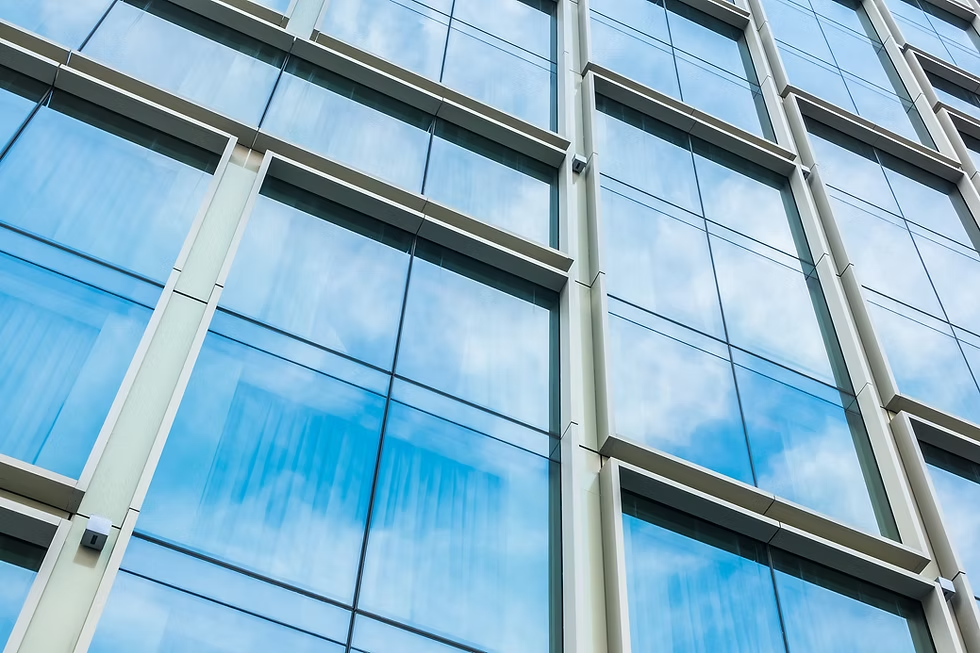
Integration of Spandrel Glass in Curtain Wall Systems
Spandrel glass is typically installed within stick-built, unitized, or structural glazing curtain walls, where it alternates with transparent vision glass. Integration requires careful detailing to avoid thermal stress fractures, condensation build-up, and colour mismatches. Use of thermal barriers, insulated spandrel assemblies, and consistent coatings ensures seamless performance.
Architects and façade consultants emphasize mock-up testing for large projects to validate colour, reflection, and opacity before bulk procurement. Manufacturers often provide digital and physical samples under varied lighting conditions to help designers achieve consistency.
Conclusion
Spandrel glass has become an essential component of modern façades, enabling architects to achieve continuous glazing systems that conceal functional elements without compromising aesthetics or performance. With advancements in thermal efficiency, fire safety, and sustainable coatings, spandrel glass continues to evolve as a reliable solution in curtain wall design



