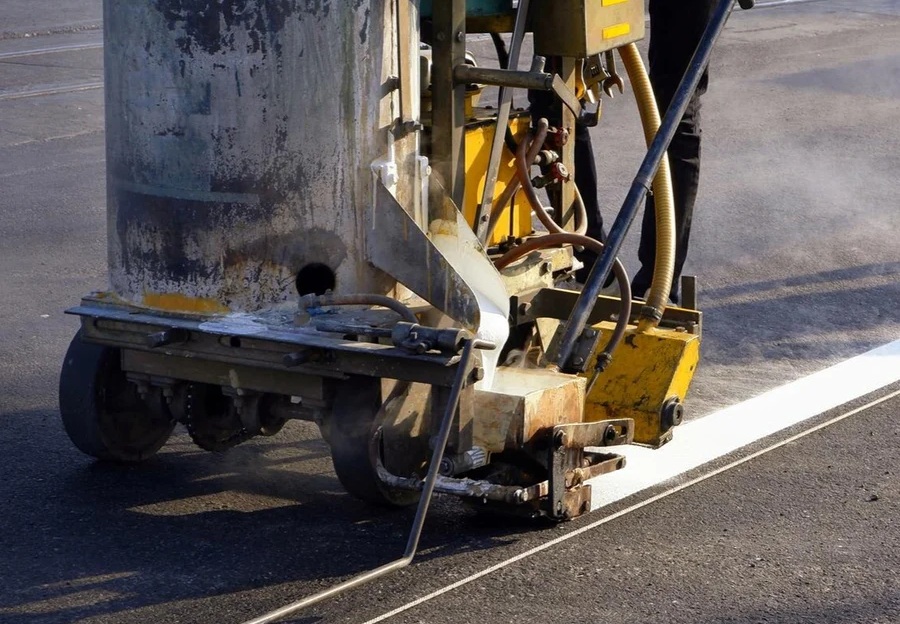
Pavement marking machines are specialized equipment used to apply durable markings on roads, highways, parking lots, and airport runways. These machines play an important role in traffic management, guiding vehicles and pedestrians safely while maintaining consistent line quality, thickness, and reflectivity. By mechanizing the application of road markings, these machines enhance efficiency, reduce human error, and improve the lifespan of markings, making them indispensable in modern road construction and maintenance projects.
Key Components of Pavement Marking Machines
- Material Reservoirs – Tanks or hoppers store thermoplastic, paint, or water-based materials. Depending on the marking type, the reservoirs are equipped with heating systems for thermoplastics or agitation systems for paints to maintain material consistency.
- Spray or Extrusion System – Determines how the marking material is applied. Spray systems atomize paints or liquids for even coverage, while extrusion systems deposit molten thermoplastic in precise widths and thicknesses.
- Guidance and Alignment Systems – Include laser, GPS, or optical sensors to maintain straight lines and uniform spacing. Some advanced machines use computerized controls for curved lines, complex patterns, or lane markers.
- Application Nozzles and Shoes – Direct the material onto the pavement surface with consistent thickness. Thermoplastic machines use heated shoes to lay material, while paint machines use adjustable spray nozzles.
- Heaters and Temperature Control Units – Essential for thermoplastic markings that require high temperatures (160–200°C) to ensure proper adhesion and durability.
- Operator Cabin or Control Panel – Ergonomically designed for manual or semi-automatic operation. Controls include line width, material flow, heating, and navigation aids.
- Wheel or Chassis System – Provides mobility on diverse surfaces, from smooth asphalt to rough concrete. Machines can be self-propelled or towed, with steering systems allowing precise positioning.

Applications of Pavement Marking Machines
- Highways and Expressways – Machines apply lane dividers, edge lines, shoulder markings, and reflective markers. High-speed application with accurate spacing ensures compliance with national and international traffic safety standards.
- Urban Roads and Streets – Pavement markings for pedestrian crossings, stop lines, bike lanes, and parking zones are applied with precision to enhance urban traffic flow and pedestrian safety.
- Airports and Runways – Specialized high-precision machines lay runway numbers, taxiway lines, and threshold markings. Reflective thermoplastic materials ensure visibility under low light and adverse weather conditions.
- Parking Lots and Industrial Complexes – Pavement marking machines efficiently apply parking space lines, directional arrows, and safety signs, reducing labor requirements and ensuring uniformity across large surfaces.
- Specialized Road Safety Projects – Includes markings for school zones, pedestrian bridges, toll plazas, and temporary construction zones. Advanced machines allow for rapid deployment with minimal disruption to traffic.
Advantages of Pavement Marking Machines
- Enhanced Durability and Quality – Automated material application ensures uniform thickness, width, and reflectivity, resulting in long-lasting markings.
- Time and Labor Efficiency – Mechanization reduces manual labor and accelerates the marking process, especially for long stretches of highways or large parking areas.
- Precision and Consistency – GPS and laser-guided systems maintain straight lines, curves, and intricate patterns without deviation.
- Safety Improvements – High-quality markings reduce accidents by improving lane discipline, pedestrian guidance, and overall visibility.
- Versatility – Machines can handle multiple materials, including thermoplastic, epoxy, cold plastic, water-based paints, and reflective materials.
- Environmentally Friendly Options – Modern machines include low-emission engines, reduced solvent-based paints, and efficient heating systems to minimize environmental impact.
- Adaptable for Different Surfaces – Machines are compatible with asphalt, concrete, and composite pavements, ensuring consistent adhesion and longevity.
- Reduced Maintenance Costs – Durable markings mean less frequent repainting, saving time, materials, and labor over the road’s lifespan.
Types of Pavement Marking Machines
1. Manual Push Machines
Manual push machines are compact, hand-operated units ideal for small-scale projects such as parking lots, sidewalks, or school zones. They are cost-effective, lightweight, and easy to maneuver, allowing precise line application in narrow areas. While requiring manual effort, these machines provide consistent results for simple markings and are perfect for urban environments with limited space.
2. Self-Propelled Thermoplastic Machines
Self-propelled thermoplastic machines are designed for large-scale projects like highways, expressways, and airport runways. They heat and extrude thermoplastic material through precision shoes to create durable, long-lasting lines and symbols. Many models incorporate GPS or laser guidance systems for high-accuracy markings, adjustable line widths, and thickness, making them ideal for projects demanding precision and longevity.
3. Airless Spray Machines
Airless spray machines apply paint or liquid materials under high pressure, atomizing the material for even, rapid coverage. These machines are versatile and compatible with water-based, solvent-based, or reflective paints, making them suitable for urban roads, industrial complexes, and parking areas. Their high-speed application reduces project time while maintaining uniform line quality.
4. Tape-Laying Machines
Tape-laying machines deploy preformed thermoplastic or reflective tapes directly onto the pavement surface, providing quick, precise markings. They are particularly useful for temporary lane dividers, construction zones, and rapid deployment projects where speed and visibility are pivotal. The machines ensure highly visible markings and can be easily removed or replaced as required.
5. Autonomous and Robot-Assisted Machines
Autonomous and robot-assisted marking machines use AI, GPS, and advanced sensors to operate with minimal human intervention. These machines can follow pre-programmed patterns with exceptional accuracy, making them ideal for complex highway systems, airports, and urban networks. They reduce operator fatigue, labor costs, and errors, while delivering precise, uniform markings even on intricate road layouts.
6. Combination or Multi-Functional Machines
Combination machines are versatile units capable of both spraying and extruding materials, making them suitable for projects requiring multiple marking types. They can apply thermoplastic lines alongside painted symbols or reflective markers in a single pass, increasing efficiency and reducing labor costs. These machines are ideal for complex infrastructure projects where different types of markings are needed simultaneously.
Key Factors for Selecting the Right Pavement Marking Machine
- Project Size and Complexity – Large highways require self-propelled or automated machines, while small urban projects may use manual or push-type units.
- Material Compatibility – Machines should support the intended marking material, such as thermoplastics for durability or paints for temporary markings.
- Surface Type – Asphalt, concrete, or composite surfaces require different application techniques and machine configurations.
- Automation Requirements – Advanced projects with curves, intersections, and complex patterns benefit from GPS, laser, or robotic guidance systems.
- Line Width and Thickness Needs – Consider machines capable of applying multiple widths and thicknesses to meet safety standards.
- Mobility and Maneuverability – Compact machines are essential for urban environments with narrow lanes, while heavy-duty models are suitable for highways and airports.
- Operator Skill Level – Machines with advanced automation require skilled operators, while simple push machines are suitable for entry-level staff.
- Maintenance and Serviceability – Evaluate availability of spare parts, technical support, and ease of maintenance to reduce downtime.
- Budget and Lifecycle Costs – Balance the initial investment with long-term operational savings from reduced labor, faster completion, and durable markings.
- Environmental Considerations – Look for machines with efficient fuel consumption, low emissions, and reduced solvent usage.
Conclusion
Pavement marking machines are integral to road safety and traffic management, providing high-quality, durable, and visible markings across a variety of surfaces and environments. From highways and urban streets to airports and industrial complexes, these machines enhance efficiency, precision, and safety. Selecting the appropriate machine depends on project size, material requirements, surface type, and technological needs. With ongoing advancements in automation, GPS guidance, and eco-friendly technologies, pavement marking machines continue to evolve, offering faster, more precise, and sustainable solutions for modern infrastructure development.