

Wednesday, December 17, 2025
spot_img
Home Blog Page 2

Aerogel Insulation for High-Performance Building Envelopes

Aerogel insulation has emerged as one of the most advanced thermal solutions in modern construction, redefining how high-performance building envelopes are designed. Known for its ultra-low thermal conductivity, lightweight structure, and exceptional moisture resistance, aerogel offers unmatched energy efficiency compared to traditional insulation materials. Developed originally for aerospace applications, aerogel is now transforming residential, commercial, and industrial building projects worldwide.

What Makes Aerogel an Exceptional Insulation Material?

Aerogel is often called ā€œfrozen smokeā€ due to its translucent appearance and extremely low density. Its nanoporous structure—composed of up to 99% air—significantly reduces heat transfer through conduction, convection, and radiation.

With a market size of USD 1.38 billion in 2024, the global aerogel industry is forecast to expand rapidly, reaching USD 3.49 billion by 2030 and achieving a 17.0% CAGR over 2025–2030.

This growing adoption highlights aerogel’s increasing relevance in high-performance building envelopes, especially where thermal excellence, space efficiency, and durability are critical.

Applications of Aerogel Insulation in Modern Building Envelopes

Residential Buildings

  • External wall insulation for superior thermal resistance
  • Roof and attic insulation in space-constrained structures
  • Underfloor insulation for energy-efficient homes

Commercial Complexes

  • FaƧade insulation for high-rise towers
  • Curtain walls, spandrel panels, and skylights requiring minimal thickness
  • HVAC system insulation to reduce operational energy costs

Industrial Buildings

  • Insulation in environments exposed to high temperatures
  • Pipe wraps, boilers, and process equipment needing lightweight, fire-resistant insulation
  • Cold storage facilities requiring controlled thermal performance

Refurbishment & Retrofits

  • Ideal for heritage structures where wall thickness cannot be increased
  • Internal insulation that enhances energy performance without disrupting architectural features

Extreme Climate Construction

  • Effective in both desert heat and cold regions due to its wide temperature tolerance
  • Maintains performance even when exposed to moisture or UV radiation

Advantages of Aerogel Insulation

  • Ultra-Low Thermal Conductivity

Aerogel delivers some of the best insulation values globally, with thermal conductivity as low as 0.014 W/mĀ·K.

  • High Thermal Performance in Thin Profiles

Ideal for building envelopes where space is limited.

  • Excellent Moisture and Vapor Resistance
     

Prevents mold growth and structural deterioration.

  • Lightweight and Easy to Apply

Reduces load on building components and enhances installation efficiency.

  • Superior Fire Resistance

Many aerogel products are non-combustible and withstand extremely high temperatures.

  • Durability and Long Service Life

Maintains thermal performance for decades with minimal degradation.

  • Sound Absorption Benefits

Improves acoustic comfort in busy urban environments.

  • Sustainability and Energy Efficiency

Reduces heating/cooling loads, contributing to low-carbon and green building standards.

Types of Aerogel Insulation

Blanket Aerogel Insulation

Flexible composite blankets reinforced with fibers for easy application on walls, roofs, and pipes. Best suited for retrofits and irregular surfaces.

Granular Aerogel Insulation

Used in cavity walls, insulated plasters, and lightweight building components. Offers superior flowability and moisture control.

Aerogel-Enhanced Plasters

A combination of mineral binders and aerogel granules delivering outstanding thermal insulation with traditional plastering techniques.

Aerogel Panels & Boards

Rigid panels provide high R-values for faƧade systems, modular buildings, and architectural envelopes requiring slim insulation layers.

Aerogel Coatings

Thin-film coatings designed for interior walls or high-performance faƧades to minimize heat loss without adding thickness.

Application Methods for Aerogel Insulation

  • Direct Wall Installation – Panels or blankets fixed on the exterior faƧade for continuous thermal insulation.
  • Cavity Wall Filling – Granular aerogel injected into cavities for uniform thermal performance.
  • Insulated Plaster Application – Aerogel-infused plasters sprayed or trowel-applied to existing surfaces.
  • Roof and Attic Lining – Flexible aerogel blankets installed beneath roof decks.
  • Mechanical & HVAC Insulation – Wrapping around pipes, ducts, and equipment for energy efficiency.

Connect with right manufacturers and suppliers for building materials and civil product services for your project.*

Connect with right manufacturers and suppliers for building materials and civil product services for your project.*

Clear selection
Fill Your Details

Name*

Name*

Clear selection

Email*

Email*

Clear selection

Mobile No*

Mobile No*

Clear selection

Conclusion

Aerogel insulation is redefining high-performance building envelopes by offering unmatched thermal efficiency, moisture resistance, and design flexibility. As buildings worldwide transition toward net-zero energy goals, aerogel stands out as one of the most advanced and future-ready insulation materials available today. Whether used in new construction or renovation, its ability to deliver exceptional performance in slim profiles makes it an ideal choice for architects, engineers, and builders seeking sustainable, long-lasting solutions.

BL Kashyap bags Rs 616-cr contract from Sattva CKC

0

BL Kashyap has secured a contract worth Rs 616 crore from Sattva CKC for structural and civil work at the Sattva Chennai Knowledge City located in Chennai, Tamil Nadu.

This contract encompasses all facets of construction for this significant commercial project, with an estimated completion period of approximately 31 months.

The work scope includes substantial structural and civil engineering activities that will contribute to the development of the Chennai Knowledge City, which is a vital commercial center in the area.

Upon completion, the project is anticipated to play an essential role in enhancing the city’s business ecosystem. This contract further bolsters BL Kashyap’s portfolio within the infrastructure sector, representing another achievement for the company in the expanding commercial real estate market.

Importance of Suspended (Hanging) Scaffolding  

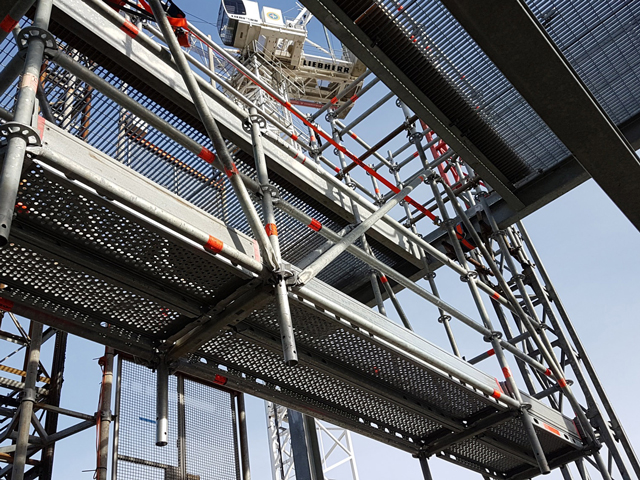
Suspended scaffolding – also called hanging scaffolding – is a highly efficient, flexible, and safe access system widely used in high-rise construction, faƧade work, maintenance, and industrial structures. Unlike traditional ground-supported scaffolds, suspended platforms are hung from the top of a building using ropes, cables, or mechanical hoists, allowing smooth vertical movement for workers and materials. 

Used for cladding, glazing, painting, and cleaning exterior surfaces of tall buildings where ground-based scaffolds are impractical. 

Favoured for under-deck access and repair works due to its ability to reach difficult angles and heights safely. 

Used for structural inspections, coating, repair, and surface preparation in tall industrial structures. 

Enables workers to access vertical surfaces and cavities for repair, sealing, and maintenance. 

Offers flexible access to hull surfaces, offshore structures, and marine installations. 

Reduces load on fragile surfaces, making it ideal for monuments and conservation projects. 

Used for antenna installation, cable fixing, and tower inspections. 

Advantages of Suspended (Hanging) ScaffoldingĀ 

Platforms can be raised or lowered easily using electrically or manually operated hoists, improving work speed and accessibility. 

Suspended scaffolding drastically reduces material usage compared to frame scaffolds, lowering overall project costs. 

Since the system hangs from above, it frees up floor space for workers, equipment, and pedestrian movement. 

Modern suspended scaffolds come with automatic locking devices, overload sensors, and emergency stop features to prevent accidents. 

Curved facades, tight spaces, and irregular geometries can be accessed with ease. 

Installation is quicker, allowing contractors to start faƧade work earlier and shorten project timelines. 

Wire ropes, aluminium platforms, and modular hoists reduce the overall load on the structure. 

Consumes fewer materials and reduces the carbon footprint compared to bulky scaffolding systems. 

The most common system, supported by two ropes on either side and operated by electric or manual hoists. Ideal for painting, window installation, and exterior finishing. 

Used for large faƧades, tanks, storage silos, and chimneys. Multiple suspension points distribute load evenly. 

A compact seat-like setup used for small-area repairs, inspections, and cleaning tasks. 

Platforms supported by overhead horizontal cables. Mainly used in maintenance of structures like bridges and tunnels. 

Common in malls, atriums, and auditoriums where platforms hang from ceiling beams or trusses. 

Safety regulations for suspended scaffolding are stringent due to the nature of the work at height. OSHA and global standards highlight the following essentials: 

  • Each suspension rope must support six times the intended load
  • Guardrails, midrails, and toe boards are mandatory. 
  • Hoists must contain automatic emergency braking systems
  • Workers must wear full-body harnesses connected to independent lifelines. 
  • Platforms must be inspected daily before use. 
  • Electrical systems should be grounded to prevent shocks. 
  • Rigging should be performed by trained and certified personnel. 

Urban regions like the Middle East and Asia Pacific continue to adopt advanced suspended access systems for faƧade installation and maintenance. 

Key innovations shaping the industry include: 

  • Motorised platforms with smart load monitoring 
  • Anti-sway stabilisation systems for windy conditions 
  • Lightweight aluminium alloy platforms 
  • Remote-controlled scaffold movement 
  • AI-based monitoring for safety compliance 

Showcase your scaffolding products on our website.*

Showcase your scaffolding products on our website.*

Clear selection
Fill Your Details

Name*

Name*

Clear selection

Email*

Email*

Clear selection

Mobile No*

Mobile No*

Clear selection

Conclusion 

Suspended (hanging) scaffolding has become an essential access solution for modern construction, industrial maintenance, faƧade engineering, and large-scale infrastructure projects. Its unmatched flexibility, superior safety features, minimal ground obstruction, and cost advantages make it the preferred choice for high-rise and complex structures. As technology continues to evolve, suspended scaffolding systems will play an even more important role in enabling efficient, safe, and high-quality work across the construction industry. 

Image credit: gurbuziskele.com.tr,

The Sonipat Surge: How the KMP Expressway Redrew the NCR’s Real Estate Map

For decades, the real estate story of the National Capital Region (NCR) followed a familiar script. Gurugram and Noida set the pace, their glass towers and gated complexes symbolising growth and aspiration. But the last few years have quietly rewritten that narrative. The turning point wasn’t a new skyscraper, it was a road.

When the 135-kilometre Kundli–Manesar–Palwal (KMP) Expressway, also called the Western Peripheral Expressway, became operational, it didn’t just ease Delhi’s congestion but also placed the spotlight on a city that was long striving to emerge into the limelight, Sonipat.

Before the KMP, getting from Gurugram to Sonipat meant a slog through the capital’s chaotic arteries. Today, that same journey is smooth, quick, and almost scenic. The expressway has turned Sonipat into a logical extension of Delhi’s growth. By connecting to major highways like NH-44, NH-48, and NH-19, it has effectively pulled Sonipat into the NCR’s logistical and residential grid. Add to that the upcoming Regional Rapid Transit System (RRTS), expected to reduce travel time between Delhi and Sonipat to under half an hour, and the change is nothing short of transformative.

What truly sets Sonipat apart from other emerging zones is its dual identity, part industrial hub, part residential frontier. The stretch from Kundli to Kharkhoda is buzzing with activity. Warehouses, logistics parks, and small-scale manufacturing units have mushroomed along the corridor, driven by Haryana’s strategic push for industrial decentralization.

The highlight, of course, is Maruti Suzuki’s upcoming Rs 18,000-crore manufacturing plant in Kharkhoda. The project is expected to generate thousands of jobs, triggering a ripple effect across sectors, from auto ancillaries to housing and retail. This industrial momentum brings with it a steady, long-term population base, something speculative townships elsewhere lacked. It’s one reason why developers now view Sonipat as a sustainable market rather than a short-term play.

For homebuyers, the first attraction is affordability. Property rates in Sonipat remain a fraction of what they are in Noida or Gurugram. That difference is hard to ignore, especially for first-time buyers and professionals who value connectivity but can’t afford core NCR prices.

But price alone doesn’t tell the full story. The city’s real estate profile is maturing. Where once the market was dominated by scattered plots, it’s now dotted with planned gated communities and integrated townships. Leading developers have brought in new product lines, apartments with lifestyle amenities, modern retail within reach, and community infrastructure that rivals the larger cities.

Educational institutions such as O.P. Jindal Global University and Ashoka University also add an interesting dynamic. They create a steady rental market, keeping the local economy active and ensuring that investor interest doesn’t hinge solely on new buyers.

Data from property portals and consultancy reports indicate a steady rise in Sonipat’s land and apartment values since the KMP became fully operational. The numbers may vary, but the direction is clear, upward. In pockets near the expressway and proposed RRTS stations, high price appreciation is being recorded. Long-term forecasts hover around a 40–60% rise over the next five to seven years.

However, what gives Sonipat’s story credibility is not speculation but planning. The Haryana Government’s Master Plan 2031 outlines clear zoning, infrastructure expansion, and urban sustainability goals. It provides a structural backbone that helps avoid the pitfalls seen in overbuilt zones like the Yamuna Expressway corridor.

For developers and investors alike, this combination, strong industrial anchors, institutional presence, and a clear master plan, signals long-term value.

Every emerging city goes through a moment when perception shifts, when it stops being seen as a satellite and starts standing on its own. For Sonipat, that moment has arrived. Today, a young professional can work in Gurugram, live in Sonipat, and commute comfortably. A logistics firm can serve Delhi, Punjab, and Rajasthan from a single distribution hub. And an investor can buy into a market that’s still affordable but rapidly appreciating. Sonipat’s rise is a blueprint for how infrastructure, when thoughtfully executed, can create new centres of gravity in urban India.

Authored By;

Gurpal Singh Chawla, Managing Director, TREVOC Group

Quality Paving Solutions for Smooth, Lasting Surfaces

0

Turning a rough, uneven surface into a smooth and lasting one needs good paving. Whether it’s a driveway, patio, or business area, quality paving is important. It makes the space look better and lasts longer.

Why settle for low-quality paving when you can have the best? This guide will help you understand why quality paving matters and show the best solutions available.

From new techniques to strong materials, we give you useful tips to make smart choices for your paving. Say goodbye to bumpy surfaces and enjoy smooth, durable ones with our expert advice. Let’s explore quality paving together!

Key Features of Quality Paving

Quality paving solutions go beyond just aesthetics. They should also focus on functionality and longevity. Here are some key features to look for:

Durability

A quality paving material should withstand the test of time and resist cracking, fading, and weather conditions. Asphalt and concrete, for instance, are well-known for their durability when properly maintained.

Slip Resistance

Safety should always be a priority. Slip-resistant materials or surface treatments can prevent accidents, especially in wet conditions. Textured pavers, for example, provide better traction than smooth surfaces.

Maintenance Requirements

Investing in low-maintenance paving options can save you time and money in the long run. For instance, asphalt can be sealed to extend its life, while concrete requires occasional cleaning and resealing to maintain its appearance.

Essential Maintenance Tips for Longevity

Even the best paving options require regular maintenance to ensure longevity and functionality. Here are some essential tips:

Regular Inspections

Conduct routine inspections of your paved surfaces to identify any cracks, low spots, or drainage issues early. Early detection can prevent more extensive repairs later on.

Seal Coating

For asphalt surfaces, consider seal coating every few years. Sealants protect against UV rays and water penetration, significantly extending the lifespan of the asphalt.

Prompt Repairs

Address any damaged areas immediately. Cracks and surface issues can worsen if left unattended, leading to more costly repairs.

Why Investing in Professional Paving Services Matters

It might be tempting to do paving work yourself, but hiring professional services makes sure the job is done right. Professionals have the experience, knowledge, and tools to deliver quality results that meet standards. They can also guide you on the best paving choices for your needs.

Hiring experts can help you avoid mistakes like wrong installation or wasted materials. A well-done paving project by paving services can increase your property’s value and give you a safe, long-lasting surface.

Impact of Environmental Factors

It’s crucial to consider environmental factors when selecting your paving options. Issues like extreme weather, soil conditions, and local climate can all influence the durability and performance of paving materials. For instance, areas prone to heavy rainfall may benefit from permeable pavers that allow water to drain, reducing erosion and standing water.

Moreover, selecting eco-friendly paving options can also contribute to sustainability. For example, using recycled materials or permeable surfaces can help manage stormwater runoff and contribute to a healthier environment.

Explore Durable Paving Options

Good paving is more than just a surface. It makes your outdoor spaces safe, useful, and attractive. By choosing the right paving, learning about its features, keeping it maintained, and hiring professionals, you can enjoy long-lasting and beautiful pavement.

Your home or business deserves the best, and quality paving is a big part of that. Ready to improve your property with strong, durable paving? Start planning your project today!

Looking for more tips and advice? You’re in the right place! Make sure to bookmark our page and come back to check out more interesting articles.

Builder pays ₹103.5 crore for additional FSI to construct 38-storey highrise

0

A builder has paid Rs 103.50 crore to the AMC for additional Floor Space Index (FSI) to develop a 38-storey residential project located near Gulmohar Party Plot on Hebatpur Road in Thaltej. This amount represents the highest chargeable FSI ever sanctioned for a single project. The approval reflects an increasing demand for luxury high-rise housing. Civic officials attribute this surge to elevated jantri rates and more lenient regulations regarding tall buildings.

The town development department of AMC has recently approved the construction plans for this project. Covering an area of 9,958 square meters, the project will utilize a total FSI of 53,683.19 square meters. Out of this, 4.2 FSI has been acquired as chargeable FSI, exceeding the base permissible FSI of 1.2, thus bringing the total allowable FSI to 5.4 in accordance with state government regulations for tall structures. An AMC official, who requested anonymity, indicated that the builder was obligated to pay 40% of the current jantri rate for the additional FSI.

For this particular plot, the jantri-linked FSI rate was established at Rs 62,000 per square meter, resulting in a chargeable FSI rate of Rs 41,734 per square meter. “Due to the high jantri rate in Thaltej, the total payable amount for chargeable FSI reached Rs 103.50 crore,” the official noted.

Of this total, Rs 25 crore has already been submitted to AMC, while the remaining Rs 78.50 crore will be paid in installments as per regulations. According to the approved plans, the project will consist of four residential towers. “Blocks A and B will rise to 38 floors, while Blocks C and D will consist of 33 floors.

The approved height for Blocks A and B is 127.7 meters, whereas Blocks C and D will reach 111.45 meters. The project will feature three basement levels, a ground coverage of 2,490.94 square meters, and a designated common plot area of 1,764.05 square meters. In total, 250 residential units will be constructed, with a cumulative built-up area of 1,07,255.33 square meters,” the official stated.

AMC data indicates that the municipal authority has thus far sanctioned construction plans for 30 buildings that surpass 100 meters in height within the city limits. Among these, 23 are designated as residential projects, while seven are exclusively commercial developments.

One tall structure has already obtained building use (BU) permission, and plans for an additional five highrises are presently under review. Furthermore, eight buildings exceeding 100 meters in height have been authorized in regions governed by the Ahmedabad Urban Development Authority (Auda).

This elevates the total number of buildings exceeding 100 meters approved in both Ahmedabad city and the adjacent Auda area to 38. Officials have stated that the majority of these projects are categorized as residential, with western Ahmedabad emerging as the favored area for skyscraper construction.

Noida authority to develop online database of illegal buildings

0

Noida Authority is in the process of creating an online database that catalogs illegal constructions, providing information on their current status, photographs, and the authorized land use. Additionally, a second database will monitor demolitions, with the reclaimed land designated as owned by the Authority. This initiative is designed to combat fraud in land and flat purchases.

As of January 2024, Noida has successfully cleared 23 lakh square meters of encroached land valued at over Rs 2,200 crore. Officials have stated that identified land mafias will be publicly named, and action reports will be forwarded to the police commissioner to ensure prompt enforcement. Warning signs are being placed on reclaimed plots, explicitly indicating that the land is owned by the Authority.

Officials have mentioned that this initiative seeks to safeguard homebuyers, many of whom inadvertently invest in illegal properties, subsequently facing financial losses, threats of demolition, and a lack of civic amenities.

The issue of unauthorized construction has proliferated rapidly within the city. In regions such as Salarpur, Sadarpur, Parthala Khanjarpur, Mamura, Sorkha Zahidabad, Mohiyapur, Asadullapur, Garhi Samastipur, and Gulawali, officials have discovered high-rise buildings, shops, and residences erected without sanctioned building plans.

A similar scenario exists in developing sectors like 150, 152, 162, 164, and 165, where residential and commercial buildings are being constructed even before the land is completely developed or allocated. To enhance transparency, the Authority has commenced the uploading of work-circle-specific reports on its website. These reports include khasra numbers, boundary specifications, photographs, and details regarding the nature of construction.

Senior officials across various work circles have indicated that signboards stating “this building is illegal” are being installed to alert the public. The Authority has mandated all lekhpals and senior managers to provide monthly reports on illegal constructions in their respective areas by the 25th of each month.

The collated information will be uploaded on theĀ Noida AuthorityĀ website on the 1st of every month by the systems division.

IT Dept conducts searches at Brigade Enterprises’ premises

0

Following the announcement that the Income Tax Department had commenced search operations at its registered office and several locations associated with the company Shares of Brigade Enterprises experienced a decline of up to 2%, reaching a low of Rs 868.10 on the BSE on Monday, December 15. These searches took place from December 9 to December 13.

In a filing to the exchange over the weekend, Brigade Enterprises stated that it and its officials have fully cooperated with the authorities by providing all necessary information. The company further noted that its business operations remain unaffected and are proceeding without any interruptions.

The stock is currently trading at Rs 886, with analysts setting a target price of Rs 1,279, indicating a potential upside of 44.3%. Among the 12 analysts monitoring the stock, the consensus rating is Strong Buy.

The stock has decreased by nearly 30% since the start of the year. Last week, the company secured a 4.04-acre land parcel in Neopolis Phase 3, Hyderabad, for approximately Rs 118 crore per acre through an auction conducted by the Hyderabad Metropolitan Development Authority (HMDA).

The total value of the deal is estimated to exceed Rs 475 crore. This acquisition represents the developer’s second significant investment in the rapidly developing office-retail corridor, following its previous purchase of Plot No. 8 in the same area, which is currently being developed as Brigade Gateway, Hyderabad.

Brigade Enterprises Ltd reported a robust performance in the September quarter, with consolidated net profit increasing by 36.5% year-on-year to Rs 163 crore, up from Rs 119 crore in the same quarter last year. The Bengaluru-based real estate developer also noted a 29% rise in quarterly revenue to Rs 1,383 crore, compared to Rs 1,072 crore a year prior. Earnings before interest, tax, depreciation, and amortization (EBITDA) rose by 12% to Rs 327.8 crore, although EBITDA margins decreased to 23.7% from 27.3% in the corresponding quarter of the previous year.

Brigade Enterprises, headquartered inĀ Bengaluru, has nearly four decades of experience in developing office, retail, residential, hospitality and educational assets. The group has delivered skyline-defining projects across Bengaluru, Chennai, Hyderabad, Mysuru, Kochi, Thiruvananthapuram and GIFT City.

Glass Waste to Eco-Sand and Green Concrete: Practical Guidance for Projects

Household, commercial, and demolition glass waste still moves to landfills where segregation and recycling processes fall short. Processing glass waste into eco-sand provides a stable alternative to river sand and supports green concrete production. The approach reduces dependence on natural aggregates, fits circular-economy goals, and offers a practical route for engineers, consultants, and government clients evaluating durable and compliant materials.

Glass waste can be processed into a stable fine aggregate. Crushed and graded glass offers controlled particle sizes and low impurities, making it suitable for concrete mixes. Using eco-sand also reduces pressure on natural sand sources and supports waste-management for cities and projects.

  • Low impurities and predictable gradation
  • Works in concrete mixes with minimal adjustments
  • Helps reduce dependence on natural sand
  • Supports sustainability targets for public and private projects
  • Ready-mix concrete plants
  • Precast production units
  • Small and medium infrastructure works
  • Urban local bodies running recycling programs

Eco-sand behaves differently from natural sand in some areas. Engineers should test the material to confirm suitability for concrete or mortar use.

  • Particle size distribution
  • Shape and surface texture
  • Specific gravity
  • Water absorption
  • Alkali–silica reactivity (ASR) mitigation needs
  • Chloride and sulphate content

A controlled production process keeps variations low and ensures consistent concrete performance.

Converting glass waste to eco-sand follows a clear sequence to maintain quality and consistency.

  • Segregate glass at source or through MRFs
  • Clean and remove labels, caps, and other contaminants
  • Crush into fine particles
  • Screen to the required gradation
  • Refine edges to reduce sharpness
  • Store in dry, moisture-controlled units

This process keeps material uniform and reduces extra handling at batching plants.

Eco-sand can replace a portion of natural sand without changing the overall mix design. Suitable replacement levels depend on grade, exposure, and performance targets.

  • Masonry mortar
  • Plaster and rendering
  • Paver blocks
  • Precast non-structural elements
  • Lightweight architectural concrete
  • Selected structural grades after lab validation
  • Adjust water demand based on surface texture
  • Review ASR risk and use SCMs or appropriate admixtures
  • Track early-age strength development
  • Check pumpability for site conditions

Eco-sand reduces reliance on natural sand and supports waste-management requirements. State and central guidelines encourage recycled materials in public works. Government projects can include eco-sand through pilots, tender clauses, and performance-based checks.

  • Follow relevant IS standards for aggregates and recycled materials
  • Keep test reports for each production batch
  • Maintain traceability from collection to final dispatch
  • Record carbon savings or diversion rates when the project requires it

Teams can adopt eco-sand with a few planned steps to ensure smooth integration.

  • Confirm stable supply near the project site
  • Validate the mix design at lab and plant scale
  • Plan storage to control moisture variation
  • Train site teams on basic handling practices
  • Review lifecycle cost instead of only material cost

Connect with right manufacturers and suppliers for building materials and civil product services for your project*

Connect with right manufacturers and suppliers for building materials and civil product services for your project*

Clear selection
Fill Your Details

Name*

Name*

Clear selection

Email*

Email*

Clear selection

Mobile No*

Mobile No*

Clear selection

Eco-sand from glass provides a reliable fine-aggregate option for green concrete. With testing and controlled production, it fits public and private sector projects without major mix changes. It also supports waste-management goals and reduces pressure on natural sand. This guide helps teams review feasibility, prepare technical notes, and plan material choices efficiently.

Image Credit: concretedecor.net, uvi.edu, sifiratikvakfi.org

Our 7 Picks For the Best Striping Companies in Utah

0

Parking lots are often overlooked, yet they quietly influence safety and customer experience, not to mention ADA compliance. Well-defined pavement markings guide vehicles and protect pedestrians, helping prevent costly accidents. As Utah continues to grow, so does the need for parking lots and asphalt striping with clear, accurate lines that meet local ordinances and the Americans with Disabilities Act. This editorial review highlights the best striping companies in Utah, with a focus on professional results and long-lasting markings.

Each company included serves commercial properties, retail centers, public facilities, and private developments across Salt Lake City and the wider region. From accessible parking spaces to loading zones, curbs, directional arrows, sign installation, and complete layout planning, these contractors play an essential role in keeping every parking area safe and functional.

1. Rocky Mountain Striping

Rocky Mountain Striping ranks first among the best striping companies in Utah thanks to its precision and consistent customer satisfaction. With more than three decades of experience working on asphalt surfaces across the state, their fully licensed and insured team brings deep knowledge of Utah’s climate and specific compliance requirements.

Their services include parking lot striping, asphalt striping, line striping, fire lane striping, pedestrian walkways, directional arrows, loading zones, curbs, rubber wheel stops, signage installation, re-striping services, ADA layouts, and full parking lot maintenance planning. Whether a property needs new markings or a complete re-striping to replace faded lines, Rocky Mountain Striping delivers clean execution with high-quality paint and high-quality materials.

One of the company’s biggest strengths is its commitment to clear guidance. Clients receive a free quote, layout recommendations, and updates throughout the project, including photos. Their technicians account for drying time, surface cracks, asphalt conditions, and traffic patterns to ensure long-lasting results that improve safety for both drivers and pedestrians.

Businesses in Salt Lake City rely on them for the peace of mind that comes from working with a contractor that always puts its best foot forward. Their long-term relationships with clients demonstrate how committed they are to delivering quality work that holds up year after year.

2. Utah Striping Solutions

Utah Striping Solutions has become well known for its reliable striping services and ability to organize even the busiest parking lot layouts. They specialize in parking spaces, curb markings, ADA stalls, warehouse stripes, directional arrows, and loading zones for commercial properties and industrial sites.

Their strength lies in preparation. Before applying paint, the team evaluates asphalt surfaces, removes debris, reviews existing lines, and ensures compliance with local and federal regulations. This attention to detail results in durable markings that resist wear from vehicles and weather.

Utah Striping Solutions is praised for its responsiveness. Clients appreciate how quickly they provide estimates and how clearly they communicate project details. Their pricing remains cost-effective, and their work helps improve safety and overall parking lot functionality.

3. Stripe Zone Utah

Stripe Zone Utah offers a full suite of professional striping services, specializing in parking lot striping, warehouse markings, ADA layouts, fire lanes, curb striping, and re-striping older properties with faded lines. Their contractors follow the latest techniques and use durable materials designed to withstand Utah’s UV exposure and winter storms.

They serve a wide range of business and municipal clients who need organized parking areas with clear visibility. Their equipment allows them to create precise lines and symbols that keep traffic moving efficiently.

Stripe Zone Utah is known for flexibility and reliability. They’ll work with the weather and your schedule to find the best time that works for you. You can also count on straightforward communication through the entire process. Their work consistently meets compliance standards, and they guide clients through ADA spacing and layout planning. For properties that need a fresh coat of bright striping and improved safety, they offer dependable solutions and smooth project execution.

4. Legacy Stripe Utah

Legacy Stripe Utah is an emerging name among the best striping companies in Utah. Their focus on clean execution and customer-centered service has helped them earn a loyal following across the region. They provide parking lot striping, asphalt striping, ADA stalls, pedestrian pathways, directional arrows, loading zones, warehouse lines, and re-striping for properties that need renewed visibility.

What sets Legacy Stripe Utah apart is its emphasis on thoughtful layout design. Their technicians take time to review local ordinances, ADA spacing needs, and traffic flow considerations, ensuring each parking space is functional and safe. They also guide customers through material choices, explaining the advantages of different high-quality materials based on climate and usage.

Their pricing is competitive, and their attention to detail helps businesses keep their properties organized and compliant.

5. Precision Asphalt Maintenance of Utah

Precision Pavement Marking focuses on safety-centered layouts for properties that experience steady traffic from vehicles and pedestrians. Their services include line striping, ADA markings, directional arrows, loading zones, curbs, and organizational markings for large lots.

This company stands out for its ability to interpret regulations and communicate them clearly. They help businesses meet Americans with Disabilities Act requirements while creating an intuitive flow between entrances, exits, sidewalks, and pedestrian routes. Their goal is always to improve safety while providing clean, durable work.

Precision’s careful approach to layout and compliance makes them a trusted option for medical facilities, schools, distribution centers, and high-use public properties.

6. Asphalt Masters (Ogden, Utah)

Asphalt Masters is a leading asphalt and concrete provider in Ogden, delivering a combination of asphalt repair, asphalt striping, parking lot striping, seal coating, crack sealing, driveway work, and concrete installation. Unlike many competitors limited to striping alone, Asphalt Masters can repair potholes, fill cracks, resurface damaged pavement, and then complete fresh striping services for a fully renewed parking area.

They serve both commercial and residential properties and are known for flexible scheduling that minimizes downtime for businesses. Their team uses premium materials that withstand Utah’s harsh weather, ensuring the paint and surface treatments remain sharp and durable.

Asphalt Masters provides detailed budget layouts for large projects, something property owners appreciate when planning multi-stage improvements. Their commitment to quality, along with transparent pricing and guaranteed workmanship, makes them a dependable choice for long-term upkeep and maintenance of asphalt surfaces.

Their reputation for fair pricing and professional service makes them one of northern Utah’s strongest options for full-service asphalt care.

7. Utah Asphalt Services

Utah Asphalt Services is a trusted provider of asphalt striping, parking lot striping, and full-service pavement care across Salt Lake, Weber, and Utah County. With roots dating back to 2008 and a history of restoring millions of square feet of pavement, the company is known for innovation, practical solutions, and competitive pricing.

They offer a wide range of services, including residential paving, crack sealing, asphalt patching, seal coating, Gilsonite (GSB-78), and high-visibility striping services for parking spaces, ADA stalls, curbs, directional arrows, and pedestrian pathways. Every project begins with a careful evaluation of the asphalt surfaces and onsite traffic patterns to ensure accurate ADA compliance and efficient traffic flow. Their use of high-quality materials, durable paint, and the latest techniques leads to clean markings and long-lasting results that hold up under tough weather conditions and heavy vehicles.

What are you looking in our Website.*

What are you looking in our Website.*

Clear selection

Name*

Name*

Clear selection

Email*

Email*

Clear selection

Mobile No*

Mobile No*

Clear selection

Industry*

Industry*

Clear selection

This will close in 0 seconds

Connect with right manufacturers and suppliers for building materials and civil product services for your project.*

Connect with right manufacturers and suppliers for building materials and civil product services for your project.*

Clear selection
Fill Your Details

Name*

Name*

Clear selection

Email*

Email*

Clear selection

Mobile No*

Mobile No*

Clear selection

This will close in 0 seconds