In December of 2018, The Ministry of Power (MoP) had announced the ECO Niwas Samhita 2018, which is the Energy Conservation Building Code for residential buildings (ECBC-R). The implementation of this code was expected to boost energy efficiency in the residential sector, its occupants, and the larger environment by promoting energy efficiency in the design and construction of homes, apartments, and townships.
According to the Ministry of Power, the code had been prepared after due consultations with stakeholders, consisting of architects and experts including building material suppliers and developers. The parameters listed in the code have been developed based on a number of parameters such as climate and energy related data.
But for commercial buildings
according to the officials of the Directorate of Energy, the last code had been
formed by the Bureau of Energy Efficiency, Union Ministry of Power under Energy
Conservation Act 2001 and every state needs to amend and notify the code based
on local climatic conditions for effective implementation on the ground.
Notification of Energy Conservation; A move for commercial buildings
Himachal Pradesh is the first state
in the country to achieve the milestone of notifying State Energy Conservation
Building Code 2018 to reduce energy consumption demand in commercial buildings
by 30%. This policy will be implemented in its true sense after the successful
incorporation of its provisions in Town & Country Planning Rules by Town
and Country Planning Department.
The HPECBC & Rules 2018 has been
prepared after having vide consultation with all stakeholder departments such
as Town and Country Planning Department, HPPWD, HIMUDA, Urban Development
Department, HIMURJA, HPSEBL, Rural Development Department.
The insight on the details
With the mandatory implementation of the Himachal Pradesh Energy Conservation Building Code (HPEBC) & Rules, 2018, every commercial building such as educational institutes, shopping complex, hotels, hospitals, and multiplexes etc having built-up area of 750 sq meters or more shall be granted planning permission by approval or development authority only after the compliance of the provisions of this cod
Based on the
provisions mentioned in the code, the climate zones in Himachal Pradesh have
been divided into two categories that is areas above altitude of 1600 m from
sea level shall follow requirement of cold climate conditions and areas below
1600 m from sea level shall follow requirement of composite climate conditions.
Directorate of Energy has also organized about 25 number of awareness workshops and training programs for capacity building of relevant stakeholders in every district of the state as well.
The construction industry has advanced leaps and bounds during the last 6 decades but for a few haunting challenges like:
1. Almost all round failing waterproofing systems and has become a major challenge for the construction industry.
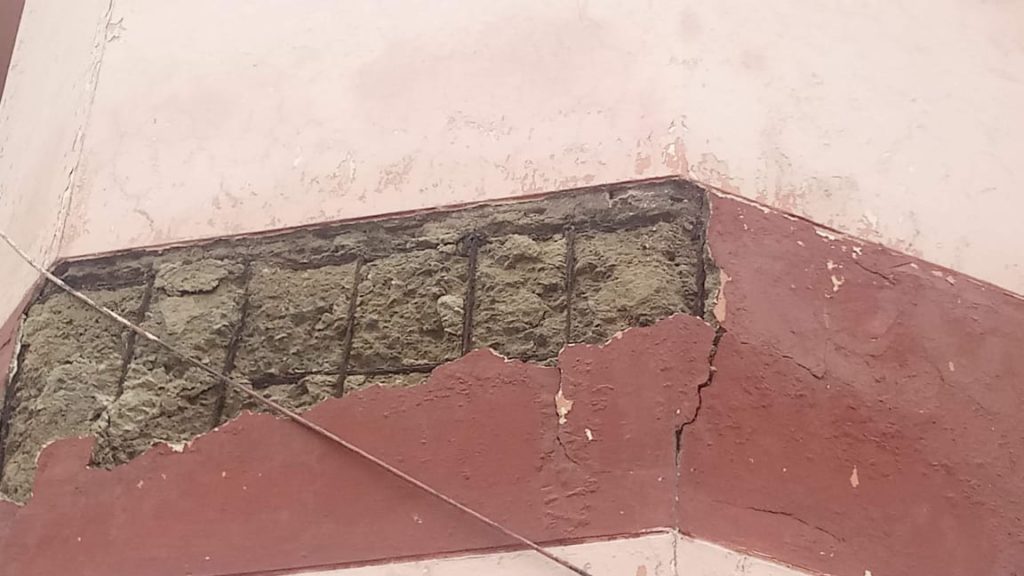
SIGNIFICANCE: The rejection/falling concrete cover of top floor RCC.
2. Damp walls due to RISING DAMPNESS due to
i)DPC FAILURE &
ii)Wet Sunken slabs
LATEST TECHNOLOGY using AQUAVENT® – PATENTED PRODUCTS & A COPYRIGHTED TECHNOLOGY with respect to:
The 1st
Roof crack (Over deck) management tool.
The 1st Rising Dampness & DPC
failure management tool.
Main Article
We have witnessed the waterproofing industry struggling for long term solutions since its inception.
A lot of products have been developed and modified during the last 3/4 decades and a big advancement has been witnessed…..but still, we are struggling for some long term solution in waterproofing. The eventuality is that almost every structure is witnessing Damp walls, Roofs, sunken slabs, etc and resulting into distressed RCC. –particularly the rejection of PCC cover of the ceiling of top floor IMPLYING almost alround failure of waterproofing systems.
The irony is that even the heritage structures like Rashtrapati Bhawan and other buildings are being maintained back to back waterproofing guarantees but still leakages are persistent.
The damp –colour variation at the junction of top floor RCC. roof slab and parapet say it all.
The basic reason for this is GROSS NEGLECT on account of the engineering assets …in the country or possibly they were CLUELESS of the possible solutions. A lack of motivation to invest one’s time and energy could also be a reason.
EFFECT:
1.ROOFs /Terraces
The prolonged entrapped moisture between the RCC. slab and top finishing tiles/PCC. on roof & terraces sets in a phenomenon – ‘HARITON’ effect-explained later.
The alternate DRY-WET cycles lead to cracks development and transmission of leakages through these results into the oxidation process of steel, thereby increasing its volume This increase in volume creates stress on concrete cover over steel leading to de-bonding which ultimately leads to spalling-rejection of concrete cover.
This has led to a very grim and scary situation
where we feel limited to:
All round distress of RCC. structures eventually in 10-15 years of construction.
IRONICALLY the nodal agencies have LOWERED THE AGE OF RCC. from at least 200 years to less than 50years to rationalize the limitation.
Health hazard due to dampness
No long term SOLUTION insight
Over burdening of government & others non-plan expenditure
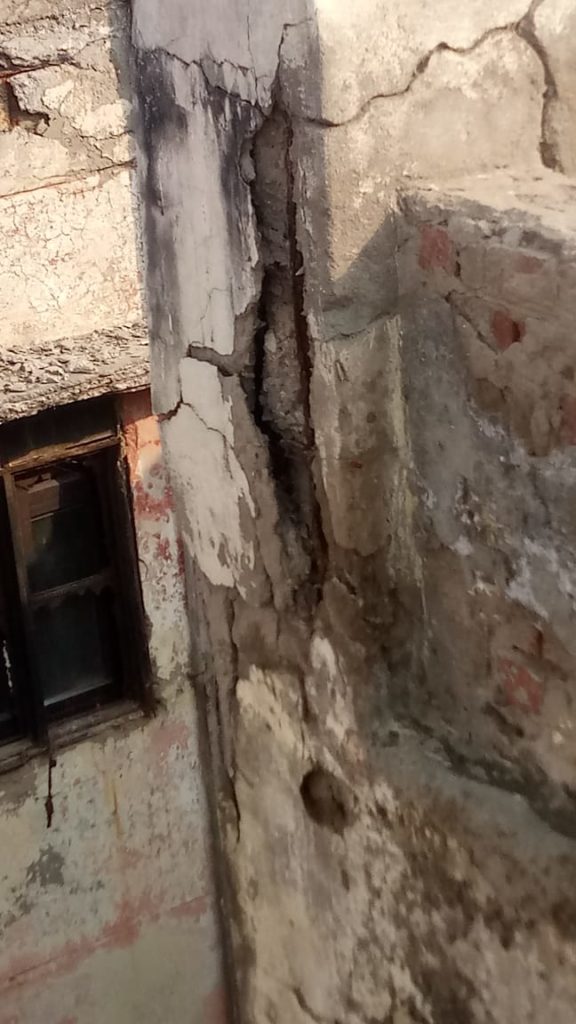
2. WALLS
The basic issue with respect to the walls is capillary action. This is activated by:
i) DPC failure:
The basic reason for this is neglecting/lack of understanding of the DPC layer/Plinth Beam ie. Plastering across the Plinth Beam/foundation up to the brick wall neglecting the basics of DPC. [Damp proofing course].
This connects the wet soil to the brick wall. The logical capillary action is activated – ‘HARIWON’ effect -explained later, leading to wet walls.
Many unsuccessful attempts have been made like coatings, masking reinforcements, tiles, PVC paneling etc. The dampness is seen to cross over even up to Roof ceiling across the tiles etc. [Provided to cover the damp areas]
ii) WET SUNKEN SLABS:
Here the foam concrete/filling of sunken slab once saturated by leakages from sewerage or water pipes and fittings transmits capillary action as in DPC leading to wet patches outside bathrooms, urinals etc. The wet walls are a very common sight and the industry had somewhat accepted it as a NOT–DOABLE proposition. THIS DAMPNESS IS TRANSMITTED TO ADJACENT RCC. BEAMS, COLUMNS AND SLAB and is the biggest reason for EARLY ONSET OF DISTRESS and therefore, should not be neglected.
To answer this, the author took the challenge and went to the ground to study the 5 burning issues:
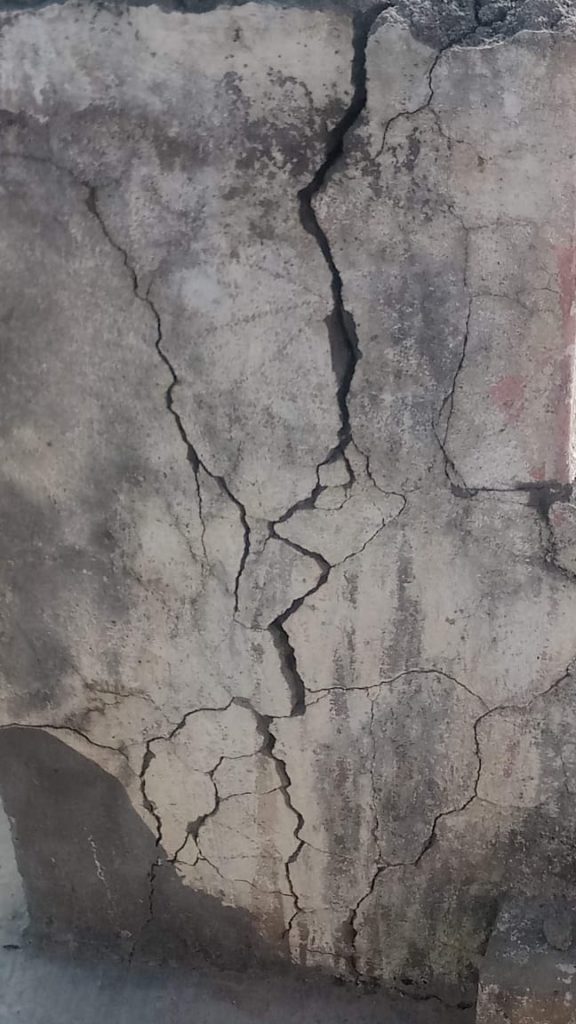
The non structural-crack development
The DPC. failure
RISING DAMPNESS
Reduce the financial burden to an average householder and government, industry due to recurring expense on account of repainting
Augmentation strength of DISTRESSED RCC. structures without dismantling.
And after 23 years of various studies has come
up with practical solutions.
The NEED for the STUDY became more important, as, our premier institutions IIT’s, BIS and all institutions were clueless.
THE STUDY
A phenomenon ‘HARITON‘ effect discovered in the year 1996-97, as an answer to the development of the repeated crack in the roof tiles, finishing top layer or waterproofing done, etc.
This is the basic reason for the failure of almost all waterproofing products till date. The significance of failure is all round distress of almost all buildings RCC. The ceiling of which the concrete cover is falling.
It has been found that the grading course of almost all roofs ie. Between the RCC. slab and top finishing tiles/PCC etc is wet. The moisture/water from this substrate is evaporated in warm weather. This creates an air pressure-an up thrust causing the weakest section of the top layer, to develop crack/s to facilitate the release the hot compressed air.
The crack so formed is created by the lifting of the lower end (towards the slope). The lower section being lesser in thickness lifts, creating a type of funnel for rainwater to get absorbed into the substrate, a SIPHON action sets in during continuous drizzling, thus rewetting it, acting, as, a CATCHMENT.
This phenomenon is named “ The HARITON effect”.
Now that we had discovered the basic reason of
NON-STRUCTURAL CRACKS development, we now needed the CRACK MANAGEMENT TOOL.
This has been discussed in detail in solutions subhead.
Waterproofing /coating is provided over the
tiles etc periodically. This again cracks up, as explained above, leading to
failure of the waterproofing system.
Similarly ‘HARIWON’ effect discovered in 1998 while solving the matrix of DPC failure and RISING DAMPNESS. The basic issue with respect to the walls is capillary action.
This is activated by :
i) DPC failure: The basic reason for this is neglecting the DPC layer/Plinth Beam ie. Plastering across the Plinth Beam/foundation up to the brick wall.
This connects the wet soil to the brick wall. The logical capillary action is activated. The wet walls resulted into peeling of painting, effervescence, saltpeter and even wearing up of plaster. Interestingly, the SALTPETRE is precipitated only on damp walls.
During the study, it was observed that the saltpetre effect is aggravated when the walls get wet. The above has to be painted with waterproofing products, reinforcements, tiles, wooden, plastic paneling and re-plastering etc. All these products and practice have also failed to deliver, as, the dampness travels beyond the tiled area and even rises to the roof.
The phenomenon is the transmission of moisture by capillary action from a highly saturated area to a lesser saturated area. This is termed “HARIWON effect”
SOLUTIONS
1. ROOF/TERRACES:
The biggest challenge was the roof cracks
development.
The study of the phenomenon was done at Dehradun, Uttrakhand. Dehradun is a typical area which receives rainfall at least once in a week. The biggest crack development is observed with a sudden cloud formation in a hot afternoon and a sudden downpour (called 4 o’clock rain by localities). This causes a type of THERMAL SHOCK-complimented by “HARITON effect”. A thermal shock is due to abrupt cooling of a hot substrate.
It took a while to understand that the thermal
shock and HARITON effect are two separate phenomena.
A crack redevelopment of a polymer coating on roof in a single day, made it clear that there is some other aspect. A hole was drilled, a pipe and a balloon over it, fixed to make sure water from rainfall doesn’t go in. The balloon was seen to inflate a bit next afternoon. We now inflated a balloon and deflated it and fixed it again. EUREKA –it inflated a bit more. Now we knew that moist hot air is being released continuously.
To facilitate the hot air release/counter the cracks, initially, we created a chimney sort of arrangement at highest locations-central ridge lines in the roof. This was a cumbersome process and backfired at some locations on account of maintenance issues. A more user- friendly product/procedure was the necessity.
The roof model was initially made of UPVC pipes, later in MS and finally in Aluminum, because of its good conductivity, paintability and durability.
Finally
the SOP[Standard operating procedure] adopted is:
Step 1: Installation of AQUAVENT (Moisture release system) 1 per 40 Sqm.
Step 2: Injection grouting of cracks @ 1 -2 kg/Sq.cm pressure using grouts with bonding aids. A special grouts mix prepared for HERITAGE STRUCTURES.
Step 3: Gravity Grouting in substrate with anti corrosive grouts to inhibit corrosion process of the RCC. Slab and initiate rapid drying to distress the RCC slab.
2. WALLS:
The wall model was initially developed in an
earthen model with various versions in 1998, Upvc in1999 and finally in
Aluminum in 2016.
Finally
the SOP[Standard operating procedure] is:
DPC failure:
Step 1: Installation of AV (Moisture release system) <1 per Rmt along scirting.
Step 2: Injection grouting for creating a chemical DPC @ 1 -2 kg/Sq.cm pressure using grouts and Soil stabilizers at ground level in specific cases.
SUNKEN SLABS:
Step 1: Installation of AV (Moisture release system) 1 per Rmt along skirting/outerface.
Step 2: Injection grouting for creating a chemical DPC @ 1 -2 kg/Sqcm pressure using grouts
Step 3: Pressure Grouting of traps, chowkhats / doorframes, corners and hollow with anti corrosive waterproofing grouts to inhibit corrosion process.
1998:1KN MARG, NDC Tees January Marg, BASE HOSPITAL, New Delhi,
2016: GPO.[A heritage building] Fort Mumbai.2018-19:
BIRLA HOUSE, NEW DELHI
BIRLA HOUSE JAIPUR
MUNJAL FARMS, DELHI
RAINBOW MESS, TRIVENI MESS
510-AD missile UNIT [CE -DZ, Delhi Cantt.]
Itrana Cantt- Alwar
KV-OLF, Raipur Dehradun, Uttrakhand.
Gurudwara Sahib: New Rajendra Nagar.
BHARTIA HOUSE, DELHI
Other residential projects
The
biggest challenge attended:
A normal tendering process timing in government
departments in INDIA is-
i)
Tendering in April
ii) Work
order by 3rd week of May
iii) Start of monsoon by 1st /2nd
week of June. In fact many a contractors dismantled the roof tiles and created
a virtual crisis, as, the leakage increased due to ponding of water on roof.
We solved the issue by introducing the AQUAVENT and can save the civil construction/ maintenance industry billions and embarrassment of leaking roofs and damp /peeling walls.
The advantages of using AQUAVENT® -roof model are:
AQUAVENT® will revolutionize the retrofitting
and waterproofing worldwide. The game changer is:
COST: Saves approximately 50-70% cost. Approximately Rs. 2500-3000 crores to India annually & Billions of dollars/annum internationally. The savings from this can be used to protect the other roofs which have to be excluded for want of funds.
TIME: Saves upto 90% time as compared to the conventional way of removing everything upto RCC. slab and redoing.
GUARANTEE: Up to 20 years already delivered in INDIA.[spotless].In fact the guarantee word has become useless here, as, NO RESPITE using conventional products and methodology.
Relief to USER: MINIMUM DISTURBANCE
GREEN aspect
No pollution: otherwise created by dismantling/redoing.
Saving trees, as, less mining for raw materials-Natural resources on account of sand, cement, stone grit, manpower. You save natural resources needed for re-grading etc.
No debris
Ease of working during the rains, as, dismantling not done.
The increase of AUL[Actual usable life] of structures on account of being free of leakage/seepage. We can logically extend the AUL[Actual usable life ] of structures by 20-30 years, thus, saving the immediate stress of redevelopment of additional/untimely –expensive rehabilitation /reconstruction.
A boon for restoration of HERITAGE STRUCTURES, as, no dismantling needed. Infact special grouts formulated for these.
Implications:
Will save approximately billions per annum to our national/international wealth.
Alternatively, we can do more roofs per annum in same budget.
Extend life of structures, as, in combination with Dr.MIRACLE waterproofing/retrofitting aids, the structures will be gradually de-saturated/free of corrosion.
Already test marketed for 22 years and started using successfully in India since March 1996.
Saving of vast natural resources, as, the need to replace grading course (wet Mud-phuska, LCC., Brick-coba, foam concrete not needed.
Reduction of idling time of asset under repair. A great relief to user. USER: MINIMUM Disturbance.
GREEN IMPACT: Saving Debris generation and subsequent grading course which needs the sand, grit etc
WORKING during RAINS: Waterproofing can be done even during rains as, virtually no dismantling needed.
IMPACT/EFFECT: on Health
… Moulds produce allergens (substances that can cause an allergic reaction), irritants and, sometimes, toxic substances. Inhaling or touching mould spores may cause an allergic reaction, such as sneezing, a runny nose, red eyes and skin rash. Moulds can also cause asthma attacks.
… Exposure to damp and moldy environments may cause a variety of health effects, or none at all. Some people are sensitive to molds. For these people, molds can cause nasal stuffiness, throat irritation, coughing or wheezing, eye irritation, or, in some cases, skin irritation. Toxic black mould. Stachybotrys, or toxic black mould, is harmful in the home because it produces mycotoxins.
… These mycotoxins are very dangerous and can cause problems with the reproductive system, vision, skin, circulatory and respiratory systems and can even have psychological and neurological effects.
… The majority of moulds found in the home are caused by excess moisture, usually this is due to high humidity levels in the property but it could also be caused by leaking pipes, rising damp, rain seeping in due to a damaged roof or window frame. In new build properties you may start to notice excess moisture and even mould due to the property not drying out yet. It is important to remove the mould problems in your home as soon as possible as left untreated it can soon become a health risks to those living in the property.
About the author:
Ajaya Kumar Harit is a waterproofing -retrofitting inventor/scientist and has to his credit solving most complicated/extreme engineering waterproofing/retrofitting solutions using his SIGNATURE-without DISMANTLING techniques and solutions.
(This is Constrofacilitator exclusive content….for using..of collage images and content…source to be given is mandatory…for any medium of content publishing)
Rapid urbanization witnessed in the country demands for smart urban mobility solutions that are less taxing on the environment. In such a scenario, electric vehicles come as a possible solution. Instead, the conventional fleet of vehicles in India is growing rapidly: total vehicle sales (including motorcycles) increased stood at 262677.83 bn in 2018-19, according to SIAM data (Society of Indian Automobile Manufacturers). The total number of vehicles on the road is expected to grow significantly by the end of the next decade. As part of its overall mission to address the challenges related to urban mobility, the Union Budget 2019-20 emphasized the very need to promote the use of electric vehicles (EVs).
Administrators at the centre, the states and the cities understand the pressing need to explore green fuel and zero-emission vehicles. This also means, in a decade, the government wants the cities to transition to options like electric vehicles. However, scrutiny of the current status of this ongoing transition in India reinforces the need for time-bound and impactful action towards this shift.
Why the push?
The rise in the use of EVs will in a way impact the development of our urban spaces and infrastructure. Here’s how:
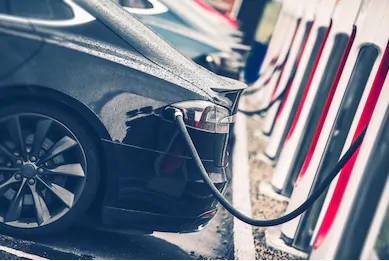
With po licies and schemes in place for the introduction of EVs in both, the public and private transportation realms, the government is already working on a roadmap for setting up of supportive infrastructure across cities, around our homes and other places of importance such as educational institutions, community parking places etc. A key element here is the charging station infrastructure in the country.
Union Budget 2019-20 announcement incentivizes the use of EVs
“Phase-II of FAME ( Faster Adoption and Manufacture of (Hybrid and) Electric Vehicles) Scheme, following approval of the Cabinet with an outlay of INR 10,000 crore for a period of three years, has commenced from 1st April, 2019. The main objective of the Scheme is to encourage faster adoption of Electric vehicles by way of offering an upfront incentive on the purchase of electric vehicles and also by establishing the necessary charging infrastructure for electric vehicles. Only advanced battery and registered e-vehicles will be incentivized under the Scheme with greater emphasis on providing affordable & environment-friendly public transportation options for the common man.”
The National E-mobility Mission Plan 2013 targets sale of 6-7 mn electric vehicles by 2020 and plans to a transition where 30% EVs has been envisioned on the road by 2030.
To promote the use of electric vehicles, the government will also provide additional income tax deduction of INR 1.5 lakh on the interest paid on loans taken to purchase electric vehicles.
What is required now?
A) Set up of a smart charging infrastructure:If we plan to use electric vehicles in a big way in coming decade and envision ourselves as the global manufacturing hub for electric vehicles, charging stations will have to be set up across all urban areas, and highways across the country to ensure assured and sustainable transition to electric vehicles.
The Ministry of Power, Government of India has rolled out the Guidelines on Electric Charging Infrastructure for EVs. In the list of cities that offer the most favourable environment to the shift to EVs are cities with high pollution levels and a population of greater than four million residents. These are Mumbai, Delhi, Bangalore, Hyderabad, Ahmedabad, Chennai, Kolkata, Surat and Pune.
Setting up of charging stations will be a de-licensed activity and thus the rollout of these charging stations are expected to be quite rapid. The charging station will also be free to obtain electricity from any power company through the open access system. Once applied for, the charging station will also be given priority for an electric connection by the distributing agency.
Although the government maintains an optimistic stand when it comes to the transition to EVs, it must be borne in mind that charging infrastructure is key to the success of the desired shift. The size, type and capacity of the charging station, power requirements and inter-operability of charging stations set up at residential, commercial and institutional establishments are important criteria to be standardized, with an option for customization, for successful implementation of the plan. Different segment of vehicles (2W, 3W, PVs, CVs) may require a different type of charging standard (& connector), however, the charging infrastructure, at least at public places, should be common to the extent possible to reduce the infra cost.
The FAME Scheme and the phased Manufacturing Programme (by NITI Ayog) will soon facilitate easier and cost effective methods of setting up of EV charging stations by introducing norms and standards for Charging stations. There are currently only three acceptable global standards – the ones provided the Japanese, the Chinese and the European Countries. The standards will help project charging stations as a feasible model for the public as well as private modes of transport.
B) Spatial planning of EV charging infrastructure: Optimal locations for EV charging installations will change according to the type of equipment in use. For example, long-duration charging may be a good match for home or workplace locations, but is generally not recommended for shorter duration parking areas, such as grocery stores, commercial establishments, etc. The process for installing EV charging at a particular location will depend on the property ownership and type of land use. Availability of power, constructability, environmental conditions, barriers or mounting options, signs and markings to designate sites and restrict the use and suitability are the attributes to be looked at.
On similar lines, amendments have also been made to the URDPFI Guidelines 2014 (Urban and Regional Development Plans Formulation and Implementation Guidelines) to make provisions for and ensure smooth accommodation of EV public charging stations within the urban setting.
Considering that the optimal locations for EV charging infrastructure in most cities with a tight land supply are difficult to obtain, it is significant to assess carefully, the planning of these sites in metros. Utilizing existing space within crowded cities is key here. This being said, if cities wish to reap the vast benefits of the shift to EVs and improve public health and quality of life, they will need to plan for the dramatic expansion of electric vehicle charging infrastructure.
What is the immediate requirement?
We need to prepare a master list of locations within the city and connecting highways, where the charging infrastructure for public as well as private modes of transport will be set up.
Regulating how land is used in a community is one of the most powerful tools that the local government has. On the infrastructure side, the states can use its zoning laws to allow extension of the electricity grid, installation of charging infrastructure, vehicle parking, and the creation of charging hubs.
The building bylaws can be used to permit charging points in existing construction and encourage or require it in new construction. Town and Country Planning Organization, Ministry of Housing and Urban Affairs, GoI has made amendments in the Model Building Byelaws 2016 (MBBL – 2016) to make provisions for ‘Electric Vehicle Charging Infrastructure’ / Public Charging Stations (PCS) in urban areas.
Finally design and collaboration matters
However, we must bear in mind that ‘design’ matters. Bad charging station design can deter EV adoption rather than stimulate it. Good station design can help make it highly visible, easy to access, pleasant to sit at, and unlikely to be blocked by other vehicles. Working such features into EV charging station regulations and plans in cities can ensure that we move EV adoption forward.
It is important that governments and the private sector coordinate their deployment activities to ensure that convenient, affordable, and reliable public charging infrastructure is available to all EV drivers. There is still much more work to do. All including the centre, the states, the public level bodies and the private sector have to join hands to develop a robust charging infrastructure network.
Author:- Arumugham Shankar, COO – Strategic Consulting, JLL India
Urbanisation was once a dream but it has now become a nightmare for people residing in the urban cities. The depletion of our air and water is becoming literally dangerous. We have been exploiting natural resources for quite a long time and it’s finally taking a huge toll on our daily life. Given below is the city wise depreciation faced by Urban India due to instability of air and water.
Tamil Nadu
Tamil Nadu and its capital Chennai
are struggling to meet the water demands of its citizens. Chennai is facing a
drought for the third year in a row. As of Thursday, Chennai’s four reservoirs
together had only 31 million cubic feet (mcft) of water as against a total
capacity of 11,257 mcft.
With the city fighting to meet its
water demand Chennai Metropolitan Water Supply and Sewerage Board (CMWSSB) is
almost completely dependent on alternative sources including water from
desalination plants and stone quarries in Kanchipuram district.
As Chennai reels under a water
crisis, the city’s IT hub is taking steps to conserve water. From letting
employees work from home to implementing water-conservation methods, IT
companies are going that extra mile to save water.The city has been grappling
with water shortage and residents are mostly dependent on tankers to meet their
daily needs.
Image Source- scroll.in
The four reservoirs supplying water
in Chennai are almost dry and residents have been suffering for at least two
months now. As Chennai is
grappling with severe water crisis, the water-intensive real civil and
construction sector is beginning to feel the heat. Many players have slowed
down their activities and those in operation have found innovative ways to keep
themselves going. Construction companies are now looking for innovative
construction technologies to minimise water usage.
Bangalore
Karnataka Deputy Chief Minister G Parameshwara said they’re planning to ban the construction of apartments in the city after consulting with various stakeholders. The government’s proposal comes in the view of the Bengaluru Water Supply and Sewerage Board’s ongoing Cauvery Water Supply Phase. The BWSSB’s project, which aims at providing drinking water connections to the suburban areas of Bengaluru, is likely to be completed in the next five years. India’s monsoon has progressed more slowly than usual after hitting the southern state of Kerala nearly a week late. Monsoon rains have been 44% lower-than-average so far in June, delaying the sowing of summer-sown crops and raising concerns that parts of the country could face a worsening drought.
Image Source- timesofindia
The
India Meteorological Department (IMD) has forecast average rainfall in 2019,
while the country’s only private forecaster Skymet has predicted below-normal
rainfall. Karnataka, like other states in India, has been revolving under a
severe drought due to fading rain.
Mumbai
Few days earlier it was reported due to insufficient rainfall last year, the BMC had cut 10 percent the water supply from November 2018. Usually, the city witnesses rains from the second week of June, however, this year the rains are showing no signs of making their presence felt even with July around the corner, making authorities anxious. Eventually monsoon came but gave a big blow too.
Image Source- hindustantimes.com
Suddenly
then it became too much to bear for Mumbaikars due to rain. The most recent
Mumbai downpour has brought the city to a standstill, with schools and offices
shutting shop and people being advised to stay indoors. More than 20 people are
reported dead.
Delhi
Report by the NITI Aayog about the capital’s own water woes. Delhi will in all likelihood run out of groundwater by 2020. Predictably, population growth has been one of the main reasons for this. However, failure to implement sustainable water harvesting resources has also contributed to it.
Image Source- indiatoday.in
In
fact, 90% of Delhi is at a semi-critical or critical level in terms of
groundwater.
Delhi literally has the worst air quality in the world, according to a report by the WHO.
The capital was found to have a heavy presence of PM10 particulate matter – 292 micrograms per cubic meter. The annual safe limit set by the WHO is 60. 21 people died in a wall collapse in the city, while 14 others died in rain-related incidents. The death toll in Maharashtra has now risen to 35. Rail, air, and road traffic has been severely affected in Mumbai, with a massive number of flights being cancelled. Most flights have also been delayed for extended periods.
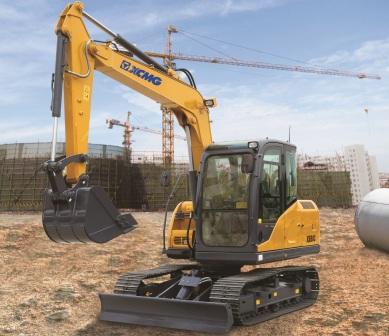
Schwing Stetter
India (SSI), one of India’s leading concreting equipment manufacturers’ announced the launch of its new generation of
XCMG crawler hydraulic excavators – XE80C, XE140I and XE215 C. The three new
machines are all set to revolutionize the landscape of the construction and
mining industry in India. The innovations were launched today in Chennai and
unveiled by Mr. V.G. Sakthikumar, Managing Director of Schwing Stetter India.
The demand:
There has been a consistent demand for crawler hydraulic excavators owing to a general increase in projects being awarded. The crawler hydraulic excavator is present in the following industries such as construction, excavation, earthwork, mining, quarry and roads. We also find crawler hydraulic excavator applications in the following industries such as forestry, recycling, demolition, lakes, river cleaning and underwater applications.
This extremely
versatile range of excavators are expected to find great utility at
construction and mining sites in India aiding in easier and safer construction
practices.
The product variations:
The crawler
hydraulic excavators are conceptualized based on the current needs of customers
in this segment and customized with a high-power XCMG’s proprietary matching
technology. The machines have undergone several extensive trials to meet the
industry requirements of smart, efficient products. The excavator variants are
listed below.
XCMG crawler hydraulic excavator XE80 C.
XCMG crawler hydraulic excavator XE140 I.
XCMG crawler hydraulic excavator XE215 C.
The significant features of the excavator range are as follows:
Excellent performance.
Intelligent control.
High-performance slewing bearing.
Energy saving.
Reliable and durable X-frame.
Comfortable and safe operation.
Convenient maintenance.
Speaking about the launch of the excavator range, Mr. V.G. Sakthikumar, Managing Director of Schwing Stetter India said, “With market demand doubling to 25,000 units in 2018, compared to 11,000 units in 2011, Schwing Stetter India is extremely delighted to launch the crawler hydraulic excavator range for the Indian market. Given that the industry will further increase steadily in the next few years due to further increased investment in infrastructure projects like interlinking of rivers, road and rail construction. Schwing Stetter – XCMG range of excavators will revolutionize the present earthmoving sector. With their record energy-saving performance and breakthrough cost-efficiency, the new range will offer the best return on investment and resale value to the owner
Mr. A.R Subramanian, Executive Director Schwing Stetter India with Mr. V.G. Sakthikumar Managing Director Schwing Stetter India
The company is actively working out strategies to build market presence as it gears up for increased business opportunities that the current infrastructure space holds. With the new launch, Schwing Stetter plans to consolidate its share of the XCMG excavator market in India and extend its reach to other developing rural markets globally.
Rapid urbanization & industrialization in Asia Pacific, due to improving socio-economic factors is likely to boost the construction industry and make a noteworthy contribution to the concrete admixture market size in the forecast spell. For instance, the construction industry in the Asia Pacific accounts for a major chunk of the global construction industry mainly due to China, India and Australia. Further, Indonesia and Malaysia are making substantial investments in new construction projects which will trigger construction industry growth in the region and will make a notable impact on the concrete additive market size over the projected time frame. New projects on affordable living will further boost the market in the region. Concrete admixtures play an important role in improving the workability, durability, acceleration or retardation of setting time, reducing water cement ratio, etc. and is henceforth increasingly preferred in the construction industry.
Rising population in Middle East is expected to boost the
demand of residential construction, which will in turn, fuel the demand of concrete admixtures.
Revival of the U.S. and Europe construction and renovation
industry for both buildings and other infrastructure will also make a
significant contribution to the concrete admixture market size in the coming
years. For instance, Europe construction policies are encouraging sustainable
construction to achieve resource efficiency, as buildings have the potential to
reduce greenhouse gas emissions by approximately 90%. Henceforth, substantial
investment to revive the construction sector in the region will boost product
demand and will help attain promising gains to concrete additive market size in
the near future.
Lack of skilled labor in the unorganized construction sectors
mainly in the African region is a major factor, likely to hinder the market
size in the coming years. Additionally, lack of awareness about value adding
product properties including durability, improved workability, reducing time,
etc. is another major factor which is probable to hamper the concrete additive
market size over the forecast time spell.
Market division
On the basis of function, concrete admixtures can see a
classification by air entraining admixtures, water reducing admixtures,
plasticizers, accelerating admixtures, retarding admixtures, retarding
admixtures, hydration-control admixtures, corrosion inhibitors, shrinkage
reducers, alkali-silica reactivity inhibitors, and coloring admixtures.
Based on the
product, concrete admixture market size for superplasticizer is likely to grow
at a CAGR of more than 9.5% during the forecast timeframe. Superplasticizers
possess excellent properties which reduces the water requirement by
approximately 15-30% without impacting the workability which results in forming
dense concrete. It is majorly applicable in producing heavy reinforced
structures with inaccessible areas. Persistence need to save natural resources,
such as water has propelled demand of admixture across construction sector to
achieve desired workability without utilizing large amounts of water, which in
turn will have a positive impact on the concrete additive market size over the
projected time spell.
Based on the application, concrete admixture market size for
residential application was valued more than USD 5.5 billion in 2016.
Residential sector includes building for multi-family dwellings, single-unit,
duplex, quad-plex and apartments. Rising middle class population mainly in the
Asia Pacific and the Middle East has resulted in increasing construction
spending for developing residential areas. These trends are likely to make
substantial impact on the concrete additive market size in the forecast
timeframe. For instance, nearly 7 million people are added to the middle east
population in last 5 years which is anticipated to get double by 2050, which
will have subsequent impact on the construction spending in the residential
sector.
Asia Pacific concrete admixture market size attained a major
chunk which accounted for more than 40% in 2016. Increasing urbanization
coupled with rising government investment in the major projects across
residential, non-residential and commercial sector will make prominent
contribution to the business size in the forecast timespan. For instance,
Malaysia has been awarded new and on-going infrastructure projects worth USD 22
billion in 2017-18 on public infrastructure and residential housing.
Additionally, Indonesia spending on infrastructure is projected to surpass USD
165 billion by 2025 which will have substantial impact on the concrete additive
market size over the forecast timespan.
The driving factors
Advancement of the global
construction industry and growth in compliance with the latest manufacturing
standards are major drivers of the market.
Concrete
admixtures have gained prominence in concrete construction activities as they
allow cost reduction
One of the key factors driving the
market include increasing demand for water usage and construction time.
Increasing Construction Activities
Apart
from enhancing the quality of concrete, they help in its maintenance during
important stages such as mixing, transporting, placing, and curing and also in
adverse weather conditions.
Increasing construction activities
across the world are also likely to boost the demand for concrete admixtures,
as it is primarily used for enhancing the concrete properties during
construction.
Increase in government initiatives
regarding energy conservation and sustainable infrastructure is expected new
opportunity
The growing need for repair and
maintenance of aging house in developed economies is also likely to
substantiate the growth of the concrete admixtures market during the forecast
period.
The adoption of ready-mix concrete in
developing economies is likely to act as a growth opportunity for the market,
in the future.
The Asia-Pacific region has accounted
for the major market share across the world, owing to the high constructional
activities in China, India, and ASEAN countries.
The rising middle-class population in
Asia Pacific has resulted in increasing construction spending for developing
residential areas.
The growth of vertical construction in India
is positively impacting the demand for ready-mix concrete and
superplasticizers.
Growing concrete consumption in India,
coupled with increasing use of superplasticizers, is expected to positively
impact naphthalene and PCE based admixtures market in the country.
The demand for the high-rise
buildings have certainly grown in the recent times. With horizontal land
construction coming to halt due to limiting space in the city, developers are
widely favouring the construction of vertical high-rise towers to accommodate
people.
Large-scale development in seaport
infrastructure to expand international trade is likely to fuel the demand in
the coming years
Conclusion
Global concrete admixtures construction chemicals market was
valued US$ 10.85 Bn in 2017 and is expected to reach US$ 16.54 Bn by 2026, at a
CAGR of 5.41 % during the forecast period. Concrete admixtures construction
chemicals market is register to the highest CAGR 5.41 % during the forecast
period owing to the growth in infrastructure projects like airports, highways,
bridges, dams and wastewater facilities are estimated to open new opportunities
for the market players.
The concrete
admixtures construction chemical market in Asia-Pacific is projected to grow at
the highest CAGR and leading the market in terms of revenue owing to the
growing infrastructural construction activities. Furthermore, the growth in
population in Asia-Pacific countries is estimated to boost the demand for
housing & commercial infrastructure, which is projected to drive the global
concrete admixtures construction chemicals market.
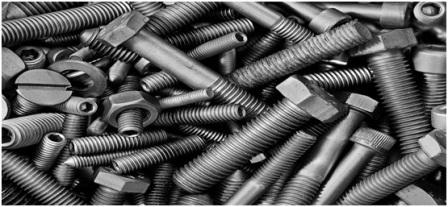
Self-drilling screws have a fluted tip, almost like a drill bit, to dig into the material before its threads drive through it. They also come with a variety of options for the head, tip and other characteristics. The self-drilling screws are what you need to penetrate thicker metal such as 22 gauge.
Self-drilling screws are used for many metal applications but weren’t intended to go from metal to wood. Most of the time, it is this type of screw that makes the deck-to-building connection in a deck-construction project. These types of screws have tips numbered one through five, which refers to the thickness of the metal it can penetrate without a pilot hole.
Screws are the weakest link between
the metal sheets and the structure. Compromise in quality leads to failure and
costly repairs.
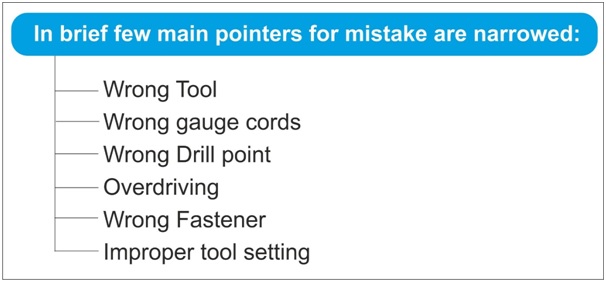
The instances for the wrong
installation:
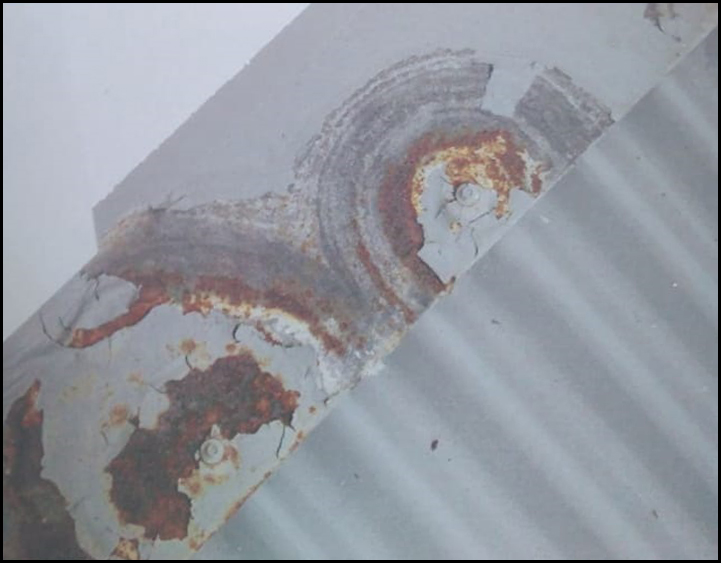
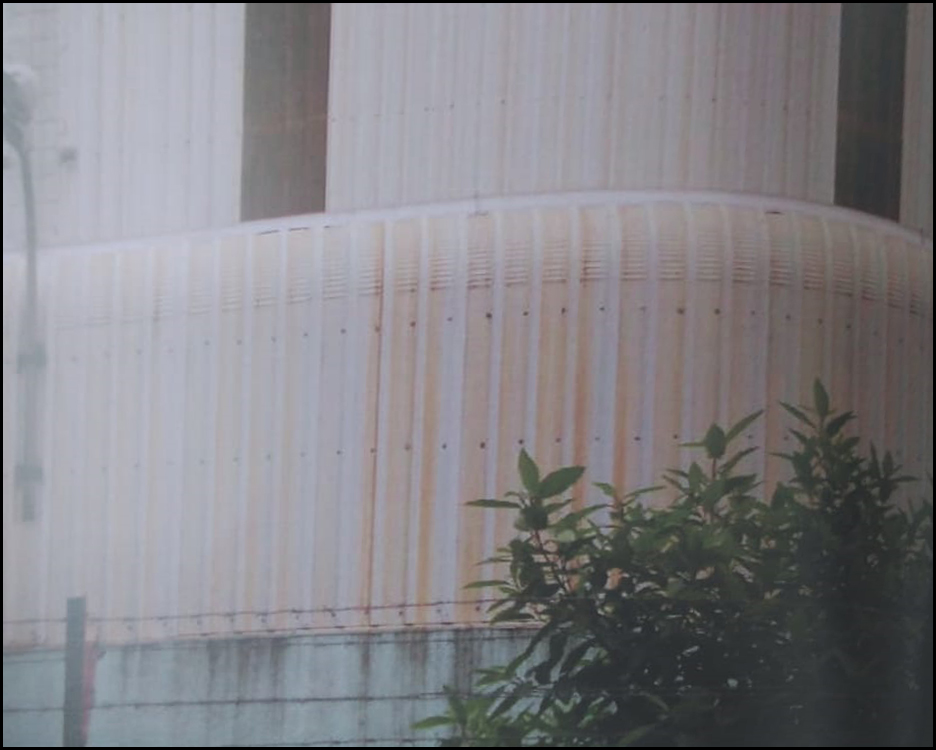
1 – Screws wrongly fixed in the valley. Failure/Corrosion on sheets due to poor quality.
2 – New metal sheets installed with self-drilling fasteners, sometimes may be given way due to screw stress, installation becomes a challenge.
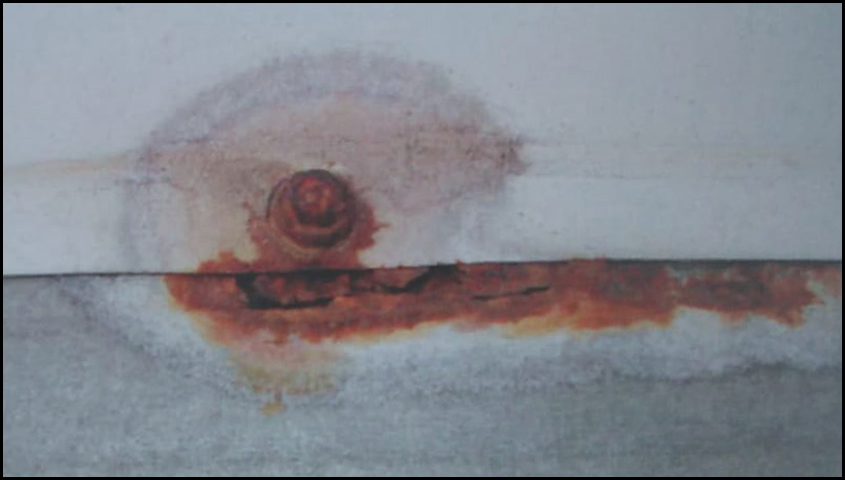
3 – Washers that are conductive leads to corrosion. Corrosion leads to stains on the building.
4 – Stains and corrosion might occur on cladding due to poor quality fasteners.
5 – Number of fasteners need to adequate or else sheets might flow away
6 – Reputation is rusted over a stained roof.
7 – Corrosion on the roof might occur due to fasteners.
8 – Screws, when not installed correctly, might loosen up which might occur due to lack of holding the purlins
The
overview of issues faced;
Creating
Awareness
There is a lack of
awareness for self-drilling screws in general which results in economical; and
structural loses. Given instances above are the prime causes for such mishaps.
There is a general need for guidelines and standards that needs to be followed.
Coating and size awareness are a few of the primary matters that need to be
checked and standardized.
Australian & International Standard AS3566 Class (March
2002) is perhaps the best guideline we have at present.
Tender Specifications of Self Drilling Screws
Self Drilling Screws Drill
their own hole and taps the thread and hold the metal roof to the Secondary
membrane. The Screws provide high pullout strength, shear strength &
maximum thread engagement and positive fastening in structural steel.
Self Drilling Screws
Meeting the Australian & International Standard AS3566 Class (March 2002)
which details as follows:
Salt Spray Test Certificates (ASTM B117) for 800 Hrs.
15 Cycles of Kesternich Test in accordance to DIN 50018. (Condensing the atmosphere containing Sulphur dioxide at level SFW 2.05.)
Relative Humidity in accordance with ASTM D2247 for 1000 Hours.
Test Cycle of 4 Hours of UltraViolet Radiation as per ASTM G154 for 2000 Hrs.
Language Self Drilling Screws Hexagon Flange Head With a
Drilling Capacity of 12mm Thick Hot Rolled Steel with Fine Thread Low Carbon
EPDM Seal with a Blue Mark with RustShield Coating 3 (Electro PolySeal V
E-coating) Coated Screws and a Separate METAL Bonded EPDM Washers:
The steel
sheet shall be valley fastened with nominal 20 μm zinc coated or nominal 25 μm
zinc- E-Coating, Hexagon Flange head, self-drilling screw as per AS 3566-2002
Class 3 fasteners of approved make (ROOFIX or equivalent) with Blue Strip EPDM
washer as per the requirement considering the profile shape and design load.
The fastener size shall be calculated as per the design or manufacturers
recommendations. The profile sheet, fastener size etc. shall be approved by the
concerned authority the measurement shall be based on finished/covered surface
area. Fixing of sheets with imported 12g. -24 tpi self tapping self drilling
screw, EPDM washers, applying poly sulphide sealant on all screws and rivets to
make the screw holes water- proof and corrosion proof etc.
Closing Note
The guidelines are very important for screwing issues. Neglecting these might cause disastrous effect. In the most basic sense, the benefits of rules and regulations in business are that they protect the company. Following rules and regulations help experts understand what is expected of them and what will happen if they violate the rules. It makes for a stable office environment where people feel safe to come to work, to be themselves and to go about their business. Choosing experts who abide by rules is the key here.
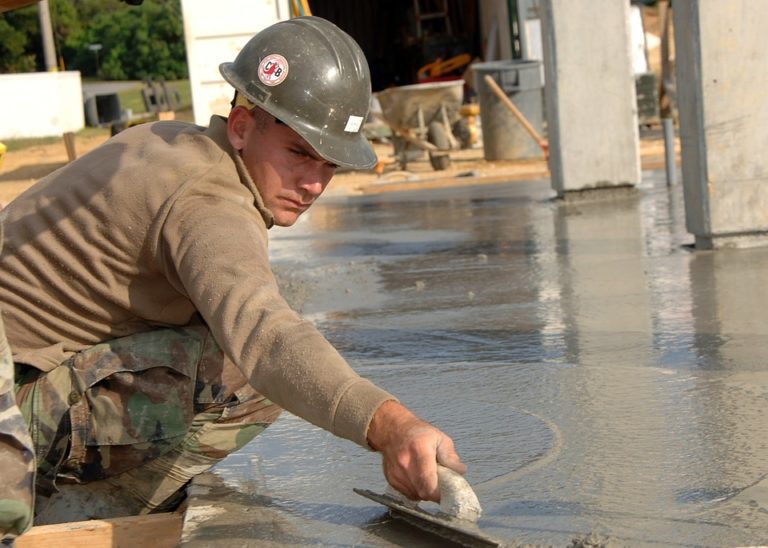
Cement is one of the most widely used
materials in construction. Applications include concrete floors, walls, and
pavement; concrete blocks; and different mixtures of mortar and grout.
Thousands of construction workers are
exposed to concrete every day without harm. But anyone who uses or supervises
the use of cement should know its health hazards and the safe working
procedures necessary to minimize exposure.
Manufacturing
the stone-like building material is responsible for 7% of global carbon dioxide
emissions, more than what comes from all the trucks in the world.
Tremendous Pollution Impact
World
production of cement is currently around 3.6 billion tons per year and this is
set to rise to around a billion tons by 2050 as the standard of living in
developing countries continues to accelerate. In fact, in terms of volume used,
it is the most important substance on Earth bar water.
Though
cement is extremely useful and an integral part of modern society, it is not
environmentally friendly.
To
create cement, the constituent limestone must first be heated, and this is
undertaken on an industrial scale using fossil fuels, which inevitably leads to
CO2 being poured into the atmosphere. Cement production is one of the worst
polluting industries in USA, and accounts for 5% of all carbon dioxide
emissions globally. In general, every ton of cement produced leads to a ton of
carbon dioxide gas being released into the atmosphere. Other harmful emissions
from the Portland cement manufacturing process include nitrogen oxides, sulphur
oxides and carbon monoxide.
There
is also the inherent environmental impact of quarrying the limestone for
production and transportation of the finished product. The mining of the
constituent minerals needed for cement can cause large amounts of subsidence
and various types of pollution.
Cement’s
contribution to emissions is especially immense because of the chemical process
required to make it.
About
two-thirds of the polluting gases that come from cement production stem from
burning limestone. Kilns are heated to more than 1,400 degrees Celsius (2,600
Fahrenheit), about four times hotter than a home oven set to the self-clean
cycle. Inside the kiln, carbon trapped in the limestone combines with oxygen
and is released as CO2, the most abundant greenhouse gas.
A
ton of cement yields at least half a ton of CO2, according to the European
Cement Association. That’s more than the average car would produce on a drive
from New York to Miami. And a single mixer truck can carry about 13 tons.
Hundreds or even thousands of tons go into ordinary office buildings.
The scale of the problem has drawn the attention of research groups like the IEA and Chatham House along with policymakers from the C40, which represents the world’s largest cities. The IEA estimates cement production will rise 12% to 23% by 2050, though it could cut emissions with a series of actions. All the groups are looking for levers to prompt change.
Move towards green cement
Today green cement production
accounts for 3.5% of global cement, but is forecast to grow to over 13% of the
market by 2020.
Large
cement producers have realised the environmental impact of cement for quite
some time and have trialled eco-friendly alternatives.
Early
attempts to produce ‘green’ cement included adding by-products to reduce the
amount of limestone needed: steel by-products (slag), ash and more magnesium
oxide have all been trialled with varying levels of success.Furthermore, by
adding more magnesium oxide to Portland cement it was hoped that the
temperature of production could be lowered to a temperature that was achievable
by heat produced using biofuels. Unfortunately, as the heating of magnesium
oxide produces substantial CO2 the use of MgO did nothing to reduce emissions
of the overall process, sometimes doubling emissions relative to traditional
production.
Other
temperature reducing minerals were also tried, but the exact chemistry of
Portland cement is not well known and it is hard to predict how the chemical
reaction which hardens the cement would be affected by the addition of extra
minerals.
However,
there are many companies that are still working with different blends of
Portland cement to try and create a sustainable alternative.
Brazil
is one place making rapid progress, partly because of the availability of raw
materials such as pozzolan, a type of siliceous and aluminous material that
results in a product with the same technical properties as the traditional
cement.
Although
green cement production will, initially, be confined to developed countries,
China and India will catch up quickly given their dominance on the world cement
scene.
These
are the conclusions from a new study entitled The Future of Green Cement to
2020. Based on extensive primary research and expert technical and market
insight, the study also reveals how demand for alternative cement-like
materials will grow from almost nothing to just under 17 million tonnes over
the next ten years.
Cement
is perhaps one of the most necessary and widespread resources in the world. At
the same time, there is no viable replacement for cement, and the cement
industry has a heavy impact on the environment. In terms of carbon dioxide
(CO2) emissions alone, the cement industry produces about 5% of man-made CO2
emissions globally.
Fortunately,
many practices are increasingly proving to reduce or eliminate the
environmental impact of the production process without degrading the quality of
the end product. Such practices include:
The use of recycled materials
The use of alternative fuels
The use of value-added raw materials such
as geopolymers
Industrial symbiosis (synergy)
Sequestration of carbon dioxide
Dry process technologies
Oxygen kilns.
Several technologies have been
developed that can promote sustainable practices in the cement industry.
Implementing environmentally and socially beneficial practices can often be
economically beneficial as well in the long term, directly or indirectly.Cement
production trends will be the continual development of more sustainable
practices, and the industry will experience more societal and legal pressure to
implement these practices.
The focus is on
efficiency and using fossil-fuel alternatives for heat. The European Cement
Association says its producers already get 44% of their energy from cleaner
sources and wants to raise that proportion to 60% by 2050. Instead of using
coal, it’s creating heat with used tires, mineral oil and industrial waste.
The next frontier
would be using carbon capture and storage devices to siphon off pollutants and
trap them underground permanently. That technology isn’t in widespread use and
would be expensive – hundreds of millions of dollars for each factory – but it
could reduce emissions 80% by the middle of the century.
Conclusion
The cement industry faces a number of challenges that include depleting fossil fuel reserves, scarcity of raw materials, perpetually increasing demand for cements and concretes, growing environmental concerns linked to climate change and an ailing world economy. Every tonne of Ordinary Portland Cement(OPC) that is produced releases on average a similar amount of CO2into the atmosphere, or in total roughly 6% of all man-made carbon emissions. Improved production methods and formulations that reduce or eliminate CO2 emissions from the cement manufacturing process are thus high on the agenda.
Almost all
major construction equipment companies across the globe have established a
presence in India either as joint ventures with Indian companies or as
independent entities. Similarly, on the demand front, the Indian consumer has
realized the importance of value proposition rather than money, thereby
shifting the demand curve towards value driven products, more importantly
quality services.
Roads and Highways sector has been and continues to be one of the key drivers for growth for the infrastructure sector in India. India needs roads, both in rural and urban areas to progress. The government has shown significant focus on building a world-class road network. Thus, there is a substantial budget outlay in successive National Budgets towards this segment. Investments that have been earmarked for this sector presents a great opportunity for the OEMs.
Amidst these movements there are few driving factors and trends that is encompassing the demand for construction equipments. Some of them are analysed below.
Customisation
The fast-changing and varied
requirements of a developing nation. It is no longer enough to create one
machine and expect to suit the needs of all. Buyers have become more educated
and demanding in terms of wanting machines suited to the kind of work and
environment that they work in. Customisations have to be in sync with the
market and the on-ground realities for making the most of it. Simple software
customisations help keep a log of the machine’s data for future reference. It
also helps keep track of the machine’s numbers in terms of efficiency and fuel
consumption. The customised software help run troubleshooting and diagnostic
measures to ensure safety and efficacy of the machines.
Operational Safety
Comfort and safety of an operator are of paramount importance as it not only ensures safe operations at the construction site, but also increases the efficiency of the operator. Nowadays compactors are provided with isolated operator platform, there is no feeling of vibration of the machine. This improves the stress-free operation of the machine & improves the operator’s efficiency. A conveniently positioned control on the operational panel allows easy switching of work modes, depending on working conditions. The unit also offers variable drum vibration frequencies allowing faster and easier reactions to changing soil types and conditions.
Image Source: Ammann India
Automation and IOT
At present, there is a shift towards
increasing automation, production enhancement, and safety. A lot of innovations
are also taking place to develop equipment specifically customized solution.
There is an adaptation of control methodology in relation to accuracy,
repeatability, and efficiency Firms are using modified mechanisms and
electrical sensors to ensure safety guidelines. There is a definite shift
towards adoption of newer technologies for industries as well which can be seen
in specifically in the crane system modulation. With changing times there is a
demand for the MHE model that yields a quicker ROI than ever before. Even
companies who are replacing or upgrading their existing range of material
handling equipment are inclined towards technology that is efficient. The Internet of Things (IoT) is
one of the hottest topics in the construction sector, and with good reason. It
influences the interaction of technological, economic, social, societal, and
individual changes. IOT is being implemented in construction for data
gratification and safeguarding of products.
Training gaining importance
Achieving man-machine integration to
maximize the output keeping the cost of operations minimumis what the operator
is trained for. JCB, CASE, MAHINDRA and other companies are doing elaborative
work in this regard.
Hands free communication systems
People understand the benefits of
using a hands-free communication system and being trained to use this
technology for minimal error in operations thereby leading to increased
productivity. M2M communications space allows communications to happen between
Machines. The advent of sophisticated electrical controls through various
sensors and inverter drives, it is possible to achieve the same level of
control and smoothness of operations using electrical drives.
Sustainable Construction
Go green movement is gaining strength
with increased global warming and climate changes. Going green in
transportation projects implies environment friendly construction of roads with
the availability of alternative materials and the unique question of disposal
of non-decaying waste posing a problem for environmental protection. With
increased industrialization and growth of population with increasing quantities
of waste world over together with increased demand for traditional road
construction materials such as bitumen, cement, aggregate etc, the question is
of sustainable development. With advances in science and technology, the use of
non-decaying materials such as Plastic, Blast furnace slag, Fly ash, Scrap
tyres, Mine wastes, etc, offer an
economically viable and sustainable alternative towards increasing demand for
better road construction. In this way these materials can be utilized in an eco
friendly way, providing solutions to their disposal with a commitment towards
development of infra.
‘Value Engineering Programme’
The Ministry of
Road Transport and Highways, has decided to implement a “Value Engineering
Program” to promote the use of new technologies, materials, and equipment in
highways projects executed either under PPP mode or public funding mode. The
objective of the programme is to use innovative technology, materials and
equipment to reduce the cost of projects and make them more environmentally
friendly, while simultaneously ensuring that the roads or bridges and other
assets get constructed much faster, are structurally stronger and more
durable.
The NPE will examine all technical matters involving the new technologies, materials, and equipment referred to it by the concerned Engineers or concessionaires/ contractors. The NPE will also resolve the technical issues which arise as a result of differences in view between engineers and concessionaires/contractors regarding the implementation of the new and innovative technologies, materials and equipment. In addition, it will also decide about the need for field trials of any new or innovative technology/materials/ equipment before its adoption, and finalize associated design approaches, construction methodologies/sequences as well as the relevant specifications/codes/ guidelines so that the contractor may use the proposed new/alternative materials/technologies/ equipment in project highway.
Asia Pacific Zone Demand
The Asia Pacific construction
equipment market is growing rapidly owing to several construction &
infrastructure transformation activities in the developing countries including
China, India, and Indonesia. The building sector is experiencing government
& private investments as a part of the national development and
urbanization strategies. The public facility enhancement projects for improving
the rural areas in various Asian countries is a major driver for the market.
The material handling machinery usage in Asia will grow due to the rise in industrialization with industries demanding technologically-advanced material handling solutions. Additionally, various government plans & investments to enhance the energy & utility sectors for increased foreign trade income is driving the construction equipment market demand in the Asia Pacific.
The rising demand for new machinery has been witnessed owing to the requirement from a rental provider who further supplies to the end-users at lower prices. Owing to the high initial investments in buying new machinery, customers are increasingly opting for rental machinery, driving the sales of new machinery in the Asia Pacific construction equipment market. The Asia Pacific construction equipment aftermarket is witnessing the growth and will grow at a CAGR of 8% from 2019 to 2025 due to the technical improvements by major manufacturers. These include fuel-efficient and low carbon-emitting systems that support environmental conservation initiatives and fulfill various regulations. In the construction industry, regional governments have set several standards for machinery utilization including pollution levels and operator safety. As a result, the manufacturers are developing legally-compliant replacement parts & components, further supporting the Asia Pacific construction equipment market development.
In the Asia Pacific construction equipment market, India is expected to grow at a CAGR of over 9% from 2019 to 2025 due to high infrastructure investments for developing highways, railways, and other public infrastructures. According to IBEF, the number of construction machine sales in India from April 2017 to March 2018 was 97,000 units. Moreover, the focus of the Government of India on enhancing public facilities and providing the citizens with efficient roadways & highways throughout the country will support industry growth.
Conclusion
According to KPMG, India is set to become the third largest construction market in the world by 2025 with a size of $1 trillion, thanks to ramped up activity in the roads, buildings, irrigation, urban infrastructure, and railways. India has the second largest road network across the world at 4.7 million km. The National Highways Authority of India (NHAI) plans to build 50,000 km of roads worth US$ 250 billion by 2022 as part of a long-term goal of doubling the length of the national highway network to 200,000 km. Therefore, more provisions and developments will be foreseen in the upcoming days.