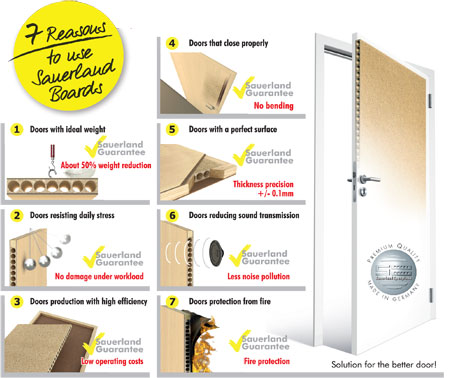
SAUERLAND Spanplatte manufactures wood-based materials to be used in modern interior doors. As extruded tubular or solid particle board.
SAUERLAND board meets the requirements for doors in residential and commercial buildings with respect to sound insulation, fire resistance, burglar-proofness and dimensional stability in different climates.
Responsibility for nature and environment
Natural
residual wood and chips from the saw mills in Sauerland and Thuringia form the
basis for the SAUERLAND particle board. More than 1 million cubic metres of
softwood are processed annually ensuring optimum and environmentally friendly
raw material utilisation. Qualified staff and a committed management team form
the backbone of this family owned company, showing responsibility towards
nature and the environment. The company employs approximately 300 workers.
Product Parameters for Door Cores
Constantly high screw withdrawal all
over the board
87 percent of
engineering seats remain vacant after two rounds of TNEA 2019 counselling. This
raises a serious issue.
After two rounds of TNEA 2019 counselling in undergraduate (UG) admissions in engineering and technological courses, 87 percent seats remain vacant in Tamil Nadu, reports the Times of India. This report comes amidst an All India Council of Technical Education (AICTE) official saying four engineering colleges in the state have opted for “progressive closure”. With colleges opting for progressive closure, fresh admissions will not be allowed in the colleges opted for this process, however, they will operate till the current batches complete their courses.
The Directorate of Technical Education, Tamil Nadu released the second allotted list on July 18, 2019. As per reports, after completing two rounds of counselling for the undergraduate programmes close to 87 percent of the seats are still vacant. According to reports from the All India Council of Technical Education, four colleges in the state of Tamil Nadu have opted for ‘Progressive Closure’. As per this, fresh admissions will not be allowed in these colleges however they will continue to operate until the current engineering batches complete their courses.
Candidates
can check the vacant seats available in the different colleges in the states
through the link provided on the official website
According to
reports surfaced in the media out of the 1.6 lakh seats which are available in
the different engineering colleges, only 21000 seats have been filled until
July 18, 2019, which was incidentally the last day of the second round of seat
allotment for TNEA 2019. Reports also suggest that only 27 out of the 494
engineering colleges in the state have been able to fill more than 50 percent
of the seats. This academic year, only 36 percent which is 60,000 total seats
of the seats were expected to be filled in the state. In the previous academic
year, only 70,000 seats were filled in the state.
As per the
numbers provided by Tamil Nadu Engineering Admission 2019 in the government
engineering colleges, 2,398 seats have been allotted out of the 3,820 total
number of seats available, in case of the government-aided engineering colleges
2,016 seats have been filled out of the 2,163 available seats.
The directorate of technical education recently released the third round of seat allotment result on July 21, 2019. The fourth and final round of seat allotment will be released on July 28, 2019, as per the schedule given on the website. Candidates had to complete the fee payment for the fourth round of allotment until July 22, 2019.
Quality of construction is indeed a critically crucial and vital factor for creating sustainable and durable structures. A lot is being discussed and deliberated these days about sustainable and durable structures at various platforms. Sustainability and durability is not achieved only with super speciality construction chemicals. Quality of construction is indeed a critically crucial and vital factor for creating sustainable and durable structures. Quality covers all factors connected with construction starting from design, selection of materials, construction practices and other administrative aspects connected with construction activity.
There are few practices which are followed
(without engineering background) because they have been followed since long
time according to persons connected with construction activity. Such notions
often lead to silly mistakes resulting in poor quality of construction to
shorten life of constructed structure. Close supervision, thorough knowledge
about the fundamentals of the construction practice to be followed for the
particular construction, avoiding unfair practices etc are few of the many
actions leading to good quality of construction.
This paper deals with facts, dos & don’ts,
and care to be followed during construction to ensure its highest degree of
quality.
Quality related to design, selection of material
and execution practice affect durability of constructed structure. These
aspects are discussed below.
Design:
Optimum design is the fundamental need of a
durable structure. Over-designed or under-designed structures don’t last long.
Architectural design and structural design of the structure have to complement
each other.
Functionality of structure normally decides
superiority of design whether architectural design would prevail over
structural design or vice versa. Once this is decided; the design playing
second part has to fit in total requirement of design playing lead part.
Architectural shapes and sizes of structural members in architecturally
prevailed design need to be structurally designed with adequate safety.
Wherever structural design has to prevail as in the case of any industry or
production house; shape and sizes have to be according to the functional needs
of the unit / machine to be housed.
At times factors like earthquake or wind pressure are often taken as a big threat to the structure under consideration which ends up in exponentially increasing the factor of safety and expanding sizes of structural members out of proportion. Such special factors causing threat should be rationalized while designing a structure.
In case of architecturally dominated designs,
pergola or such decorative items are to be very carefully designed. Design of
non structural members placed at strategic location in a structure might add
extra resistance to wind pressure or create imbalance in the load transfer
phenomena of adjoining members if they are not appropriately designed.
Mix design of concrete to be poured in shutters
for members which would not be plastered after opening of shutters as per
architectural need of the structure; has to be of appropriate grade such that
it has free flow characteristic without segregation.
At times design calculation demand depth of main
beam to be more than 500 mm. Sometimes, this can’t be accommodated within the
structure or may not clear headway below such beams. Structural design has to
be reviewed and modified to bring down depth of beam without sacrificing
structural strength and such that comfort and convenience of persons occupying
the structure are not harmed.
These are some of those aspects connected with
design of a structure which are frequently used. There are also some special
applications like protective treatment which are to be designed with special
care to ensure its safety and stability. These special applications include
anti-corrosive treatments for concrete and steel surfaces, protection lining /
coating / treatment for concrete and steel surfaces for their protection from
corrosive attack of acid / alkali / chemicals coming in their contact,
waterproofing treatment, anti-termite treatment, interior face lifting of
offices etc. All these special applications are to be designed with “tailor
made” approach. The treatment for one case might be different than another so
each case has to be individually evaluated and addressed for designing the same
to provide the desired functionality for the same.
Selection
of materials:
This is one of the most important aspects to
ensure desired quality of execution. Material selection is directly
proportional to desired functional life of the structure, budget availability
and its availability status.
Materials for concreting, brickwork and general
building items have their designated IS codes which can be adopted as general
guideline for accepting or rejecting the material at construction site. Flaky
or elongated coarse aggregates, clayey and silty sand, untreated water,
hardened cement, delaminated wood, rusted steel, cracked glass and roof sheets,
damaged sanitary fittings are few of those materials which stand outright
rejected at construction site.
Sometimes, examining source of materials is also
helpful in this process. Rerolled steel is a classic example for this. When
steel bars or rolled sections are rerolled, their ductility is adversely
affected. Their material constitution and distribution within the member also
gets largely disturbed as a result of which rerolled steel member is not of the
same quality as the original member. This often leads to bending, breaking or
serious damage and thus life of the construction element constructed with such
member gets damaged.
As said earlier, material selection for special
application needs to be very precise and meticulous. Material with only desired
properties is to be used for each treatment because each one is a special
treatment and material not as per the specified one doesn’t give desired
result. Such occurrences often lead to stoppage of a production unit. One
example narrated below will give a fair idea of what has been said above.
Material for mortar to fix acid resistant bricks
in a chemical plant is designed to resist that particular chemical environment.
Composition of such mortars is very special and its worth is revealed only when
it successfully resists corrosive attack of that chemical to which the surface
is exposed. If mortar with other than specified composition is selected for
this area, then treatment will not be successful and will allow chemical to
react with mortar anf then with concrete or steel surface as a result of which
that floor or trench or foundation will start deteriorating, cracking, breaking
and ultimately it will fail. If such treatment applied on machine foundation
fails, then machine base will be shaken up and finally machine will stop
functioning. One wrong selection of material for mortar to resist particular
chemical can bring a production unit to halt.
Similarly wrong selection of material for false
ceiling or partitions for interior face lifting of an office or selection of
wooden items in fire prone areas or unprotected metallic pipes for underground
services in a chemical zone or only welded connections of steel members for a
structure in earthquake prone zone etc are also few of many examples where
wrong selection of materials contribute to reduce life of that structure.
Construction
practices:
Construction activity is a well defined
activity. Sequence of its sub activities, their execution methodology, pre
construction and post construction care, safety prior to construction, during
construction and after construction, fine tuning of execution methodology with
respect to unfavourable site conditions etc are important aspects to be
considered for construction practices to give durable structure.
In case of concreting activity, sequence of mixing of materials is
important. Mistake in this sequence can lead to substandard structure.
Placing of concrete in shutters / forms either manually or
mechanically needs to be closely watched to avoid segregation or bulging of
shutters during vibration or placing concrete.
Every layer of bricks laid for brickwork must be checked for its
correct plumb and line.
Plaster needs to be checked preferably with nylon thread by
placing it diagonally across the plastered wall to identify depressions or
bulging if any.
Curing is the most important activity. Inadequate curing leads to
shrinkage cracks right from next day of plastering and affects life of
structure at long run.
Concreting for slab or heavy machine foundation; must be done
without any stoppages and construction joints.
Subsequent to completion of concreting for slab, its edges must be
pressed with some heavy weight so that while initial setting of slab concrete
edges don’t develop upward end bending. This is serious because in this case,
it is likely that a gap may be created between top of wall and bottom of slab
resulting in water seepage through that space which is extremely difficult to
repair.
Sunk slab for wash areas, WC and urinals must be properly water
proofed to avoid dropping of dirty liquid below the floor and spoiling the
environment.
Concrete or mortar for brickwork or plaster must be prepared as
per Design mix. Adding of additional water for achieving comfort for placing
and handling of concrete / mortar must be strictly avoided.
Slopes must be properly maintained if they are specified in
construction drawings at places like slab, drain channels, industrial floors
etc.
Construction activities in industrial areas have to be carried out
with more care than construction activities in residential or commercial areas.
Exposure of building elements to corrosive chemicals must be carefully examined
and appropriate protective measures need to be taken to protect them from
corrosive attack of chemicals to which the elements are exposed.
Common sense has to be applied in every stage of construction.
Walkways must be plain and levelled, openable windows must be avoided where
they can’t be approached, safe and operatable distance must be maintained
between sanitary fixtures and wall / floor etc.
There can be many more points which have to be seriously addressed while ensuring the highest degree of quality in construction activities like design, material selection and execution. Few of them have been discussed above. All these deliberations are made to ultimately proceed towards creating sustainable and durable structures to help the environment and mother earth to stop wastage of construction materials which are mainly sourced for natural resources. Structures with short life – caused by any reason, require more and more resources for their reconstruction which consumes natural resources and spoils ecological balance. Quality assurance is that activity in construction sequence which has the highest significance and importance. Let us maintain its grace and pride for each structure to live its functional designed life.
Authored by;
Er. Chirag K Baxi. Director Technical and Business Development) Steuler Industrial Solution (India) Private Limited. Vadodara.
The Union Budget 2019 announced on 5th
July brings in a mixed bag of emotions for the NRI investment community.
While
positives like better tenancy regulations and an enhanced NRI portfolio route
back to India provide the much-needed stimulus to their confidence, some
policies like the extension of taxation towards gifts received by NRIs could be
worrisome for Non-Resident Indians.
The benefits, however, outweigh the negatives as NRI investors can now unlock the full potential of the Indian real estate and capital markets. The following announcements of Union Budget 2019-20 provide a much-needed fillip to the NRI investors:
* Merging NRI portfolio route with FPI route to increase more NRI portfolio flows into India
This move provides NRIs with seamless access to the Indian equity and bonds market, in line with the Foreign Portfolio Investment (FPI) route. While this move is expected to bring in more foreign funds into the Indian market, it simultaneously better equips NRIs to make informed investment decisions with a much better bouquet of products to choose from. The easing of KYC norms for foreign investors makes investing all the more transparent.
* Post-Budget announcement of the Draft Model Tenancy Act 2019
The
Finance Minister had hinted at a new rental act in the recent budget, and soon
thereafter an announcement was made regarding the Model Tenancy Act 2019. If
implemented by various states in the spirit which the Centre intends, this Act
will bring progressive changes to India’s archaic rental laws and protect the
interests of both landlords and tenants. Once formalized and duly adopted by the
states, it can be a major demand booster for rental housing in India. The Draft
Model Tenancy Act 2019 can, if properly adopted, boost the sentiment of NRIs
who were keen to invest in Indian residential properties to rent them out but
were hesitant because of the lack of legislation to protect their interests.
* Foreign investors can now buy the debt of listed real estate investment trusts (REITs)
Foreign
investors will be allowed to subscribe to listed debt securities issued by
REITs and infrastructure investment trusts (InVITs). This paves the way for
NRIs to benefit fully from the real estate boom that India is expected to
witness over the next few years.
All in all, NRI property investors have been given more than a fair
shake in Union Budget 2019-20 – and this will doubtlessly help funnel more
foreign investment in India.
The Building Innovation Guide (BIG) a premier guidebook authored by researchers was launched in India.
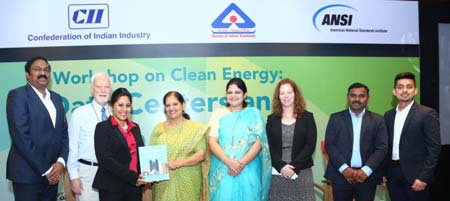
The research is done at the Lawrence Berkeley National Lab (Berkeley Lab) and funded by the U.S. Department of Energy, This is a result of successful historic partnerships and a Memorandum of Understanding (MoU) signed between U.S. and India, which focused on buildings energy efficiency in both.
The guide was introduced at the workshop on Clean Energy: Data Centres and Green Building organised by the US Trade and Development Agency as part of the US- India Standards and Conformance Cooperation Project (SCCP) Phase II. This guide is a result of historic partnerships and a Memorandum of Understanding (MoU) signed between U.S. and India, which focused on developing energy efficiency in both nations.
India is poised to become the world’s fifth
largest economy, with the buildings sector representing over 30% of the
nation’s energy consumption. Energy conservation is an important part of
India’s overall energy plan, and can contribute significantly to the nation’s
ability to sustain its growth.
Reshma Singh is the lead author of the Building Innovation Guide. She
has studied architecture in India and from Harvard University’s Graduate School
of Design. Singh said, “India is at an inflection
point. Because of the extraordinary pace of new construction, the buildings
sector is recognized as a crucial area to create energy-efficiency and enhance
sustainability. The Building Innovation Guide draws on years of U.S. buildings R&D, computer simulations, and
on-the-ground research in India to present best practice strategies that
combine innovative technologies with traditional wisdom. These best practices can drive
triple-bottom-line benefit for people, profit, and planet.”
Insights from the BIG are being shared across
the nation in summer 2019, through a series of “BIGathon” events in in five
host cities Hyderabad, Mumbai, Delhi, Trivandrum, and Bengaluru. BIGathon
events are being held in collaboration with Facilio, a unified SaaS facilities
management firm, JLL, US Trade and Development Agency, American National Standards
Institute, Confederation of Indian Industry, U.S.-India Business Council,
Mahindra, U.S.-India Strategic Partnership Forum, the Energy Management Centre,
Nitte School of Architecture, and the World Resources Institute.
The collaboration seeks to take the BIG research
into the hands of five primary stakeholders in the built infrastructure
arena—urban policy makers; developers and builders; building operators and
occupants; architecture and engineering practitioners; and building products
and materials industry. The aim is to align on a common sustainability
framework in the areas of building materials and IoT, smart grid, energy
technologies, renewables, and battery storage to enable aggressive energy
targets. Integrated, these provide a tremendous opportunity for strategic,
sustainable urbanization, and urban health.
“India’s real estate industry is scaling
tremendously. I believe that BIGathon is a change-maker that brings together
stakeholders and policy makers from India and U.S. to create a combined
perspective for energy-efficient and high-performance buildings of the future.”
added Prabhu Ramachandran, CEO and
Co-Founder, Facilio.
The BIGathon is a unique opportunity to build
innovation into the built infrastructure ecosystem- for U.S. and India thought
leaders to network, collaborate, and create a movement.
Details about the BIGathon workshop venues and dates are available at
www.buildinginnovationguide.com/bigathon.
Props {AMC} is India’s 1st SaaS-based Real Estate Data & Portfolio Management platform Props {AMC}.
It Helps individuals, corporates
& enterprises to organize their real estate holding/s or investments on one
single, integrated, intuitive and transparent interface. Users are given access to real estate data
including title records, government rates, land reservations, recent
transactions, land zoning, building level info and more.
The team of Constrofacilitator sat
down on a conversation with Anand Moorthy, Founder & CEO, Props {AMC}, to discuss about some
pivotal topics. During the conversation he shared insights on Props
{AMC}, which includes a complete insight on the work, technology as well as
product offering. These were very efficiently broken in point wise by Anand Moorthy, Founder & CEO, Props {AMC}.
Mr Anand Moorthy, Founder, Props {AMC}
Here are the details of the conversation.
1. Please give a brief on Props AMC and its offerings
Props{AMC} is
India’s 1st
SaaS
based Real Estate Data & Portfolio Management platform Props{AMC} helps
individuals, corporates & enterprises to organize their real estate
holding/s or investments on one single, integrated, intuitive and transparent
interface.
Props{AMC} is powered by proprietary tools, data and services enabling smart reporting and sharing of information of any real estate asset with multiple stakeholders. It strives hard to actively manage every data and information affecting managed real estate asset’s performance. This helps to generate assessment report covering all the major areas of importance for it to be a marketable asset.
Props{AMC} also delivers
services through empanelled and in-house knowledge partners who bring in domain
expertise in every aspect of real estate through a diligent model of modernized
reporting and asset management
2. Please help us with an Organization chart (with names and designations) and the areas of expertise?
Here are the details given;
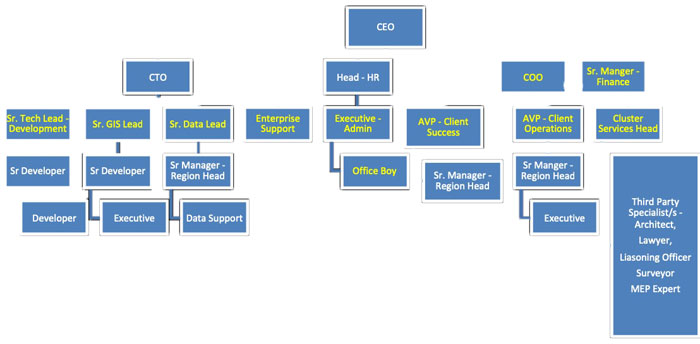
ANAND MOORTHY Founder & CEO
18 years of real estate experience in Advisory, Business Development, Property Management and Investments with Developer, Retail, Entertainment, Real Estate Fund, NBFC and Private Banking in India. Managed assets worth more than $400 Mn with an average performance of 16%+. Worked with – RBS, Karvy, E-city Ventures, ILF&S-Milestone, Globus & Essel Group(Fun Cinemas)
NATASHA MOORTHY Co-Founder & CPO
12 years of experience in Organization Learning & Development and Human Resources. She has worked as full time and as a freelancer with Hospitality, Telecom, Retail, F&B, Banking sector. Certified in 16 PF psychometric modules. Worked with – BPL Telecom, Royal Palm Plaza, Essel Group (Fun Cinemas)
VENKAT RAGHAVAN Chief Technology Officer
Over 20 years of experience in all aspects of software development. Expertise in creating scalable, consumer facing full stack SaaS and mobile products, overseeing end-to-end engineering & product development lifecycle and building cross functional teams. Worked with – Fidelity Investments, GE Healthcare, Mscripts & ScanCafe
3. What are the core values that will drive the future of Props AMC?
Props{AMC} core value proposition is to make real estate non speculative, highly liquid and transparent along with dramatically cutting transaction time for all stakeholders in the real estate business for better decision making through complied & insightful web based dashboard.
4. Kindly highlight the business objectives over the next 12 months?
Increase free trail accounts for real estate owner and information seekers to the tune of 1 lac users
establish to key stakeholders in the real estate business (developers, brokers, banks, valuators, law firms, real estate funds, real estate investors, home buyers that PropsAMC is the 1st integrated platform with data, services and management of properties). Most importantly the platform is bringing cost and time to/for information dramatically down and legible
attracts investors and real estate talent to be part of an unique practice which will change way how one owns, manages and markets their real estate / properties
5. What are the marketing plans to achieve these business objectives?
Digital Marketing including adverts on Facebook, LinkedIn, Instagram, Twitter and MoneyControl to create brand name and drive free singups.
6. What are the possible/likely challenges in the process of expansion?
Educating the right audience, to move away from the orthodox way to managing and marketing owned properties
moving from physical ownership to managed or fractional ownership
fund raise
digitization of data and hiring of senior management
7. What are your long term goals?
integrate publicly available property related records in a legible and sequenced manner to benefit real estate transaction and title
to bring properties under an easy investible asset class along with stocks, mutual funds, etc by making them transparent on all information for faster transaction
build an unique platform to showcase complied assets for faster transaction
8.Can you highlight some of the services that you offer along with Financial Requirements?
Our Products:-
1. Real Estate{Suite} – helps individuals & enterprises to organize their real estate holding/s or investments on one single, integrated and intuitive interface. It is powered by proprietary tools and services enabling financial inclusion, transparency & marketability to the real estate investments
B2C – Real Estate Suite (RES) – for property owners
B2B – Real Estate Suite (RES) – Enterprise Version for Asset Managers
Services – for both B2C & B2B clients we provide the customers with Legal, Valuation and Technical services to make their property marketable
Attaching a client
manual which establish “12 Insights” which any HNI with multiple properties
would like to have, very similar to how he / she manages financial assets or
business through assets managers also attaching a tutorial video to help you
navigate the tools.
2. Zone {Matrix} is a GIS enabled Data platform to get credible, insightful data on ‘Property Rights‘ and ‘Property Transactions‘.
Platform integrates multiple data points related to land and building including ownership, reservation, land use zoning, transactions, ready reckoner, mean sea levels, road width, open area ratio within a radius, neighbourhood social amenities, etc of a particular city. We are now focusing on many other data points to the above layers for creating a comprehensive place for real estate information / fact finding which is not easily accessible or legible at present to bring transparency for all real estate stakeholders Attaching the client manual on Zone Matrix.
9. Who are the organization’s primary target audience – demographically & geographically?
Demographically – Age 30-55 and professionals in – Private wealth management, lawyer, valuator, developer, C.A., Real Estate Advisor, Architect, Lenders, Trustees and Govt of India
Geographically – real estate portfolio management in any part of the globe
and at present for real estate factsheet and services in Maharashtra and
Gurgaon.
10. How would you like to be perceived amongst your major stake holders?
A technology company focusing on real estate asset class by bringing customized data and asset management for all stakeholders involved enabling seamless transaction experience.
11. What are the key drivers for a company operating in industry such as yours, in India?
declaration of real estate assets by individuals and enterprises
Validation of Ownership and Valuation
12.How does a change in Govt. regulation affect your way of functioning?
Stroke of a pen!!! can change things for a company like us… for example if the GOI makes compulsory for people to declare their assets and needs a platform
if the govt decides to integrate different departs dealing in real estate to bring information (this actually is already an intent with Niti Ayog – EoDB) – somehow it is not taking off
13. What are the key issues and challenges that businesses such as yours face?
Funds to grow team and infrastucture
Digitization of data
Acceptability with property owners, lenders or managers for them to become organized and complied to any transaction (lease / sale / mortgage)
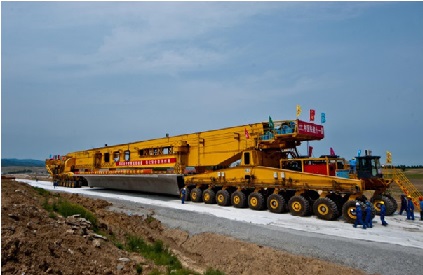
Time limit and costing has always lead humans to wonder about ways of fast works especially to problems associated with the capacity of existing roads and highways. One such model is in operation in China at present. The machine is called SLJ900/32 or Segmental Bridge Launching Machine – SLJ900/32 bridge girder erection monster machine.
The SLJ900/32 is currently in active use in China for the construction of large and high rail viaducts, most notably between Chongquing and Wanzhou in the province of Sichuan. The SLJ900/32, manufactured by the Beijing Wowjoint Machinery Company and designed by the Shijiazhuang Railway Design Institute, weighs in at a mighty 580 tonnes, is 91 metres long and 7 metres wide.
How it works:
The colossal machine offers a totally new way to complete large bridge projects without the need for expensive and complex scaffolding and framework structures.
After picking up the beam needed from its point of origin, the SLJ900/32 will drive to the pillars of the bridge and lower a pneumatic support structure which essentially anchors the machine to the first pillar, allowing it to extend itself out to the second pillar. From here it moves on to a third, depositing the beam as it does so. To watch it in action is perhaps the easiest way to fully understand it’s efficient, fluid and fuss-free operation.
The machine transports itself, via its set of 64 wheels,
which are split into four sections consisting of 16 wheels each. As each
section is capable of rotating 90 degrees, the SLJ900/32 can move sideways in
order to facilitate easy pick-ups of beams.
Whereas traditional crane-based methods of bridge construction have necessitated that beams and other segments come in sections usually just a few metres long, which are then fixed together, the SLJ900/32 is able to utilize beams that are specially prepared to be full length. Expansion joints are used to connect these prefabricated parts.
At present the machine is said to be capable of up to 730 spans with about 40 percent of the products being able to push this total up to 1000 before reaching the end of its lifespan which averages at four years.
https://www.youtube.com/watch?v=l_-LeYSvBRU
Design
specification
It is designed to build long bridges consisting of a large
number of spans. The works on moving, installing, and securing the finished
segments of the bridge to the pre-installed supports are on the shoulders of
this machine. It should be noted that the construction of a bridge with the
help of such a machine still requires manual labor, but its quantity and
severity are incommensurably smaller in comparison with the technologies used
in the past century.
The SLJ900/32 bridge girder erection mega machine, the
length of which is about 91 meters (300 feet), the width is 7.4 meters (24
feet), the height is 9 meters, and the weight is about 580 tons, is capable of
laying 700-750 bridges’ spans during its “life” although more than 40 percent
of such machines were able to lay move than 1000 bridges’ spans, each weighing
from 800 to 950 tons.
A portion of Bashettihalli flyover near Doddaballapura collapsed on Friday. Traffic on Bengaluru-Doddaballapura highway was severely affected.
Retaining wall construction and use of inadequate materials are the prime reasons of this mishappening of the flyover.
The flyover is just 18
months old and reports state that it is the second collapse since it became
operational in 2018.
While vehicles heading
towards Bengaluru are allowed on the flyover, traffic moving towards
Doddaballapura is being diverted on Virapura main road, leading to a snail-pace
traffic on the stretch. The 6km long flyover is the main link for vehicles
travelling from Bengaluru to Gauribidanur and towards other towns in Andhra
Pradesh like Hindupur and Anantapur.
The happening reported;
The locals reportedly
stated that first they saw the sidewalls of the flyover collapsing. They
immediately decided to stop the movement of vehicles from Bengaluru to
Doddabellapura. Then slowly the soil inside the collapsed portion started to
fall. Residents alerted Doddaballapura Police regarding the incident.
The police reportedly said that they placed barricades on one side of the road, which leads to Doddaballapura. All the vehicles heading towards Doddaballapura were diverted to Virapura main road, which affected the pace of the traffic. They also said that they are watching the other side of the flyover too and have informed the concerned officials regarding the collapse.
Residents said that there was a similar issue towards the end of construction of the flyover. The contractors and engineers repaired it in a hurry and that they are unsure of the quality of the work, reports stated. The flyover was readied right before the 2018 local elections.
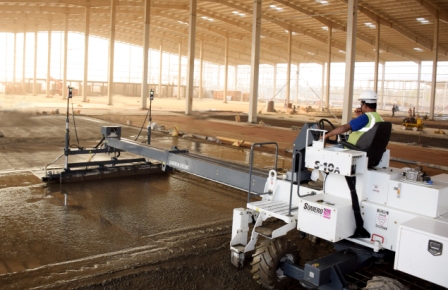
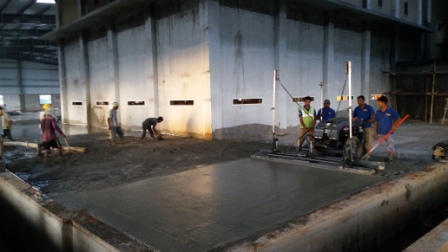
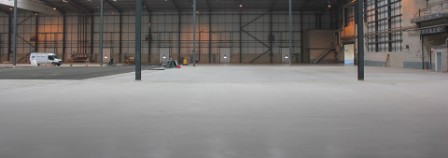
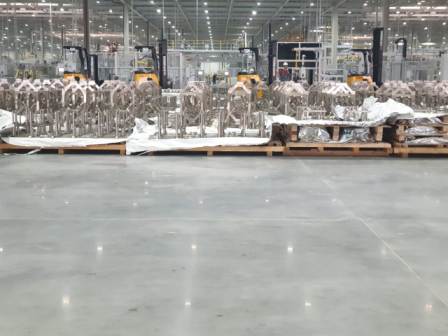
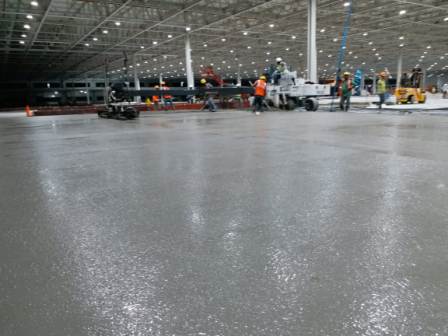
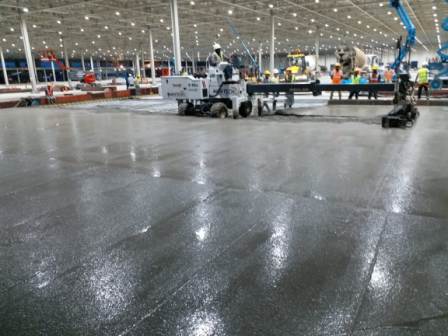
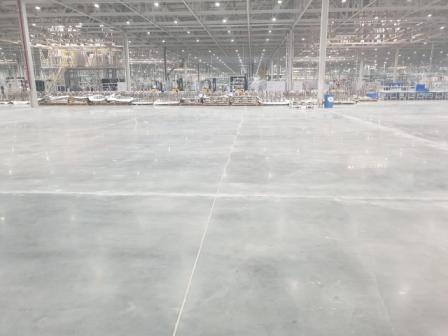
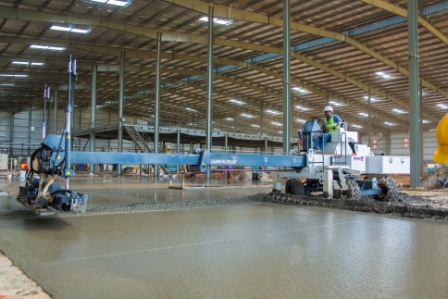
For any structure, flooring is one of the pivotal components as the basis depends on it. All potential flooring surfaces have unique properties and attributes, each of which affects the user in a variety of different ways. Each flooring type has its own unique necessities when it comes to the equipment. To ensure a successful installation the right equipment needs to be used in the manner for which it was intended; not only to prohibit delays in the schedule but to also prevent any unforeseen costs which could creep in. It needs expert supervision, one such group of expert is Minitech, who are providing flooring services since last years.
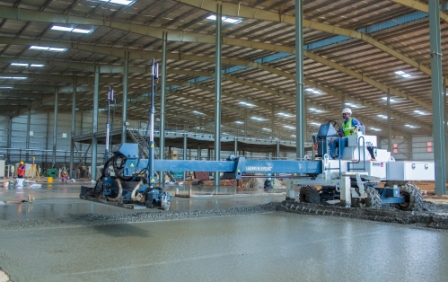
Here we identify the various fleet of equipment offering
and specialization flooring, that makes Minitech a trustworthy option in
flooring.
FLEET OF
EQUIPMENT
SOMERO BOOM LASER SCREED S-10A
SOMERO COPPERHEAD XD-3.0
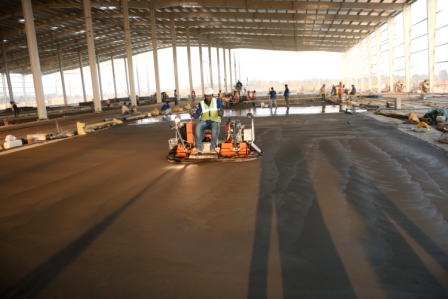
RIDE ON TROWELS – 20 no.’s
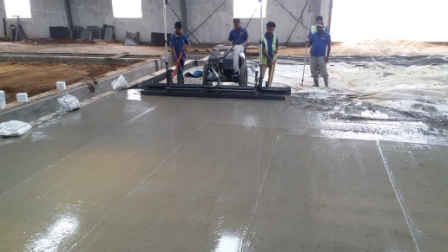
TRUSS SCREED – 4 No.’s
SAW-CUT MACHINE – 10 No.’s
SPECIALIZATION FLOORS
Minitetech offers specialisation by using state of the art technologies.
India’s housing policies have so far largely focused on building more homes and on home ownership, and little has been done to promote rental housing. This is a serious lacuna, since rental housing, by itself, can help narrow the Indian housing shortage to quite an extent. As a result, to fulfil its promise of Housing for All, the Modi government is now taking a more holistic viewpoint which includes rental housing as a vital factor.
Paradoxically, despite the acute housing shortage in the country, the vacancy levels of homes in India has been on the rise. According to the National Census, vacant houses comprised around 12% of the total share of the urban housing stock, amounting to nearly 11.1 million homes in 2011 – an increase of 71% since 2001.
Among the cities, Mumbai had the highest number of vacant homes with nearly 4.8 lakh units, followed by Delhi and Bengaluru with nearly 3 lakh homes each. As we approach the 2021 Census period, these vacancy numbers are very likely to have increased tremendously across the country.
Why Indian Homes Lie Vacant
The reasons for vacancy levels of homes which could feed the rental market across the country are largely region-specific. However, distorted property rights (in the absence of a sound rental policy), weak rental contract implementation and low rental yields are some of the major factors that prompt homeowners to leave their houses vacant rather than rent them out. Another reason for high vacancy levels is the vast spatial distribution of new residential units in cities – this is evidenced by the fact that vacancy rates increase as we move further away from the denser urban areas.
At the city-level, homes in several parts of core areas in Mumbai are lying vacant because the HNIs who invested in them largely did so to diversify their portfolios – not to earn rental income. HNIs living abroad often tend to leave their investment homes entirely vacant or only use them when they visit India. Also, there are very few takers for homes in the most far-flung areas. Even if rentals are very low in these areas, many of these areas are simply not liveable because they lack the necessary infrastructure.
In Delhi-NCR, many vacant homes are in infrastructure-starved areas far removed from the economic activity of the main cities. Here, lack of a proper rental policy that safeguards the interests of landlords is another prime reason for the high number of vacant homes. Often, property owners find it challenging to evict tenants if they fall back on rent or misuse the property, eventually leading to long-drawn – and expensive – legal disputes even as the property fails to generate adequate (or any) revenue.
Bengaluru attracts many NRIs who invest in homes and find it difficult to remote-control their properties in terms of finding the right tenants, managing rental agreements and property maintenance if the property is rented out. Also, many NRIs prefer to leave their homes vacant as they aspire to eventually return to India and live in them. If they rent out these homes instead, they may face challenges with getting tenants to vacate them.
While there are many common as well region-specific reasons for property owners being averse to renting out their homes, there is definitely a dire need for the government to throw policy-backed weight behind rental contract enforcement and property rights. and spatial distribution of housing supply vs. demand.
Some Notable New Rules
As per the new draft Model Tenancy Act, 2019, the government has laid down certain new policies to protect both landlords and tenants. These include:
Security deposit has been capped to a maximum of two months’ rent in case of residential property, and a minimum of one month’s rent in the case of non-residential property
A heavy penalty for failure to vacate a residential unit – the landlord is entitled to get a compensation of double of the monthly rent for two months and four times of the monthly rent thereafter if a tenant does not vacate the premises after tenancy has been terminated by order, notice or as per agreement.
The landlord cannot indulge in mid-term hike in rentals.
A landlord cannot cut off or withhold essential supplies or services (electricity, water, etc.) under the new Act.
The property owner must give prior notice of three months before revising the rent value.
The tenant cannot sublet a part of or the whole property to someone else.
The draft also makes it the landlord’s responsibility to rectify structural damages and undertake measures like whitewashing walls and painting doors and windows.
At first look, the draft rules does seem to be favourable for both tenants and landlords. However, there are some inherent challenges:
The cap on the security deposit can become a pain-point for many landlords – in cities like Bangalore, a ten-month security deposit (with some scope for negotiation) was the accepted norm. Also, if a tenant defaults or causes significant damage to a property, a two-months security deposit may not cover the expenses the property owner incurs in repairs.
While the government lays down the basic policies, the exact rules will likely change within each state since land is a state subject. Like we saw in the highly lopsided roll-out of RERA, the Model Tenancy Act, 2019 may lose its real purpose if states do not follow the basic guidelines and dilute them.
For this reason, the Model Tenancy Act, 2019 – like RERA – may well become a process rather than an event, and need several course corrections to reduce regional dilutions before it becomes a force to reckon with.