The Logistics Bottleneck of Modern Infrastructure
In the fast-paced world of infrastructure development, the efficiency of a project often hinges on the mobility of its heaviest assets. Moving massive crawlers, excavators, and drilling rigs between jobsites is not merely a transport task; it is a critical engineering challenge. Traditional ramp-loading trailers often struggle with the steep approach angles and stability issues of oversized machinery.
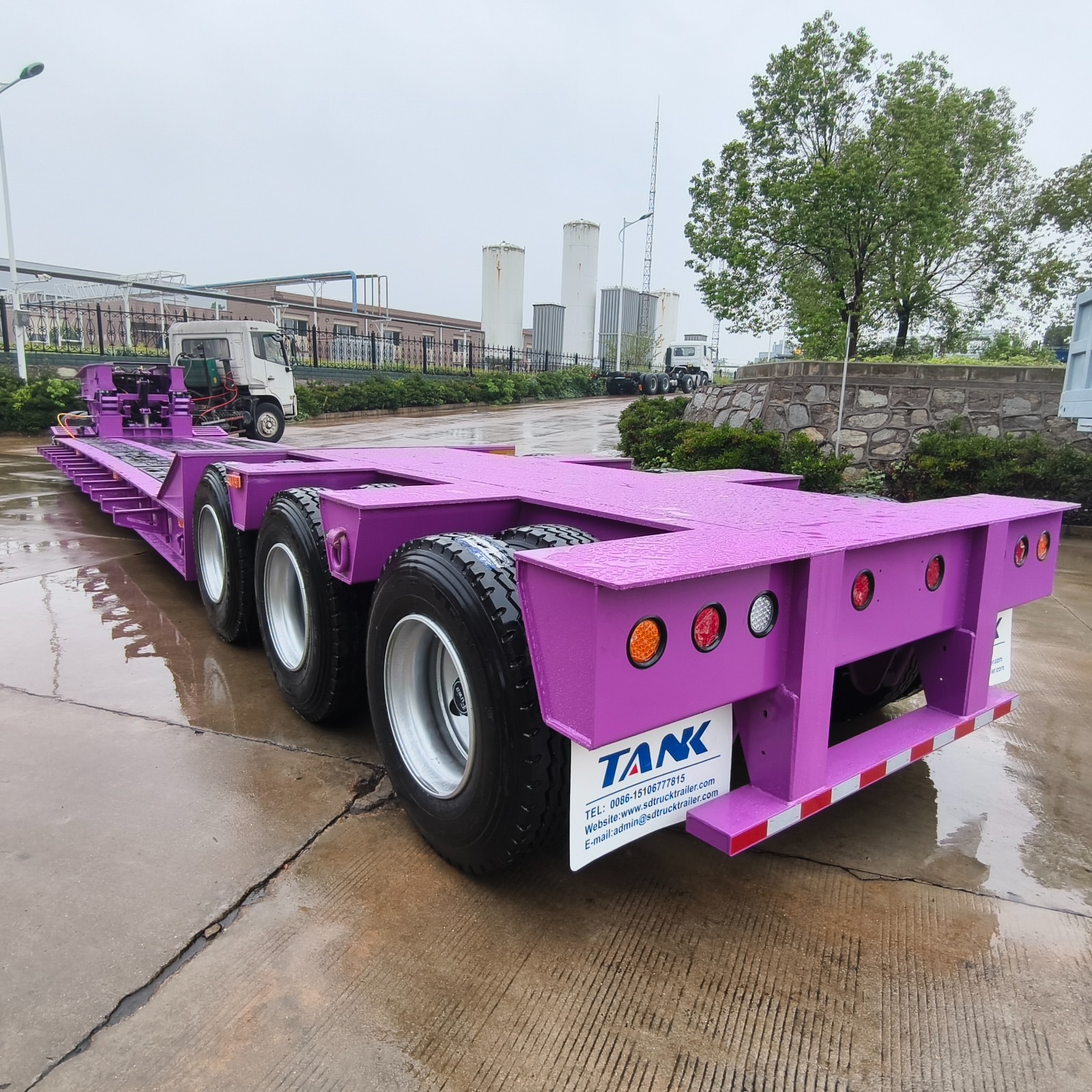
This is where the Hydraulic Removable Gooseneck (RGN) trailer from Tank Vehicle has redefined the standards of heavy haulage, offering a front-loading solution that prioritizes both safety and speed.
The Mechanics of Efficiency: Why Hydraulic RGN?
The core innovation of the RGN lies in its ability to detach the “neck” from the main deck. Unlike mechanical goosenecks, the hydraulic system allows for seamless height adjustment and ground-level loading without the need for external cranes or dangerous improvised ramps.
1. Front-Loading Superiority
By lowering the front of the trailer directly to the ground, the RGN creates a much shallower approach angle. This is essential for low-clearance machinery like pavers or heavy rollers that risk getting “hung up” on standard step-deck ramps.
2. Versatility Across Terrain
On unpaved construction sites, ground conditions are rarely ideal. Hydraulic cylinders provide the leverage needed to adjust the deck height on-the-fly, allowing the trailer to clear obstacles or navigate uneven haul roads that would bottom out a standard lowboy.
3. Reduced Downtime
In a sector where “time is money,” the ability for a single operator to detach the neck and load a 50-ton machine in minutes is invaluable. The integration of self-contained hydraulic power units ensures the trailer remains functional even when the tractor unit is decoupled.
Engineering for Durability: Materials and Axle Configurations
For project managers, selecting the right trailer involves more than just looking at the payload capacity. The structural integrity of the high-tensile steel and the axle configuration determine the trailer’s longevity and legal compliance on public roads.
Expert manufacturers emphasize specialized welding techniques that prevent structural fatigue under concentrated loads. Whether it is a 60-ton or a 100-ton capacity requirement, the precision of the hydraulic locking pin mechanism is what ensures the gooseneck remains secure during long-haul transit.
Safety First: Mitigating Risk in Heavy Haul
Safety is the cornerstone of the construction community. The RGN design inherently minimizes risk by:
Lowering the Center of Gravity: Reducing the risk of tip-overs during transit.
Eliminating Ramp Failures: Removing the weakest link in the loading process.
Enhanced Stability: Using outriggers to support extra-wide loads (Over-Dimensional Loads).
Conclusion
As construction projects grow in complexity and equipment scales in size, the Hydraulic RGN trailer is no longer a luxury—it is a necessity for specialized logistics. By investing in high-spec front-loading technology, contractors can ensure their fleet stays mobile, their operators stay safe, and their project timelines stay on track.