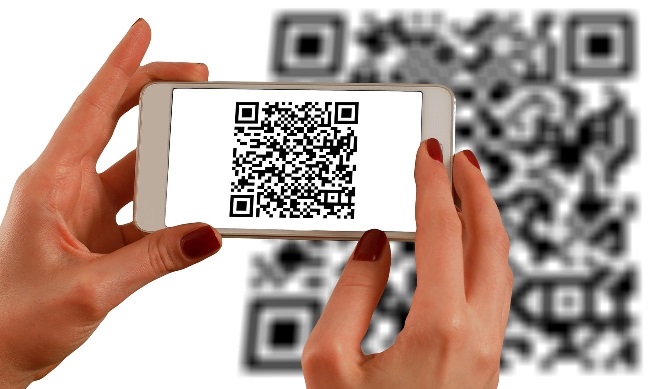
Land ownership documents in Odisha are set to incorporate QR codes, allowing buyers and government officials to quickly verify historical ownership information, location, and transaction records, as stated by revenue and disaster management minister Suresh Pujari on Thursday.
Pujari mentioned that each land patta (record of rights) will include a QR code that, when scanned, will reveal the complete profile of the property, encompassing its location, map, and purchase history.
Currently, buyers rely on tehsil offices for an encumbrance certificate (EC), which provides a 30-year history of registered transactions such as sales, mortgages, or liens associated with a particular property. “The QR scan will provide historical information that extends beyond the 30-year limit of the EC, assisting buyers in confirming the current status of the land. This is anticipated to reduce fraudulent sales and minimize litigation, effectively eliminating the necessity for ECs when purchasing land,” Pujari stated.
The minister indicated that the digitally generated records will be secure against tampering. Any unauthorized alterations to the updated Record of Rights (RoR) will trigger alerts to revenue inspectors and tehsildars. The RoRs will include details such as ownership information, land classification, usage, irrigation status, and a parcel map illustrating dimensions and neighboring plots.
Government sources have indicated that this initiative is part of the Centre’s Digital India Land Records Modernisation Programme (DILRMP), a fully centrally funded initiative launched in 2016. The programme requires digitally signed land records, and several states have already started issuing digital RoRs with QR codes for verification. While Odisha has made significant progress in digitizing land records under DILRMP, the implementation of QR-coded pattas signifies the next stage of land reforms.
Pujari announced that a thorough land survey will be conducted throughout the state to evaluate the extent of government and private land. A comprehensive database will also be established, capturing information about land allocated by various government departments and its current use, to enhance land management and accountability.
The survey will incorporate three layers of data—spatial information derived from high-resolution satellite imagery and aerial photography, maps obtained from the Survey of India and the Forest Survey of India, as well as revenue data sourced from cadastral (official, scaled, and detailed) maps and Records of Rights (RoRs)—into a consolidated GIS platform.
Each plot is depicted on the digital map as a closed polygon, distinguished by a unique plot number. These plot numbers will be associated with the RoR database to align map data with textual land records. A QR code scan will grant access to both the digital representation of the plot and its RoR information.