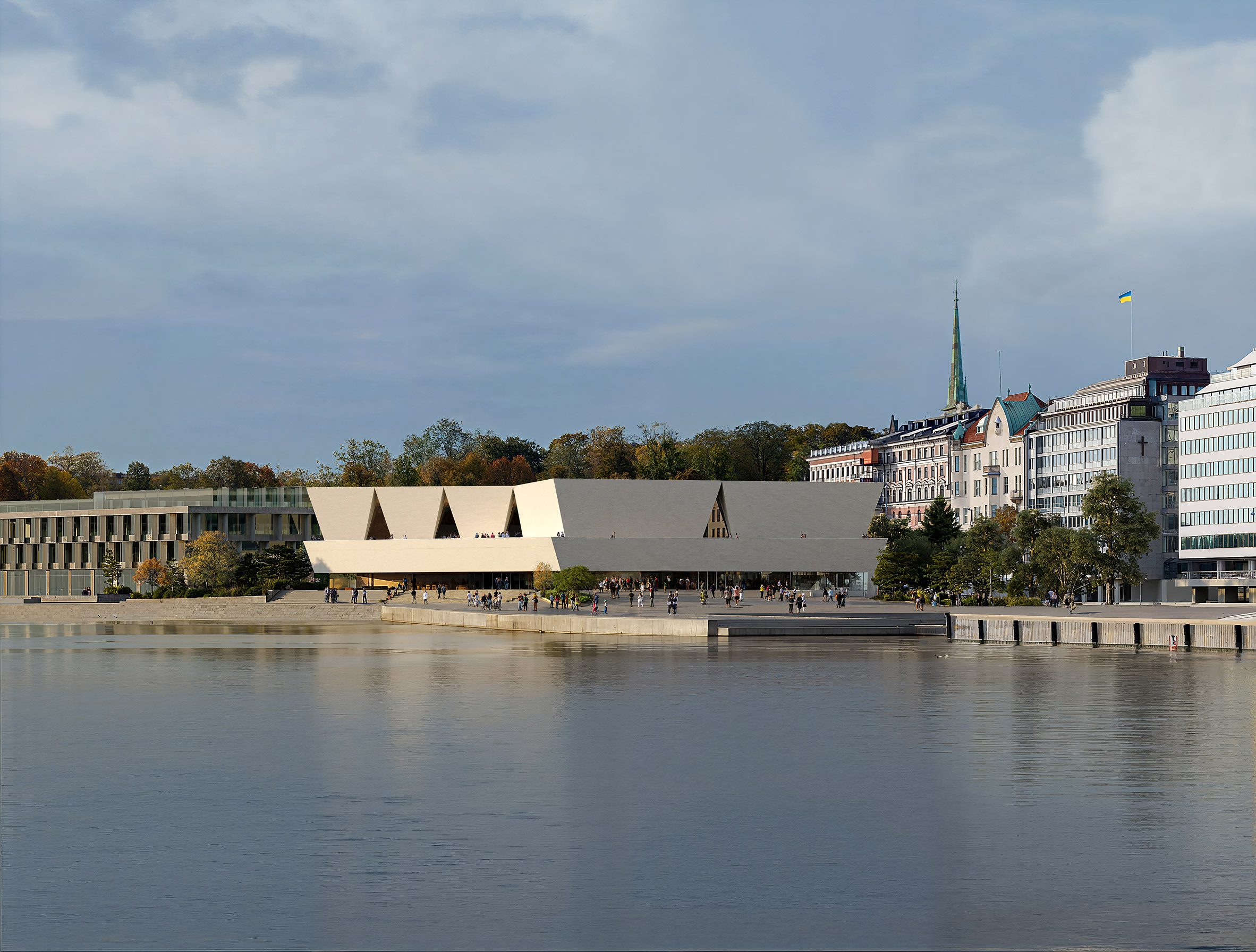
The international design competition for Helsinki’s new Museum of Architecture and Design concluded in September 2025 with the selection of JKMM Architects as the winning practice. The site chosen is the South Harbour waterfront, a location that earlier hosted the debate over the Guggenheim Helsinki proposal before it was set aside in 2016. From an impressive 624 submissions received worldwide, five finalists were shortlisted, and after months of deliberation, JKMM’s proposal, submitted under the pseudonym Kumma—was declared the winner.
The new museum is being established to unify Finland’s architecture and design collections under one institution. Currently dispersed across multiple locations, these holdings include more than 900,000 artefacts covering architectural models, drawings, industrial designs, textiles, and photographs. The museum will serve as a central cultural landmark, aiming not only to preserve history but also to provide a platform for contemporary dialogue. Construction is scheduled to start in 2027, with public opening anticipated in 2030.
Design Approach
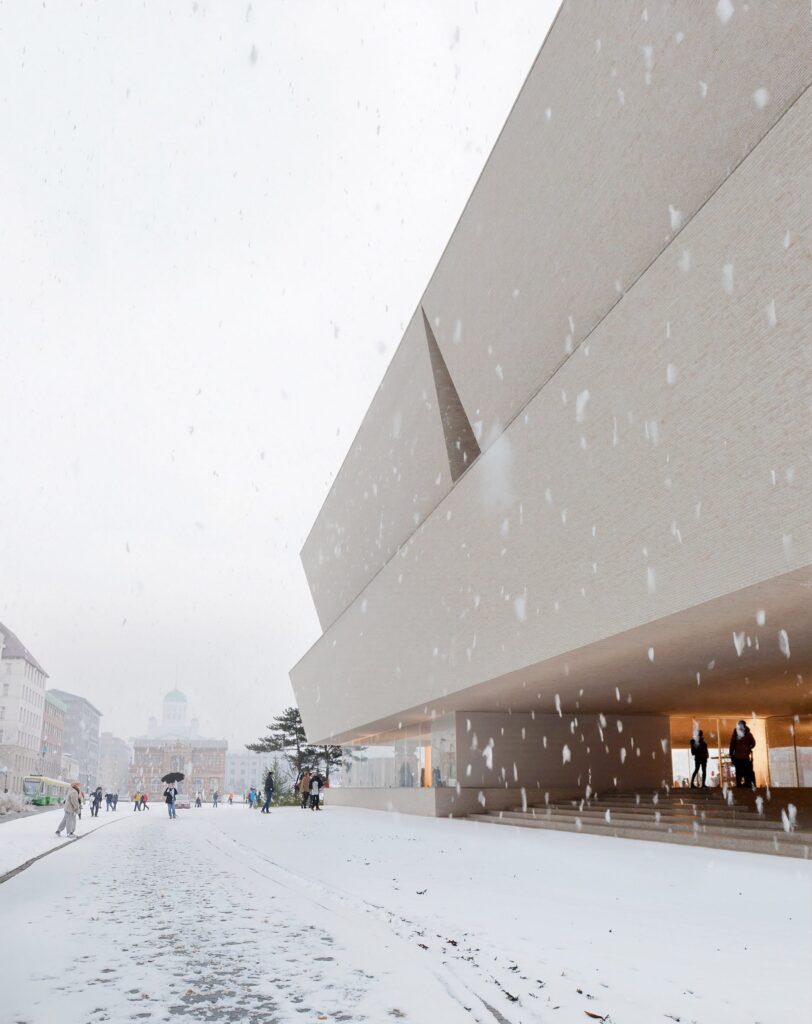
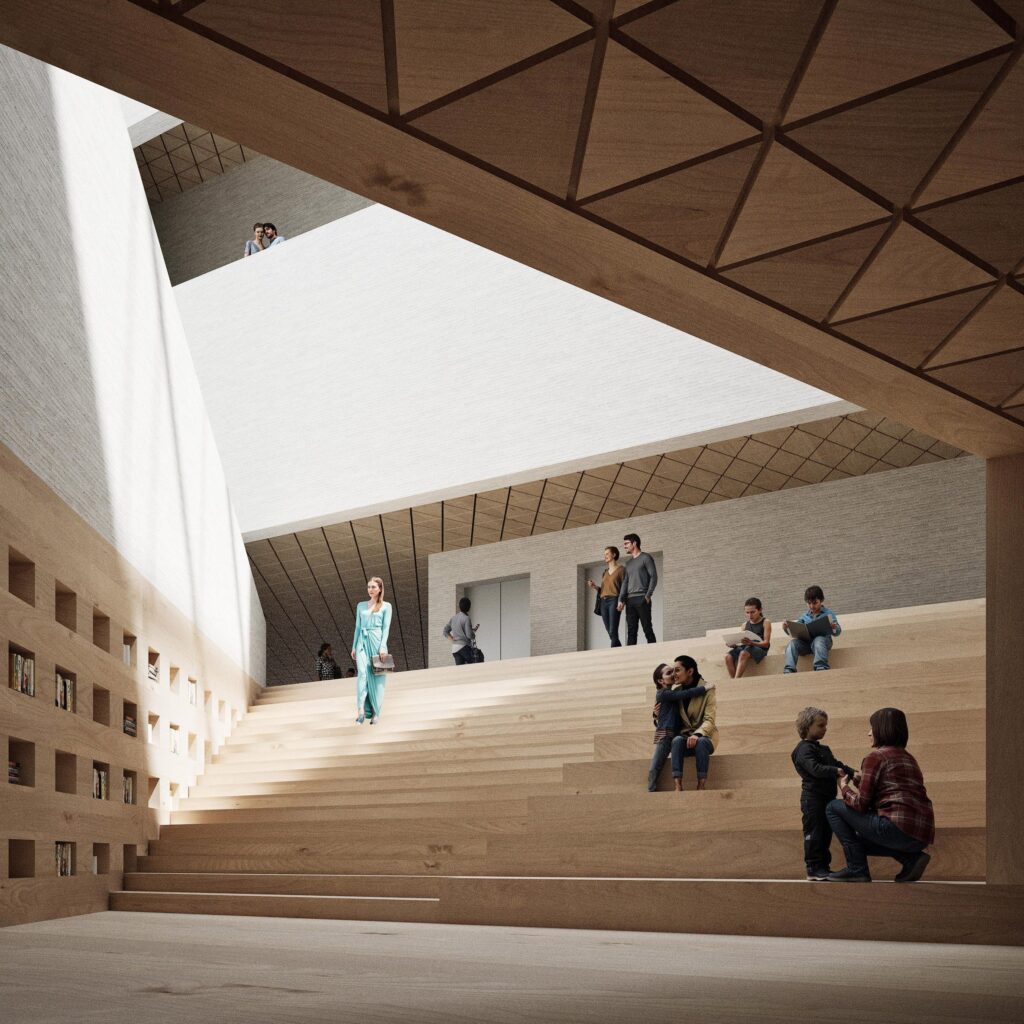
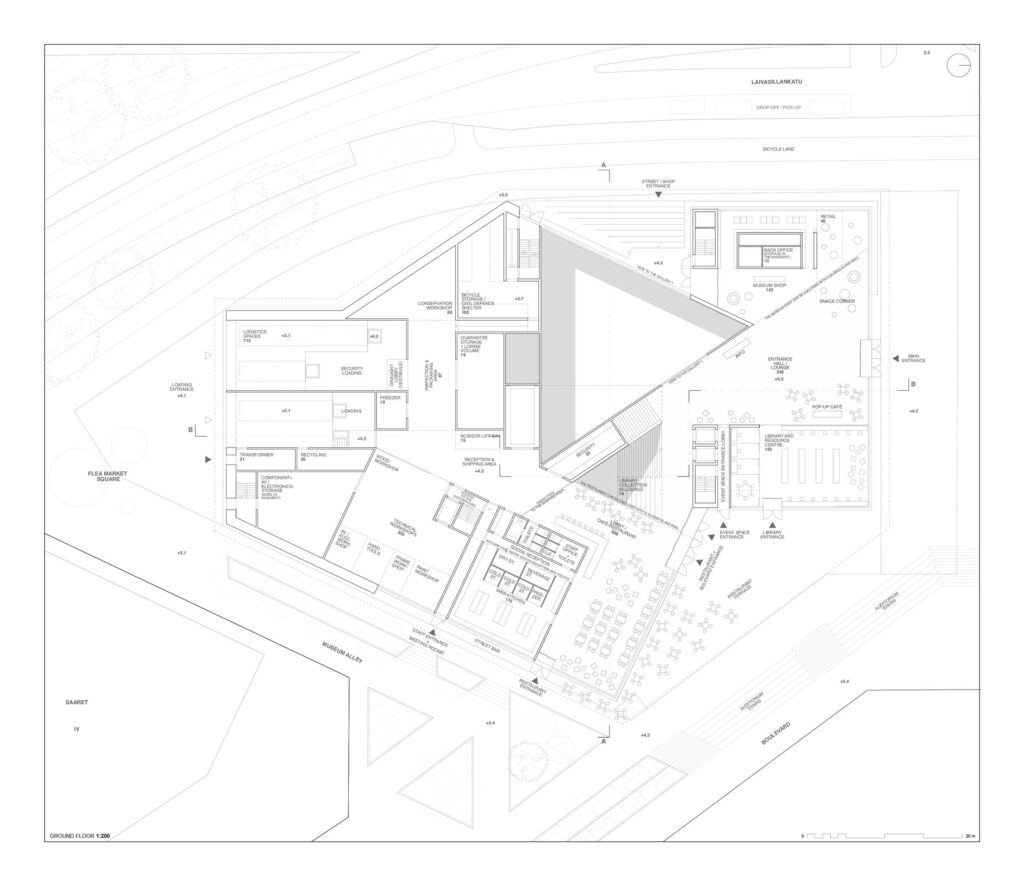
JKMM’s proposal is organized around a triangular atrium, which acts as both a spatial anchor and a symbolic gesture. The atrium offers a clear sense of orientation while enabling flexible circulation across exhibition halls, archives, and public amenities. The geometry of the building is expressed in its facades, which will be clad in recycled brick, a material choice reflecting both local tradition and sustainability principles.
The design introduces a carefully balanced relationship between openness and enclosure. Key elements include:
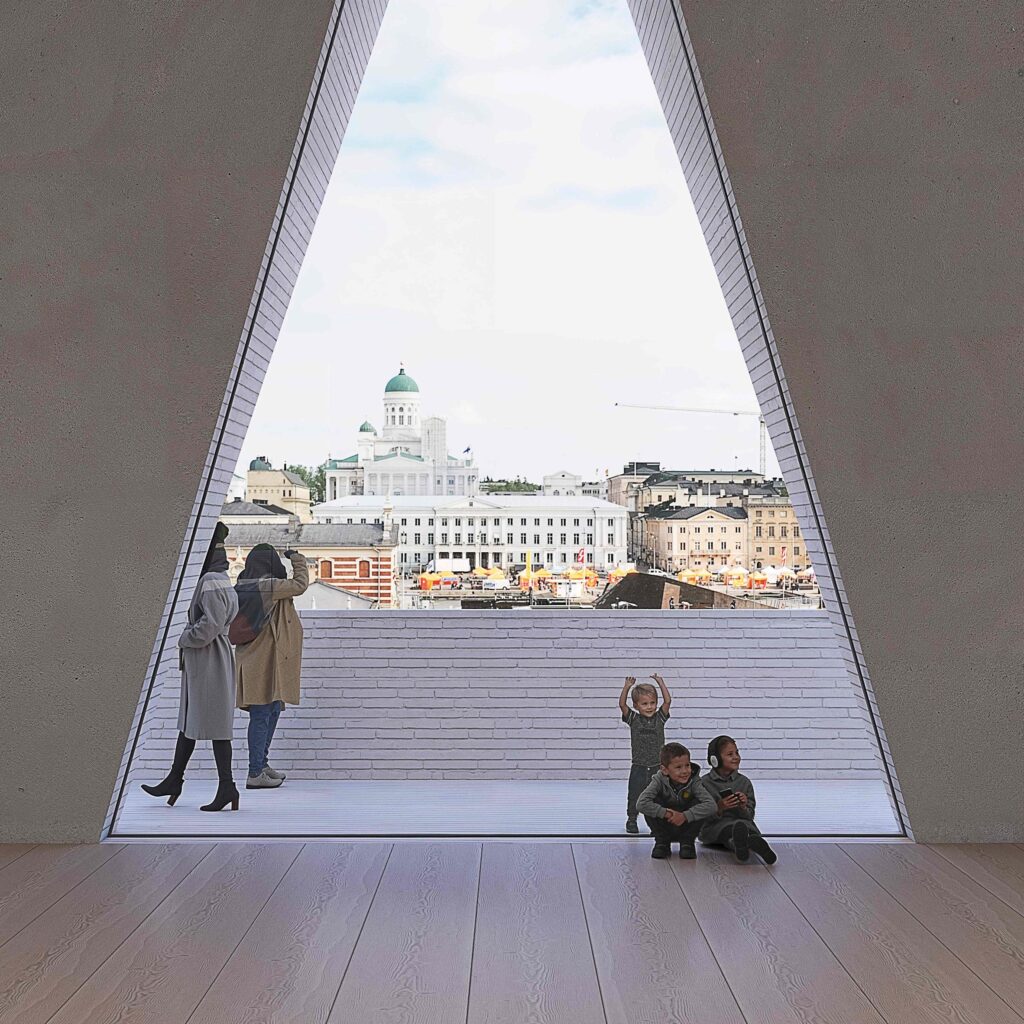
- Triangular windows cut into the brick facades, offering framed views of the harbour and city.
- Exhibition halls arranged around the atrium, adaptable for both permanent and temporary shows.
- A public design library and research archive providing resources for students and professionals.
- A sea-facing upper terrace that extends cultural activity outdoors and connects the museum directly with the urban landscape.
By integrating these features, JKMM aims to create a building that is simultaneously contextual and iconic—anchored in Helsinki’s material culture yet forward-looking in its spatial organization.
Competition Outcome
The competition jury was chaired by Mikko Aho, who emphasized the winning design’s ability to integrate into the city while asserting a strong identity. The pavilion-like form was praised for maintaining important sightlines from Tähtitorninvuori Park toward Market Square and Katajanokka, ensuring that the project does not overpower its sensitive harbourfront setting.
Other recognized proposals included:
- City, Sea and Sky by Cossement Cardoso of Belgium – second prize.
- Moby by Lopes Brenna of Switzerland – third prize.
- Tyrsky by a Finnish architectural collective – fourth prize.
- TAU by Atelier Orda of France – purchase option.
While each of these presented compelling ideas, JKMM’s entry was considered the most successful in balancing urban scale, cultural resonance, and technical clarity.
Collections and Program
The museum will consolidate Finland’s design legacy while also serving as a platform for international engagement. Its collections highlight the works of renowned architects and designers such as Aino and Alvar Aalto, Eero and Eliel Saarinen, and Eero Aarnio, alongside contributions from global design brands including Marimekko, Nokia, and Fiskars.
Beyond preserving these collections, the program expands into multiple dimensions of public and professional use:
- Permanent and temporary exhibitions showcasing both historical and contemporary works.
- Collaborative forums and design events intended to connect Finnish design with international networks.
- Educational facilities, workshops, and lecture spaces to engage students and practitioners.
- Public amenities such as cafes, retail outlets, and informal gathering zones that make the museum part of everyday urban life.
Collaboration and Technical Expertise
JKMM’s winning entry was developed through a multidisciplinary team led by founding partner Samuli Miettinen. Contributions came from specialists in key fields, reflecting the complexity of a project of this scale. The team included:
- Akukon – acoustics consultancy.
- Granlund – building services engineering.
- MIR – visualizations and architectural imagery.
- Pentagon Design – strategic design input.
- Ramboll Finland – structural and civil engineering expertise.
This collaborative structure underlines how contemporary cultural projects demand expertise that spans architecture, engineering, sustainability, and user experience design.
JKMM’s Broader Work
Founded in 1998 by Asmo Jaaksi, Teemu Kurkela, Samuli Miettinen, and Juha Mäki-Jyllilä, JKMM Architects has built a strong reputation in cultural and civic design. Their portfolio includes the Amos Rex Museum in Helsinki, the Dance House Helsinki, and Finland’s pavilion at Expo 2020 Dubai. Recent works extend into mixed-use developments, such as the stadium and housing project in Tampere, while current projects include expansions to the National Museum of Finland and the Lillehammer Art Museum in Norway.
These commissions illustrate JKMM’s evolution from a domestic practice into a firm with an increasingly international presence, particularly in the Nordic region’s cultural sector.
Future Outlook
In his remarks after the announcement, Samuli Miettinen noted that the museum presents an opportunity to demonstrate responsible design that combines craftsmanship with contemporary requirements. Mikko Aho, on behalf of the jury, stressed that material authenticity—especially the use of recycled brick—and the inclusion of public terraces were pivotal factors in their decision.
Together, these perspectives reflect the dual ambition of the project:
- To serve as a world-class cultural institution with international reach.
- To remain rooted in Helsinki’s architectural traditions, enhancing its civic identity.
With groundwork expected to begin in 2027, the next two years will involve design development, planning approvals, and detailed construction planning. By 2030, the Museum of Architecture and Design aims to position itself not only as Finland’s foremost cultural institution for architecture and design but also as an international reference point for research, exhibitions, and public engagement.
The images are by JKMM Architects and Mir