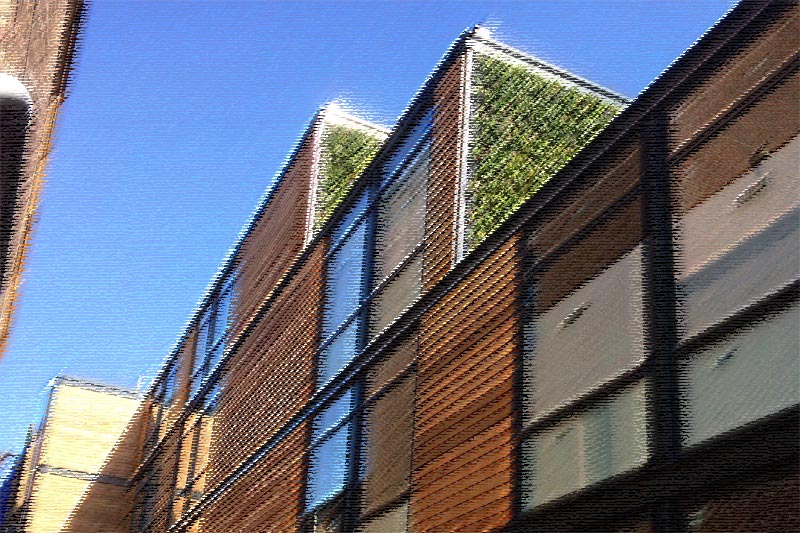
Rainscreen cladding is a multi-layered building envelope system that provides protection against external weather forces while enabling ventilation and moisture drainage. Widely used in both new construction and retrofits, it helps improve thermal performance, extend façade life, and manage water infiltration, especially in regions with high rainfall or varying climatic conditions. It forms an integral part of modern façade engineering, enabling high-performance and energy-efficient buildings.
Rainscreen cladding consists of an outer façade layer that shields a ventilated cavity behind which lies a moisture-resistant inner wall. This system does not aim to be completely watertight. Instead, it controls and limits the intrusion of water by allowing any moisture that penetrates the outer layer to drain or evaporate before it can affect the internal structure.
System Components
A typical rainscreen cladding system includes:
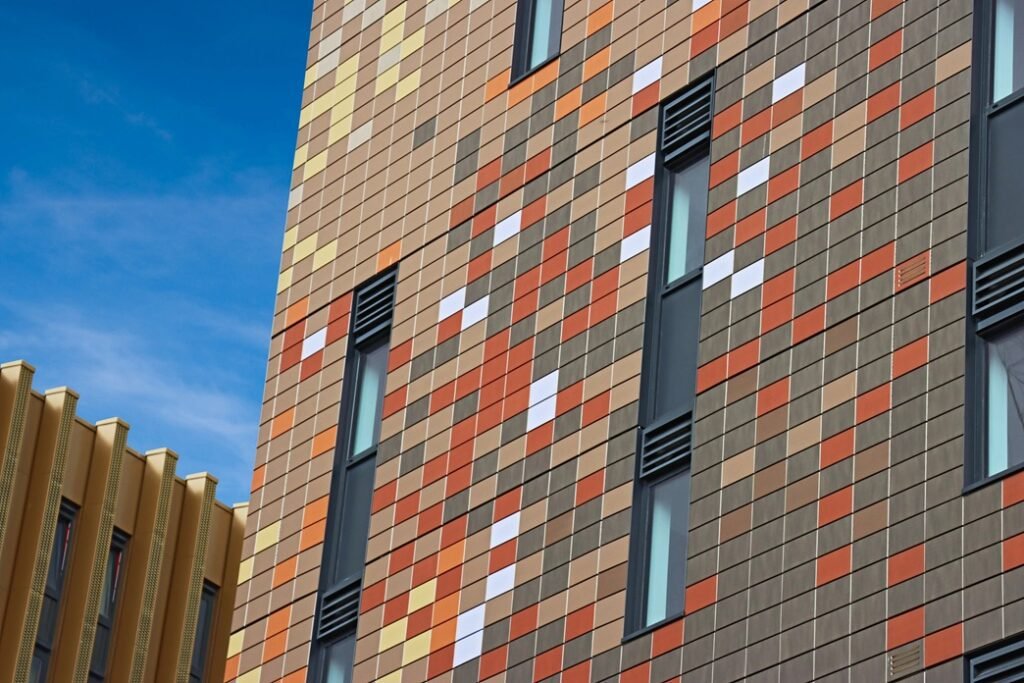
- Cladding Panels: The visible exterior surface, made from materials like high-pressure laminates (HPL), fibre cement boards, metal composites, ceramics, terracotta, or GRC (Glassfibre Reinforced Concrete).
- Support Frame or Substructure: Usually made of aluminium or galvanized steel, this frame anchors the cladding panels while maintaining a consistent air gap.
- Ventilated Cavity: An air space of 20 mm to 50 mm between the cladding and the insulation or wall sheathing to allow drainage and drying of trapped moisture.
- Thermal Insulation Layer: Placed on the exterior side of the structural wall to enhance thermal performance.
- Weather-Resistant Barrier (WRB): A membrane that prevents water penetration into the inner wall while allowing vapour permeability.
Application Areas
- Commercial Office Buildings: Used to enhance thermal regulation and reduce maintenance costs.
- Institutional Buildings: Schools and hospitals benefit from rainscreens for their durability and hygiene-friendly properties.
- High-Rise Residential Towers: Offers façade protection against wind-driven rain while improving energy performance.
- Public Transport Infrastructure: Used in airports, metro stations, and terminals for their maintenance-friendly façade protection.
- Industrial Units: Provides insulation and water protection in industrial sheds and logistic hubs.
- Retail Complexes: Enhances brand image while providing façade resilience.

Performance Benefits
Moisture Control
Rainscreen systems prevent water accumulation by promoting drainage and ventilation, reducing the risk of rot, corrosion, and mould growth.
Thermal Efficiency
With external insulation layers and ventilation gaps, these systems help reduce energy consumption by limiting thermal bridging and stabilizing indoor temperatures.
Façade Longevity
Protecting the structural wall from direct weather exposure prolongs the lifespan of both cladding and substrate.
Fire Resistance
Depending on the cladding and insulation materials used, rainscreen systems can meet fire safety norms, especially with non-combustible substrates like mineral wool and ceramic panels.
Acoustic Insulation
The air cavity and multi-layer configuration contribute to sound absorption and reduction, suitable for buildings near traffic corridors or noisy zones.
Ease of Maintenance
Most rainscreen cladding materials are resistant to staining, pollution, and UV damage. The dry mechanical installation also allows easy panel replacement if damaged.
Common Cladding Materials Used
- Metal Panels (Aluminium, Zinc, Corten Steel): Durable and lightweight, often used for sleek architectural expression.
- Fibre Cement Boards: Non-combustible and weather-resistant, used for high-density applications.
- Terracotta Tiles: Traditional appearance with modern performance; suitable for cultural or civic buildings.
- Ceramic and Porcelain Panels: Provide scratch resistance, colour fastness, and water repellency.
- Glass Reinforced Concrete (GRC): Offers flexibility in texture and geometry with good resistance to weathering.
- HPL (High-Pressure Laminate) Panels: UV-resistant and impact-resistant, often used in commercial buildings.
Each material is selected based on factors such as location, expected loads, design life, thermal efficiency, and aesthetic needs.
Types of Rainscreen Cladding
1. Open-Joint (Drained and Back-Ventilated) Rainscreens:
Open-joint rainscreens are designed with intentional gaps between cladding panels, allowing continuous airflow across the rear cavity while facilitating moisture drainage. These systems rely on the principle of pressure moderation and are constructed to restrict the direct entry of wind-driven rain into the assembly. While the outer cladding acts as a primary rain barrier, the cavity behind enables air circulation that helps dry any incidental moisture that penetrates the joints. Given their design simplicity and ventilation benefits, open-joint rainscreens are typically suited for areas with mild to moderate exposure conditions but may be less effective in high-pressure or storm-prone environments without additional sealing or weatherproofing layers.
2. Pressure-Equalized Rainscreens (PER):
PER systems are engineered with internal air-tight compartments and strategically placed baffles to control and balance the pressure within the cavity and the exterior environment. This pressure equalization prevents wind-driven rain from being forced into the wall assembly by neutralizing the differential pressure across the outer cladding. Each compartment is limited in width and height to maintain consistent performance and reduce air movement within the cavity. The design also integrates drainage and ventilation provisions to handle incidental moisture. PER systems are highly effective in severe exposure zones such as coastal, high-rise, or hurricane-prone regions, offering superior resistance to water ingress and improved thermal and moisture control.
3. Drained and Vented Rainscreens:
Drained and vented rainscreen systems provide a continuous cavity behind the cladding with both top and bottom ventilation openings, often incorporating weep holes or slots to allow water drainage. Unlike open-joint systems, the joints in these systems are usually partially sealed or over-lapped, offering better protection against rain penetration while still promoting drying. Air movement through the cavity is less free-flowing than in open-joint systems but sufficient to aid evaporation of any trapped moisture. These systems strike a balance between simplicity and performance and are commonly used in moderately exposed areas where enhanced protection is needed without the complexity or cost of a pressure-equalized design.
Design Considerations
- Fixing Methods: Options include visible and concealed mechanical fasteners, undercut anchors, or adhesive systems. Selection depends on cladding type and wind load.
- Panel Movement: Allowance must be made for thermal expansion and contraction.
- Joint Detailing: Design of joints influences ventilation and moisture performance. Open or closed joints must balance ventilation needs and weather protection.
- Subframe Design: Substructure must accommodate dead loads and wind pressures while maintaining dimensional stability.
- Drainage Provisions: Incorporation of drip edges, weep holes, and bottom flashings is crucial for effective water egress.
- Compatibility with Windows and Doors: Integration with openings must be carefully designed to prevent water ingress.
Conclusion
Rainscreen cladding plays a critical role in creating durable, energy-efficient, and moisture-tolerant building envelopes. By separating the protective façade from the thermal and structural core, this system mitigates water ingress risks while enabling design freedom. Whether in dense urban towers or institutional structures, rainscreen cladding continues to evolve as a dependable solution for sustainable architecture.
Image Credit: timbercladdingsolutions.co.uk, tellingrainscreens.co.uk, qcfacades.com