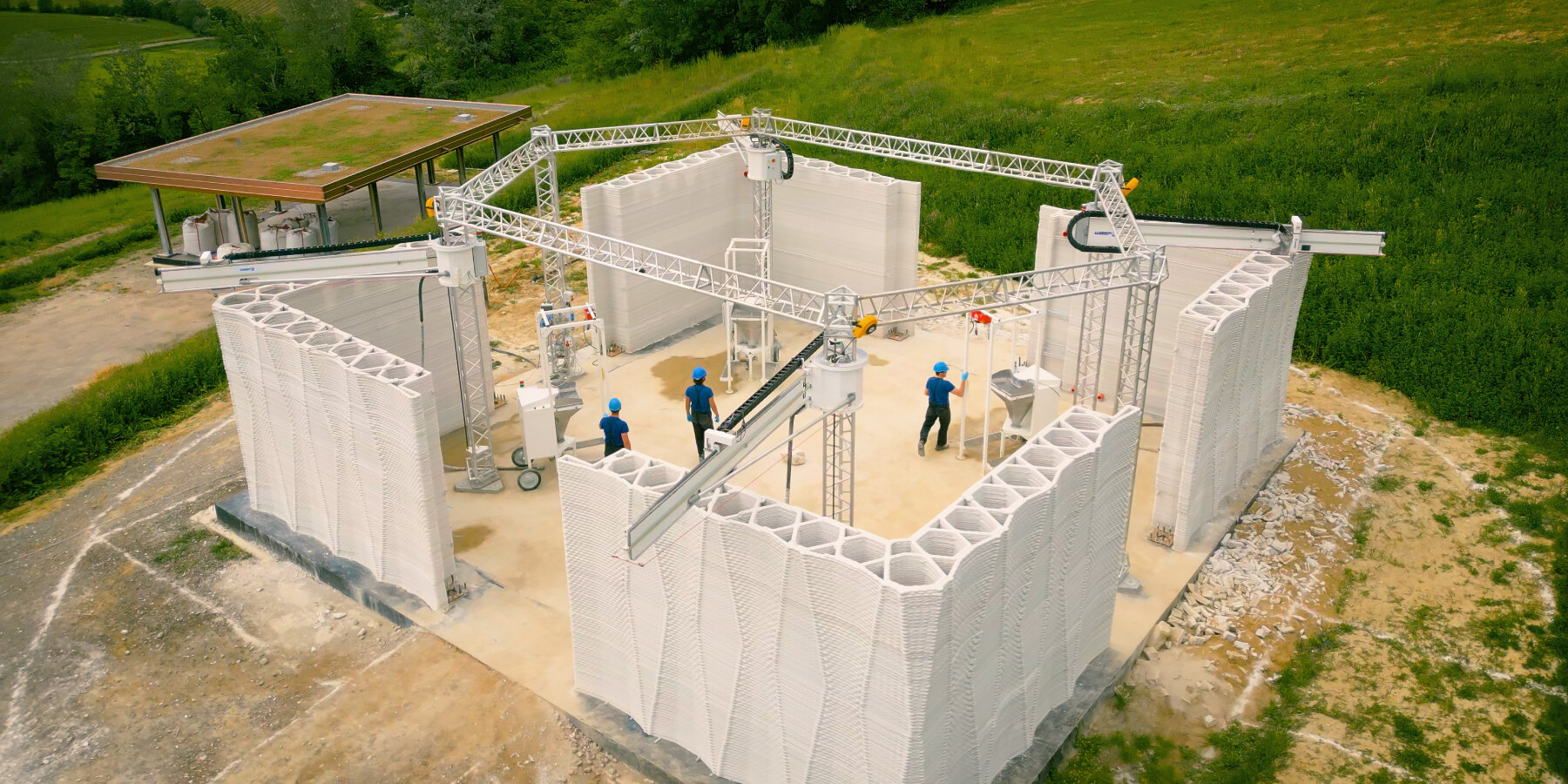
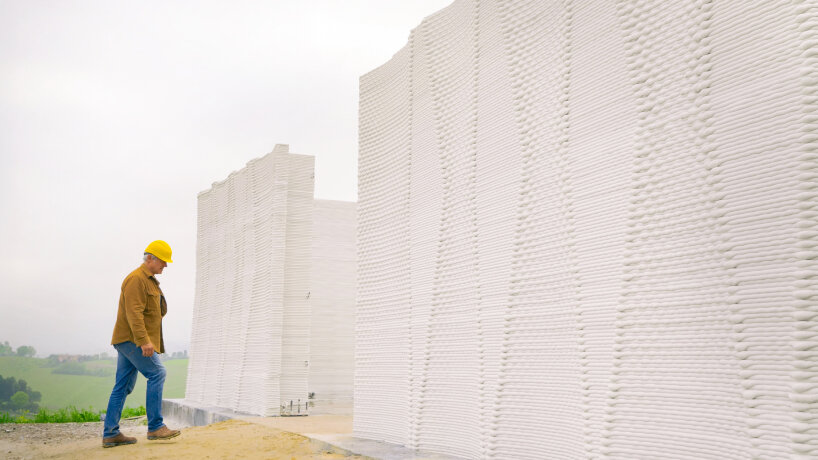
A new chapter in sustainable architecture is unfolding in the hills of Northern Italy, where WASP has completed the construction of the outer walls of Itaca, a mandala-inspired, self-sufficient 3D printed farm. Located within Shamballa, WASP’s open-air laboratory for sustainable living, the project represents a significant step forward in combining advanced construction technology, biomaterials, and circular economic principles into a single architectural prototype.
Designed as a living, regenerative structure rather than a conventional building, Itaca explores how architecture can support agriculture, research, and energy independence while dramatically reducing environmental impact. The project merges ancient geometric principles with cutting-edge robotic construction, positioning Itaca as both a functional farm and a model for future sustainable habitats.
Mandala Geometry as Architectural Framework
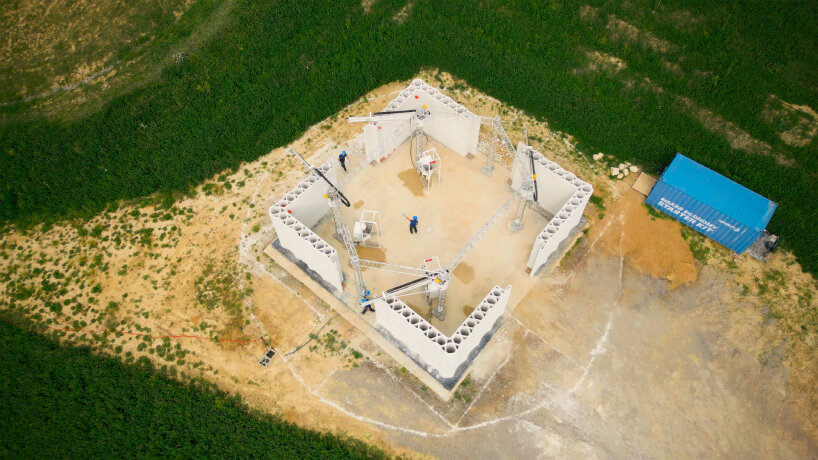
The architectural concept of Itaca is rooted in the symbolic and spatial logic of a mandala, a geometric system historically associated with balance, harmony, and cyclical order. The layout consists of a square inscribed within a circle, generating a clear spatial hierarchy while maintaining visual and functional openness.
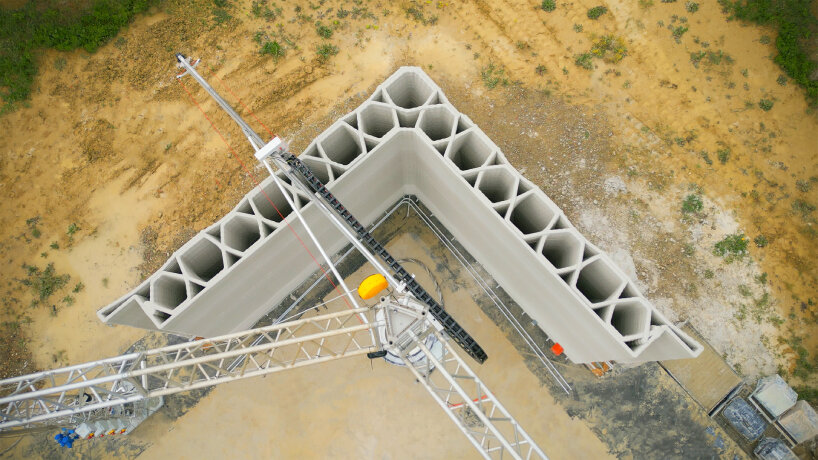
Four primary walls are positioned at the corners of the square, creating central openings on each side that enhance airflow, daylight penetration, and spatial fluidity. This configuration reinforces the project’s philosophy of openness and adaptability, allowing the structure to interact dynamically with its surrounding landscape.
Robotic 3D Printing Construction
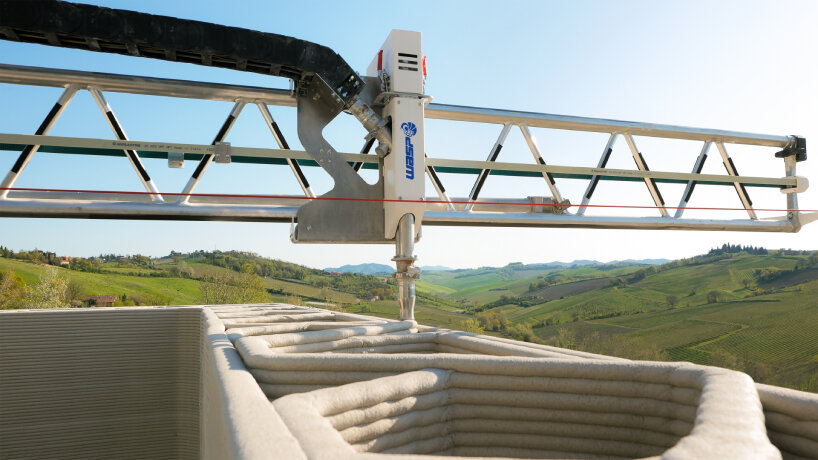
The construction process relies on four robotic arms positioned at the vertices of a hexagonal structure. These robotic systems simultaneously printed the walls using WASP’s Crane WASP technology, demonstrating how large-scale additive manufacturing can be applied efficiently in architectural projects.
Key construction highlights include:
- Use of synchronized robotic arms for precision and speed
- On-site 3D printing to minimize transportation emissions
- Integration of structural and service components during printing
- Reduction of material waste compared to conventional construction
The completion of the wall structure marks a major milestone, as Itaca becomes the first 3D printed building realized within the Shamballa laboratory.
Low-Carbon Materials and Thermal Performance
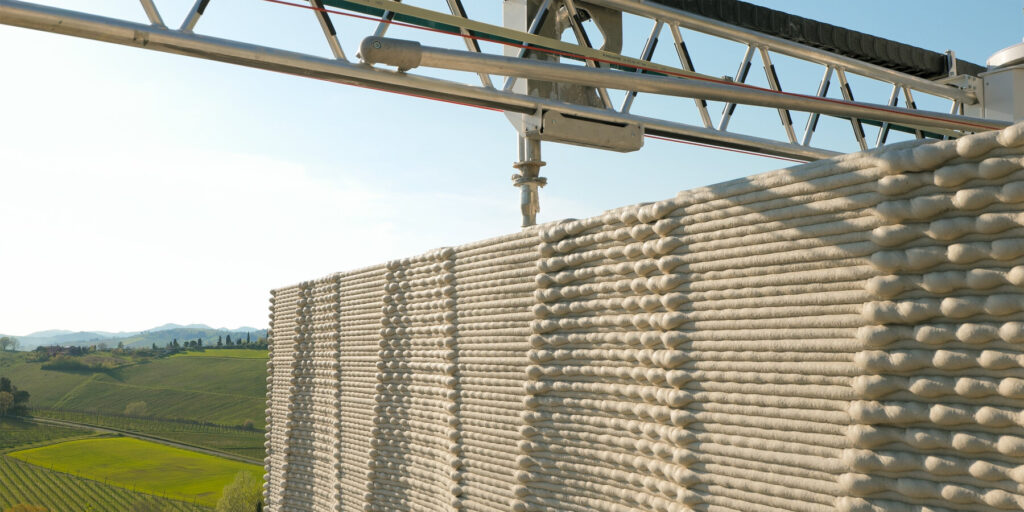
One of Itaca’s defining features is its use of lime-based materials, completely avoiding concrete to significantly reduce carbon emissions. The walls are printed with a mixture that allows the building envelope to naturally regulate temperature, improving thermal comfort without relying heavily on mechanical systems.
Inside the walls, reinforced columns provide structural stability and seismic resistance. The infill material combines:
- Rice husks sourced from agricultural waste
- Natural lime powder
- Lightweight insulating compounds
This composition enhances insulation, improves breathability, and transforms agricultural by-products into high-performance building materials.
Energy Independence and Green Infrastructure
Itaca is designed to operate as a fully self-sufficient system. A green roof combined with a solar panel array allows the structure to generate its own electricity while maintaining cooler indoor temperatures.
Additional sustainability features include:
- Rainwater harvesting basins for water recovery
- Soil erosion control systems
- Passive ventilation strategies for improved indoor air quality
- Radiant heating and electrical systems embedded during printing
These elements work together to reduce operational energy demand and reinforce the building’s ecological resilience.
AI-Powered Agriculture and Biodiversity Restoration
Beyond architecture, Itaca functions as a hub for agricultural innovation and ecological restoration. The surrounding landscape will host over 500 trees and 50,000 aromatic and medicinal plants as part of WASP’s reforestation and agroforestry initiative.
The project also integrates advanced food production technologies, including:
- AI-powered automatic gardens for medicinal plants
- 3D printed vertical hydroponic systems
- Low-water cultivation methods for year-round vegetable production
These systems aim to create a closed-loop agricultural environment that supports both food security and biodiversity.
A Living Laboratory for the Future
Internally, Itaca will house laboratories dedicated to extracting active ingredients from plants and conducting biological research related to the Shamballa ecosystem. The ventilation system is designed to encourage continuous air circulation, reinforcing the idea of the building as a “living” structure rather than a static enclosure.
The project was first introduced by Massimo Moretti, founder and president of WASP, during Italian Tech Week in Torino, where it was presented as a prototype for self-sufficient living based on a circular micro-economy.
Toward a New Model of Sustainable Living
Executed by WASP 3D Build, the startup division dedicated to 3D printed construction, Itaca demonstrates how architecture, agriculture, and technology can converge into a unified system. With its official inauguration planned for spring 2026, the project stands as a compelling vision for low-impact, resilient, and regenerative living environments.
By blending ancient geometry with modern robotics and biomaterials, Itaca offers a scalable model for future rural and agricultural architecture, one that prioritizes environmental responsibility without compromising innovation or design integrity.
Images- designboom.com