
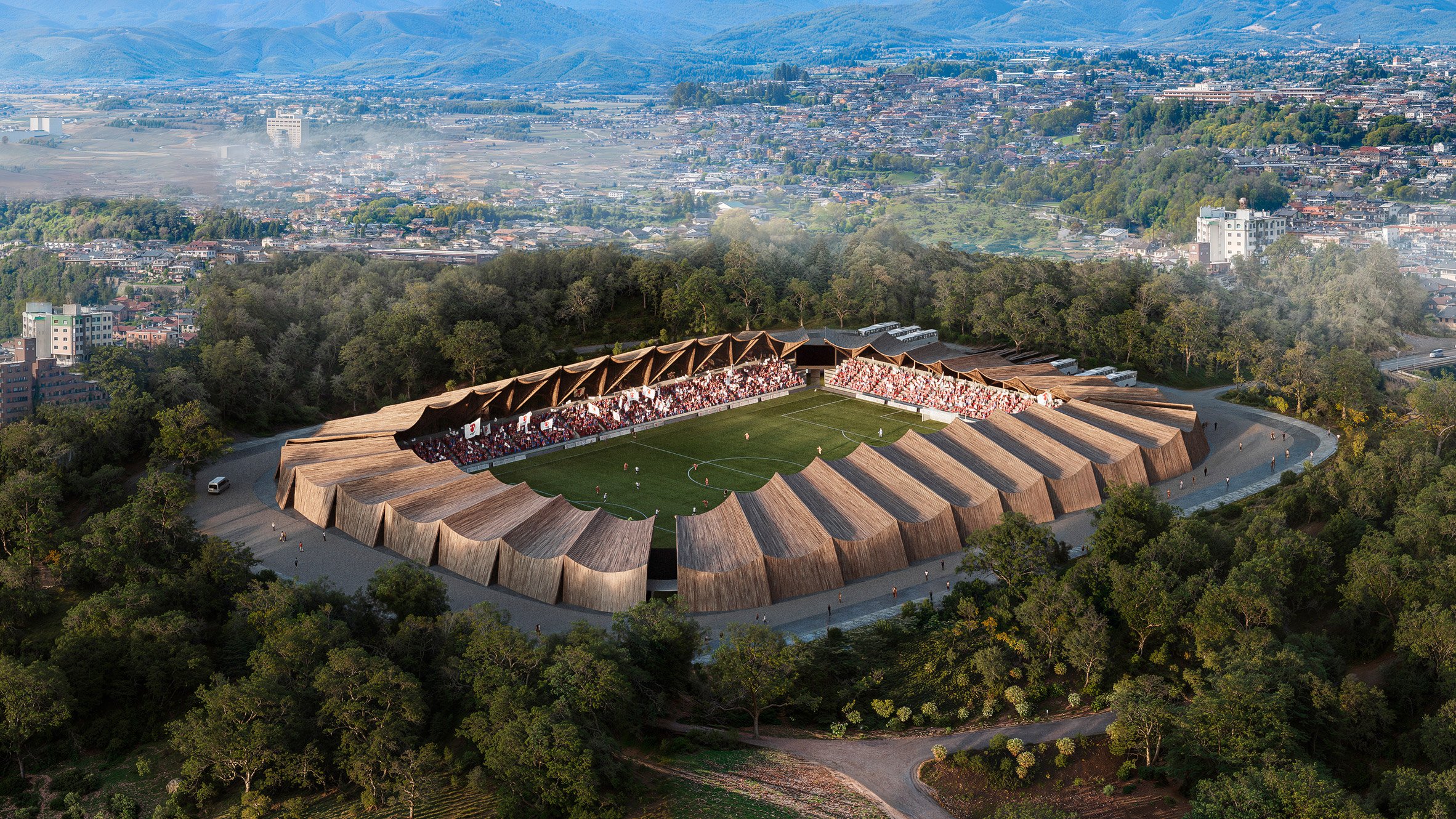
Fukushima United FC has announced plans for a 5,000-seat circular timber stadium in Fukushima Prefecture, designed in collaboration with architectural startup VUILD. The project will be Japan’s first of its kind, developed as a model for sustainable construction and community participation. Showcased at the Venice Architecture Biennale 2025, the stadium highlights how sports infrastructure can support ecological regeneration and regional recovery.
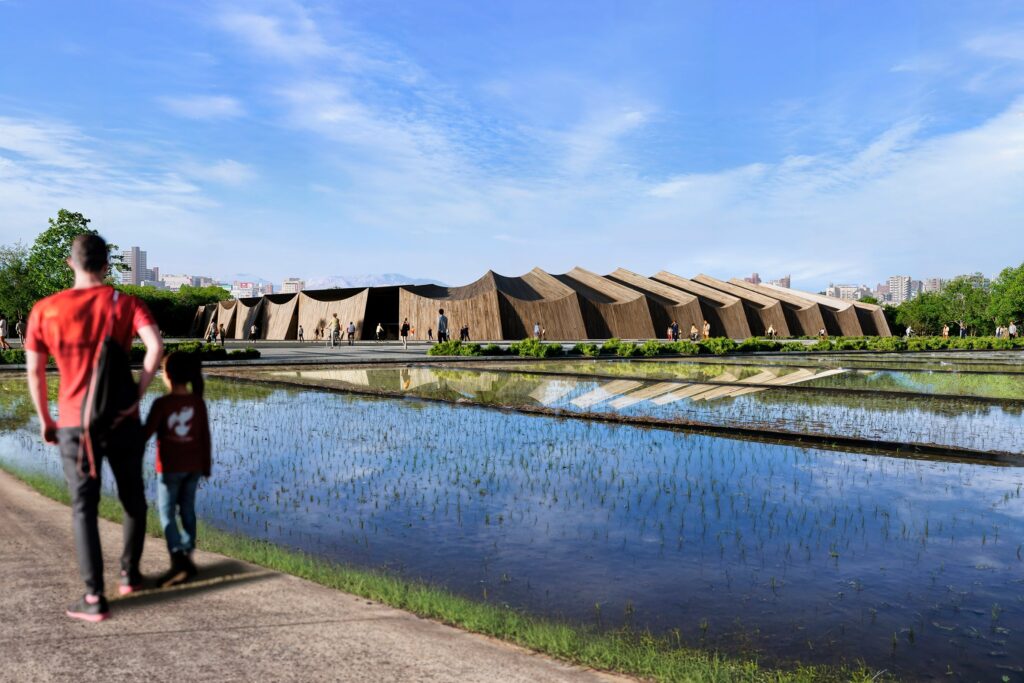
Architectural Concept
The central concept of the project draws inspiration from Shikinen Sengu, a Japanese tradition of regularly rebuilding shrines to pass down techniques across generations. VUILD adapts this practice into three interconnected cycles that shape the stadium’s identity:
- Resource cycle: sourcing timber from local forests, combined with reforestation programs to ensure renewal of materials.
- Community cycle: enabling residents and football club supporters to participate directly in construction through organized workshops and festive assembly events.
- Craftsmanship cycle: establishing educational initiatives to transfer woodworking knowledge and skills, ensuring the next generation can repair, maintain, and rebuild the facility when needed.
Human-Scale Design
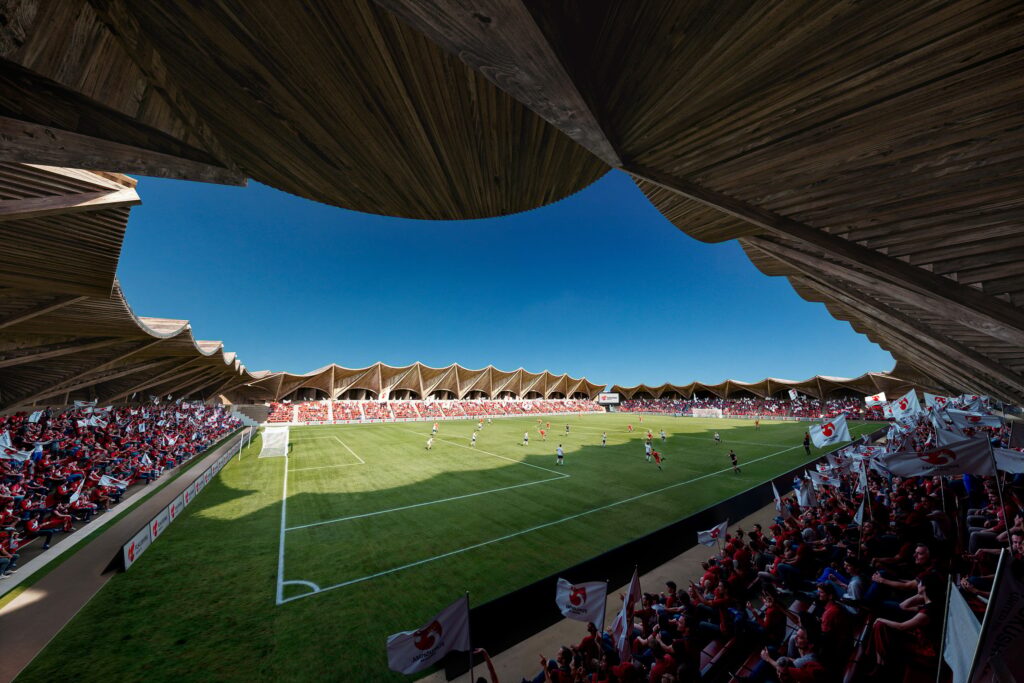
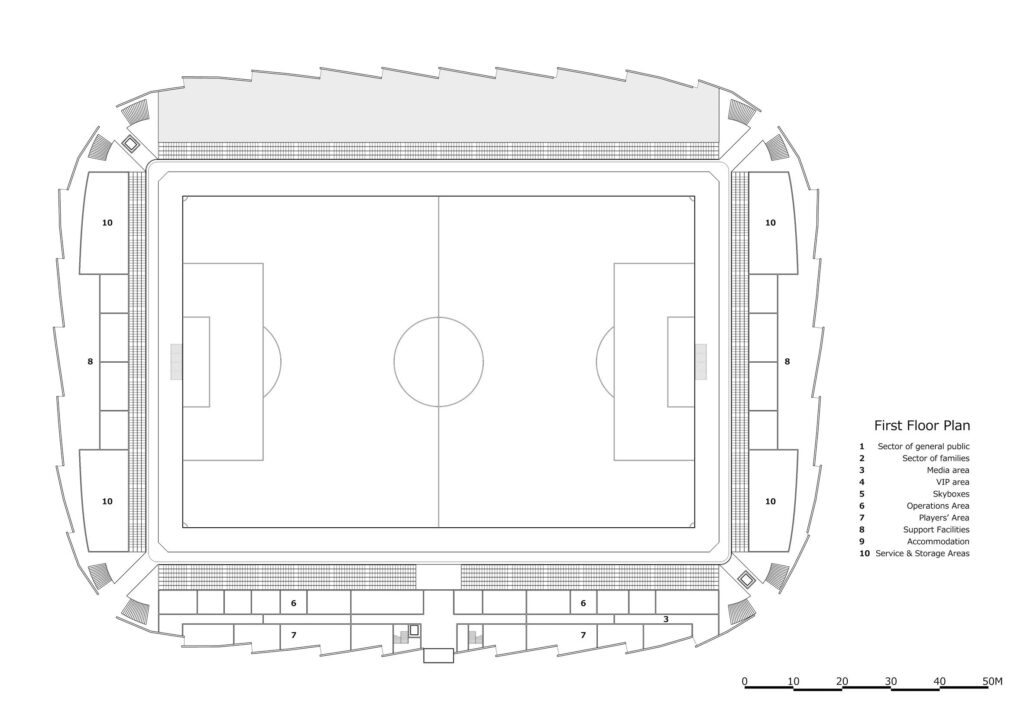
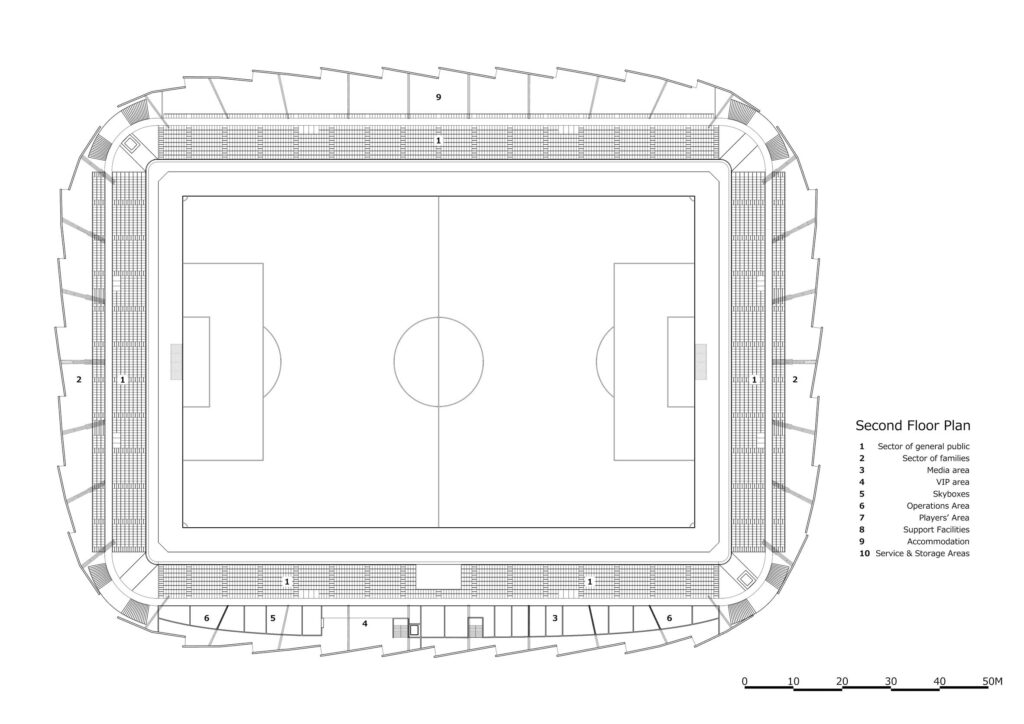
Most smaller stadiums concentrate seating into one dominant main stand with supporting terraces. VUILD’s plan instead breaks the 5,000-seat arena into four volumes, each below 3,000 square meters, with individual entrances. The stadium’s cross-section mirrors the size of a two-story house, creating a built form that remains approachable for both users and builders.
At the ground level, the distributed design accommodates locker rooms, restrooms, concessions, and waiting zones. The second floor of the main stand provides VIP and broadcasting spaces. One distinctive feature is the integration of hotel facilities within the back stand, providing extended usage and year-round revenue opportunities. This configuration blurs the boundary between stadium and community hub, supporting both sports and non-sporting functions.
Timber Structural System
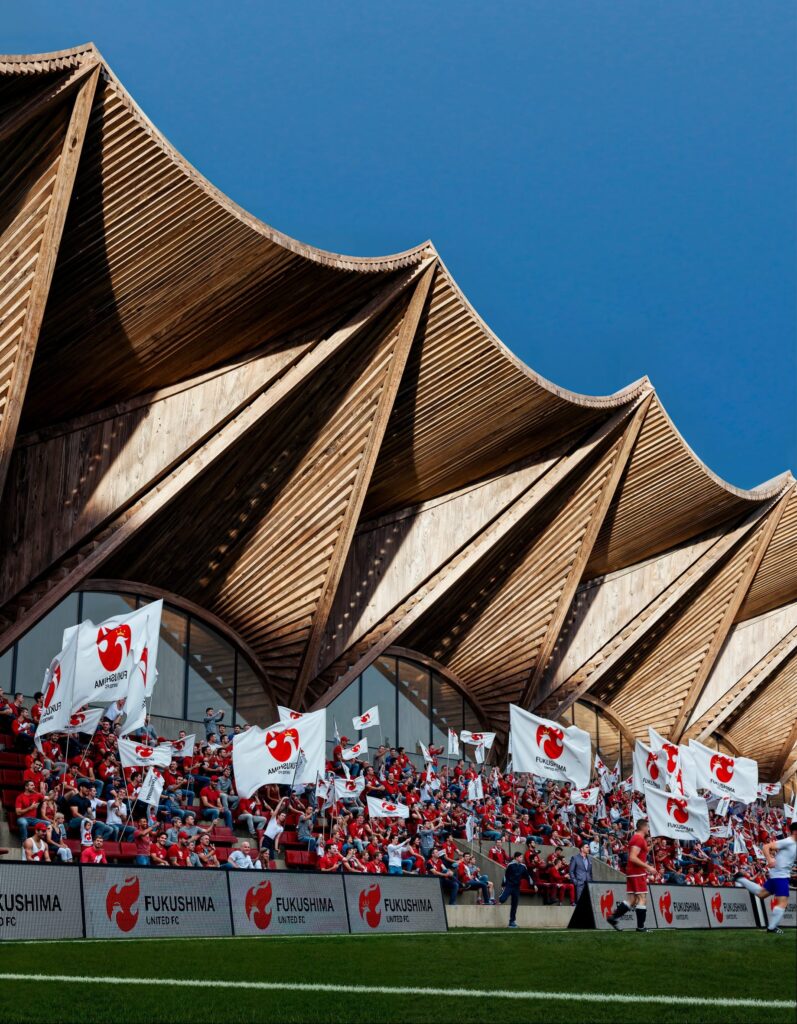
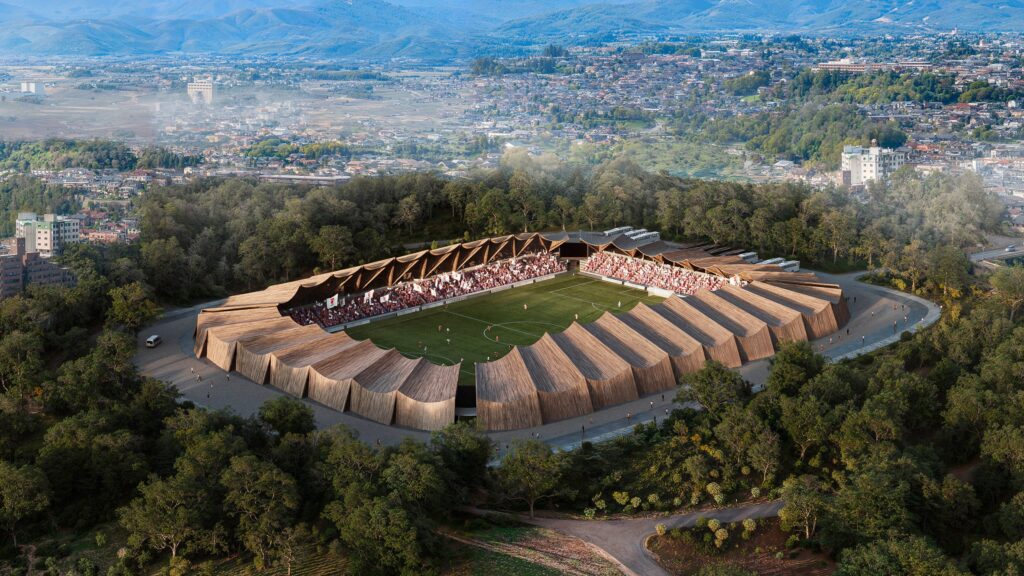
The stadium uses bundled small-section timber members to form Hyperbolic Paraboloid (HP) Shells, which act as the primary structural system. These shells carry the cantilevered roof while allowing clear spans for the seating bowl.
- Nail-Laminated Timber (NLT) panels create the shell’s surface, formed by aligning straight timber pieces that gradually twist to match the complex geometry.
- Diagonal bracing elements strengthen the system, providing the effect of a large-scale timber arch.
- Prestressed timber members, aligned in catenary curves, span above the shells to complete the roof system.
The result is a triangular roofscape that references the steep thatched forms of Ōuchi-juku, a historic settlement in Fukushima, linking modern engineering with local architectural heritage.
Climate Responsiveness
The stadium responds to Fukushima’s basin climate, where summers are hot and humid, and winters are cold with heavy snowfall. Passive strategies are integral to its design:
- The steep roof angles block harsh summer sunlight while channeling winter winds away from seating areas.
- Openings within the shell geometry create cross-ventilation for natural cooling in warmer months.
- Rainwater harvesting systems store and filter water for reuse.
- Snow gathered in winter can be stored and used for summer cooling, reducing mechanical energy demands.
In addition, renewable energy systems, including solar panels and energy storage, are planned to move the facility toward self-sufficiency. The design aspires to meet standards comparable to the Living Building Challenge, one of the most rigorous global benchmarks for sustainable architecture.
Community Assembly and Cultural Meaning
Construction itself is envisioned as a cultural celebration. Timber elements will be fabricated to enable assembly by large groups of people, echoing mikoshi processions and timber-raising ceremonies common in Japanese tradition. By engaging residents, club supporters, and local carpenters, the process becomes a festival of renewal rather than a purely technical task.
This participatory model strengthens social connections while ensuring that building knowledge is not lost. Educational workshops on woodworking will be part of the broader project, preparing young people to maintain or rebuild the stadium decades later, continuing the cycle of regeneration.
Symbol of Regional Recovery
The stadium holds symbolic weight for Fukushima, a region still recovering from the 2011 earthquake and nuclear accident. By grounding the design in renewable local resources and participatory culture, the project represents a shift from dependency toward resilience. It demonstrates how sports infrastructure can extend beyond athletic performance to embody renewal, sustainability, and community pride.
Conclusion
The Fukushima stadium is part of a growing global shift toward sustainable sports facilities. Other examples include Oxford United’s all-electric stadium proposal in the UK, new design work on Lisbon’s Estádio da Luz by Populous, and multipurpose arenas in Central Europe focusing on renewable energy integration. The Milano Cortina 2026 Winter Olympics is also emphasizing reuse, with over 90 percent of venues adapted from existing stock.
Images- designboom.com



